—
Has Doomsday Arrived for Wine?
—

In recent months, there has been an unusually large amount of bad news about wine. People talk about a “wine crisis” with falling consumption, fires, heatwaves, wine shortages, price increases, and all sorts of gloomy developments.
We ourselves have contributed to the focus on all this bleakness, with our articles on several of these topics. We took the pulse of the wine industry by asking fifteen wine professionals for their views on the wine crisis; we did a deep dive into the effects of heatwaves on vineyards; and we even entered the debate about forest fires and their “catastrophic” (?) impact on wine production. But we have tried to add more nuance to the discussion rather than shouting “disaster.”
–
Calling all wine lovers:
Do you know someone who might be interested in a wine tour?
Please tell them about BKWine Wine Tours! We do wine tours like no other. A leading wine tour operator since more than 20 years.
Have you already been on one of our tours? Tell your friends! Word-of-mouth is perhaps the most important way to spread the word of good wine, great food and exciting travel.
Thank you in advance for your help and support!
(If you have Swedish friends, please know that we have a separate, more extensive travel program in Swedish: BKWine Vinresor.)
–
Forest fires, for example, have caused major damage. To forests. But not to vineyards, and definitely not in Bordeaux (we’re soon heading to Bordeaux on a wine tour and will certainly take a close look!). You will still be able to enjoy classic Bordeaux wines in the future.
Of course, it is worrying that wine consumption is falling. And production with it: tens of thousands of hectares are being uprooted in places like Bordeaux and California, and one hundred thousand tons of grapes were never harvested in New Zealand.
Thirty five years ago, when we arrived in France, it was almost standard to order un quart de côte — 25 cl of Côtes du Rhône — with lunch, either in the company canteen or at the café on the corner. Today it is less common, even if no one raises an eyebrow if you have a glass of wine with lunch here in France. But in terms of taste, that quart de côte is probably nothing to mourn.
The wine producers we spoke to about “the crisis” were fairly unanimous: yes, declining consumption is a concern, but they do not feel it very strongly. There was no sense of doomsday in their answers. The view was rather that the crisis seems to hit the lowest segments of the market the hardest. Some even hinted that it might be a good thing; time to clear out part of the bottom tier, bulk wines of the lowest quality, planted thanks to overly optimistic expansion. This is probably true, but it does not make things easier for the producers or growers affected.
An interesting perspective came from our new guest writer, Guido Spina, in his debut article. Today’s young wine drinkers seem more curious, more aware, and choose wine in a spirit of exploration, in contrast to earlier generations, who ordered big, well-known brands, safe bets, wines with international reputation.
Change has always been a companion of the wine industry. During the phylloxera crisis, countless vineyards disappeared. At various points in wine history, “purges” have taken place. During phylloxera, there was time; it spread over decades, and vines did not die overnight. But the changes to Europe’s wine landscape were monumental. Looking back, one can see the phylloxera crisis as a seed that led to replanting, reassessment, restart, and ultimately improved quality.
In Champagne last week, we saw how winemakers adapt to heatwaves and drought (more on that in one of the news items). The same is true in other wine regions, too. Heatwaves and climate change bring challenges, but they always have. They also bring opportunities, such as new, exciting wines like the one we wrote about recently, unthinkable thirty years ago.
Will wine styles change? Not necessarily. But even if they do, that is something that has happened throughout wine’s entire existence. The wines we drink today are not at all the same as those people drank thirty years ago. And that is largely because growers and winemakers have become more and more skilled. The wines get better.
Uprooting vines changes the landscape and can even cause harm. The fires of recent years have shown the advantages of having vineyards act as firebreaks in fire prone areas such as the Corbières massif in Languedoc (even though vines eventually burn too, as the photo further down in that article sadly illustrates).
So, is wine’s doomsday approaching? Something to discuss over a good glass of wine at the dinner table.
But our answer is no. Consumption is changing, as is production — in many ways toward better quality. The climate brings challenges, but also opportunities (and causes far greater problems in contexts other than wine), and fires — yes, we will always have to live with those.
This month’s BKWine Brief has more reading for you than usual, so take a good look and file it perhaps in your come-back-to-again pile.
Wine tours
We have three tours that we particularly want to bring to your attention: Bordeaux, Burgundy-Champagne, and New Zealand.
If you can’t come this time, maybe you can tell a friend who might want to join us on one of our upcoming tours.
Bordeaux luxury wine and gastronomy
13-19 September
This Bordeaux tour takes you to private lunches and tastings and insider access at world-famous châteaux as well as family-run estates.
More info and book here: Bordeaux, September 13-19, 2026
The Burgundy & Champagne Grand Tour
September 23 – October 1
This nine-day Grand Tour to Burgundy and Champagne.
More info here: Burgundy and Champagne, September 23 – October 1, 2026
New Zealand
The extraordinary adventure in one of the youngest wine countries
A total road-trip, gastronomic, vinous adventure across breathtaking landscapes, blending meetings with the pioneers of the country’s wine industry, private wine tastings of international top-level sauvignon, pinot, cabernet and much more. And immersive cultural experiences, a private dinner with a Māori family to a stunning glacial lake excursion and tea with the Doonan family. All together with Britt and Per of BKWine.
More info and book here:
New Zealand, 10-25 March 2027
And also in winter (only a few places remaining):
- Chile-Argentina, in January 2027
- South Africa, in February 2027 – fully booked now, sorry
More info on our wine tours here. “World’s Top Wine Tours“. Tours led by the people who know wine and who have an unrivalled experience of wine and wine tours.
Travel in wine regions with someone you trust.
Enjoy the Brief!
Britt & Per
Wine editors to the national encyclopaedia, Forbes.com contributors, award-winning wine book authors, wine tour advisors to the UN and national wine organisations, wine judges … and, above all, passionate wine travellers.


If you appreciate what we do, you can help us:
Tell your friends about the Brief or send it to them.
Like us and follow us on social media:
BKWine Magazine on Facebook | Wine Tours on Facebook
—
What’s on at BKWine Tours
BKWine is also one of the world’s leading wine tour operators. Here’s what we currently have on our scheduled wine tour program:
- Bordeaux, 13-19 September
- Burgundy and Champagne, 23 September – 1 October
- Maybe more. What would you like?
–
- Chile-Argentina, 11-24 January 2027
- South Africa, 14-24 February 2027
- New Zealand, 10-25 March 2027
We also make custom designed wine tours.
And we have an extensive travel program in Swedish: BKWine Vinresor.
We’re different than most other wine tour operators. We are people who know wine inside out, who travel constantly in wine regions, who write award winning books about wine. Who do this out of passion.
Our wine tours are different from others.
A typical year we organise more than 30 wine tours to destinations across the world. In Europe: France, Italy, Spain, Portugal and more. World-wide: South Africa, Chile, Argentina, New Zealand. Thanks to our Scandinavian background we have a separate offer for the Scandinavian market. These are sometimes offered in English and also available as custom made tours. For example, these destinations:
—
Read our books
We have written eleven wine books. They have won awards from the Gourmand Awards, The International Organisation of Vine and Wine (OIV) and others.
Unfortunately, only one of them has been translated to English; the others are (so far) only available in Swedish. This is the one that is available in English:
Here’s the full list of our books:
- The Wonderful World of Wine
- Languedoc-Roussillon, the Wines of Southern France
- Champagne, the Wine and the Growers
—
News from the World of Wine
—
Short briefs on what’s been happening in the world of wine recently and other interesting things.
—
Record early harvest in Champagne: visit to Thomas Cheurlin in Côte des Bar
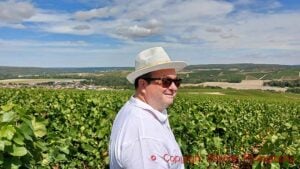
We arrived in Côte des Bar, Champagne’s southernmost sub region, on August 25 and assumed the harvest would be in full swing. (Read more on Côte des Bar and Champagne Vaucelle in this BKWine Magazine article.) But no, it had just finished. “It was a very early harvest, record early in fact,” says Freddy Creniller, chef de cave at Champagne Thomas Cheurlin / Champagne Vaucelle in Celles sur Ource. And with that, a very unusual vintage.
In Champagne, the 2026 harvest began as early as August 8. “We started on August 14,” Freddy explains. In just two weeks, the grapes went from being far from ripe to approaching over ripeness. The potential alcohol level is between 11.5 and 13%, something Freddy has never seen before. For the first time in his 20 year career, he has not chaptalised a single tank. (Chaptalisation is very common in Champagne, almost everyone does it.) Spring began well, with excellent flowering and fruit set. Some chardonnay plots were hit by spring frost, but pinot noir fared better since it develops slightly later. The yield ended up at around 7,000 kg/ha.
The rapid ripening naturally raises the question of acidity. It is lower than usual, but according to Freddy, much can be balanced by blending different plots and adding so-called reserve wine. The dosage can also be adjusted to suit the vintage. He was hesitant at first, but is now far more optimistic and believes 2026 will be an excellent year. We agree, after having tasted the exceptional 2026 Pinot Noir and Chardonnay juice.
Eric Rodez in Ambonnay seems to agree: “a lot of sun, great heat, no rain, a very concentrated harvest, a stratospheric sugar richness… The challenge is huge but beautiful and big. So, we lend ourselves to dreaming carried by the potential of this vintage knowing that 1959, 1947, 1921 were of the same type…”
–
Travel: Come on a wine tour to Champagne and Burgundy with BKWine. (PS: We’ve written a prize-winning book on Champagne and one on Burgundy.)
New on the travel site: Live, Dispatches from The Vineyards and Wine Regions
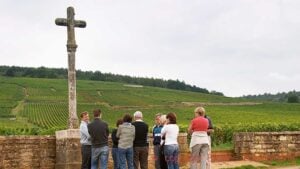
We have started a new experiment. We want to share more of all the beautiful, exciting, interesting things that we encounter on our wine tours. The best thing is of course to be on the tour, but the next best thing is to see pictures from what happens on the visits. We have therefore started a project posting very short texts but with lots of pictures, directly (or almost directly) from the tours, in the travel blog. Simple. Fast. Inspiring. We call it “Live, Dispatches from The Vineyards and Wine Regions”. We will organize it a little better in the future, but for now you can find it on the home page of BKWineTours.com and on this page: Vineyard Dispatches. Some examples, pictures and short texts:
- At Champagne Vaucelle in the Cote des Bar
- Clotilde Legrand in Saumur-Champigny, superb cabernet franc
- In the strange town of Tirau, south of Auckland, New Zealand
- At Podere Cresci on Waiheke Island, New Zealand
- Britt and Per in Montrachet, Burgundy
- Pioneer Nigel Greening on Felton Road, Central Otago, New Zealand
In other words, follow along among the vineyards this autumn with Vineyard Dispatches.
Early and rapid harvest in Germany: smaller volume but healthy grapes

The 2026 harvest has begun record early in almost all German wine regions. The warm summer caused the grapes to ripen very quickly, which means the harvest is already underway everywhere and will accelerate during the first week of September. The weather ideally needs to remain as dry as possible; heavy rainfall would further speed up an already fast-moving harvest.
Since almost all grape varieties are ripening at the same time, the harvest is expected to proceed quickly and finish early. Growers will also want to monitor the acidity and harvest before it drops too far to keep good freshness in their wines. The grapes are very healthy and, according to Wines of Germany, producers expect aromatic white wines and deeply coloured reds (not usually the case for German reds). However, the grapes are smaller than usual due to the dry conditions, resulting in lower yields. Read more: winesofgermany
The 2026 harvest in Bordeaux: drought more damaging than heat, irrigation a saviour

The forest fires south of Bordeaux this summer never reached the wine regions. But les canicules, the heat waves, were bad. David Stannard at Paradise Rescued, a small winery in Cardan in the Entre-deux-Mers region, has lived in Australia for a long time and is used to very warm weather. Still, even he thinks this was quite a summer and warmer than many he has seen recently in Melbourne. This is his latest update on his Bordeaux harvest:
“There has been a complete disconnect between the weather and the type of fauna/vegetation that grows in this beautiful corner of the world. The trees in our front garden have already lost 80% of their leaves. Many vines have required emergency resuscitation with a small amount of (legal) water. I used a watering can, which saved a few young merlots from total elimination. The drought has been a greater problem than the heat. The merlot harvest will be on September 6 and the cabernet franc a week later. The dates remain under daily review.”
–
Travel: Come on a wine tour to Bordeaux with BKWine. (PS: We’ve written a prize-winning book on Bordeaux.)
— THERE MAY BE VERY FEW LAST-MINUTE PLACES LEFT ON OUR BORDEAUX TOUR ON SEPTEMBER 13-19. Contact us urgently if you are interested.
New on the travel site: Highlighting useful travel info for you

Another improvement we’ve been working on for our wine travel site over summer is a better organisation of all the travel and tour information we have on BKWineTours.com. We’ve been writing about wine touring there for many years and have many texts that give you useful advice, insider tips and other things that will make your travel better, give you more knowledge about the wine regions we visit, and highlight some of the destinations we have. We have sorted everything in more easily accessible categories. You can find all of them on the front page and also on dedicated category pages:
- Upcoming Wine Tours on the Schedule
- Wine Travel Guides and Tips
- Live, Dispatches from The Vineyards and Wine Regions (as described elsewhere)
- From BKWine Magazine (about the wine regions that are our wine tour destinations)
- Wine Travel Stories and Highlights (stories, short and long from our wine tours)
- Wine Tourism News and Insights (on the wine tourism and wine travel business)
- And, “What Others Think, Customers, Media”:
Stéphane Vedeau in the Southern Rhône: a winemaker to watch with La Ferme du Mont and Clos Bellane
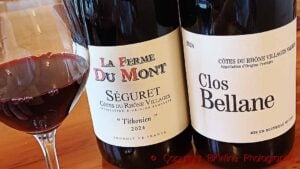
We recently tasted a couple of wines from Stéphane Vedeau, a winemaker who is attracting a lot of attention in the southern Rhône Valley. We tasted his wines from Séguret and Valréas, two well‑known Côtes‑du‑Rhône Villages. Both wines deliver the character you hope for from this charming region of France: a mix of red and dark berries, herbal spice, and a fine freshness.
Côtes‑du‑Rhône Villages Séguret, Tithonien 2024, La Ferme du Mont
A lovely and intense nose of red berries. A flavourful wine with ripe red‑berry aromas, a certain softness that gives way to good freshness and a touch of tannin on the finish. Good length. The style is easy‑drinking yet structured.
Clos Bellane 2024, Côtes‑du‑Rhône Villages Valréas
A distinct nose with dark fruit, black cherries, a hint of leather, tannin and fresh herbs. Fine acidity and a long finish.
Stéphane Vedeau has a long background in the wine industry. Today he focuses mainly on his favourite grape, grenache, in the southern Rhône Valley (although he does make a wine in Crozes‑Hermitage as well). Under the name La Ferme du Mont, he gathers a selection of appellations from the southern Rhône, including Vinsobres, Châteauneuf‑du‑Pape and Rasteau. In 2010, Stéphane purchased the 60‑hectare estate Clos Bellane in Valréas and became a strong advocate for this beautiful and slightly remote region in the northern part of the southern Rhône Valley. If you come across his white wines, don’t hesitate. Read more on Clos Bellane here: Clos Bellane, organic wine with personality, from a historical village in Southern Rhône | Britt on Forbes.
See our grape profile on grenache on BKWine Magazine.
This summer’s major forest fires in Bordeaux and elsewhere: will the wine get smoke taint?

Large forest fires have swept across Europe this summer, and the question of smoke tainted grapes has been widely discussed. It’s an issue that has been relevant for years in places like California and Australia, regions long affected by annual, large scale wildfires. How do these fires impact wine grapes? Research is ongoing, and our understanding is steadily improving.
Laboratoire Dubernet in southern France has studied the subject. If a vineyard is 100 metres from the fire, the risk of smoke damage to the grapes is high. At 500 metres, the risk drops significantly. At a distance of one kilometre, analyses generally show no impact at all on the harvest, even in the case of very large fires. Wind direction must, however, be taken into account, and above all the stage of grape development. The vine becomes sensitive from the moment the berries reach “pea size” (stade petit pois). The risk becomes particularly high one week after véraison (when the grapes change colour) and continues all the way to harvest. In other words, although there may be a slight risk that a small number of Bordeaux wines may get smoke taint this year, the probability seems very small. The risk is greater in some other areas, for example in Languedoc and Spain that have had fires in close proximity to the vineyards. Read more: vitisphere.
–
Travel: Come on a wine tour to Bordeaux with BKWine. (PS: We’ve written a prize-winning book on Bordeaux.)
— THERE MAY BE VERY FEW LAST-MINUTE PLACES LEFT ON OUR BORDEAUX TOUR ON SEPTEMBER 13-19. Contact us urgently if you are interested.
Viorica from Crama Mircesti: Moldova’s Aromatic Native Grape Worth Discovering
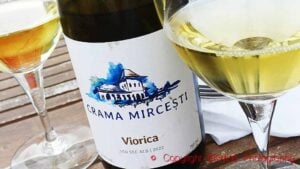
Moldova has several highly interesting local grape varieties that deserve far more attention. Viorica is one of them. It’s a white grape with a big personality, often combining floral and spicy aromas with citrus and sometimes a touch of honey. It can be very aromatic, though not always. It depends entirely on the style the winemaker is aiming for. One of its parents is a red muscat grape, which explains the aromatic character. The other parent is a French hybrid, also red, which is somewhat surprising given that viorica itself is a white grape. We recently tasted this superb wine:
Crama Mircești Viorica Vin Sec Alb 2022
The first thing that strikes you is the high acidity — 8.1 g/l — but this remarkable freshness is beautifully balanced by abundant citrus aromas, a full body, and a slightly floral finish. I really enjoyed this wine. (Note from the editor: and identified it blind as viorica!) It is made from young vines planted in 2020, making this vintage the first.
The winemaker is Arcadie Fosnea, who opened Crama Mircești for visitors in 2020. He built the estate from scratch in the forgotten village of Mircești, 80 km from the capital Chișinău, and created jobs for 40 villagers. The estate includes a small hotel and restaurant. BKWine has visited and can confirm that the food too is delicious and traditionally Moldovan. Arcadie Fosnea learned winemaking in Germany and has worked at Château Vartely, one of Moldova’s top wineries. We have also tasted excellent Viorica wines from Atú Winery and Vinaria Javgur, the latter producing a viorica/pinot grigio blend.
You can find quite a few articles on wine from Moldova on BKWine Magazine here.
This myriad of grape names… but pušipel is one worth remembering (but you probably already know it!)
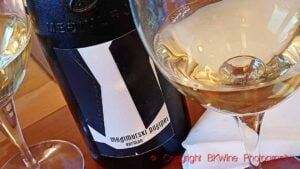
Pušipel doesn’t feel familiar, does it? But if we say furmint instead, the grape behind the fabulous sweet (and dry) wines of Tokaj in Hungary, then it suddenly rings a bell. Grape varieties can have confusingly many different synonyms in different countries, and not only that: within the same country, the same grape can have different names in different regions. We see it in Italy, France, Spain, Portugal… Pušipel was a new grape for me when we drank it the other day. I think furmint is a wonderful variety. Its distinctive features are the high acidity (one reason to love it), citrus aromas, and a good body that often gives a fine mouthfeel.
The wine we drank came from Croatia, and here furmint is called pušipel. But to make things even more confusing, it is also sometimes called moslavac in this country. Significant plantings are found in the district of Međimurje, in the northernmost corner of Croatia bordering Slovenia and Hungary. When Per was in Croatia earlier this year to judge in the Concours Mondial de Bruxelles-CMB Sauvignon Selection he had the opportunity to participate in a big pusipel tasting and was so impressed he brought a few bottles home.
Furmint is also grown in Slovenia, where it goes by the name Šipon. In both Croatia and Slovenia, the grape is almost always made into a dry wine. Whatever name it goes by, it’s a wine worth grabbing when you see it.
Medimurski Pušipel, Vinarija Kerman, Međimurje, Croatia
A very good wine — slightly aromatic, lots of citrus, good mouthfeel and length. Refreshing finish.
New Zealand focus on BKWine Magazine

We have written a lot about New Zealand on BKWine Magazine. This is mainly based on our extensive travel in the New Zealand wine regions. We’ve been going to New Zealand since 2019 and have seen a lot and established some really good contacts. Here’s a selection of some of our best articles:
- Trailblazing in Hawkes Bay, a conversation with the winemaker at Black Barn Vineyards | Per on Forbes
- Around New Zealand with Pinot Noir | Britt on Forbes
- New Zealand is much more than just sauvignon blanc
- Felton Road: quality Pinot Noir from Central Otago, New Zealand | Britt on Forbes
- New Zealand pioneer Unison Vineyard interprets Gimblett Gravels terroir | Britt on Forbes
- Jenny Dobson, legendary Kiwi winemaker, talks about changes and challenges in New Zealand | Britt on Forbes
- New Zealand, a “new” wine country with a great future enters a new phase says Emma Jenkins MW | Britt on Forbes
If you’re interested in New Zealand wine you should definitely consider coming on the BKWine tour of the country. You too will meet some of these living legends too.
–
Travel: Come on a wine tour to New Zealand with BKWine.
See: See pictures and videos from New Zealand in the latest wine tour’s Facebook group.
—
Features of the Month
—
Articles and features published on BKWine Magazine and on our wine travel blog and (occasionally) photography blog in the last month.
—
Where to eat in Auckland? Restaurant recommendations for when you come to New Zealand
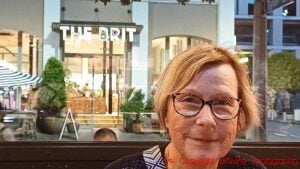
Auckland has no shortage of restaurants, but finding the right place for a relaxed dinner in the city centre can be surprisingly difficult. The waterfront and harbour is full of restaurants, some with great views, but many are busy, noisy and touristy. Not our style. Instead, this guide gives you our personal recommendations to places that have good food, comfortable and calm atmosphere and are within walking distance. In addition to those we have tried ourselves, we give you some more that look like promising candidates for a future visit on our next wine tour in New Zealand. We have also included a few wine bars. This list will give you a good wine and food start to your tour of the country (hopefully on the BKWine New Zealand wine tour).
As a bonus, you get some pictures from the city of Auckland.
Read more in Per’s article on BKWine’s Travel Blog: Where to eat in Auckland? Restaurant recommendations, New Zealand.
BOOK YOUR NEW ZEALAND WINE TOUR NOW. AN UNFORGETTABLE AND FABULOUS WINE TOUR.
–
Travel: Come on a wine tour to New Zealand with BKWine.
See: See pictures and videos from New Zealand in the latest wine tour’s Facebook group.
How you make your (wine) travel in Italy (or other wine regions) even better, travel and restaurant tips: “Sip Easy”
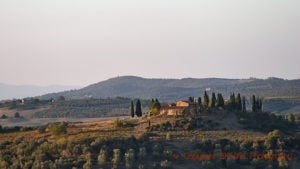
Most of us have felt it: standing in front of a restaurant wine list in Italy, utterly overwhelmed, or wandering in front of a wine shop shelf full of unfamiliar names. Elisabetta Tosi’s new book “Sip Easy” tackles exactly that problem, but not in the way you’d expect. This isn’t another book about grape varieties, appellations, or regional facts. Instead, it’s a practical survival kit for actually enjoying wine on the ground: what to say, how to order, when to trust the waiter, and why the wines you loved on holiday might not be there on your local market (but that’s okay). Per reviews the book, finding in it much of the same philosophy he brings to his own wine travels and wine tours: be curious, seek out the unfamiliar, and trust the place. Tosi’s advice, he notes, works just as well in France or Spain as it does in Italy.
Read more in Per’s article on BKWine’s Travel Blog, originally published on Forbes: How to make the most of your wine tour to Italy (or elsewhere) | Per on Forbes.
I asked winemakers about the current wine crisis: some surprising answers | Per on Forbes

Every week seems to bring another gloomy headline about wine. Consumption is falling. Vineyards are being uprooted. Climate change is rewriting the rules of winegrowing. It seems the wine world is facing an existential crisis. But is that really how the people who make wine see it? Reports and industry statistics paint a picture that is not quite what I see when travelling to wine regions around the world with our wine tours. Time to investigate! So, I put the same question to the people living this challenge every day: fifteen winemakers and wine people on five continents, “Do you personally see ‘the wine crisis,’ and, if so, what should be done about it?” Their answers were far more nuanced—and often far more optimistic. Most see challenges, yes. But few spoke of despair. Instead, they talked about adaptation, quality, sustainability, new markets, consumer tastes. A refreshingly different perspective from the usual headlines. Here’s what the people living “the wine crisis” told me.
Read more in Per’s article on BKWine Magazine, originally published on Forbes: I asked winemakers about the current wine crisis: some surprising answers | Per on Forbes.
A new – and different? – generation wine drinkers
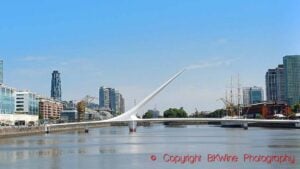
Argentinians drink only a fraction as much wine as they did a few decades back. The wine bottle is not a given on the family dining table. Is it terminal decline? A week in Buenos Aires paints a very different picture, much more positive. Wine bar after wine bar prominently displayed and served wine on crowded sidewalk seatings. Young people were chatting and drinking. But not the same wines, nor in the same way as their parents and grandparents. BKWine Magazine contributor Guido Spina spent a week immersed in the Buenos Aires scene and discovered the future might look brighter than we think for wine.
The story is much more generally applicable than just for Argentina. How do you see it?
Ed.: With this article, we introduce Guido Spina as a new contributor to BKWine Magazine. Guido is Argentinean and lives in Patagonia.
Read more in Guido Spina’s article on BKWine Magazine: Argentina No Longer Drinks Wine the Way It Used To – a Generation Shift With Cause for Hope?
–
Travel: Come on a wine tour to Chile and Argentina with BKWine.
See: See pictures and videos from Chile and Argentina in the latest wine tour’s Facebook group.
Unusual grapes, excellent wines, from Piedmont and Silvia Barbaglia
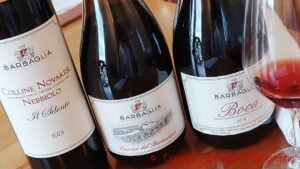
Just two hours north of the Langhe, the vineyards of Alto Piemonte offer a very different side of Piedmont. In the tiny DOC of Boca, Silvia Barbaglia is helping to revive a historic wine region, working with nebbiolo, vespolina and other unusual local varieties. Here she makes distinctive, elegant wines from the foothills of the Alps. We tasted some of her very original wines. Britt tells the story.
Read more in Britt’s article on BKWine Magazine: Silvia Barbaglia in Alto Piemonte, Wines from the Foothills of the Alps.
Island Wines Summit Tenerife 2026: Do wines made on Islands share a distinct identity? | Britt on Forbes

“In June, I attended the Island Wines Summit Tenerife 2026, a conference designed to shine a spotlight on wines made on islands. The event attracted many exciting winegrowers from islands, mainly in the Mediterranean and the Atlantic. But what do wines from islands actually have in common, if anything? I asked myself that question before I left. And I got answers, some expected, others more surprising.”
Read more in Britt’s article on BKWine Magazine, originally published on Forbes: Island Wines Summit Tenerife 2026: Do wines made on Islands share a distinct identity? | Britt on Forbes.
Will Ramiro Ibáñez give sherry the renaissance it deserves?
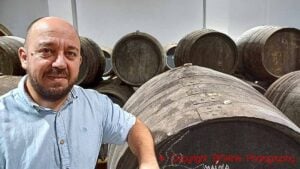
We all love sherry. It is one of the world’s great wines. But do we drink it? Not very often. Is that because it is a fortified wine, which is a bit out of fashion? Or is it because we all associate it with some old aunt who kept the sweet stuff in a cupboard? (Which is wrong. Today, most sherry is dry, very dry.) Ramiro Ibáñez is a pioneering wine producer in Jerez who thinks the way forward is to make more unfortified wine, as in the Douro Valley, while still making top-level fortified sherry. We met Ramiro Ibáñez in his Jerez cellar.
Read more in Britt’s article on BKWine Magazine, originally published on Forbes: A great wine’s revival? Ramiro Ibáñez’ unfortified wines at Cota 45 in Jerez | Britt on Forbes.
BKWine interviewed in Metro UK about the heatwave’s effect on vineyards
At the end of June, we wrote an in-depth article about the heat-wave’s effect on vineyards. Large parts of Europe have been hit by exceptional weather this year.
We explained that the heat can lead to problems in many ways, drought, burnt grapes, imbalance, immaturity and over-ripeness and a lot more.
It was a theme that interested the English publication Metro, so they called us and asked for an interview with Per, which we were happy to do.
Read more in Per’s article on BKWine Magazine: BKWine interviewed in Metro UK about the heatwave’s effect on vineyards.
Island Wines Summit Part 2: The producers who make wines from islands feel different | Britt on Forbes
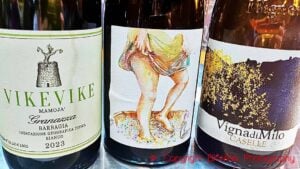
“At the Island Wine Summit in Tenerife in June, I tasted some excellent wines from islands in the Mediterranean and the North Atlantic Ocean (see part 1 for an introduction). The winemakers here mostly work with indigenous grape varieties, and they are passionate about keeping the terroir character of their specific island vineyards.”
Read more in Britt’s article on BKWine Magazine, originally published on Forbes: Island Wines Summit Part 2: The producers who make wines from islands feel different | Britt on Forbes.
More myths and misunderstandings about champagne and Champagne | Per on Forbes

Do you care more about the name on the label or the taste of the contents? I’m sure it’s the latter. Sometimes it is difficult to rid oneself of “received wisdom”, though, which gets in the way of really appreciating the wine. Champagne, in particular, as well as other sparkling wines, are more than most subject to these misunderstandings and myths. Serve it from an ice bucket. Drink it from a pretty and tall glass. Ultimate luxury is vintage. Champagne is always from Champagne. And, of course, champagne is the world’s best sparkling wine. If you look closely, none of this is really true. Let’s dig into these myths and free you to enjoy your glass(es) of bubbly even more.
Read more in Per’s article on BKWine Magazine, originally published on Forbes: Five more myths about champagne, with a bonus | Per on Forbes.
–
Travel: Come on a wine tour to Champagne and Burgundy with BKWine. (PS: We’ve written a prize-winning book on Champagne and one on Burgundy.)
—
Wine Tours
—
Details on our current and future wine tours. Book a wine tour with the “World’s Top Wine Tour Operator” today (or when you feel like travelling to wine country).
Treat yourself to an unforgettable experience in the beautiful wine-lands together with some of the most knowledgeable wine people around. Book now!
—
Private tastings, luxury meals, personal visits, a wine tour like no other — in Bordeaux with BKWine *

URGENT! BOOK NOW!
Bordeaux is admired but also endlessly discussed. Actually, Bordeaux is changing along with consumer preferences and to adapt to a warmer climate. This is a slow process, but you can already easily find high-quality Bordeaux wines meant to be enjoyed earlier, without requiring a deep cellar or decades of patience. On this tour, we invite you to get to know different aspects of Bordeaux, the big and famous and the small, family‑run estates where you meet the people behind the wines. We visit some of the region’s iconic châteaux: Château Lascombes, Château Beychevelle, and Château Haut‑Bailly, among others. We will stop in Sauternes for a memorable lunch at a Michelin‑starred restaurant, and several other meals will be hosted in private salons at the châteaux. The gastronomy on this Bordeaux tour is exceptional and perfectly paired with the wines.
On the tour, you will get to know Médoc, Graves, Sauternes, Saint‑Émilion, and Entre‑Deux‑Mers, five regions with very different characters.
Enjoy châteaux lunches, exquisite wines and that special feeling of being in the middle of one of the world’s most dynamic wine regions.
Come and discover French wine and food in Bordeaux on this luxurious wine tour with BKWine, one of the world’s leading wine tour operators (*).
(*) And the only one who has authored 13 award-winning wine books, one of which is on Bordeaux wines.
We can add that we have also written an award-winning book about Bordeaux.
Immerse yourself and learn all you can wish for in Burgundy and Champagne | an exceptional behind-the-scenes wine tour *

URGENT! BOOK NOW!
Even if you know that Burgundy produces some of the world’s most expensive wines, it has a way of feeling unpretentious. Everything seems scaled down: small cellars, modest equipment, simple tasting rooms. But from these places that look anything but extravagant, some of the world’s most sought-after wines are made. During our days in the Côte d’Or, you’ll see for yourself that world‑class wines don’t need a grand cellar.
We’ll taste exceptional wines, including premier cru and grand cru, alongside classic Burgundian dishes, often rooted in traditional home cooking. The combination is remarkable, and our six‑grand‑cru lunch is something exceptional you won’t forget.(They make a special effort when BKWine arrives with guests!)
After Burgundy, we go north. We make a quick stop in Chablis, the region known for its crisp chardonnay wines, and then we continue to Reims, the capital of Champagne. Being here makes you realise how many different styles of champagnes there are. Various rules govern the production of champagne, but there are still many ways for the producers to make a champagne the way they want it. Conversations with the producers offer insights you can’t get from books; their stories, their challenges, and their passion bring the region to life.
Join us for a behind‑the‑scenes deep dive on this Burgundy-Champagne tour, where we also enjoy some truly delicious lunches, always accompanied by top-quality Burgundy or different styles of Champagne.
Come on this exceptional tour to two of the world’s most respected wine regions with BKWine, one of the world’s leading wine tour operators (*).
Book now!
(*) And the only one who has authored 13 award-winning wine books.
Get to Know South American wines in their true environment | Wine Tour to Argentina and Chile

VERY FEW PLACES LEFT ON THIS TOUR.
The reason for going on a wine tour is, of course, to taste good wines and to discover new ones. But just as important, we think, is that wine, when experienced in the place where it is made, falls into context in a completely different way than when you drink it at home. That place, that context, those people you’ve met, stay with you later, when you’re back home enjoying a malbec or a torrontés from Argentina, or a cabernet sauvignon or a carmenère from Chile.
Equally magnificent are the landscapes we encounter during our journey through these two countries. We see how the vines have adapted to their surroundings: the dry climate and heat in Mendoza, or the cool ocean winds along the Chilean Pacific coast.
Wine is, of course, the main focus of the tour. We taste at wineries, and during our vineyard lunches we continue tasting, but now together with gourmet food. Perhaps the wines will feel different, perhaps even better; food and wine are always at their best together. Everyone will undoubtedly discover new favourite wines.
But the tour is far from just about wine and fine dining. We meet in Buenos Aires where we learn the tango steps (by watching others, not by dancing ourselves. But the enthusiast can always find a milonga!). We end the tour in Santiago de Chile. Two big cities that are completely different. So it is with the two countries as well. Argentina and Chile lie close to each other but feel very different. Join us on the tour and discover these differences up close. We travel by bus over the Andes — that alone is an experience, actually worth a trip on its own! We travel to beautiful Colchagua in Chile and visit the port city of Valparaíso and Viña del Mar. And much more.
This is a chance to experience two dynamic wine countries in one unforgettable wine tour.
You will travel with both Britt and Per on this tour, two world-leading authorities on wine and wine travel, authors of 13 award-winning wine books.
Come on this exciting wine tour to Argentina and Chile with BKWine, one of the world’s leading wine tour operators (*).
Book now!
Very few places left.
(*) And the only one who has authored 13 award-winning wine books.
More inspiration: You can get an even better feeling for what you will experience on this tour if you visit the latest tour’s own Facebook group. Lots of pictures and videos from the tour: See pictures and videos from Chile and Argentina in the latest wine tour’s Facebook group.
A wonderful tour through wine regions, a myriad of landscapes and local flavours | wine tour New Zealand
URGENT! Book now!
Our wine tour in New Zealand takes you on a journey through the key wine regions of the country, in fact, almost all of them. Wine is the centre piece of our tour, of course, but we will experience many other things, such as glacial lakes, Māori culture, local food, geysers, mud pools (!), boat journeys and more. And since our bus will take us all the way from Auckland to Queenstown, we will have ample time to admire the ever-changing landscape.
Amazing vineyard lunches are part of the tour, with lamb, seafood (we will stop in Kaikoura for their famous crayfish, aka New Zealand lobster), salmon and celebrated cheeses. And other delicacies. New Zealand is famous for its sheep and, consequently, for its sheep dogs. We will get to know some of them together with one of the country’s top dog handlers. Quite stunning.
From the North Island, we cross the Cook Strait by boat, a memorable boat ride that is not only a transfer. Here you have to watch out for dolphins and gannets. And the majestic albatrosses if we’re lucky. We dock at Picton on the South Island, close to the biggest wine region, Marlborough. Sauvignon blanc dominates, but the region’s pinot noir and riesling are increasingly getting attention. Further south we will admire the Southern Alps and we will make a stop at the Mount Cook national park. Our last stop will be in Central Otago with is dramatic landscape and gold-digging history. Here, pinot noir gets flavours different from anywhere else. World class.
Join us on this adventure and discover a different wine country, far away. We promise you many surprises. Good ones!
You will travel with both Britt and Per on this tour, two world-leading authorities on wine and wine travel, authors of 13 award-winning wine books.
Come on this stunning wine tour to New Zealand with BKWine, one of the world’s leading wine tour operators (*).
Book now!
Watch this introductory video about our New Zealand wine tour.
(*) And the only one who has authored 13 award-winning wine books.
More inspiration: You can get an even better feeling for what you will experience on this tour if you visit the latest tour’s own Facebook group. Lots of pictures and videos from the tour: See pictures and videos from New Zealand in the latest wine tour’s Facebook group.