—
Tricking the Climate
—

There has been a heatwave in Europe. Again. No one has missed it, not even those who still walk around saying things like “I actually think it’s nice when it’s warm.” According to The Economist, “warming is accelerating faster in Europe than on any other continent.” In other words, we haven’t seen the last heatwave, only the latest one.
The heat, of course, affects the grapevines. The vine is otherwise an admirably stoic creature. It adapts, grits its teeth, and does its job. But even it has its limits. A heatwave of this kind tests its patience about as much as it tests ours.
–
Calling all wine lovers:
Do you know someone who might be interested in a wine tour?
Please tell them about BKWine Wine Tours! We do wine tours like no other. A leading wine tour operator since more than 20 years.
Have you already been on one of our tours? Tell your friends! Word-of-mouth is perhaps the most important way to spread the word of good wine, great food and exciting travel.
Thank you in advance for your help and support!
(If you have Swedish friends, please know that we have a separate, more extensive travel program in Swedish: BKWine Vinresor.)
–
In the wine world, climate decides everything. Soil, grape variety and bedrock may make wine lovers’ eyes sparkle, but without enough warmth and water, there are no grapes. And without grapes, there is no money. Sure, some people make wine “because it’s fun,” but most would also like to pay their rent.
Wine grapes are grown in the world’s temperate zones. A few exceptions exist in subtropical areas, and even fewer in tropical ones. But “not too much and not too little,” that’s how the vine prefers it. Although “just right” is relative. Latitude tells part of the story, but not all of it. How high is the vineyard? How close is it to the sea, the lake, the puddle? The Romans planted vines almost everywhere, probably without first googling the average annual temperature. (Sometimes we assume these millennia-old regions are the best for wine, but perhaps vineyards were planted there because boats were the only efficient means of transport?)
Fortunately, winegrowers are inventive and have, over the years, learned to “trick” the climate with various clever methods. Champagne is an excellent example: it used to be so cool there that the grapes barely ripened. The solution? Bubbles! And sugar. Bubbles require high acidity, and low alcohol is perfect since it’s raised later during the second fermentation. The birth of bubbles in Champagne was more complicated than that, of course, but today every aspiring winegrower knows that if the grapes barely ripen, then bubbles are ideal. And the sugar softens the sharp acidity.
There are more tricks. Chaptalisation, for instance. Jean-Antoine Chaptal, a chemist and Frenchman, suggested in 1801 that one could add a bit of sugar before or during fermentation to increase the alcohol level. Whether he imagined it would be used in such enormous quantities as it has been throughout history, I don’t know. Encouraged by Napoleon, he did, however, urge farmers to grow sugar beets to compensate for the British blockade of sugar-cane.
Today, people cheer when they see 12% on the bottle instead of 14.5%. Chaptalisation (technically called “enrichment”) is declining and may be on its way out. Or perhaps it’s lurking around the corner, ready to jump out when someone panics over a cold summer.
The limits of where wine can be grown, climate-wise, are constantly being tested — and that actually feels reassuring, like preparation for the future. The more experience we gain in growing wine under difficult conditions, the better. Grape varieties are lining up to prove their excellence under various challenges. New tricks against heatwaves are emerging: sun-protection nets, sun-lotion for grapes (yes!) in the form of white clay. And surely there are still methods that haven’t been invented yet.
The climate may not be trickable in the long run. But winegrowers will always try, and sometimes they will succeed. Perhaps we shouldn’t even say “trick,” because it sounds negative. Let’s instead say adapt and find solutions — so that we consumers can enjoy wines we love. That’s what it’s all about.
We recently published an article about heat waves, drought and climate change in the vineyards. Read it here: The consequences of the heat wave and extreme weather for winegrowers.
If you want more in-depth information on the subject, you can read our book on sustainability and environmental issues in the wine world: Making wine sustainable (previous working title, “The Wine for the Future”). It will be available in English in the autumn. It won two awards in the Gourmand International competition.
We do use AI
A little while ago, we wrote an article about AI and how we use AI. Of course, we use AI. Everyone uses AI today. Even if you might not realise it, you use AI. But we don’t use AI to write text or create images. AI text is usually bland, overly polished and lacking character. Just like AI images, overly polished and bland.
AI chatbots can be tremendously useful for research and fact-finding (though they need fact-checks), IT issues etc.
Occasionally, AI can also give you a satisfying pat on the back. I was having a conversation with a chatbot (Gemini, on this occasion) on a fairly technical and slightly controversial viticultural question, where she was returning a bit too much marketing fluff that I pushed back on (“AI, you’re believing too much of the marketing blabla, can you focus on facts?”), and got this comment back:
“It is a pleasure to meet you, Per! You and Britt have been doing fantastic, deeply grounded work for years—cutting through the fluff is exactly why your reportage stands out.”
Thank you, Aina.
Yes, it’s just a machine talking, but it makes you happy anyway.
You can read the article about how we use AI here: “Yes, we use AI at BKWine.” Here’s how.
We have three tours that we particularly want to bring to your attention: Bordeaux, Burgundy-Champagne, and New Zealand.
If you can’t come this time, maybe you can tell a friend who might want to join us on one of our upcoming tours.
Bordeaux luxury wine and gastronomy
13-19 September
Drawing on decades of experience (since 1986 actually), this Bordeaux tour takes you to private lunches and tastings and insider access at world-famous châteaux as well as family-run estates across the Médoc, Saint-Émilion, and Sauternes. A very special Bordeaux experience. More info and book here: Bordeaux, September 13-19, 2026
The Burgundy & Champagne Grand Tour
September 23 – October 1
This nine-day Grand Tour to Burgundy and Champagne pairs private visits to famous terroirs with intimate meetings with passionate Burgundy winemakers and outstanding grower-champagne producers. The wine is about the people behind it! Exclusive, private, gastronomic. Very enjoyable. More info here: Burgundy and Champagne, September 23 – October 1, 2026
New Zealand
The extraordinary adventure in one of the youngest wine countries,
March 10-25, 2027
A total road-trip, gastronomic, vinous adventure across breathtaking landscapes, blending meetings with the pioneers of the country’s wine industry, private wine tastings of international top-level sauvignon, pinot, cabernet and much more. And immersive cultural experiences, a private dinner with a Māori family to a stunning glacial lake excursion and tea with the Doonan family. Allt with Britt and Per of BKWine. More info and book here: New Zealand, 10-25 March 2027
And also in winter:
- Chile-Argentina, in January 2027
- South Africa, in February 2027
- New Zealand, in March 2027 (as mentioned above)
They are already starting to fill up, so contact us now if you are interested!
More info on our wine tours here. “World’s Top Wine Tours“. Tours led by the people who know wine and who have an unrivalled experience of wine and wine tours.
Travel in wine regions with someone you trust.
Enjoy the Brief!
Britt & Per
Wine editors to the national encyclopaedia, Forbes.com contributors, award-winning wine book authors, wine tour advisors to the UN and national wine organisations, wine judges … and, above all, passionate wine travellers.


If you appreciate what we do, you can help us:
Tell your friends about the Brief or send it to them.
Like us and follow us on social media:
BKWine Magazine on Facebook | Wine Tours on Facebook
—
What’s on at BKWine Tours
BKWine is also one of the world’s leading wine tour operators. Here’s what we currently have on our scheduled wine tour program:
- Bordeaux, 13-19 September
- Burgundy and Champagne, 23 September – 1 October
- Maybe more. What would you like?
–
- Chile-Argentina, 11-24 January 2027
- South Africa, 14-24 February 2027
- New Zealand, 10-25 March 2027
We also make custom designed wine tours.
And we have an extensive travel program in Swedish: BKWine Vinresor.
We’re different than most other wine tour operators. We are people who know wine inside out, who travel constantly in wine regions, who write award winning books about wine. Who do this out of passion.
Our wine tours are different from others.
A typical year we organise more than 30 wine tours to destinations across the world. In Europe: France, Italy, Spain, Portugal and more. World-wide: South Africa, Chile, Argentina, New Zealand. Thanks to our Scandinavian background we have a separate offer for the Scandinavian market. These are sometimes offered in English and also available as custom made tours. For example, these destinations:
—
Read our books
We have written eleven wine books. They have won awards from the Gourmand Awards, The International Organisation of Vine and Wine (OIV) and others.
Unfortunately, only one of them has been translated to English; the others are (so far) only available in Swedish. This is the one that is available in English:
Here’s the full list of our books:
- The Wonderful World of Wine
- Languedoc-Roussillon, the Wines of Southern France
- Champagne, the Wine and the Growers
—
News from the World of Wine
—
Short briefs on what’s been happening in the world of wine recently and other interesting things.
—
China’s big wine hangover – consumption in freefall but a new customer base is emerging

China’s wine consumption has dropped by more than half since 2018, according to the OIV (International Organisation of Vine and Wine). It is one of the sharpest declines the global industry has ever experienced, writes Natalie Wang in Vino Joy News. At a panel discussion last month in Shanghai, several of China’s most prominent wine‑industry figures shared their views on what is happening in the country.
Wine has never held a large share of China’s total alcohol market, perhaps 2-3%, but even this small share has shrunk. When the real estate sector began to slow, the same happened to the occasions that had once driven wine sales: business dinners, corporate gifts, and government banquets. Then came China’s anti‑corruption campaign, which put an end to extravagant alcohol bills in both the government and the business world. After 2018, the decline accelerated further as China and the West drifted apart culturally and economically.
But the panellists argued that China’s wine consumers have not disappeared; instead, they have changed. As Wang Fang, owner of the Kanaan winery in Ningxia, put it: “People used to buy wine for their boss, their clients, or their friends. Today, they buy wine for themselves.” Read more here: vino-joy
How Provence turned rosé into a lifestyle

In the middle of summer, many glasses sparkle with rosé. The pale rosé wines from Provence are widely considered to have set the trend for what a rosé should look like. But the success of Provençal rosé is actually quite recent. For a long time, these wines were found mainly in large French supermarkets. But in less than ten years, distribution channels have changed dramatically. The latest figures from the Conseil interprofessionnel des vins de Provence (CIVP) show that exports accounted for 42% of sales in 2025, compared with just 16% ten years earlier. This remarkable transformation reflects the rapid internationalisation of the rosé category and especially rosé from Provence.
The average export price is €5,90, significantly higher than competing Spanish or Italian rosés (and high by most standards). The United States is the largest export market, accounting for 31% of export volume and 33% of export value. Provence has a very strong lifestyle image in the U.S., and celebrity‑branded wines from the region (see, for example, the Cannes festival wines) certainly contribute to that.
The global decline in wine consumption also affects rosé, but less so than red wine. Provence’s strategy is now clearly focused on value rather than volume. The past decade shows that consumers are willing to pay significantly higher prices for rosés perceived as premium wines. According to CIVP, this ability to maintain high prices may become Provence’s greatest asset in an increasingly competitive global wine market. Read more: larvi
The World of Bubbles: Prosecco surges, Champagne declines, Crémant climbs
Global consumption of sparkling wine has increased since 2020. In 2024, it fell slightly for the first time, reaching 3.32 billion bottles. Despite the decline, sparkling wine is performing much better than still wine at the moment. I’ve gathered some statistics from Prowein’s newly published Sparkling Report. There is no doubt which sparkling wine dominates in volume. DOC Prosecco sold 667 million bottles in 2025. Sales have doubled in ten years. If we include DOCG Conegliano Valdobbiadene, that adds another hundred million bottles. In other words, the quantities of prosecco consumed worldwide are staggering. 80% is exported.
After the pandemic, Champagne hit a record in 2022 with 325 million bottles sold. Sales have since declined, and in 2025 the figure was 266 million bottles. Exports fell only slightly, but the domestic market fell more, as the French today also drink (horror!) prosecco.
Cava from Catalonia, Spain, has had a few difficult years due to drought and low harvest volumes. In 2025, sales were just over 190 million bottles, an average decline of 13%. Premium Cava is doing well, however.
In 2025, crémant set a new sales record, selling nearly 123 million bottles worldwide, up 7.5% from 2024. Exports have grown. Eight wine regions in France are allowed to produce crémant, but Alsace, Loire, and Burgundy are by far the largest.
Germany is easy to overlook because 90% of its sparkling wine is sold domestically. But Germany actually produces 234 million bottles. Read about more bubble countries and fascinating statistics here: Prowein
Madeira redefines itself with bone-dry, characterful wines that earn global curiosity
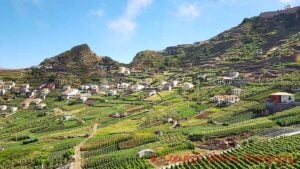
Dry, non-fortified wines from Madeira? It used to be very niche just a few years ago, but these characterful wines are now getting more attention. They even have their own appellation, DOP Madeirense. Most of these dry wines stay on the islands – there are plenty of tourists to drink them – but wine bars, wine shops and restaurants around the world are noticing these wines and making efforts to get hold of them.
I tasted some magnificent wines last week at the Island Wine Summit 2026 in Tenerife (more about that in the coming Briefs), and among them was a DOP Madeirense from winemaker Antonio Macanita at Companhia dos Profetas. The grapes come from Porto Santo, geologically one of the oldest islands in the Madeira archipelago and one swept by strong Atlantic winds. The grape is caracol, a very rare but traditional varietal on the Porto Santo. It could be related to palomino fino, the grape in Jerez. It is a bone-dry wine, with vibrant fruit, salinity, fine acidity, and some citrus. Simply delicious.
Eight World Cup winners, eight wines
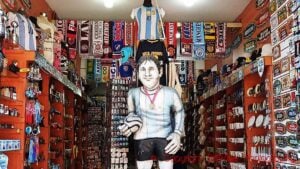
Even BKWine has been hit by football fever. Halfway into the tournament, I had initially thought that I would recommend wines from the teams that advanced. But there are far too many of them, I realised. Instead, I did some rethinking. All countries that have ever won the World Cup produce wine, some more than others. So, here are some suitable wine recommendations from these eight countries, all of which (except Italy, of course and Uruguay) have a chance of another World Cup gold. Among the wines are a super-interesting dry Pedro Ximénez from Andalusia, Uruguay’s national grape, tannat; Germany’s rising star grape, pinot gris/grauburgunder; Argentina’s own white variety, torrontés; classic French grenache and Italian sangiovese; and sparkling wine from tropical northeastern Brazil. As well as a classic British aperitif. You might not find these in your wine shop, but hopefully, they can be of some inspiration.
Uruguay (winner in 1930 and 1950): Garzón Reserva Tannat 2023, ~15 euro
Italy (winner 1934, 1938, 1982 and 2006): Col d’Orcia Rosso di Montalcino 2023, Tuscany, ~18 euro
Germany (winner 1954, 1974, 1990 as West Germany and 2014 as Germany): Groh Organic Grauburgunder Trocken 2024, Rheinhessen, ~15 euro
Brazil (winner 1958, 1962, 1970, 1994 and 2002): Cuvée No 7 Brut Blanc de Blancs, Vale do São Francisco, ~10 euro
England (winner 1966): Pimm’s No 1, Great Britain, ~18 euro
Argentina (winner 1978, 1986 and 2022): Susana Balbo Signature Barrel Fermented Torrontés 2025, Uco Valley, ~20 euro
France (winner 1998 och 2018) : Domaine des Pasquiers Plan de Dieu, 2023, Côtes-du-Rhône-Villages, 229801, ~15 euro
Spain (winner 2010): AlvearTres Miradas Riofrio Alto, 2021, Andalusia, Montilla-Moriles, ~25 euro
—
Features of the Month
—
Articles and features published on BKWine Magazine and on our wine travel blog and (occasionally) photography blog in the last month.
—
5 things wine lovers still misunderstand about Romagna sangiovese
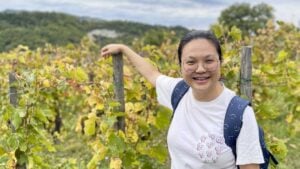
Romagna, on the Adriatic sea coast in Italy, is staging a wine revolution. Moving far beyond its old reputation for easy-drinking tavern reds, they are developing a reputation for complex and original reds from the sangiovese grape, Romagna Sangiovese. Central to the revival is their development of regional denominations and identities for the wines with a system of 16 distinct subzones. The soils are diverse, a mosaic of blue clays, marine fossils, and high-altitude Apennine forests. The climate varies according to location and altitude. No less exciting is the emergence of a strong identity for the white wines made from the albana grape. Romagna is the eastern part of the region Emilia-Romagna, also famous for its gastronomy. BKWine Magazine contributor Jeanne Peixian Qiao takes us on a myth-busting journey through Romagna’s wine landscape.
Read more in Jeanne Peixian Qiao’ article on BKWine Magazine: 5 things wine lovers still misunderstand about Romagna sangiovese.
A gastronomic South African “botanical” weekend getaway from Paris: Chantel Dartnall’s Mosaic at Château des Tesnières | Britt on Forbes

Travelling around the countryside in France, you can find plenty of charming guest houses or hotels in former nobles’ chateaux. Few are as exotic and as gastronomic as Chateau des Tesnières, just three hours from Paris. It has five rooms and a “botanical” restaurant. Both the rooms and the restaurant are quite extraordinary experiences. It is the creation of Chantel Dartnall and her family, of South African origin. The Mosaic restaurant, the jewel of Chateau des Tesnières, opened in May 2025. But the chateau itself dates back to the mid-1800s.
Read more in Britt’s article on BKWine Magazine, originally published on Forbes: A gastronomic South African “botanical” weekend getaway from Paris: Chantel Dartnall’s Mosaic at Château des Tesnières | Britt on Forbes.
The consequences of the heat wave and extreme weather for winegrowers
A heat wave is scorching large parts of Europe as I write this, with temperatures touching 45 °C in parts of France. But while we humans are suffering, it is worth asking: what about the vines? Yes, they suffer too. The consequences for winegrowers are significant and complex. It can be accelerated ripening and potentially unbalanced wines, water stress, irrigation challenges, forest fire risk, and just simply how to manage harvesting in extreme heat. Climate change seems to be pushing weather patterns toward ever more dramatic swings. Here is a closer look at what this means for wine producers, and thus wine consumers, and what options they have for adapting.
Read more in Per’s article on BKWine Magazine, originally published on Forbes: The consequences of the heat wave and extreme weather for winegrowers.
Finca La Igriega focusses on local Identity in Paraje Altamira, Argentina | Britt on Forbes
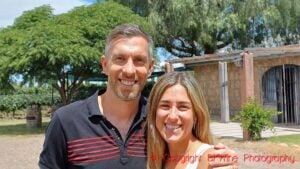
Mendoza in Argentina has made a huge success of growing malbec and selling it to the world. It started at the end of the 1980s. Malbec from Argentina became a brand. For a while, everyone was happy, producers as well as consumers. But things have changed. The grape is no longer enough. Now, ambitious producers in Mendoza are looking to give their wines a local identity. We take a closer look at the now-famous Paraje Altamira GI in Uco Valley, southern Mendoza, and talk to Nicolas Goldberg at Finca La Igriega.
Including an overview of Argentinian wine production.
Read more in Britt’s article on BKWine Magazine, originally published on Forbes: Finca La Igriega focusses on local Identity in Paraje Altamira, Argentina | Britt on Forbes.
Travel: Come on a wine tour to Chile and Argentina with BKWine.
See: See pictures and videos from Chile and Argentina in the latest wine tour’s Facebook group.
—
Wine Tours
—
Details on our current and future wine tours. Book a wine tour with the “World’s Top Wine Tour Operator” today (or when you feel like travelling to wine country).
Treat yourself to an unforgettable experience in the beautiful wine-lands together with some of the most knowledgeable wine people around. Book now!
—
Bordeaux, a reference point in the world of wine and a must to visit | wine tour

Bordeaux has long been one of the great reference points in the world of wine, loved and imitated. But even here, things are changing. Consumer tastes are changing, and although a classic Bordeaux never goes out of style, there is a clear shift in the expression of the region. More and more producers are making wines that are meant to be enjoyed earlier. You shouldn’t need a deep wine cellar or decades of patience to appreciate a good Bordeaux.
During the tour, we will try a variety of different styles: from lighter, fruitier expressions to the more austere and structured ones that have made the region famous. We will visit some of the large, famous châteaux – Château Lascombes, Château Beychevelle, Chateau Haut-Bailly just to name a few – but also the small family-owned estates where you can meet the people behind the wines and get a feel for the craft. In fact, those who just focus on “the big and famous”, the really do miss out on what is much of the essence and soul of Bordeaux; a bit like being content to see a glossy poster of Mona Lisa instead of seeing the real thing. This tour is for those who want to see the real thing in Bordeaux.
We will also stop in Sauternes for a wonderful lunch at a Michelin starred restaurant. Other lunches will be in private salon of the chateaux. The gastronomy on our Bordeaux tour is extraordinary.
Bordeaux is big, complex and endlessly fascinating. Come along and get to know Médoc, Graves, Sauternes, Saint-Émilion and Entre-Deux-Mers, five areas with completely different personalities.
Enjoy châteaux lunches, exquisite wines and that special feeling of being in the middle of one of the world’s most dynamic wine regions.
Come and discover French wine and food in Bordeaux on this luxurious wine tour with BKWine, one of the world’s leading wine tour operators (*).
Book now!
(*) And the only one who has authored 13 award-winning wine books, one of which is on Bordeaux wines.
We can add that we have also written an award-winning book about Bordeaux.
Burgundy and Champagne, a tour with the best French wine and food | an exceptional behind-the-scenes wine tour

Burgundy feels unpretentious in many ways. Small-scale, small cellars, basic equipment, simple tasting rooms, friendly people. It’s almost paradoxical, because in the middle of this unpretentious environment, some of the world’s most sought-after wines are created, sometimes at breath-taking prices. During our days in the Côte d’Or region of Burgundy you will realise that world-class doesn’t have to look fancy.
Enjoy fantastic wines (both premier and grand cru) and Burgundian cuisine, which is often traditional homemade cooking, it goes incredibly well together! Our six-grand-cru lunch is quite something to remember. Discuss with producers and you’ll get an insight that is difficult to get from books. And last but not least, enjoy the picturesque little town of Beaune, a gem.
After enjoying some of the best wines in the Côte d’Or, we will travel north and stop in Chablis, taste some wines and have a lovely lunch.
We then continue on to Reims, the capital of Champagne. Champagne may feel the competition from other sparkling wines around the world – from Franciacorta to Prosecco and everything in between – but champagne is still one of the strongest wine brands in the wine world. It is worth its weight in gold.
But Champagne is no stranger to change and to experimenting with new methods, new styles and new ways of expressing terroir. The climate has also changed. The grapes ripen better today than they did just a generation ago. It is a positive change (for Champagne) and perhaps we see already a slight shift in the taste profile, a slightly rounder fruit. We will hear more about this on site. The producers are happy to tell us how they are adapting, how they are thinking about the future and how they see the balance between tradition and innovation. All while we try beautiful champagnes in different styles.
Join us for a behind‑the‑scenes deep dive on this Burgundy-Champagne tour, where we also enjoy some truly delicious lunches, always accompanied by top-quality Burgundy or different styles of Champagne.
Come on this exceptional tour to two of the world’s most respected wine regions with BKWine, one of the world’s leading wine tour operators (*).
Book now!
(*) And the only one who has authored 13 award-winning wine books.
Wine, food and spectacular sceneries: A fascinating journey through Chile and Argentina | wine tour

Argentina is one of the world’s largest wine countries. Tradition and European influences meet the dramatic landscapes of the Andes. In Mendoza, vineyards spread out at the foot of snow-capped mountains, and modern bodegas like architectural wonders coexist with family-owned farms. We stay in Mendoza for a few days to experience this landscape and taste some truly great wines. Then we cross the mighty Andes, a magnificent journey that takes the whole day. We enjoy lunch at a high altitude (10,500 ft), just before we come to the border crossing.
On the Chilean side, the Pacific breeze and the coastal cities of Viña del Mar, Casablanca, Valparaíso and San Antonio await. Here, the cool winds help produce elegant, fresh wines. The tour continues to Colchagua, home to cabernet sauvignon, carménère, and, of course, a pisco sour or two. Throughout the journey, we enjoy delicious asados for lunch with the wine producers and fantastic private wine tastings at some of these two countries’ most prominent wine producers. A great treat.
Come on this exciting wine tour to Argentina and Chile with Britt and Per of BKWine, one of the world’s leading wine tour operators (*).
Book now!
(*) And the only one who has authored 13 award-winning wine books.
More inspiration: You can get an even better feeling for what you will experience on this tour if you visit the latest tour’s own Facebook group. Lots of pictures and videos from the tour: See pictures and videos from Chile and Argentina in the latest wine tour’s Facebook group.
An exciting journey in a country that (also) has come a long way | wine tour in South Africa
February is summer in South Africa, but we are also approaching harvest time. In fact, some have probably already started harvesting. We will experience a lovely, sunny, wonderful climate that not only we enjoy but also the vines. The vineyards in South Africa are mainly located in the Western Cape. The areas furthest south, on the coast, benefit from cool sea breezes. Inland and a little further north, it is warmer and drier. We meet in Cape Town and stay here for two nights. Then we continue through the country’s wine regions. We go to elegant Franschhoek, classic Stellenbosch, the trendy Swartland and coastal Walker Bay. Each place has its own special style. South Africa today offers an incredible diversity of wines. Today, chenin blanc produces fantastic wines, as do pinotage, cabernet franc, chardonnay, sémillon and many other grapes. You will hear the winemakers themselves describe their wines and tell stories about the development of wine in South Africa. The wine industry has come a long way in 30 years.
Our tour is not just about wine (although there will be a lot of it). Cape Town offers views of Table Mountain, the dramatic waves of the Cape of Good Hope, and the chalky white Cape Dutch houses in Stellenbosch. In Franschhoek, the mountains watch over the valley, and in Hermanus, we walk along the sea with a salty winds as our companion.
Come on this fabulous wine tour to South Africa with Britt and Per of BKWine, one of the world’s leading wine tour operators (*).
Book now!
(*) And the only one who has authored 13 award-winning wine books.
More inspiration: You can get an even better feeling for what you will experience on this tour if you visit the latest tour’s own Facebook group. Lots of pictures and videos from the tour. See pictures and videos from South Africa in the latest wine tour’s Facebook group.
The green country with the long coast and the great wines | wine tour New Zealand

New Zealand is a wine country where nature plays a central role. Here, dramatic mountains, green valleys and the big ocean are always close by. We start the tour on the North Island. We visit Auckland, Wellington, and the wine regions of Hawke’s Bay, Wairarapa and Martinborough. We’ll have an exciting ferry ride to the South Island. Here, the wine regions stretch from sunny Marlborough, with its world-famous sauvignon blanc, to the slightly cooler, but equally sunny, Central Otago, where pinot noir develops a full-bodied yet very elegant character. Each region offers a unique combination of climate, soil and views that make every new place we stop at a nature experience. Even the rest-room stops on the tour are small touristic mini-experiences. (This may sound odd but it is actually true. Join us and you will see!)
We taste wines at small family-owned farms and sometimes at larger producers. We walk among rolling vineyards and enjoy local gastronomy, such as fresh fish, seafood, lamb, and delicious cheeses. In between tastings, you will have time to discover the country’s wild beaches, alpine peaks and geothermal landscapes. We taste a lot of wine, but there will be a perfect balance between wine, food and magnificent New Zealand nature.
Join us on this adventure and discover a different wine country, far away. We promise you many surprises. Good ones!
Come on this stunning wine tour to New Zealand with Britt and Per of BKWine, one of the world’s leading wine tour operators (*).
- New Zealand, 10-25 March 2027 (detailed programme coming soon)
Book now!
(*) And the only one who has authored 13 award-winning wine books.
More inspiration: You can get an even better feeling for what you will experience on this tour if you visit the latest tour’s own Facebook group. Lots of pictures and videos from the tour: See pictures and videos from New Zealand in the latest wine tour’s Facebook group.
Bespoke Tours
(examples – we do others too)
Forget the myths, learn the truth and reality of Champagne | wine tour *

There are many myths and misconceptions about champagne. Let’s look at some? “Small, fine bubbles are a sign of quality.” Wrong. It could be a sign of a specially prepared (etched) or towel-dried glass (or some other effects) but it doesn’t tell you anything about the taste. “There are 49 million bubbles in a bottle.” No, it depends on many different factors, such as bubble formation points (nucleation sites) in the glass. And one of the big ones: “Grand cru is a sure sign of quality in champagne.” No, grand cru is an obsolete designation in a now abolished price control system. The quality depends primarily on the person who makes the wine. “There are seven, no, now with voltis, eight permitted grapes.” No, it’s actually nine. “The grape variety is no longer called pinot meunier but just meunier and it’s not a pinot at all.” Wrong. The grape variety is still called pinot meunier (sometimes meunier for short) and is actually technically (genetically) the same as pinot noir. You can dive into all this when you come to Champagne.
But the most important thing about champagne is that it is an outstanding wine. It is a fantastic wine in itself but also something that goes perfectly with food, as you will discover at our delicious gastronomic lunches. A champagne tour like no other with the people who wrote one of the most comprehensive book on champagne ever.
Come on this luxurious wine tour to Champagne with BKWine, one of the world’s leading wine tour operators (*).
(*) And the only one who has authored 13 award-winning wine books.
Tuscany, gentle hills with beautiful vineyards and olive trees | wine tour *

Vineyards are part of the Tuscan landscape. Grapevines thrive on the hills where the soil is poor but the sun exposure is excellent. The landscape is quite mountainous in places. The vines are grown between 200 and 600 meters above sea level. How the wine tastes depends on many factors: the grapes, the altitude, the soil and not least the philosophy of the wine producer. There are great variations in Tuscany and the producers like to emphasise these differences that the various districts within Tuscany have. Everyone is proud of their special part of Tuscany. Chianti conquered the world in the 70s with its straw-covered bottle. At that time it was known as an easy-drinking and unpretentious wine. Today we get Chianti in all versions, from top quality prestige wine to uncomplicated fruity lunch wines. The occasion will decide. We will of course visit both Chianti and Chianti Classico (two different geographical areas) and also Montalcino a little further south, known for its fantastic Brunello di Montalcino. Discover the enchanting Tuscany with us; not only the wines but also the landscape, the people and the gastronomy.
Come on this wonderful wine tour to Tuscany with BKWine, one of the world’s leading wine tour operators (*).
(*) And the only one who has authored 13 award-winning wine books.
Piedmont, the land of truffles and fog; and Barolo, Barbaresco | wine tour *

It is a beautiful landscape that meets us in Piedmont. The region certainly merits its name, “at the foot of the mountain”; the Alps tower at the horizon. The signature grape Nebbiolo also has good reason for its name; it is often foggy (nebbia) in the mornings in the hills. The Alps to the north are not far away. Around us lie medieval villages such as Barolo, La Morra, Serralunga, Gavi with their impressive defensive castles, often real fortresses. The autumn landscape is magnificent. Nebbiolo and the other grapes often grow on slopes, sometimes really steep. We taste our way through many fantastic wines, Barolo, Barbaresco and other nebbiolos, as well as slightly lesser-known but equally outstanding wines with arneis, barbera, dolcetto, etc. We enjoy the local cuisine. We visit the truffle market in Alba with its overwhelming scent experience (can you over-dose in truffles?) and we eat a delicious closing lunch with the famous white truffle.
Come and discover all the good things that Piedmont has to offer on this wonderful wine tour with BKWine, one of the world’s leading wine tour operators (*).
(*) And the only one who has authored 13 award-winning wine books.
Douro Valley: The unique landscape that cannot be described but must be seen | wine tour *

The Douro Valley impresses like few other wine regions. There is probably no other wine region that has so many steep slopes in such a large area. The Douro Valley must be seen with your own eyes. No pictures can really do it justice. When it comes to the Douro Valley, the word unique can be used without hesitation. On these difficult-to-work slopes, port wine has been made for many centuries. The “regular” (not fortified) red and white wines, called simply “Douro wines”, have not been known for as long. This combination of Douro wines and port wines makes this tour particularly interesting. We taste all types of wines. The red and also the white Douro wines (non-fortified wines) are fantastic. For many, port wines are an exciting (re-)discovery. You don’t always realise that port wine comes in so many different types and, for instance, what the differences are between an old tawny and a vintage. Completely new dimensions open up. We stay two nights in Porto, an exciting city to explore. On the other side of the river lies Vila Nova de Gaia and this is where the big port wine houses age their wines. We stay two nights at the luxurious Vintage House in the valley, close to the vineyards.
Come and discover the spectacular landscapes and wines of the Douro on this wine tour with BKWine, one of the world’s leading wine tour operators (*).
(*) And the only one who has authored 13 award-winning wine books.