Do you care more about the name on the label or the taste of the contents? I’m sure it’s the latter. Sometimes it is difficult to rid oneself of “received wisdom”, though, which gets in the way of really appreciating the wine. Champagne, in particular, as well as other sparkling wines, are more than most subject to these misunderstandings and myths. Serve it from an ice bucket. Drink it from a pretty and tall glass. Ultimate luxury is vintage. Champagne is always from Champagne. And, of course, champagne is the world’s best sparkling wine. If you look closely, none of this is really true. Let’s dig into these myths and free you to enjoy your glass(es) of bubbly even more.
A while back I wrote about five champagne myths:
- Grand cru is a genuine sign of top quality
- For the best champagnes, you use chardonnay and pinot noir
- Côte des Bar is a bit of a backwater champagne
- Forget “pinot” meunier; it’s just meunier
- There are three grapes in Champagne
None of that is true. Read more about that here: Get your facts right about Champagne; forget these three myths (plus 2) | Per on Forbes.
But I am not done with telling you the truth about sparkling wine, so here are five more. This time, they’re more general “myths” that really apply to all sparkling wines.
Originally published on Forbes.com, this article is republished here in an expanded form with additional context, content, updates, and editorial insights relevant to BKWine Magazine readers and other wine-lovers.
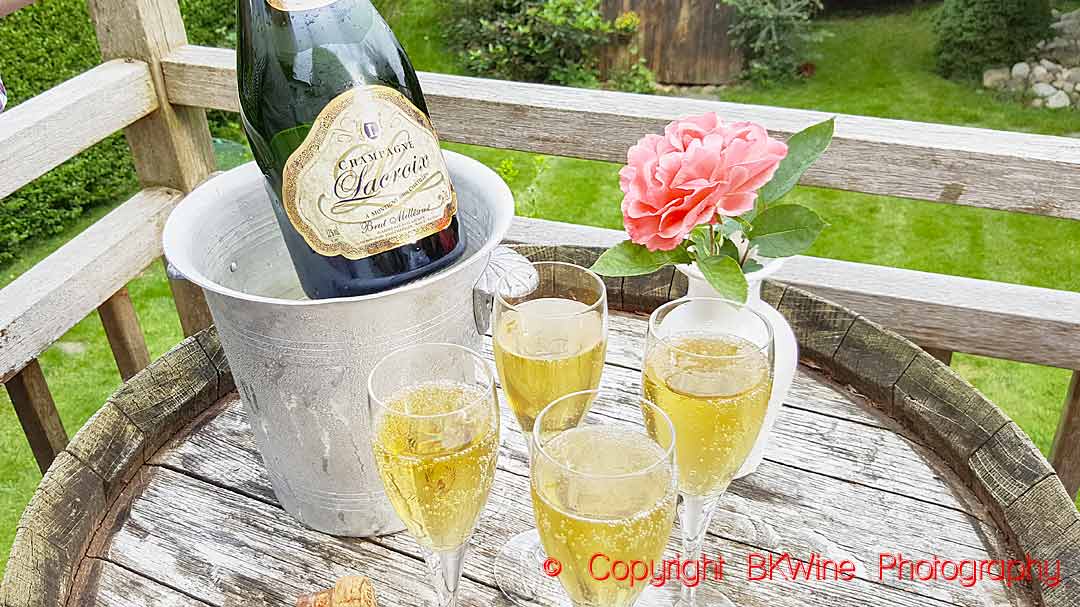
1. Champagne should be served ice cold, from an ice bucket
Yes, it is pretty and impressive to have the bottle in an ice bucket (but it does tend to make a bit of a mess). But it is not ideal. Put the bottle in an ice bucket, and it will be just above freezing point in every glass you serve.
Well, it depends a bit on how you do it. If you really want to chill a wine in an ice bucket, fill it about a third with ice, then fill it with cold water. Make sure there’s always plenty of ice in the water, not just a few cubes, but plenty. That keeps the bottle very cold. If you have only ice and no water, it will not chill the wine much at all. It’s really the cold water that does the chilling.
Having the bottle in an ice bucket, or chilled in some other way to “very cold”, say around 4°C, can be a good idea for simple white wines or everyday rosés. For champagne—as well as other quality sparkling and white wines—it can be a disaster, especially if it is a very good wine. Serving a wine ice cold removes most of its taste. The colder it is, the less it tastes. At just a few degrees above freezing, you’ll just get a pleasant acidity and a prickliness from the bubbles.
A good rule of thumb: the fuller-bodied and higher-quality the wine, the higher the serving temperature. Personally, I would serve a regular champagne at 8°-10°C and then give it time to warm up a bit in the glass. You might still want to use an ice bucket. It looks nice and is a convenient way to keep the wine at a good temperature. Just put it in the bucket occasionally and keep it on the table otherwise. Or use an ice bucket with very little ice. As I mentioned, if there is no water in the bucket, just ice, the chilling effect will be modest.
If you have a top-quality cuvée, I would serve it at 12°-14°C, and I wouldn’t worry if it gets a bit warmer. A higher temperature lets the aromas and flavours develop much better than when it is very cold.
In fact, these temperature guidelines apply to all white wines.
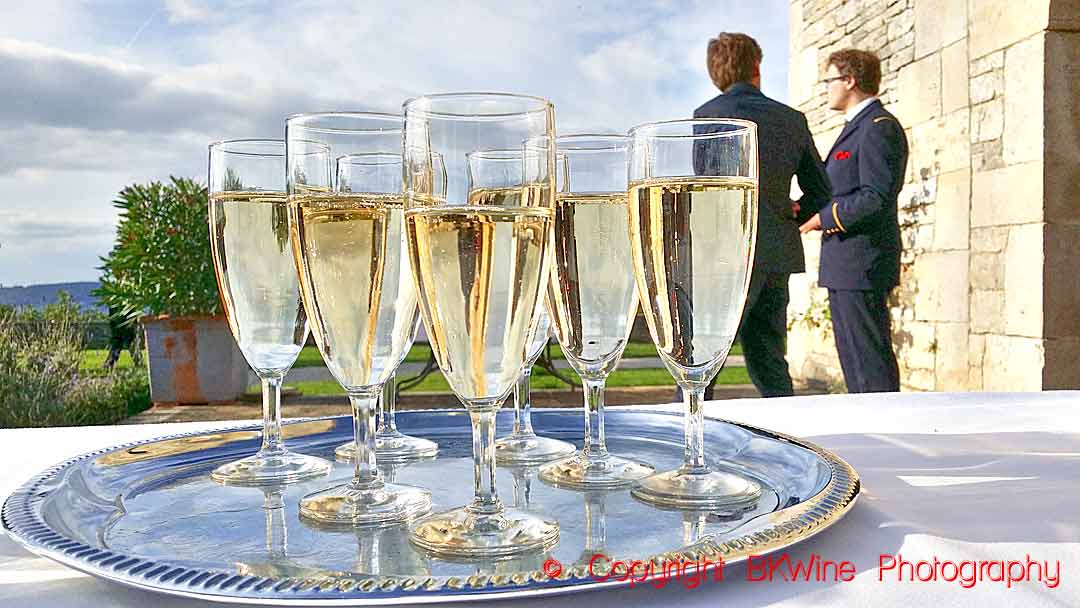
2. Serve the wine in a champagne glass, a tall “flûte”
What glass to use is a thorny subject, according to some. In fact, it is not thorny at all. Any good wine glass works for any type of wine. The exact shape (or make) of the glass doesn’t make much difference to the taste.
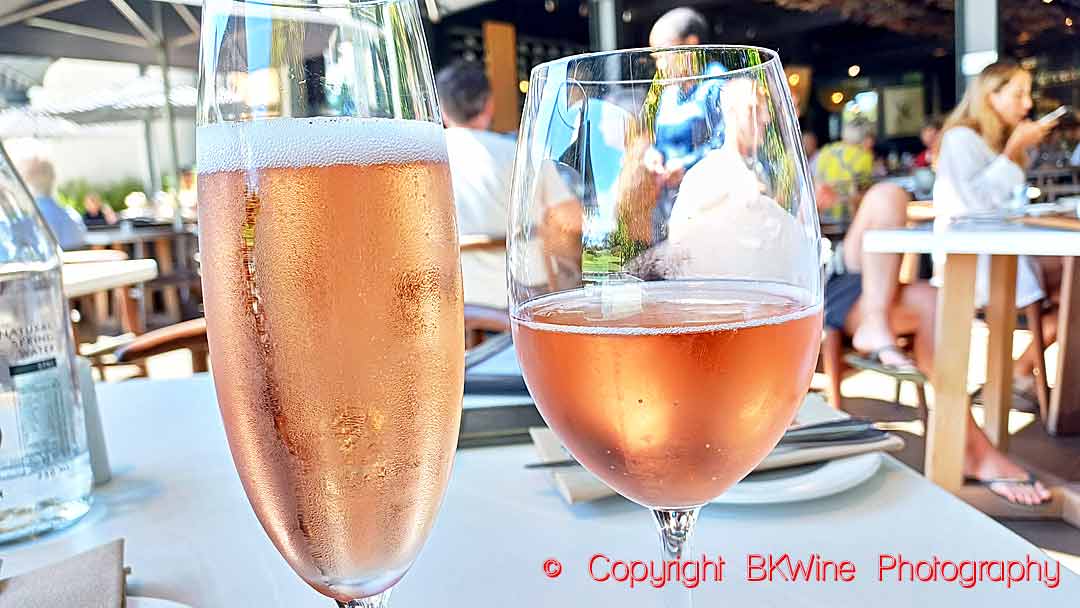
So, what about the classic champagne glasses? The tall and narrow flûte or the wide and low coupe? They may look pretty, but they are both terrible to serve champagne in if you want to experience the flavour of the wine. Most of the “flavour” actually comes from what you can smell, and both the flûte and the coupe are very good at hiding the smell, the “nose”.
The “flute” shows off the bubbles very nicely, but its narrow shape doesn’t leave enough space for the nose to develop. Your expensive wine will not have any aromas when you smell it, which is a pity.
The “coupe”, the wide and flat glass, a bit similar to a dry martini glass, is even worse; no space for the aromas to develop at all.
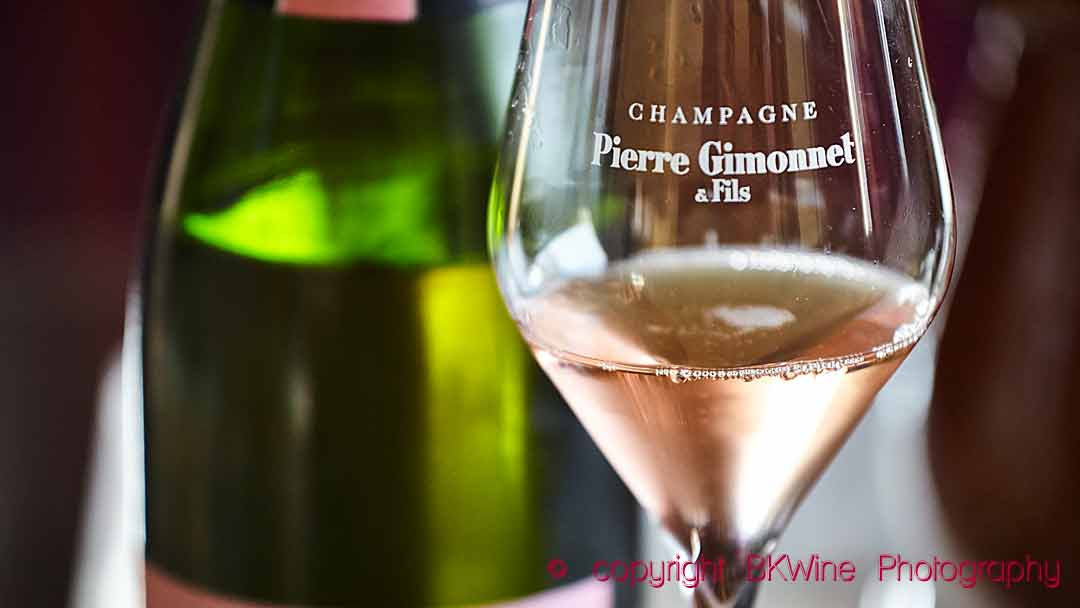
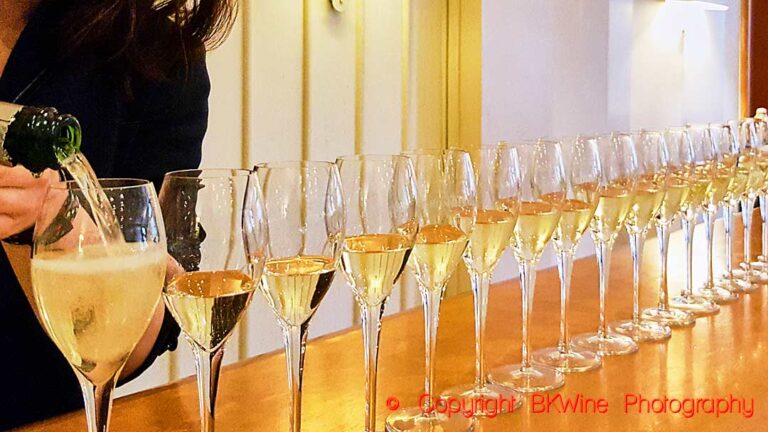
We often travel to visit champagne producers on our wine tours, as well as for other reasons, and it is becoming more and more common for producers to serve their champagnes in “normal” wine glasses rather than traditional flutes. Actually, today, few of them use the flute. They often use a glass that is more or less tulip-shaped and of a decent size so that you only fill it up to a maximum of a third of the bowl, the same kind of glass that you would use for any red or white wine. Sometimes they choose one that is slightly taller and smaller, but with still plenty of air-space above the wine. This is clearly the best shape for sparkling champagne as well.
The glass can be slightly narrower and taller than a regular wine glass, but it doesn’t have to be. That design is mainly created to show off the bubbles better- a nice aesthetic- but it is really the taste you want to enjoy, isn’t it?
Some sparkling wine glasses are specifically designed to create a pretty flow of bubbles. They have a small, invisible etching at the bottom of the bowl that releases more bubbles. With that kind of glass, you get a steady stream of bubbles from a single point at the bottom of the glass. It’s easy to identify when you know what to look for.
3. The best champagne is “vintage”
Most champagnes, from the Champagne region in France, are blends of several different vintages, so-called non-vintage (NV) champagnes, different grapes and from different vineyard plots. Vintage champagnes – millésimé – come from a single vintage. They are often priced substantially higher and presented in luxury packaging. That doesn’t mean they are better. You may get a beautiful box and an elaborate bottle design; it may look pretty, but is it really the packaging you’re after? That kind of packaging can add 15-25€ to the price, or even more if it is particularly elaborate.
A producer will usually try to keep a non-vintage champagne’s character and flavour consistent from year to year. Vintage champagne, on the other hand, is different from year to year. They express the variations in weather. A hot year will give a fuller champagne; a cool year will give a more steely one. This can be an interesting experience for a wine lover, but it doesn’t necessarily mean that it is better.
This aura of exclusivity and premium status around vintage champagne is part of a broader trend in Champagne. Houses produce more and more “prestige” cuvées (or brands). Vintage is one type of prestige cuvée, but there are others, for example “multi-vintage” (which to some extent can be seen as a clever rebranding of the traditional NV blend). This can be seen as a deliberate strategy to move toward more expensive brands. The Champagne production area is limited, so houses cannot easily grow output. Instead, they can grow revenue by moving toward more prestigious cuvées, i.e., more expensive bottlings. Their growth strategy is to push you towards the higher price ranges.
So, in essence, a vintage champagne is not necessarily better; it can be, but it depends on what you want.
4. Legally, Champagne must come from Champagne in France
This is an interesting one and one that is likely to cause a bit of “debate”. It is true and not true at the same time. It depends on where you are.
Champagne is a wine region two hours east of Paris in France. In Europe, geographic origin is always important. A Bordeaux wine must come from Bordeaux, a Burgundy wine must come from Burgundy – and a Champagne must come from Champagne.
Wine laws in the European Union (EU) define and control this strictly. In the EU, the only wine that can (legally) be called champagne is the bubbly coming from the Champagne region. The EU has extended this protection to many other countries through various trade agreements: other countries respect the champagne brand (and many others), and in return, the EU respects the brands of other countries. For example, in Europe we don’t make “Tennessee whiskey”.
So, for that reason, in most cases, a wine called champagne must come from Champagne.
But there are exceptions.
Not all countries have signed this kind of trade agreement with the EU, so champagne doesn’t necessarily have the same protection. In such countries, other sparkling wines can legally be called champagne. After all, EU laws are only valid in the EU, just as US laws are only valid in the US (perhaps we need to tell the American government that).
In the US, however, the situation is slightly more complicated. The US has signed a trade agreement with the EU protecting the name “champagne” since 2006. US sparkling wines cannot legally be called champagne.
Except…: The agreement has a “grandfather clause” allowing wines that were produced under the brand “champagne” in the US before the signing of the agreement to continue using that name. Very few do. But some still do, for example, Korbel Champagne and Gallo’s André Champagne. But they must specify the origin, “California Champagne”, and, of course, they cannot be sold in the European Union or other markets where the brand has been protected.
So, in practice, in most cases, champagne does come from the Champagne wine region in France. In most cases.
And yet, there is the old habit of consumers to call any sparkling wine champagne, both in Europe and in other countries. That will take a long time to change.
5. Champagne is the world’s best sparkling wine
Myth or not? This is, of course, a question of personal preference. What is “the world’s best” of any wine is not a question of what some expert or critic tells you. No one has a divine right to claim the title or assign it to something of their choice. It is always a question of what is best for you. (I always find these lists of “best” rather silly: “the world’s 50 best restaurants”… Who has tested them all, and who can claim the right to define what is best? It should perhaps be “MY 50 best restaurants”?)
Perhaps one should avoid being too presumptuous?
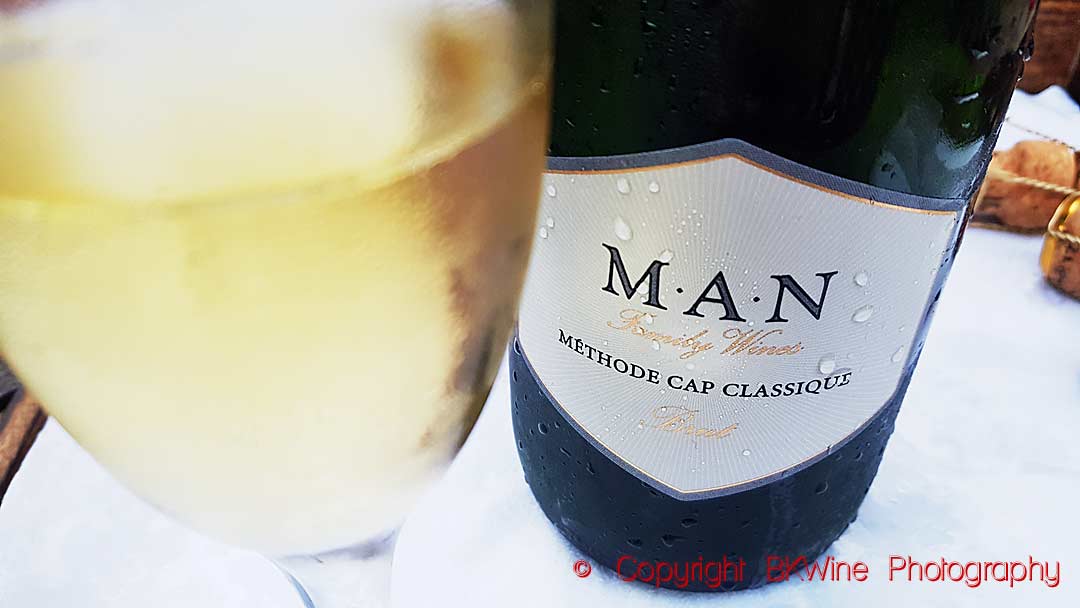
Many other wine regions around the world make outstanding sparkling wine, often challenging Champagne for the top spot: Cava in Spain, Franciacorta in Italy, MCC (Méthode Cap Classique) in South Africa, and others. These regions also produce exceptional, world-class wines.
In a blind tasting, they can score as well as champagne, as competitions like the Concours Mondial de Bruxelles CMB Sparkling Selection show every year.
What is “the world’s best” is for you to decide.
And then I have one bonus myth:
6. Many small bubbles is an indication of quality
We all love rules of thumb that make life easier, don’t we? But they are rarely truths.
An often-mentioned rule of thumb for champagne is that lots of very small bubbles in the glass is a sign of quality.
It is not.
How many bubbles there are in a glass of sparkling wine (champagne or other wine) depends on many factors, and not really on the quality of the wine. A slightly dirty glass (e.g. with a lipstick stain) has fewer bubbles because the tiny amount of fat changes the surface tension. An extremely clean glass, straight out of a dishwasher, can also have fewer bubbles, since the bubbles emerge on small impurities or tiny specs of dust. This is the reason people sometimes recommend wiping the inside of the glass with a cotton cloth, since it will leave tiny fragments from the cloth on the glass, which generate more bubbles. And as I mentioned above, a glass can be specially prepared to create more bubbles with a small (invisible) etching at the bottom of the glass.
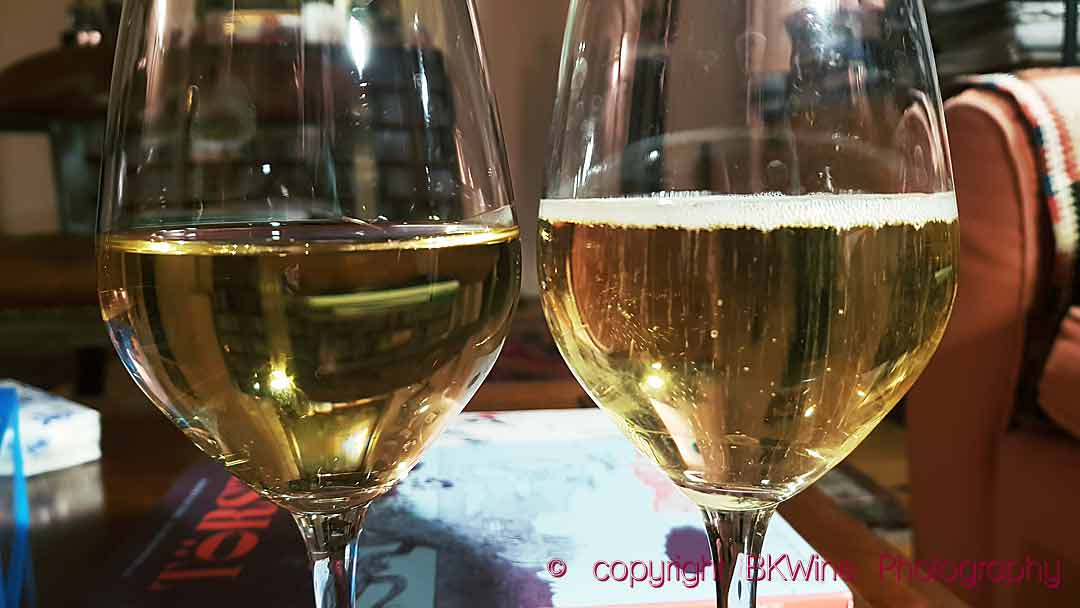
And even more complex, even confusing, different “glass melts” (the specific chemical composition of the glass raw material) give different amounts of bubbles. This video illustrates it with two identical glasses, washed identically, with the same wine in both, and poured at the same time. One has lots of bubbles, and one has almost none. The wine is the same. (This is a really strange illustration, in a way. We discovered it by chance one day at home when we poured two glasses of champagne, and they looked completely different. We tested it again, another day, another wine, the same glasses, and it was exactly the same effect. One glass has almost no bubbles, and the other has plenty.)
Read more in this BKWine Magazine article: Myths about wine: the bubbles in the glass of champagne a sign of quality?
As with any prestige product or famous brand, many stories have been created around champagne, sometimes to increase the mystique, sometimes in an effort to explain things that are not easy to understand, sometimes to make complicated things simple. And sometimes to make simple things complicated…
Having now cleared another set of champagne myths, you can concentrate on enjoying the wine instead.
Travel
The best place to discover the truth and all delicious variations of Champagne is on site. Explore champagne (the wine) and Champagne (the region) on a wine tour to Champagne with BKWine.
Travel to the world’s wine regions with the wine experts and the wine travel specialist.
Wine tours that give you insight. BKWine wine tours.