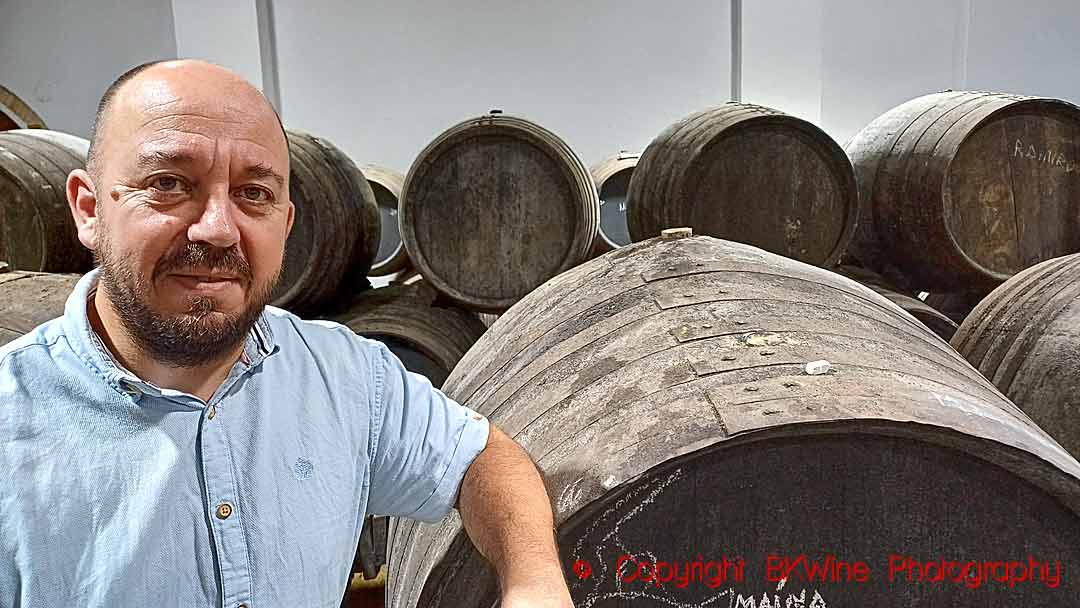
We all love sherry. It is one of the world’s great wines. But do we drink it? Not very often. Is that because it is a fortified wine, which is a bit out of fashion? Or is it because we all associate it with some old aunt who kept the sweet stuff in a cupboard? (Which is wrong. Today, most sherry is dry, very dry.) Ramiro Ibáñez is a pioneering wine producer in Jerez who thinks the way forward is to make more unfortified wine, as in the Douro Valley, while still making top-level fortified sherry. We met Ramiro Ibáñez in his Jerez cellar.
Sherry is a fortified wine. But what happens if you don’t add any spirit? What if you use the same grape and the same vinification method, minus the spirit? Ramiro Ibáñez at Cota 45 is doing just that.
Ramiro is part of the new wave of wine growers in Jerez, making non-fortified wines from palomino, the sherry grape. These wines are then called vino de pasto. This is a well-known word for Spanish people but far less so for the rest of us. It means table wines, not in the sense of “simple wine” but in the sense of “not fortified”, meant to drink with food. It used to imply, and probably still does in some places, that these are simpler wines, to be drunk with food without fuss. But don’t be mistaken, Ramiro’s wines are sophisticated and delicious.
Originally published on Forbes.com, this article is republished here in an expanded form with additional context, content, updates, and editorial insights relevant to BKWine Magazine readers and other wine-lovers.
You can read about the sherry process in this BKWine Magazine article: It is time to rediscover Sherry, the unique Spanish wine | Britt on Forbes.
Ramiro’s winery is in Sanlúcar de Barrameda. He is an oenologist and, in addition to his own project, Cota 45, he also consults for other wineries.
Ramiro has a clear view of sherry’s future, and sherry does need a new one. Or we should perhaps say of the wines from the Jerez region. Sherry consumption is decreasing, and he doesn’t think it can easily be turned around. Instead, he wants to open – and has opened – a new category of wines, wines that are not fortified, but more like “regular” wines. But it may not be so new after all. It’s existed forever in the Jerez region, but not been seen (or sold) much elsewhere. “White wine is the future,” he says.
He draws a parallel to Portugal’s Douro Valley. Port wine used to dominate the production of wine in the Douro Valley. Today, not so.
Sherry-region quick facts
Let’s take a quick look at some of the basics of sherry. Most sherry is dry, curiously called “generosos”, with less than five grams of sugar per litre. There are four types:
- Fino
- Amontillado
- Oloroso
- Palo cortado
The sweets are called ”generosos de licor”, blended up to desired sweetness:
- Pale cream
- Medium
- Cream
There are also naturally sweet sherries “Dulces Naturales”
- Moscatel
- Pedro Ximenes
Palomino is the dominant grape with sweetness coming from moscatel and pedro ximenes. Recently, other traditional grape varieties have also been permitted, and sherry wines are no longer required to be fortified, according to recently approved new sherry rules.
And then we have “table wines”, that is, wines that are not made like sherry, for example, with little or no oxidation. These are usually called “vino de pasto” although this does not appear on the label. They are sometimes sold as Vino de la Tierra de Cádiz, or just “vino”. However, many vino de pasto are barrel-aged and do get a bit of oxidation and even some flor. Will the categories merge in the future? We’ll see!
Both sherry and pasto are mainly grown on the chalky albariza soil.
We meet Ramiro in the vineyard (before continuing to the cellar for the tasting, of course). This is actually quite rare when you visit the sherry region. The bodegas all have magnificent wine cellars, and you tend to stay there, not least because sherry is, in many ways, a wine whose character is determined by the work in the cellar. Talking about grapes and vineyards feels a bit like an afterthought.
Not so for Ramiro. This is another way he differs from the sherry producers. He wants to stress the importance of the vineyard and the soil. His wines come from different types of albariza soil, a kind of limestone soil common in the area. He believes this soil has tremendous potential to show the quality of the white palomino grape, often considered a bit neutral.
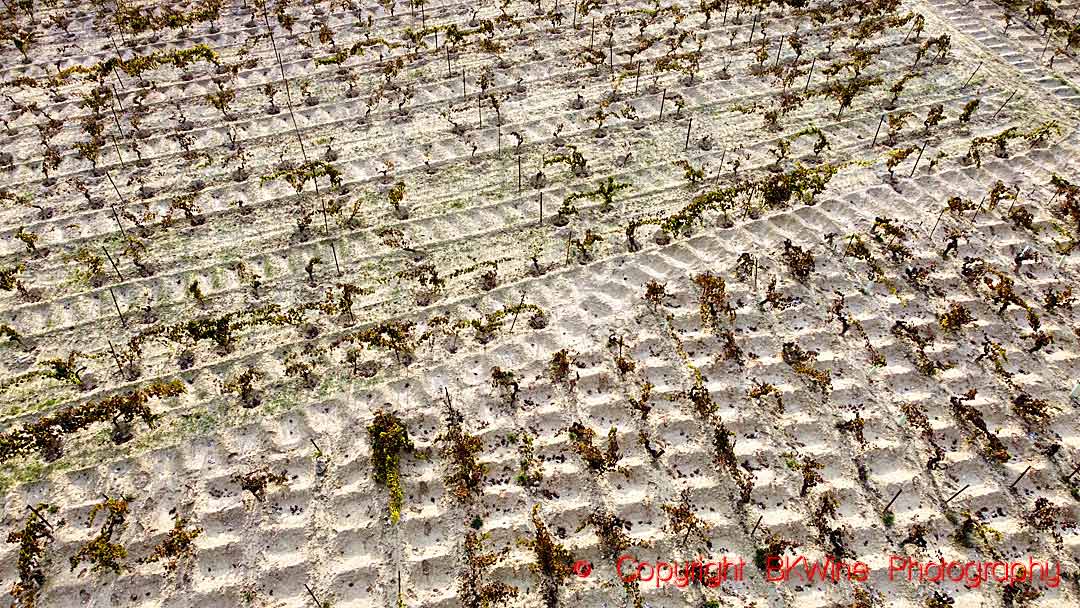
Aserpiado
When in the vineyard, it is interesting to witness what is called “aserpiado”. It is a peculiar tilling technique that creates small ridges or mounds and indentations between them. It is designed to retain water and prevent it from simply running off the hard soil surface. Rain is not plentiful here, so it is an important water-management as well as erosion control technique.
Ramiro makes wines with grapes grown in different types of albariza and at various distances from the Ocean. This affects the wines. “With vino de pasto, it is easier for the consumer to understand the connection between the wine and the vineyard”, he says.
Ramiro’s wines spend 8 months in very old sherry casks, part of the time with flor. Flor is what gives a fino sherry or a manzanilla sherry its special character. Ramiro’s wines spend around 2 months with flor, so much less than a fino, but it still gives the wine a distinct local feeling: a crispiness, the freshness of green apples and citrus combined with a lovely mouthfeel. (For more on flor, see the article linked above.)
For Ramiro, the white non-fortified wines are the future. “A restaurant in New York now has a wine list with many vinos de pasto; they are very attractive right now. Sherry is decreasing, and the vinos de pasto are increasing a lot”, he says
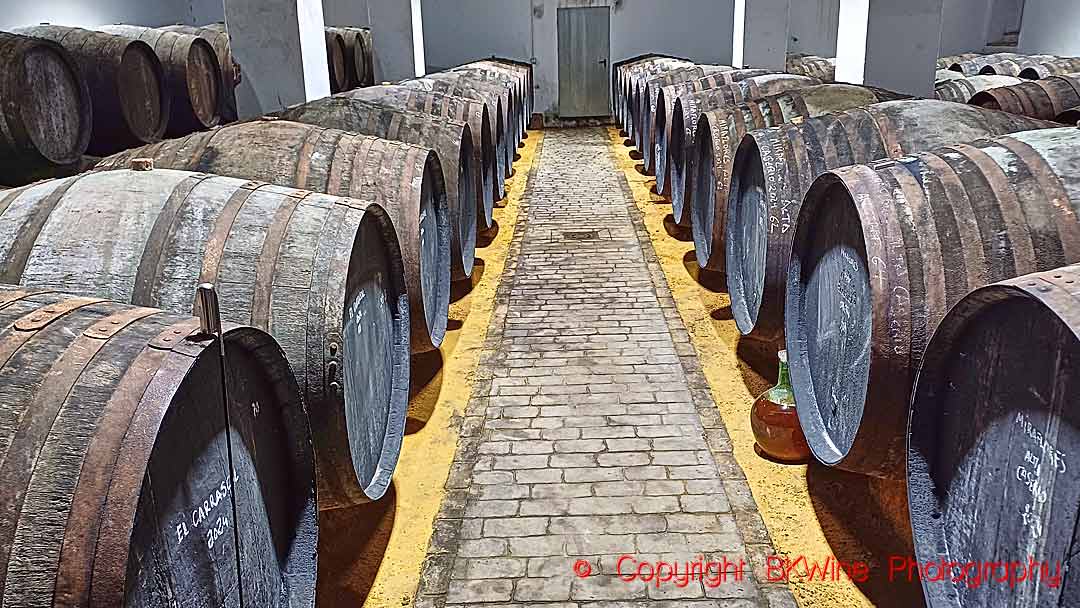
It is the same story as with port wine, he adds: “Table wines represent 50% of the production now, according to [famous Douro producer] Niepoort. The future for us here is to make white wines with lower alcohol and sherry only in the top-quality segment.”
Already, 35 new small wineries, as well as some of the big sherry wineries, are producing vino de pasto. And Ramiro points out that for a new producer, it is easier to start with these wines. “You need more money to start making a sherry, 6-8 years of ageing before you can sell anything… You need a lot of wine”.
So, this trend toward unfortified table wines can also change the structure of the whole wine business in Jerez. It has always been dominated by a handful of big houses. That is a business that it is almost impossible to break into for an outsider or a newcomer. It takes piles of capital and mountains of time to build the foundations of a traditional sherry house. Making unfortified wine is easier; you just need grapes and a place, and then you have a product you can sell one year later.
Bringing new blood, new wine entrepreneurs to the sherry region would certainly be a way to revive Jerez. It is a wonderful region with fantastic wine and food, but it is also quite a bit of “Old Spain”, with all its charm but also the weight of history.
Another of Ramiro’s fields of interest is his enthusiasm for old, almost forgotten grape varieties. Palomino is still the main grape, but he wants to bring back grapes that have now almost disappeared, both for their intrinsic qualities and for making the region less of a monoculture of palomino. We tasted some of these in his cellar, perruno, uva rey, but there’s also beba, cañocazo, mantúo de pilas, mantúo castellano…
Perruno is one of those, that we tasted. It was traditionally used for palo cortado and oloroso. It is much darker in colour and more full-bodied than palomino. “It’s like your friend who is big and friendly”, says Ramiro, very approachable compared to the sometimes austere palomino.
The sherry region is pretty close to the Atlantic Ocean, but the proximity varies. One of Ramiro’s vineyards is 50 km away, and another one, Miraflores, is only 6 km from the ocean. You feel this difference in the wine, says Ramiro.
“Further away from the sea, you feel the wine more in the back of the mouth. In Miraflores, we have more freshness; the wine is felt closer to the teeth, like the wine wants to jump out of the mouth back into the Ocean.”
I’m glad it doesn’t. I prefer to keep this incredible wine in the glass so I can savour it.
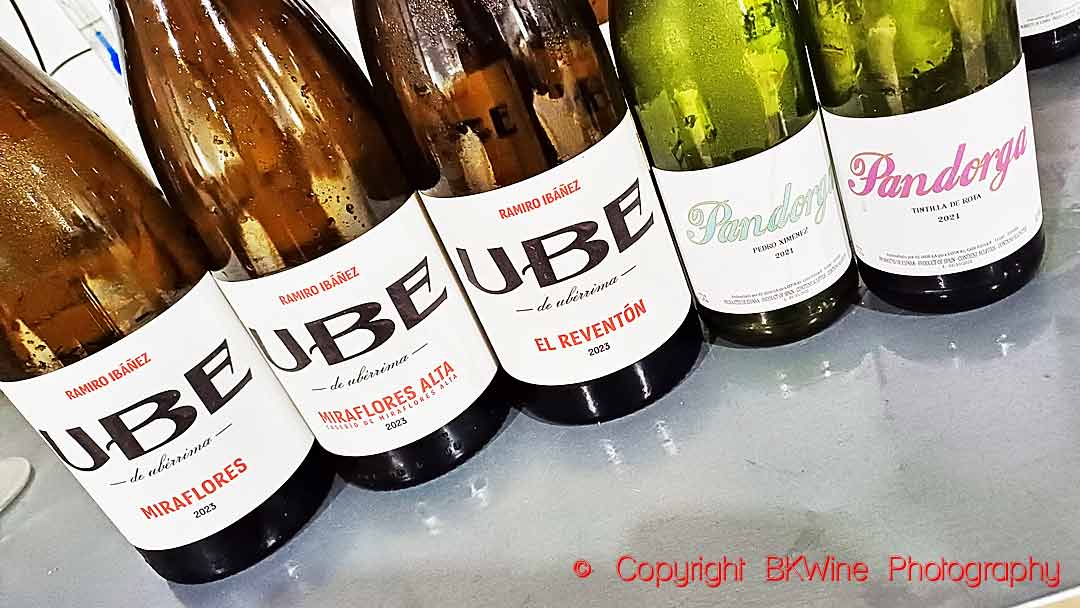
These wines are all made with the palomino fino grape and from different types of albariza soil. If you get the chance, try them. They are all from Ramiro’s series of wines called “UBE de uberrima”, referring to the Latin word for abundant or rich.
Cota 45 UBE El Reventón – from a vineyard called El Reventon with albariza de tosca cerrada soil, made with the palomino grape
Cota 45 UBE Miraflores – from different plots in the Miraflores vineyard, palomino
Cota 45 UBE Miraflores Alta – exclusively from the Alta section of the Miraflores vineyard
Is this type of wine the future of Jerez? Will it save a struggling region? The future will tell, but already today you can verify the fantastic quality of this type of wine, be it made from palomino or from one of the other grape varieties that Ramiro is saving for future generations.