Every week seems to bring another gloomy headline about wine. Consumption is falling. Vineyards are being uprooted. Climate change is rewriting the rules of winegrowing. It seems the wine world is facing an existential crisis. But is that really how the people who make wine see it?
Reports and industry statistics paint a picture that is not quite what I see when travelling to wine regions around the world with our wine tours. Time to investigate! So, I put the same question to the people living this challenge every day: fifteen winemakers and wine people on five continents, “Do you personally see ‘the wine crisis,’ and, if so, what should be done about it?” Their answers were far more nuanced—and often far more optimistic. Most see challenges, yes. But few spoke of despair. Instead, they talked about adaptation, quality, sustainability, new markets, consumer tastes. A refreshingly different perspective from the usual headlines. Here’s what the people living “the wine crisis” told me.
Everyone in the wine industry talks about the wine crisis these days. It is often focussing on two evolutions that affect the wine industry:
- Climate change, and
- Declining wine consumption
Climate change challenges
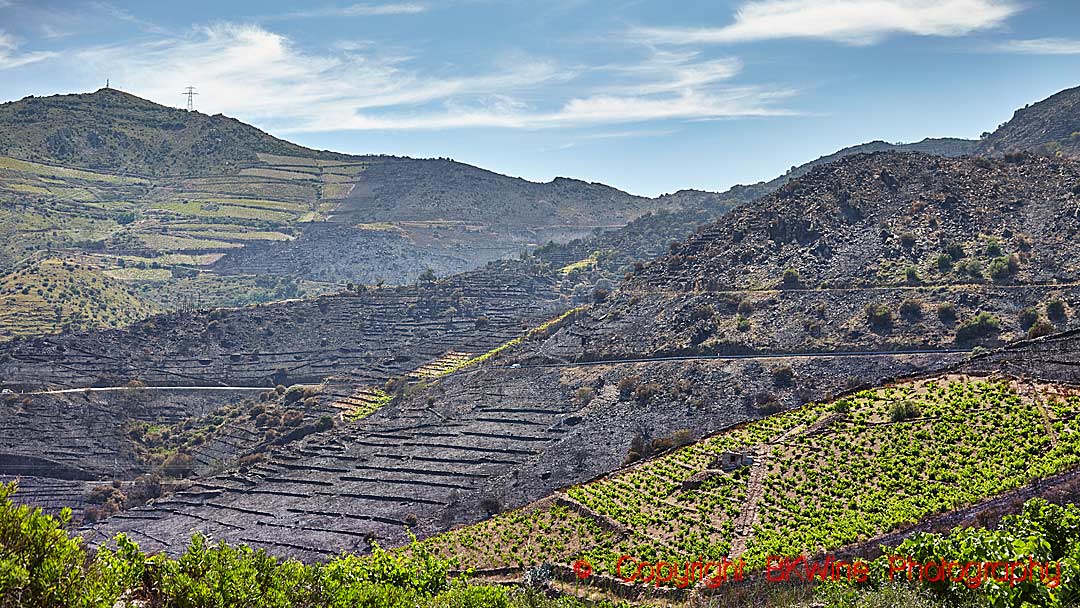
Much focus is on climate change, especially recently when almost 100,000 hectares (250,000 acres) of forest have been lost to wildfires in France and Spain recently. The biggest fire has been in Bordeaux, where more than 40,000 hectares have been lost. Fortunately, vineyards have not burned and the damage to Bordeaux vineyards seems to be minimal or none (as we wrote recently).
In Spain, where fires have been just as devastating close to Madrid, some vineyards have been burned but also here, the effect on the wine production seems limited.
More serious is the over-all effect of climate change, hotter growing seasons, earlier harvests and other adverse effects on the wine industry (read our article here).
Originally published on Forbes.com, this article is republished here in an expanded form with additional context, content, updates, and editorial insights relevant to BKWine Magazine readers and other wine-lovers.
Declining wine consumption (and production)
An equally worrying side is consumption. Wine drinkers are drinking less wine, wine makers are making less wine. In May, we went into details about the status of the wine industry in the Forbes article The Wine Industry Continues To Struggle With Production And Consumption.
As a result, wine production is also in decline; you can read stories of wineries in financial difficulties almost every day in the specialised press. 10,000 hectares of vineyards are being uprooted in Bordeaux; some sources say that 100,000 tons where dropped on the ground or not harvested in New Zealand in 2025 (~20% of the crop); in 2025, California harvested its smallest crop since 1999 and is scheduled to uproot 16,000 ha.
But what kind of crisis is it?
At the same time, when travelling in wine regions, as we do constantly throughout the year with our wine tours,
we still see, well, perhaps not happy faces but certainly not desperate faces. Are there perhaps more than one side to this wine crisis? How are the producers themselves affected by “the wine crisis”?

I decided to do a personal and un unscientific survey when at the big wine show Wine Paris earlier this year, in February 2026, and on some of our subsequent wine travels. I asked several wine producers and wine personalities, “Do you, personally, see ‘the wine crisis’? If so, what do you think can or should be done?”
I talked to mostly to “normal” wine producers who make wine that you and I can (and do) buy. Most of the people I talked to were mid-size wine producers making quality wines, wines of the kind average quality-conscious wine lovers can buy and drink, often family owned wineries. None of the people I talked to was in the bulk volume segment, and none was in the super-luxury segment.
I talked to producers from California in the US to winemakers in New Zealand, with France, North Macedonia and others in between. In total I talked with fifteen wine people from five different continent.
An interesting and unexpected picture emerged. Sometimes quite surprising. In fact, a picture that was much, much more positive than what you hear if you just read and listen to the usual wine media.
Let’s hear what the wine producers had to say.
(Quotes may have been shortened and simplified for clarity. You can listen to the full conversations on this video.)
I start with the biggest producer of quality wine in the world:
France
Much has been said about the wine crisis in Bordeaux. There is a government-sponsored scheme to uproot 10,000 hectares (25,000 acres), some 10% of all Bordeaux vineyards.
Estelle Roumage runs a family estate called Château Lestrille in the Entre-deux-Mers region in Bordeaux.
“We do see (the wine crisis). There’s a shift in the quantity of wine that people drink. There’s a shift in the type of wines they want as well. So, for example, we see a real shift in France towards lighter wines, whites, rosés. ‘Clairet’ as well is really growing. It was the same on the markets last year. I sold out my clairet in June. And we’ve got a lot of demand for lighter reds that people can drink outside of the traditional meal, when they’re having an aperitive or in in more informal occasions.”
How does that then translate into changes for Estelle at her chateau?
“We make half of our production in fresh wine: whites, rosés, and clairet. That’s a shift since I started in the early 2000s, so it’s gone little by little. Now half of our production is like (in these categories) while 85% of the wines produced in Bordeaux are red. Yeah. That’s one of the shifts we’ve made. The other shift is that my feeling is that the consumption of red wine is declining, probably faster in France than on other export markets. So we’ve developed sales on the export markets. Now we do about two thirds on the export markets. So, we’ve compensated the loss in France by selling on export markets in mostly Europe, Japan, Malaysia, the U.S. Canada as well.”
Are there any general conclusions to be drawn from her experiences, that others should look at?
“Well, yes, producing fresher, lighter wines is definitely an option. Selling direct as well, knowing what the consumer wants and adapting to what the consumer wants without losing your DNA and who you really are.”
Listen to Estelle Roumage on the video here.
You can talk to the Bordeaux winemakers directly and discuss their point of view when you come on a wine tour to Bordeaux with BKWine.
Here’s Karine Lavau’s view from the family-run Château Bernateau in the prestigious Saint-Émilion region in Bordeaux.
“Yes, of course, we feel the crisis. In lots of our markets, we can feel a slight decrease in wine sales. But at the same time, today, at Wine Paris (the wine fair) we have seen a good dynamic with lots of visitors coming to look for Bordeaux wine. So, it’s reassuring to know that there is still a demand for Bordeaux wines.”
“So, it’s reassuring to know that there is still a demand for Bordeaux wines. Some of our customers abroad, importers, don’t feel really the effect of the crisis. Some do, some do not. We feel the effect, but we try to always find new markets for our wines and diversify. We have developed the wine tours at the estate. Selling the wine directly to the customers that come to visit our winery has helped as well to maintain a good amount of sales. So, I think trying to diversify is key, and trying to be not waiting for the sales, but being here (at the Wine Paris show), for example, and trying to be dynamic.”
Listen to Karine Lavau on the video here.
You can talk to the Bordeaux winemakers directly and discuss their point of view when you come on a wine tour to Bordeaux with BKWine.
One of the more niche wine regions, but one that is particularly affected by the current climate change and certainly the heat wave in Europe :I spoke to Richard Case at Domaine Pertuisane in Maury, Roussillon, in the south of France.
“The wine crisis is definitely happening. It’s a real thing, and people are feeling it very, very badly. Our own production is a little bit more niche; we’re a small producer, we do a little bit direct-to-consumer, and we haven’t really noticed it as much ourselves yet. The wine world is going through fundamental changes. (…) It’s going to be very interesting to see in two or three years’ time.”
Is Richard Case worried about the future?
“A little bit worried. I think it’s a worrying period. I don’t think there’s anybody in the wine industry that doesn’t feel worried. But you know, you just have to keep making the best wine you possibly can. Believe that if you do that, you will find the customers for that wine and deliver something that’s honest and from a place, that’s the best you can do. You have to. You have to believe in that.”

Also in the southern part of France, I met Kate McKinlay at Domaine Mourchon in the Rhône Valley.
“We definitely (see the wine crisis). We sell to 14 different countries, and each one of my importers speak about a falling consumption. Without doubt, that’s an issue. There is a crisis. There are many. It’s a whole conglomeration of crises. I think we’re in quite a strong position in the Rhone Valley because, in good times, people tend to reach out to (more expensive) or unusual wines. In times of crisis people come back to what they know best, to wines that are traditional, that are constant, that have regular quality, price value, and that’s the Côte Rhône. So, we’re quite confident at the moment.”
Does Kate think there are any changes, adaptions, or actions needed?
“I think overall, what we need to do is stay realistic, stay small. Carry on doing what we’re doing, paying attention to the quality of our wine. First and foremost, to the quality of our vineyards, to the quality of the soil, and as a result, we have a knock-on effect to our wines, which stay consistently good, which adapt to the changing climate. At the same time, we’re experimenting, trying new things, accepting that it’s a process of trial and error. So each year we add something else to our range. This year, when you come to see us in September, hopefully, you might try a couple of new wines.”

Austria
From Austria, I met Franz Leth, from the very successful Weingut Leth and quite a big family winery close to Vienna:
“I wouldn’t say that it is so important for us. We are a niche, and we have always been a niche. For the mass market, yes, tremendously more. We are working on less than 1% of the world’s wine production. We have to find our niches. The younger generation is drinking less, yes. But it’s not as dramatic (for us) as what we hear from other parts of the world.”
Does then Franz Leth think there’s a need to change something in the way he runs his winery?
“No, no really dramatic changes. What is important is to bring wines to our consumers, with the style of wine is that they want. The time of blockbusters or shoulder heavy wines is gone and that plays into our field. So yes, not that much of correction. We just hope that Mother Nature will hear it for the next couple of vintages.”
Listen to Franz Leth on the video here.
Italy
For an Italian view, I talked to Sisto Tessari, of La Cappuccina, a family-run wine estate in Soave, Veneto in north eastern Italy.
“Our winery (only makes) estate bottling; we use only our grapes to produce our quality wines. We are the fourth generation winegrowers In the past we had some crisis but we are very resilient. If you make a good wine, especially the Soave that is as our beauty, people love it because it’s very fresh, crisp. I guess that the market is a little bit slow, but we are you know we had some positive sensation for the future.”
Does Sisto think they need to do some changes or have some specific initiatives?
“Yes, we hope to have some new markets, like Australia; it could be any opportunity in this fair (Wine Paris). The important thing is to be resilient and to find some other market to sell our wines and to promote our wines.”

Portugal
Tiago Alves de Sousa, who runs the Alves de Sousa Winery in the Douro Valley in Portugal, took a broader view of the current situation, linking it to increasing consumption of other alcoholic drinks:
“We all feel that there’s a shift, not only in terms of consumption, but also the mindset of how people look at wine; the new generations in particular—this message of always putting the emphasis on alcohol (is having a negative impact). But we know that wine is much more, especially when we compare it with other beverages, in particular spirits, which are much more alcoholic. And that consumption is not decreasing. So there’s a kind of contradiction. And it’s wine that has been more on the radar, while there are other drinks that actually have a much stronger impact on people’s health. The cultural dimension of wine, the fact that when you have a glass of wine, you have an experience, you taste the place where it comes from, the context of the year, the people that collaborated in making it. That’s something so special that makes us all love wine. And I think that if we communicate this message properly, then again people will connect with wine.”
So, if this is the helicopter view of the wine world, does Tiago Alves de Sousa feel any impact on their own winery?
“Fortunately, no. We’ve been working quite well. We’ve also been very proactive to compensate for some of these challenges. And I believe that the segment that is more impacted will be the big volumes. I think that wines produced in smaller quantities coming from unique areas and that are distinct will face these challenges better.”
So, communication and speaking to the customer in the right way is important?
“Totally, because we have always trends, this comes and goes. It’s a trend, basically, and we all know that. For example, back in the 70s, 80s, wine was always perceived as something that could even be positive for your health. The famous French Paradox. Which means that we’ve communicated that way before. We can bring back such communication. Always, of course, with due balance. But nevertheless, there are so many special things behind vines and wines, that I hope that we’ll all get better.”
Czech Republic
Moving to another niche country (in wine) in Europe, the Czech Republic, where I talked to Dagmar Fialová, marketing director for Wine of Czechia.
“Yes, definitely. We feel it, and we not only feel it, we see it because it is like three or four years in a row. There’s been a decrease in consumption for 10 years. So, the wineries are changing their approach. They are looking for different opportunities. The shift from quantity to quality is clear.”
Given this picture, what is there to do?
“It’s all about personal relationships; one-to-one relationships are crucial these days. This is simplified by social media. (…) Doing a good job in the vineyards, in the cellar, and then communicating well with your people, that’s the way to do it.”
Listen to Dagmar Fialova on the video here.
North Macedonia
In the Balkans, my target was Zvonko Herceg, a prominent wine personality in North Macedonia, a country most famous for its characterful vranec (vranac) wines:
“To be honest, no (we don’t see much of the wine crisis). We have pretty much rising sales in our wines (in North Macedonia). There is still increased interest in wines, even in the wider region of Serbia and Croatia. My overall impression is that (the interest in) wine is still going up.”
(You can read more about the wines of North Macedonia in this article/interview with Zvonko Herceg.)

Georgia
From the eastern edge of Europe, I met with Aurika Kroitor of the Vaziani Company in Georgia, the country on the Black Sea, technically in Asia but culturally perhaps more in Europe. It is squeezed in between Russia, Azerbaijan, Armenia, and Turkey, with vineyard acreage almost three times that of Napa Valley or well over half of that of Bordeaux. Kroitor has a more relaxed view than many of what is happening on the wine market:
“I don’t think it’s a crisis. I think it’s something that is a normal flaw of the market when there is excess volume on the market. There should be some purification, let’s say, or classification of the product, and the best should survive. That’s my opinion. So this is not a crisis. This is normal flow of the market.”
What, if anything, can be done to improve the situation?
“To study, to learn how to survive in the new conditions, and to always develop the business, the quality, and the approaches how to interact with the customer.”

Argentina, Mendoza
Leaving Europe, going to South America, specifically Argentina, I met with Paula Gonzales, who has been the winemaker at Antigal in Mendoza, Argentina, since 2024. Gonzales, being in a country that has dramatically shrunk its wine consumption per capita, is less sanguine but still not overly concerned:
“(The declining consumption) is something that you can see everywhere, all over the world, for example, in Argentina in the 70s, 80s, the consumption per person was once 100-120 litres, and nowadays we are in 16-15 litres per person per year. So, of course, we have to do something.”
What then are the adaptations or strategies that Gonzales is looking at?
“In our case, we have been picking the grapes earlier in order to have less alcohol content. Low alcohol wines could be just for a niche, but you have to pay attention to what people are asking for. Also, there are many new ideas, like new varieties. Habits have been changing; people are thinking about health and many other things. We have to think about that.”
Interesting thoughts coming from a wine region that historically is almost uniquely thought of as making powerful malbec wines. Which today is an outdated view of Mendoza.
Listen to Paula Gonzales on the video here.
You can talk to the winemakers in Argentina and Chile directly and discuss their point of view when you come on a wine tour to South America with BKWine.

South Africa
Continuing around the globe, on our trip to South Africa in February, I had the opportunity to speak to Johan Reyneke. Reyneke Wines is one of the pioneers of organic wines and environmental and ethical wine making in the country. Does he notice the “crisis” and, if so, what are his conclusions?
“You know, it’s an interesting thing. I have an elderly father, and he was born sort of around the time of the world wars and the depression. The brands he supports are brands that guarantee quality and are sort of aspirational products, products that he thinks will last. That type of car, that type of shirt, brands that speak to those values or to that value system. But I also have two daughters, and they are younger. They are 18 and 22 now, and they support different kinds of brands. They support brands that look after nature, brands that look after people, brands that are conscious of sustainability and ethical production. So I find at Reyneke Wines our sales are actually increasing, despite the current decline in wine consumption. I think that one must take cognisance of what the consumer wants and the value systems that, especially the younger consumers, support. If you farm in an ethical way, if you look after the people on the farm in an ethical way, if you’re mindful of how sustainable your production is, if it’s artisanal as opposed to mass produced, there is still a lot of support for that.”
Climate change and sustainability is one of the key pillars at the Reyneke wine estate, both for the current crisis and for the future.
“You mentioned climate change. I think if one farms in this way, not only is your business more sustainable, but you also become more resilient from a climate change perspective. You have a a more robust ecosystem. You also become a part of the solution. Conventional agriculture (on the other hand) can be one of the big drivers of climate change. So, from a climate change point of view, there are benefits, there are mitigation benefits, but then also from a financial sustainability point of view and brand longevity point of view, there are also benefits.”
So, in a way, I asked Johan, your fundamental philosophy, the way you’re farming is one of the solutions, or one of the ways to move forward in spite of the changing consumer habits and the declining consumption?
“Absolutely, and it goes beyond that because it’s not just about surviving; it’s also about having a meaningful existence. What do you do with your time, with this time you have on Earth? And if you’re just here to try and make money… I suppose it’s different strokes for different folks. I don’t make a lot of money, but, to me, it’s important to get up and do something that I believe in, and to find meaning in what I do.”
Certainly a view that gives a different meaning to running a winery.
Listen to Johan Reyneke on the video here.
You can talk to the winemakers in South Africa directly and discuss their point of view when you come on a wine tour to South Africa with BKWine.
USA, Napa Valley
Jaime Araujo created Trois Noix Winery in Napa, California in 2014. Her view from Napa Valley gives a bit of nuance to the sometimes negative reporting from the Valley:
“What I see is not necessarily a crisis. That’s not how I would word it. I see an industry that is going through some very important changes, and some very, I think, changes that are essential to have a healthier and more sustainable wine world moving forward.”
“Change is always hard, and we’re definitely getting acquainted with new ways of doing business and new ways of sharing ourselves with our consumers. But I actually see that as a great thing. I love these new younger consumers that are coming up that are demanding transparency and authenticity, and who are actually really caring about what they put in their bodies, because for us that actually is the most important thing about what we do, right? So for us, it works really well.”
An interesting perspective, that this is perhaps even a good, maybe even needed, cleansing of the wine business, compared to much of the doomsday scenarios we hear.
For Jaime Araujo, as a winery owner, or for a wine region as a whole, what needs to be done going forward?
“Again, I think transparency is super important. We’re revising our back labels this year, so that we can say that we are vegan and gluten free, made from organic grapes, all of those good things. It’s just really important to be open and clear about who we are and what we’re doing, what we believe in, and I think people who do that will be rewarded.”

New Zealand
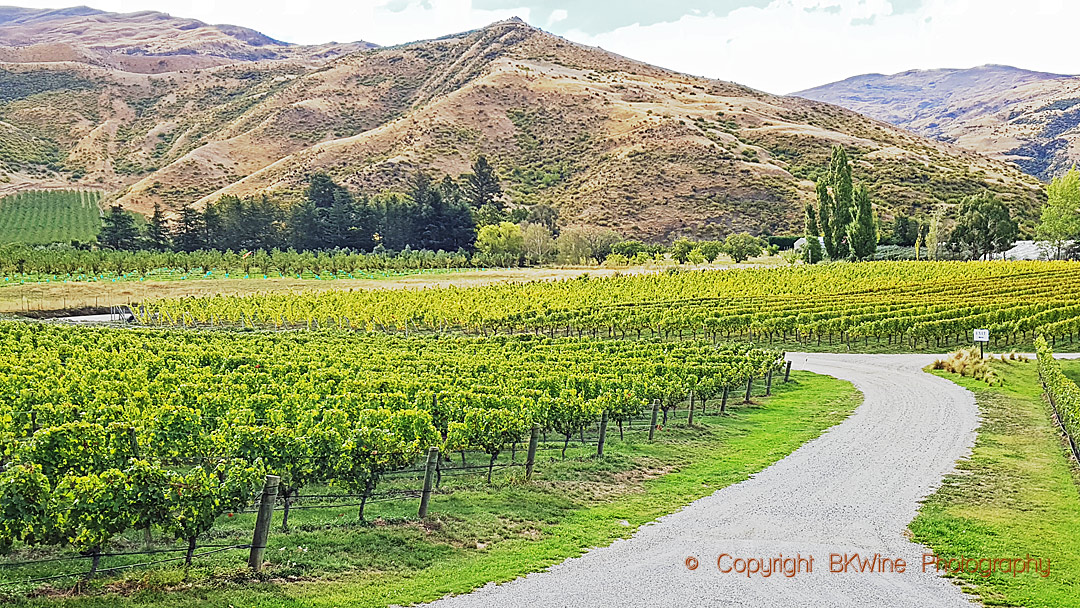
My final stop on this world tour of wine crisis was far away, on our New Zealand trip in March, where I visited one of the pioneers in New Zealand winemaking, Felton Road, Central Otago, and spoke to their assistant winemaker James Coleman. What was the perspective on The Wine Crisis from the other side of the world? Does it affect Felton Road?
“The short answer would be that this has been the fastest we’ve ever sold out of our wines in a financial year. So, from that perspective, I think you could say that we have been fortunate to not really be affected by declining consumption yet. I think what would concern us is the decline in consumption amongst younger consumers, and that is about our future. We farm as if we want our vineyard to be producing fruit for winemaking in 100 years’ time, so there need to be people who can consume that wine in 100 years’ time, so that’s a concern. We would like to reach out to consumers, and especially younger consumers, and I think we do that quite effectively through our storytelling, certainly around sustainability. These are the people that are going to be the next stewards of the planet, and we want to be part of that.”
Looking back at the history of Felton Road, this focus on sustainability and the environment is something that has always been part of the philosophy of Felton Road, isn’t it?
“Yes, and I think that message is just hitting home now. As people see the effects of climate crises and that sort of thing. I think also, as a small sustainable producer of not inexpensive wines, a decline in consumption and a move towards premiumisation is a move towards the kind of wines that we want to make. Perhaps the decline in consumption is something that concerns wines that are on a supermarket shelf for two euros, wines that perhaps are not the most ecologically sound to produce. In that sense, (the wine crisis) is not such an issue for us. But obviously, we have a great deal of empathy for anyone who is involved in the pursuit of producing wine and facing strife. That’s a heartbreaking position to be in.”
Listen to James Coleman on the video here.
You can talk to the winemakers in New Zealand directly and discuss their point of view when you come on a wine tour to New Zeland with BKWine.
With that, I think James Coleman gave a good summary of what the many people I spoke to said.
Yes, there is a wine crisis. But perhaps it is something that does not equally affect all segments of the market. It may be that mass-market wines are the ones that are hardest hit. And perhaps the current crisis is unavoidable (or even, to some extent, desirable) after years of solid growth, to eliminate some of the product that is perhaps not the best for the world.
It is perhaps also a hope-inspiring message for the type of wineries I spoke to. I did not meet any of the mass-market producers making large volumes of supermarket or generic wines. Nor did I meet with the super-luxury brands whose prices (and investments) have skyrocketed over the last decades. The winemakers and wineries I talked to were “upper mid-market”, making the type of wine that someone who loves good wine, who is buying wine for the pleasure of drinking it and not for the fame of the label.
For that kind of producer, making quality wine to drink and enjoy, the message I heard was, overall, very positive.
- Yes, we are concerned.
- Producers of quality wine with personality is less affected than volume producers.
- You have to look at the future and be flexible and dynamic. Look at what customers want.
- Go looking for new markets.
- Ethics (sustainability, organics, environment) helps.
- Sustainability, in a broad sense, is very important both for the production and for the new consumers.
- And fundamentally, continue making quality wines.
In the end, this simple idea, this question, sparked at Wine Paris in February, turned into a fascinating, surprising and encouraging closeup on the wine industry today and tomorrow.