Island Wines Summit Part 2: The producers who make wines from islands feel different | Britt on Forbes

Share / Like:

Share / Like:

At the Island Wine Summit in Tenerife in June, I tasted some excellent wines from islands in the Mediterranean and the North Atlantic Ocean (see part 1 for an introduction). The winemakers here mostly work with indigenous grape varieties, and they are passionate about keeping the terroir character of their specific island vineyards.

Originally published on Forbes.com, this article is republished here in an expanded form with additional context, content, updates, and editorial insights relevant to BKWine Magazine readers and other wine-lovers.

Mediterranean Islands

Cyprus

The Mediterranean islands have historically been famous for sweet wines. Cyprus is a good example. I use the word legendary sparingly, but it is a fitting epithet for the sweet Commanderia made in Cyprus since the days (and probably longer) of the Knights Templar and the Crusades in the 13th century. It is a remarkable wine.  Its popularity has waned over the years, as it has for all sweet wines, but it has not disappeared.

Cyprus is on the very eastern side of the Mediterranean Sea, just south of Turkey and west of Syria. It is the third largest island in the Mediterranean, after Sicily and Sardinia. At the summit, I met Yiannis Kyriakidis, who is the winemaker at his family’s estate, Vouni Panayia. He confirmed the trend: “Cyprus is moving away from sweet wines.”

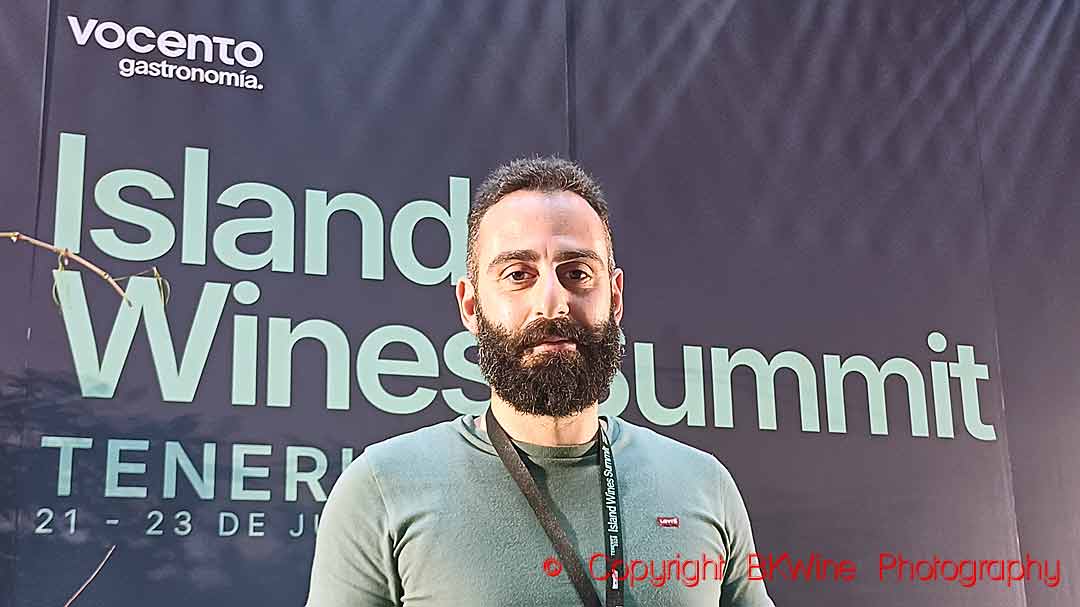
Yiannis Kyriakidis, winemaker at his family’s estate Vouni Panayia, Cyprus
Yiannis Kyriakidis, winemaker at his family’s estate Vouni Panayia, Cyprus, copyright BKWine Photography

Yiannis grew up with wine. “My parents founded the winery; we lived there. I remember the aromas of fermentation growing up.” It didn’t put him off; luckily, he became a dedicated winemaker. Cyprus has a typical Mediterranean climate, says Yiannis, but also mountains which moderate the temperatures. “Our vineyards have a dry climate with little disease pressure; we have seldom downy mildew, and we only use a bit of sulphur spraying.” He does a lot of work by hand.

At the summit, Yiannis presented a white wine:

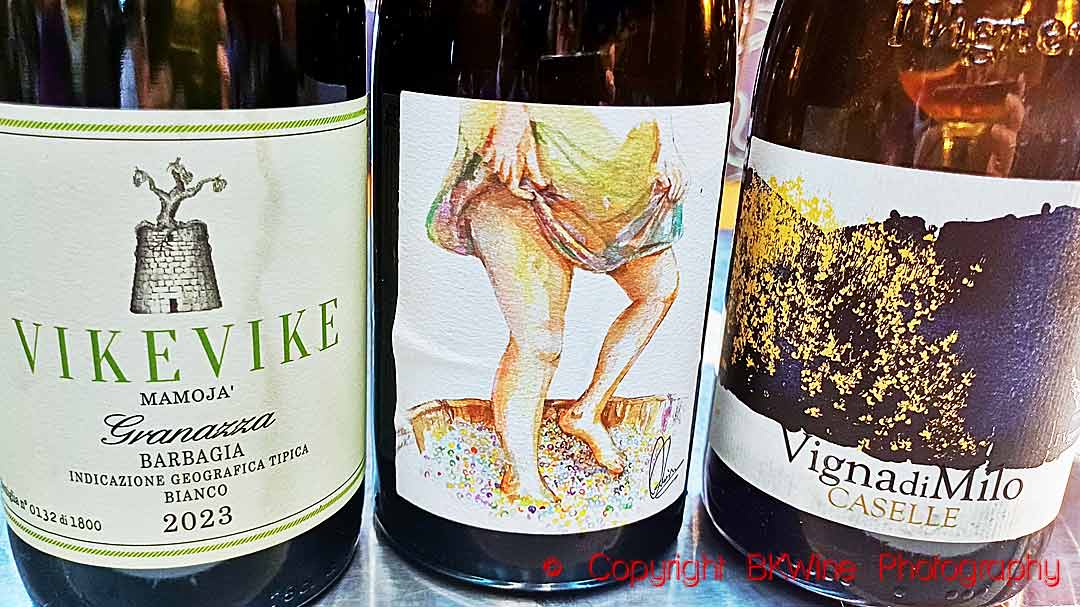
“The Woman in the Wine Press” 2022, Vouni Panayia, Cyprus

The grape here is morokanella, densely planted as bush vines on a limestone/clay soil. “The Woman in the Wine Press” (the label depicts just that) is an energetic wine with so much acidity and tension; there’s a razor sharpness to it. It also has texture on the palate, which is one of the things Yiannis is looking for. The wine spends one month on the lees.

Vike Vike Granazza 2022, Sardinia, “The Woman in the Wine Press”, Vouni Panayia, Cyprus and Vigna di Milo, Vigneri di Salvo Foti, Etna, Siciliy
Vike Vike Granazza 2022, Sardinia, “The Woman in the Wine Press”, Vouni Panayia, Cyprus and Vigna di Milo, Vigneri di Salvo Foti, Etna, Siciliy, copyright BKWine Photography

Greece, Crete

Crete is a big island, says owner and winemaker Aimilios Andrei at Aori Winery, “with many soils and microclimates”.

Aori Winery is in the west, where it is cooler and greener. It is a mountainous area with 60 peaks over 6,560 feet. Here he found a local clone of the Muscat grape, ungrafted, high up in the mountains, and that’s how it all started. Here, he says, he can make fresh, elegant wines; he is still amazed by the freshness and also the low alcohol. “We never have “cooked” style.” He likes the schist soil with its good water retention. “A schist soil is like a book with many layers”, he says,

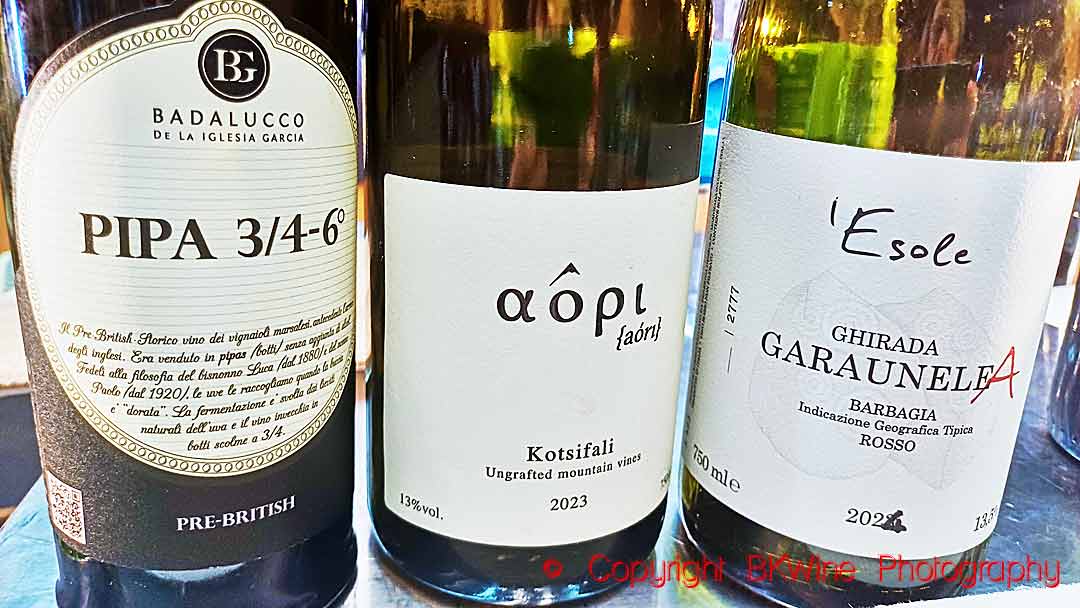
Aori Kotsifali 2023, Aori Winery, Crete, Greece

Kotsifali is a red Greek grape indigenous to the island of Crete. This wine is fragrant, elegant, and light in style, with delicate raspberry aromas; it’s structured in the mouth and very fresh.

Aori Kotsifali 2023, Aori Winery, Crete, Greece, Esole Ghirada Garaunele, Cannonau, Sardinia and Badalucco Pipa 1999 Grillo, Sicily
Aori Kotsifali 2023, Aori Winery, Crete, Greece, Esole Ghirada Garaunele, Cannonau, Sardinia and Badalucco Pipa 1999 Grillo, Sicily, copyright BKWine Photography

Greece, Île de Zakynthos

Île de Zakynthos is a smaller island off the west coast of Greece.

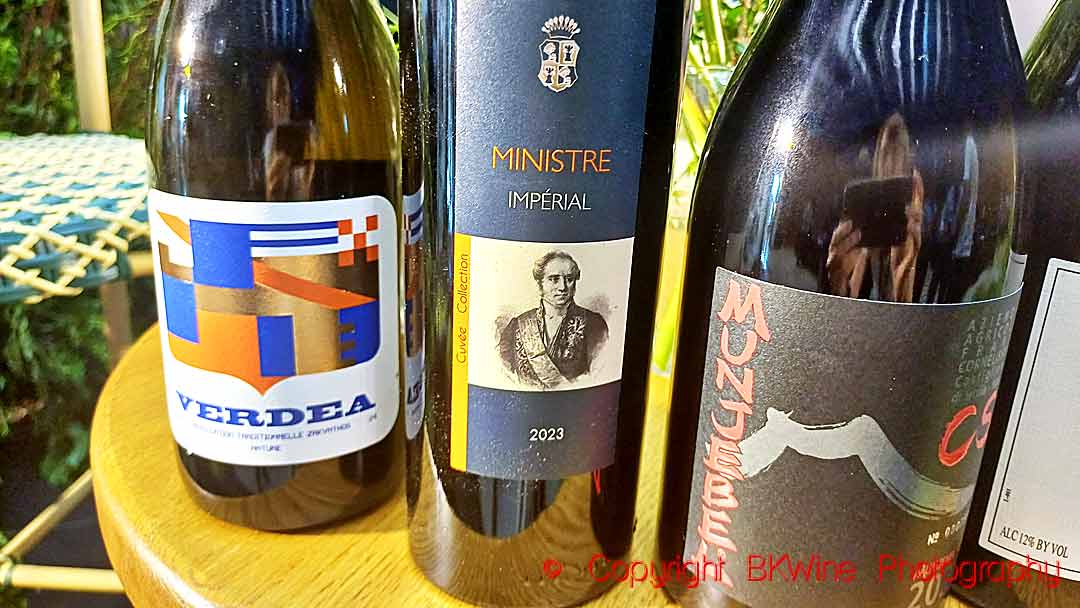
Zakynthos Verdea 2024, Dionysis Kefallinos, Greece

Six local grapes (at least) make up this wine from Dionysis Kefallinos: macripodia, goustolidi, robola, pavlos, koutsoubeli, lagorthi, and that is only a small part of all the indigenous varieties found on the island.  Dionysis is a true enthusiast of these varieties and of low-intervention winemaking.

Here we have a magnificent texture, freshness and vitality, a little bit of oxidation (it is a natural wine), but it’s not too much and adds to the experience.

Greece, Isla de Tinos

At the small Isla de Tinos, one of the Cyclades islands, Domaine de Kalathas makes a stunning rosé,

10+12 Aspro Potamisi, Rosé, Domaine de Kalathas

The first thing that hits you is the tannins and the dryness, but you soon also get the lovely mouthfeel, body, and apricot aromas, plus a bit of salinity and a hint of oxidation. No sulphites added. Non-grafted vines.

Italy, Sicily, Etna

Present at the summit was Andrea Foti, second-generation winemaker and Salvo Foti’s son. Salvo Foti is a famous wine producer on Etna, and not only that; he is a true multi-tasker in wine, not least when it comes to research.

“We are in Milo, east of Etna”, says Andrea, “we have no extreme heat, and we have a lot of rain. We have the African sun but a Nordic climate!” Andrea explains the soil: “Eruptions are frequent, but have changed; they have become explosive, with rocks and stones thrown into the air. We have a very antique soil in Milo, but it is all the time changing, all the time the soil is renovated with new soil.”

He presented a white wine made from the grape carricante.

Andrea Foti, second-generation winemaker and Salvo Foti, Etna, Sicily
Andrea Foti, second-generation winemaker and Salvo Foti, Etna, Sicily, copyright BKWine Photography

I Vigneri di Salvo Foti Vigna di Milo 2024

The grapes are pressed directly and fermentation starts in stainless steel and the juice is then transferred into big wooden casks and finishes barrels. It is very floral, with tension and vitality on the palate, good body, nice mouthfeel, good freshness. “This freshness is remarkable”, says Andrea, “we don’t have high acidity, but pH is very low.”

Frank Cornelissen Munjebel Rosso CS 2021, Etna

The grape here is Nerello Mascalese, the star grape of Etna. Cornelissen works with little intervention in the wine cellar, but without exaggerating. There is a hint of volatility, but it is quite pleasant. The red fruit lingers; it is light, refreshing, and very drinkable.

Zakynthos Verdea, Dionysis Kefallinos, Greece, Cuvée Ministre Impérial Rouge 2023, Domaine Comte Abbatucci, Corsica and Frank Cornelissen Munjebel Rosso CS, Etna
Zakynthos Verdea, Dionysis Kefallinos, Greece, Cuvée Ministre Impérial Rouge 2023, Domaine Comte Abbatucci, Corsica and Frank Cornelissen Munjebel Rosso CS, Etna, copyright BKWine Photography

Italy, Sardinia, Mamoiada

The village of Mamoiada, in the middle of the island, is a lively, dynamic wine village full of small, ambitious producers. Two of those were at the island wine summit: Simone Sedilesu at Vike Vike and Federica Dessolis at Esole. In Mamoiada, many producers farm small plots and bottle only small quantities.  “Mamoiada has around 2500 inhabitants and 240 wineries”, says Simone Sedilesu, winemaker and owner of Vike Vike. “All families make their own wines.”

“We have a new generation here now”, says Federica, “looking for finesse. In many places in Sardinia, people leave; here, in this village, people stay.”

Vike Vike Granazza 2022, Sardinia

Granazza, a white variety, was not used as a single variety until recently. But Simone did it and made a delicious wine with an abundance of flavours. It is floral; it has texture and good length.

“Our goal is to preserve the old vineyards, the old varieties and finally”, says Simone, “this is financially feasible.”

Simone Sedilesu, owner and winemaker at at Vike Vike and Federica Dessolis, owner and winemaker at Esole, both in Sardinia
Simone Sedilesu, owner and winemaker at at Vike Vike and Federica Dessolis, owner and winemaker at Esole, both in Sardinia, copyright BKWine Photography

Esole Ghirada Garaunele A 2024, Cannonau, Sardinia

From a sandy soil, which Federica really likes. “It is paradise for farming”. The grape is Cannonau, the local name for garnacha or grenache. It is a ghirada, a single vineyard (or a micro-terroir). This is an easy-drinking, refreshing wine, with lovely fruit and some tannins to give it structure; easy drinking but complex.

France, Corsica

Corsica is French, although it is closer to Italy than to France, and it used to be Italian.

The island is known for indigenous grapes, and the wine producers are now proud to continue this legacy. The island had an identity crisis some years ago. In the 1970s too many vineyards were planted and too much of the grape alicante bouchet. Too much bulk wine was produced. The reputation took a hit. Now, the vineyard surface has decreased, and quality is up.  “It is a very recent success”, says Pascaline Lepeletier. “It is a story of visionaries among the wine producers and importers from abroad.“

Cuvée Ministre Impérial Rouge 2023, Domaine Comte Abbatucci, Corsica

Jean-Charles Abbatucci and his daughter Faustine, in the southern part of the island, are passionate champions of traditional Corsican grape varieties. They have an impressive ampelographic collection, a project started by Jean-Charles’ father. The grapes for this wine are morescola, morescono, aleatico, carcajolo nero, montanaccia and the two most common grapes in Corsica, sciaccarello and nielluccio.

Looking at the label and the name of the wine (Napoléon Bonaparte was born on the island), you might expect a dense, even heavy wine, but what you get is actually the contrary: vitality, a lively acidity, easy-going but still with a backbone and a good volume in the mouth.

Republic of Türkiye, Bozcaada

Türkiye was represented by a sweet passito wine from the island of Bozcaada in the northeastern part of the Aegean Sea.

Passito Vasilaki 2015, Resit Soley, Corvus Vineyards, Isla de Bozcaada, Republic of Türkiye

Corvus Vineyards was founded by architect Resit Soley in 2002, marking the start of a new and very successful career for him. For this passito, the grapes were air-dried. Vasilaki is a grape native to the island of Bozcaada, where it thrives in the strong winds. The winemaker picks early to keep the acidity.

It is a very sweet wine, but with incredible acidity that masks some of the sugar and makes it a pleasure to drink: a beautiful amber colour and delicious aromas of ripe, crushed apricots.

Islands in the Atlantic Ocean

France, l’Île d’Yeu

Domaine de l’Île d’Yeu Blanc du Caillou, Chenin 2023, Domaine de l’Île d’Yeu

France makes a small amount of wine on a couple of its islands along the Atlantic coast, Île de Ré and Île d’Oléron. Now a nearby island has joined the exclusive group. It’s Île d’Yeu, which is at about the height of Poitiers. The wine region is the Loire Valley, and the wine has the IPG Val de Loire appellation. It is a completely new project, on soil that has never been treated with any pesticides. The first vintage is a 2023 Chenin Blanc. 1,200 kg of grapes were harvested, which ultimately yielded 500 litres of must. The character feels promising, with really high acidity and fresh green apples. The body is quite light and would benefit from a bit more fat.

Portugal, Madeira

The island of Madeira is located just over 300 miles west of Morocco. The Portuguese discovered it in 1419. At the time, the islands were inhabited. Although sugar cane cultivation came first, it was not long before the first grapes were planted on the island. Madeira is a sweet, fortified wine, tremendously popular during the first half of the 20th century. It still has its admirers, and rightly so; Madeira of top quality is amazing,

Dry, non-fortified wines from Madeira were very niche just a few years ago. They are still quite rare but are becoming better known. They also now have their own appellation, DOP Madeirense.

One of the forerunners in Madeira and the Azores today is António Maçanita of Azores Wine Company. He started in the world of wine in 2000, in the Azores, and in 2004, at the age of 23, he made his first wine. He is a prominent winemaker and a true entrepreneur. Few people know more than he does when it comes to the production of Atlantic wines. He has revitalised wine production in the Azores and breathed new life into historic grape varieties.

From left: Roberto Santana from Envinate, Tenerife, Antônio Maçanita from Azores Wine Company, Jonatan Garcia Lima from Suertes del Marqués, Tenerife and Paz Levinson, sommelier at Groupe Pic, France
From left: Roberto Santana from Envinate, Tenerife, Antônio Maçanita from Azores Wine Company, Jonatan Garcia Lima from Suertes del Marqués, Tenerife and Paz Levinson, sommelier at Groupe Pic, France, copyright BKWine Photography

António Maçanita Nuno Faria Tinta Negra Dos Villões 2022, Madeira, Azores Wine Company

“Tinta Negra is the most planted grape in Madeira”, says António, “but they hide it.” Tinta Negra is behind many Madeira wines that are not the top quality. But António reduced the yield to get a better result, and now he pays 7 euros per kilo for this grape (about what the houses pay in Champagne for a kilo of grapes …). Luckily, it is a great wine with a delicious, refreshing mouthfeel, intense red-fruit aromas, and a light, elegant, approachable style.

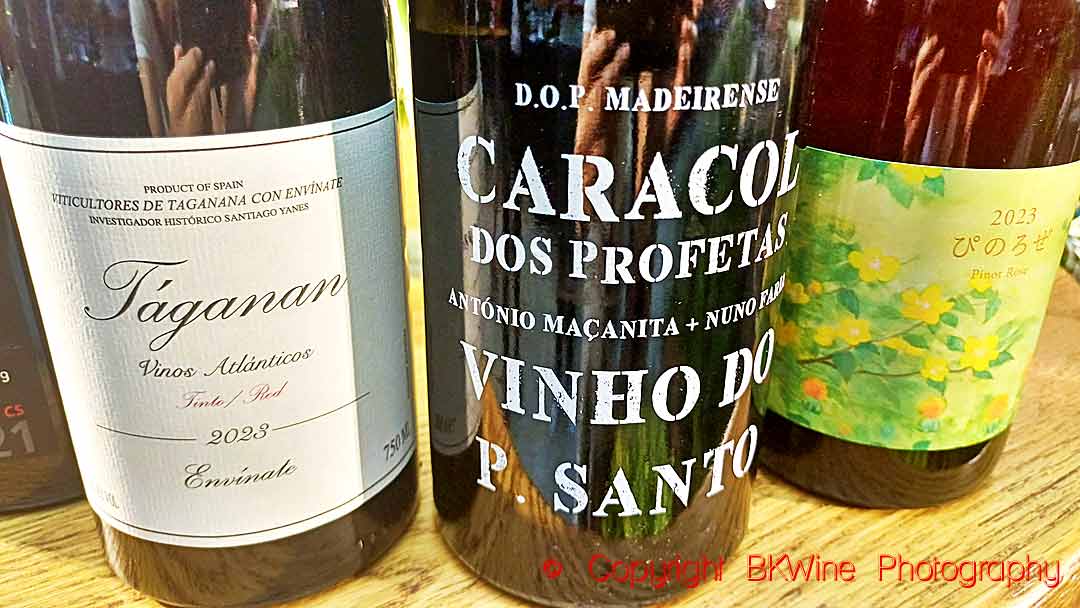
António Maçanita Nuno Faria Caracol dos Profetas Fazendas Areia 2023, Porto Santo, Madeira

The grape is caracol, a very rare but traditional grape on Porto Santo, one of the islands in the Madeira archipelago. It may be related to palomino fino, the grape used for sherry. The wine is crisp and dry, but with vibrant fruit, a bit of salinity, fine acidity and citrus. Delicious.

Listrão Biológico 2024, DOP Madeirense, Isla de Porto Santo, Justino’s Projects

An interesting dry wine project from Madeira producer Justino’s. This is a superb dry wine at only 11% alcohol, made from the palomino grape, here called listrão. A certain body and good length and texture, a hint of salinity, crisp green apples and balanced acidity.

Las Suertes 2022, Suertes del Marqués, DO Valle de la Orotava, Tenerife and António Maçanita Nuno Faria, Tinta Negra, Dos Villôes, Madeirense, Azores Wine Company
Las Suertes 2022, Suertes del Marqués, DO Valle de la Orotava, Tenerife and António Maçanita Nuno Faria, Tinta Negra, Dos Villôes, Madeirense, Azores Wine Company, copyright BKWine Photography

Portugal, The Azores

The Azores is an autonomous region of Portugal, situated far out in the Atlantic, a 2 ½-hour flight from Lisbon.  In recent years, winemaking here has gained attention for its fresh white wines made from grapes such as verdelho and arinto dos açores. Because of the marine influence, temperatures remain mild year-round. The wind can be pretty tough. When it comes to island wines, it is probably the Azores that have had the most remarkable revolution. The world’s wine lovers cannot get enough of the wines from the Azores.

Most wines are made on the island of Pico, with its huge volcano, Ponta do Pico, Portugal’s highest mountain at 2,351 metres. The island is famous for its black volcanic soil.

Arinto dos Açores Solera, Açores Wine Company Ilha do Pico, the Azores

This is quite a surprising wine. It tastes delicious, has texture on the palate, prominent acidity, is very dry, and made me think of a fino, the dry sherry. The grape arinto dos açores is a unique variety, indigenous to the Azores. Its origin is unknown, says António, but recent studies suggest it could be a descendant of the verdelho grape.

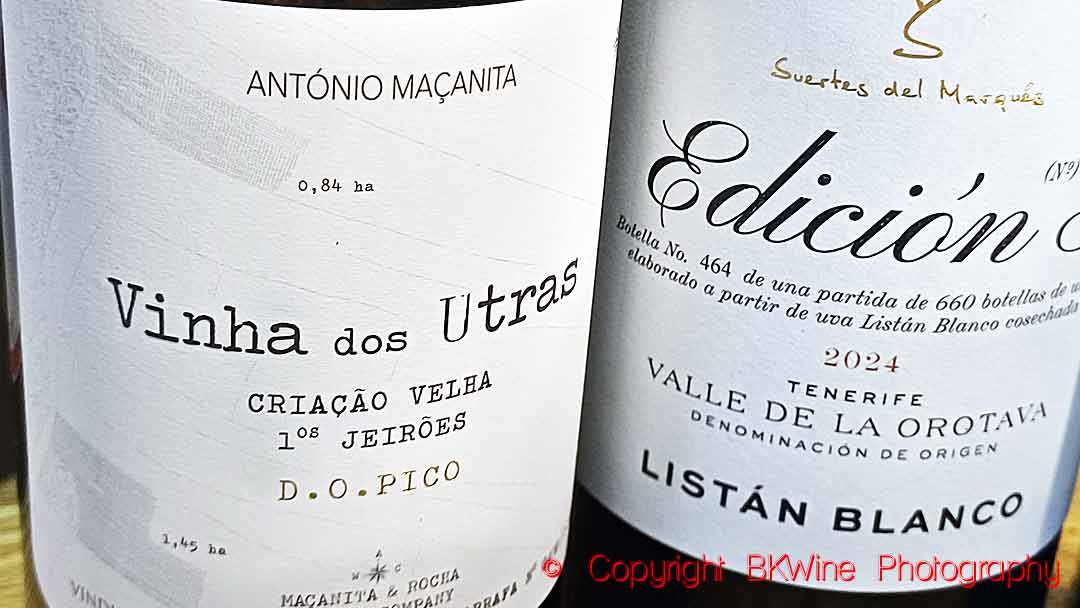
António Maçanita Vinha dos Utras 2022, Azores Wine Company, Ilha do Pico, the Azores

Here, the grapes grow in a stony, difficult terrain, in the crevices of the volcanic rock, just a few meters from the salty sea. It is a bit extreme as a location, and the salt sometimes burns the flowers, says António. It is a very old plot. He uses an ancient grape variety here called terrantez de pico. Vinha dos Utras is extremely dry, with hints of gunpowder and salinity, and very fresh, with lingering acidity. You almost hear the waves from the Atlantic.

António Maçanita Terrantez do Pico, Açores, Azores Wine Company
António Maçanita Terrantez do Pico, Açores, Azores Wine Company, copyright BKWine Photography

Spain, Canary Islands

The Canary Islands lie off north‑western Africa, just south of Madeira. Phylloxera never reached the Canaries, so vines are ungrafted, and many vineyards are over a century old. The islands are major year-round tourist destinations.

Some of the grapes that still grow here travelled on Spanish ships in the 16 th century to South America. One of them was Listan Prieto, now known as Mission in California, País in Chile, and Criolla chica in Argentina. Listan Prieto is still grown on the Canary Islands but is all but gone from mainland Spain.

At the summit, we tasted wines from Tenerife, the biggest of the islands. It is a stunning island with a dramatic landscape and Spain’s highest peak, the Teide volcano, smack in the middle. For such a small island, the differences between north and south are huge. The south is much warmer and protected from rain, so it only gets around 200 mm of rain a year. The north normally gets 700 mm or more and is greener and lusher, but, of course, with more rainy and cloudy days. It is two totally different landscapes.

António Maçanita Vinha dos Utras, Pico Island, The Azores, Azores Wine Company and Edición 3 Blanco, Suertes del Marqués, Valle de la Oratava, Tenerife
António Maçanita Vinha dos Utras, Pico Island, The Azores, Azores Wine Company and Edición 3 Blanco, Suertes del Marqués, Valle de la Oratava, Tenerife, copyright BKWine Photography

Envínate Palo Blanco 2024 Tenerife, DOP Islas Canarias

Envínate was founded by four friends who met while studying oenology. They found that they all liked the fresh, drinkable style of wines made from local grape varieties. Their names are Roberto Santana, Jose Martinez, Laura Ramos and Alfonso Torrente. While each of them worked as wine consultants, the Envínate project developed in parallel across the four regions of the founders: Tenerife, Murcia, Ribeira Sacra, and Albacete. Roberto Santana is from Tenerife and attended the summit.

“Listán blanco (also called palo blanco) is a slow-ripening grape, ” says Roberto. “It gives a complex, low alcohol wine with high personality.” The grapes grow at 760 metres; no yeast is added during fermentation. The wine ages in big oak casks for one year. It is a very dry wine, razor-sharp with tension; flavourful, rich on the nose, with stone fruit, a hint of bitterness on the finish and even a bit of tannin.

Envinate Táganan Tinto 2023, Tenerife, António Macanita Nuno Faria, Caracol, dos Profetas Fazendas Areia 2023, Porto Santo, Madeira
Envinate Táganan Tinto 2023, Tenerife, António Macanita Nuno Faria, Caracol, dos Profetas Fazendas Areia 2023, Porto Santo, Madeira, copyright BKWine Photography

Envinate Benje 2024 Tenerife, DOP Ycoden-Daute-Isora

The grapes here are listán negro, negramol, listán gaucho, and vijariego negro. The grapes grow in dark basalt soil, a complex terroir, says Robert, and adds that Teide’s last eruption was in 1909. The volcano is still active.

The vines are planted at high altitude in the northwest of Tenerife. “There is more sun up there. We are looking for protection from the sun, such as a big canopy.” The wine is light and elegant, with red-fruit aromas, refreshing and invigorating, and fine, smooth tannins.

Suertes del Marqués Edición 3 Blanco 2024, DO Valle de la Orotava, Tenerife

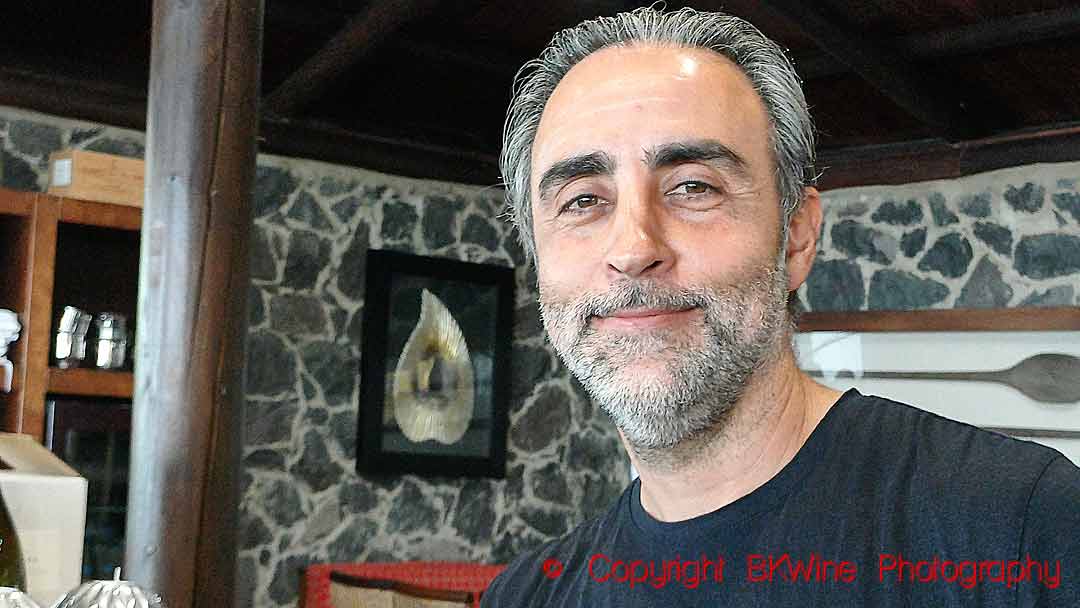
Owner and winemaker Jonatan Garcia Lima makes some amazing wine in a very special style, with prominent fresh acidity. “I like acidity in my wines”, he says. “Edición 3 Blanco is from different plots in different valleys, grown in a soil with clay, so quite rich. The vines are ungrafted and at least 100 years old. The wine has extraordinary acidity, floral notes, and fruit that give an excellent, mouth-filling sensation.

Jonatan Garcia Lima from Suertes del Marqués, Tenerife
Jonatan Garcia Lima from Suertes del Marqués, Tenerife, copyright BKWine Photography

Suertes del Marqués Las Suertes 2022, DO Valle de la Orotava, Tenerife

Very old vines of listan negra from 45 different plots, all vinified separately, a careful extraction, and one year in oak barrels. It is refreshing and energetic, with lovely fruit, length, and complexity, but still an easy-drinking wine.

Suertes del Marqués Vidonia V.P. Listán blanco 2016, DO Valle de La Orotava, Tenerife.

Superb fruit, mouthfeel, texture, good length, a pleasant hint of bitterness at the finish. A delicious wine that shows what listan blanco can do in the right hands.

Read the first part of this article here: Island Wines Summit Tenerife 2026: Do wines made on Islands share a distinct identity? | Britt on Forbes

– – – – – – 

More on Island wines on BKWine Magazine:

Cyprus

Tenerife, Canary Island

Madeira

Sicily

Sardinia

Mallorca

Chose your language. Read the article in:

Author:

Author:

Share this post:

Leave a Reply

Your email address will not be published. Required fields are marked *

  Subscribe to comments:

Notify me of followup comments via e-mail. You can also subscribe without commenting.

SUBSCRIBE TO OUR NEWSLETTER!

25,000 subscribers get wine news every month. You too?