—
Can You Yell the Difference Between “Bad” and “Small”?
—

Several years ago, I spoke with a wine producer who was complaining about wine journalists. We were discussing a particular vintage that some journalists had written off as worthless before the grape must had even made it into the tank. It had been a difficult growing season, certainly, and perhaps yields would be somewhat lower. But in the end, it turned out to be a genuinely excellent vintage. But difficult to sell, the producer told me. Because of the journalists’ condemnation of the vintage, without having even tasted the wine.
I thought about that the other day while listening to a radio program. The topic was this year’s harvest, climate change, the hot summer, and how vineyards are supposedly “moving north.”
–
Calling all wine lovers:
Do you know someone who might be interested in a wine tour?
Please tell them about BKWine Wine Tours! We do wine tours like no other. A leading wine tour operator since more than 20 years.
Have you already been on one of our tours? Tell your friends! Word-of-mouth is perhaps the most important way to spread the word of good wine, great food and exciting travel.
Thank you in advance for your help and support!
(If you have Swedish friends, please know that we have a separate, more extensive travel program in Swedish: BKWine Vinresor.)
–
Perhaps I am being picky, but I found myself getting hung up on some of the language used in the programme. In the introduction of the episode, the host stated clearly and confidently that Europe’s wine harvest is “the worst in a long time.” Almost exactly the same wording appeared in an article published by a newsletter on current events with the headline: “Worst Wine Harvest in 70 Years.”
Having recently visited several wine regions, spoken with producers here and there, and generally feeling well informed, I was somewhat puzzled. I had heard growers talk about the summer heatwaves and the challenges of the season, certainly, but also about the magnificent quality of both the grapes and the wines, which by now had, in most cases, already finished fermentation. (Harvest has been unusually early everywhere, so much of the wine is already made.)
What they also told me, however, was that harvest volumes were often lower than normal. Not always, though. Some producers had perfectly good yields.
I realised that when the journalists referred to “the worst in a long time,” they were probably talking about “the lowest volume in a long time.” I cannot be entirely sure, of course. More people than one might think automatically associate a difficult growing season with lower quality. If you are only half listening to the programme, or if you switch it off after the introduction, what are you likely to remember? Simply that 2026 is a bad vintage. And that is completely wrong.
The next speaker in the program was a climate reporter and now it gets even worse. Admittedly, she mentions that production volumes in France are down by 6%, but then undermines that clarification by describing 2026, like the host before her, as “one of the worst harvests in 30 years,” before adding that 2025 was also “a really bad year” in France.
I realise that I may be splitting hairs. I genuinely believe that both of them are talking about low yields rather than poor quality.
But do the listeners know that?
Words matter. What we say has consequences. We must also think about how words are received, about what the audience actually hears or reads. That ought to be one of the fundamental rules of journalism.
“Bad” and “worst” are loaded terms. In every context, they carry negative connotations. If you hear a vintage described as the worst in 30 years, your immediate assumption is that the quality was poor. That is unfair to 2025. It was a year of small harvests, but in the overwhelming majority of cases one of outstanding quality. We know that now that many of the wines are already available for tasting, albeit still young.
And 2026? To describe the year in those terms is to mislead listeners and readers. It is also unfair to the producers who spent the entire summer battling difficult conditions and still manage to produce something far better than anyone had expected, only to hear the result dismissed on the radio and in newspaper articles.
In reality, we have largely stopped talking about “bad vintages.” Or at least we should have. Styles vary from year to year. Some vintages are lighter, others fuller-bodied. Some produce wines with lower alcohol levels; others, higher. Some years bring large crops, others smaller ones. That is the very charm of wine. Bordeaux would not be Bordeaux without vintage variation. How interesting would vertical tastings be if every year tasted exactly the same? My most recent trip to Bordeaux would certainly have been far less exciting. Over the course of the tour, we tasted every vintage from 2000 to 2025 except seven of them. All different. All delicious.
In any case, we have not really had truly bad vintages for fifty years. Perhaps not even then. 1972 was a legendarily difficult year, but when we opened our last bottle a decade or so ago, from a modest “petit château”, it was excellent. Old, yes. But thoroughly enjoyable.
Wine tours
Focus this month:
New Zealand
The extraordinary adventure in one of the youngest wine countries
A total road-trip, gastronomic, vinous adventure across breathtaking landscapes, blending meetings with the pioneers of the country’s wine industry, private wine tastings of international top-level sauvignon, pinot, cabernet and much more. And immersive cultural experiences, a private dinner with a Māori family to a stunning glacial lake excursion and tea with the Doonan family. All together with Britt and Per of BKWine.
More info and book here:
And also in winter (only a few places remaining):
- Chile-Argentina, in January 2027
Fully booked now, sorry:
- South Africa, in February 2027
More info on our wine tours here. “World’s Top Wine Tours“. Tours led by the people who know wine and who have an unrivalled experience of wine and wine tours.
Travel in wine regions with someone you trust.
Enjoy the Brief!
Britt & Per
Wine editors to the national encyclopaedia, Forbes.com contributors, award-winning wine book authors, wine tour advisors to the UN and national wine organisations, wine judges … and, above all, passionate wine travellers.


If you appreciate what we do, you can help us:
Tell your friends about the Brief or send it to them.
Like us and follow us on social media:
BKWine Magazine on Facebook | Wine Tours on Facebook
—
What’s on at BKWine Tours
BKWine is also one of the world’s leading wine tour operators. Here’s what we currently have on our scheduled wine tour program:
- Bordeaux, 13-19 September
- Burgundy and Champagne, 23 September – 1 October
- Maybe more. What would you like?
–
- Chile-Argentina, 11-24 January 2027
- South Africa, 14-24 February 2027
- New Zealand, 10-25 March 2027
–
- Bordeaux, September
- Burgundy and Champagne, September – October
- Maybe more. What would you like?
–
We also make custom designed wine tours.
And we have an extensive travel program in Swedish: BKWine Vinresor.
We’re different than most other wine tour operators. We are people who know wine inside out, who travel constantly in wine regions, who write award winning books about wine. Who do this out of passion.
Our wine tours are different from others.
A typical year we organise more than 30 wine tours to destinations across the world. In Europe: France, Italy, Spain, Portugal and more. World-wide: South Africa, Chile, Argentina, New Zealand. Thanks to our Scandinavian background we have a separate offer for the Scandinavian market. These are sometimes offered in English and also available as custom made tours. For example, these destinations:
—
Read our books
We have written eleven wine books. They have won awards from the Gourmand Awards, The International Organisation of Vine and Wine (OIV) and others.
Unfortunately, only one of them has been translated to English; the others are (so far) only available in Swedish. This is the one that is available in English:
Here’s the full list of our books:
- The Wonderful World of Wine
- Languedoc-Roussillon, the Wines of Southern France
- Champagne, the Wine and the Growers
—
News from the World of Wine
—
Short briefs on what’s been happening in the world of wine recently and other interesting things.
—
Harvest in Bordeaux 2026: looking good but small
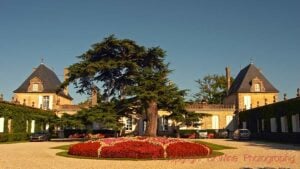
The very first feedback on the harvest in Bordeaux 2026 says it looks promising. I have just spent a week travelling in Bordeaux, Sep 14-19, and have visited about a dozen properties (Lascombes, Phelan Segur, Haut-Bailly, Carsin, Franc-Mayne, Bernateau, Paradise Rescued, Beychevelle…). Most of them had just finished the harvest a few days earlier, many were just about to finish, and some were just in the early days. It has been an extremely early harvest (as everywhere else in France). Over summer there has been a lot of buzz around the exceptional weather as well as the wildfires near Bordeaux, some commentators voicing ominous words about “catastrophe”. It did not happen. On the wildfires: it seems that even in Graves (closest to the fire) no big damage has been done and concerns about smoke taint seems over-blown (to be confirmed).
Otherwise, for the reds the harvest will be small but of good quality. Berries are small and the skin tends to be thick. The fruit that has been brought in has looked healthy. Many have also mentioned that in spite of the hot weather, acidity is good. The result for the whites have surprised those who grow white grapes: The volume is not small but normal and – also here – acidity is very good. This is, of course, just based on feedback from a handful of properties on both the right and the left bank. One interesting comment from Pierrick Lavau at Chateau Bernateau. He had just finished harvesting merlot and was starting with cabernet franc and the result surprised him: “Cabernet franc seems to have suffered much less from the heat than merlot. Poses an interesting question on what to plant in the future.”
Travel: Come on a wine tour to Bordeaux with BKWine. (PS: We’ve written a prize-winning book on Bordeaux.)
New on the travel site: Live, Dispatches from The Vineyards and Wine Regions *
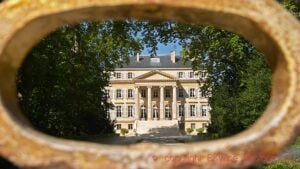
We have started a new experiment. We want to share more of all the beautiful, exciting, interesting things that we encounter on our wine tours. The best thing is of course to be on the tour, but the next best thing is to see pictures from what happens on the visits. We have therefore started a project posting very short texts but with lots of pictures, directly (or almost directly) from the tours, in the travel blog. Simple. Fast. Inspiring. We call it “Live, Dispatches from The Vineyards and Wine Regions”. We will organize it a little better in the future, but for now you can find it on the home page of BKWineTours.com. There are two easy ways: A) just add “live” at the end of the travel site URL, like this, BKWineTours.com/live/, or B) just after the intro on the travel site there’s a blue button you can click/tap: “Live Update from Current Tours”. Some examples, pictures and short texts:
- A morning at Château Lascombes, Margaux, Bordeaux
- A few châteaux along the Route des Grands Crus in Médoc. Do you recognise them?
- Lunch at Chateau Haut Bailly, Pessac Leognan, Graves, Bordeaux
- Lunch at Chateau Beychevelle, Saint Julien, Bordeaux
- The great Domaine de Cebene in Faugères
- At Unison Vineyards in Hawkes Bay, New Zealand
In other words, follow along among the vineyards this autumn with Vineyard Dispatches.
Pierce’s disease threatens Europe: can we learn from California’s experience?
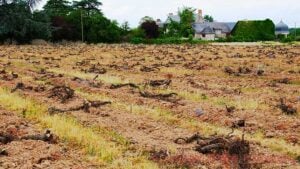
Climate change is bringing more unpredictable weather, as well as the risk of new diseases affecting vineyards. California’s vineyards have long struggled with a troublesome condition known as Pierce’s disease; recently, Mallorca and Portugal have also been affected. New research indicates that just over 40% of Europe’s vineyards are at risk of falling within the climate zone where the bacterium causing the disease thrives. The bacterium is spread by insects (sharpshooters), and infected vines typically die within one to five years. There is no cure once a vine has been infected.
Europe now aims to learn from California’s experience. Early detection and destroying the infected plants are important but also to have a good communication between producers and between the wine regions. Many decades of fighting the diseases have taught the producers in California the merits of cooperation. The disease cannot be cured, but there is a synthetic insecticide that can keep the leafhoppers in check to some extent. However, such a product is not an option for organic growers. California has also developed hybrid varieties that are resistant to Pierce’s disease and also possess some resistance to fungal infections. Read more about how to manage Pierce’s disease here: sevenfifty
A ”LinkedIn”-type wine business platform for professionals: Global Wine Business Institute

I was recently in touch with Nicolas Depetris Chauvin, a professor at HES-SO Geneva School of Business Administration that I met at an OIV congress a while back. He told me about a new initiative that could be interesting for some people who read the BKWine Brief: an online platform called “The Global Wine Business Institute”. It seems to be a forum for sharing of information, creating research and establishing contacts and networks, aimed at wine professionals of all sorts, wineries, of course, but also academics, wine trade people, writers… In Nicolas’ words: “With colleagues in 20 Universities we have just launched the Global Wine Business Institute (GWBI) platform—an open initiative connecting wine industry leaders, researchers, and policymakers to exchange market intelligence and collaborate.” It was only just started and will no doubt take some time to get up to speed. It will be interesting to see how it develops, focussed on the business of wine. It is free to join. Why not try it? Global Wine Business Institute
New on the travel site: Highlighting useful travel info for you *

Another improvement we’ve been working on for our wine travel site over summer is a better organisation of all the travel and tour information we have on BKWineTours.com. We’ve been writing about wine touring there for many years and have many texts that give you useful advice, insider tips and other things that will make your travel better, give you more knowledge about the wine regions we visit, and highlight some of the destinations we have. We have sorted everything in more easily accessible categories. You can find all of them on the front page and also on dedicated category pages:
- Upcoming Wine Tours on the Schedule
- Wine Travel Guides and Tips
- Live, Dispatches from The Vineyards and Wine Regions (as described elsewhere)
- From BKWine Magazine (about the wine regions that are our wine tour destinations)
- Wine Travel Stories and Highlights (stories, short and long from our wine tours)
- Wine Tourism News and Insights (on the wine tourism and wine travel business)
- And, “What Others Think, Customers, Media”:
Harvest 2026 in Languedoc: hot and dry conditions promises outstanding wines
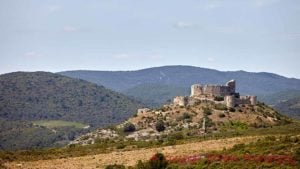
The story is much the same across most of France: the 2026 harvest began exceptionally early. The days when winegrowers could take their holidays in August are probably over. During our tour in Languedoc last week, everyone we met was highly satisfied with the quality of this year. Alain Chabanon (Montpeyroux and Terrasses du Larzac) has not quite finished harvesting yet, with mourvèdre still to come, but he is already convinced that 2026 will be an outstanding vintage. The summer has been extremely dry, he says, with virtually no rainfall since May. Substantial winter rains, however, ensured that drought stress never became as severe as it might have. What struck us most was how green and healthy the vineyards looked wherever we travelled.
Pierre Bories, owner and winemaker at Château Ollieux Romanis in Corbières Boutenac, also believes this year’s wines will be superb. The heat has increased alcohol levels by about one percentage point, hardly a dramatic change. He has also been careful to shorten skin-contact times during vinification. At Domaine des Chimères in Octon, in the Terrasses du Larzac appellation, we tasted wines still in fermentation made from varieties such as counoise, ribeyrenc, viognier, rolle and terret. They were remarkably impressive for wines at such an early stage. Winemaker Guilhem Dardé explained that some grenache parcels have reached 16% potential alcohol, but he is not concerned, as these wines will later be blended with varieties such as syrah, which do not reach the same levels of ripeness and alcohol.
Will Southern France’s Winegrowers Win the Battle Over Vermentino?
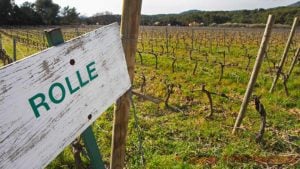
During our tour through Languedoc recently, we tasted many excellent white wines. White wine production is on the rise in Languedoc, keeping pace with growing global demand for white wines. Producers have a vast array of grape varieties at their disposal, often blending several of them, and it is remarkable how much complexity and freshness skilled winemakers can achieve. One particularly popular grape is vermentino. Or perhaps we should say rolle instead? The fact is that French winegrowers are no longer allowed to use the name vermentino on their labels. A specific EU regulation, secured by Italy a few years ago, states that if a grape variety name forms part of an Italian geographical indication, such as Vermentino di Sardegna DOC or Vermentino di Gallura DOCG, other EU wine-producing countries are then prohibited from using that grape name if it could create confusion among consumers.
Some French producers, however, have chosen to ignore the ruling and refuse to abandon the name vermentino, which they consider far more marketable and widely recognised than rolle. We saw several examples of this during our trip, although no names will be mentioned. The decision to ban the term in France has been controversial, and producers in Languedoc and Provence continue to seek ways of having it overturned. Their strongest argument may be that consumers are not confused at all, but can clearly see from the label that they are buying a French wine carrying a French IGP or AOP designation. (Or perhaps they should point out that there’s a village called Chardonnay in Burgundy.) The final word has yet to be spoken. It reminds me of the Italian tactics used to monopolise the name prosecco (which was previously a grape name): Did the Italians hijack the grape name prosecco?
New Zealand focus on BKWine Magazine *

We have written a lot about New Zealand on BKWine Magazine. This is mainly based on our extensive travel in the New Zealand wine regions. We’ve been going to New Zealand since 2019 and have seen a lot and established some really good contacts. Here’s a selection of some of our best articles:
- Trailblazing in Hawkes Bay, a conversation with the winemaker at Black Barn Vineyards | Per on Forbes
- Around New Zealand with Pinot Noir | Britt on Forbes
- New Zealand is much more than just sauvignon blanc
- Felton Road: quality Pinot Noir from Central Otago, New Zealand | Britt on Forbes
- New Zealand pioneer Unison Vineyard interprets Gimblett Gravels terroir | Britt on Forbes
- Jenny Dobson, legendary Kiwi winemaker, talks about changes and challenges in New Zealand | Britt on Forbes
- New Zealand, a “new” wine country with a great future enters a new phase says Emma Jenkins MW | Britt on Forbes
If you’re interested in New Zealand wine you should definitely consider coming on the BKWine tour of the country. You too will meet some of these living legends too.
–
Travel: Come on a wine tour to New Zealand with BKWine.
See: See pictures and videos from New Zealand in the latest wine tour’s Facebook group.
Carignan blanc has a rosy future
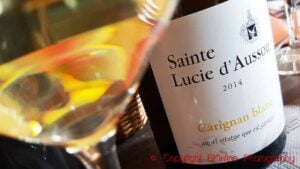
”A carignan blanc market report”? Sometimes you make a double-take when you read a news item. Carignan blanc is an odd and unusual grape. Carignan is usually red, but a mutation is a white grape. And it makes great wine, mainly in the Roussillon. So I was happy to read: ”The Carignan Blanc wine segment has witnessed notable growth in recent times.” It is an excellent excuse to make some promotion for this grape. Carignan, the red version, is grown mainly in Roussillon and in Spain (often under the name mazuelo or samsó). It has two versions, carignan gris and carignan blanc. Both gris and blanc are very interesting and very rare. Carignan blanc wine tend to be full-bodied with yellow fruit and flower aromas but with a good acidity. Blanc tends to be the more aromatic of the siblings. Gris can be a bit more austere and angular with more structure and herbal notes. Apparently, the world market for carignan blanc is currently $1.18 bn and expected to reach $1.64 bn in 2030, according to The Business Research Company. We can only hope; it is a great grape in all its three colours. Try it if you find it.
—
Features of the Month
—
Articles and features published on BKWine Magazine and on our wine travel blog and (occasionally) photography blog in the last month.
—
Turning dirt into sunshine, composted wines at Te Whare Ra in New Zealand
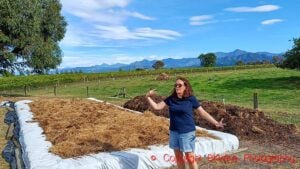
More and more wine producers talk about the importance of compost. For biodynamic wineries, it is almost a question of religion or faith; using compost is compulsory. For others, it can be an important tool to keep the soil alive and the vines growing on it healthy. But few people I have met have talked with such passion and precision about compost as Anna Flowerday at Te Whare Ra (TWR) in Marlborough, New Zealand. Here’s how they work with compost to make great wines.
Read more in Per’s article on BKWine Magazine: Wines Made With Cow Shit, Not Bullshit: Inside Te Whare Ra’s Compost in Marlborough NZ.
Travel: Come on a wine tour to New Zealand with BKWine.
Tenerife: A Visit to Vinos Atlante, 200 Year Old Vines and Braids
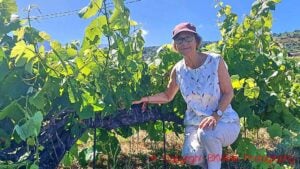
“It was a sunny morning when I arrived at Vinos Atlante in the Valle de la Orotava, one of Tenerife’s five DO areas. I was grateful for the fine weather; the day before had been, as the locals explained, “a very typical day in northern Tenerife,” with low clouds and a light rain that didn’t feel particularly wet but in fact was. The Orotava Valley lies on Tenerife’s north‑western coast. Having vineyards in the north makes a big difference. Tenerife is the largest of the Canary Islands, yet still not very big. Even so, the contrasts between south and north are enormous. The south is warmer and drier, protected from rain by the massive mountain range in the middle of the island, dominated by the majestic volcano Teide at 3,715 metres, Spain’s highest peak.”
Read more in Britt’s article on BKWine Magazine: Tenerife: A Visit to Vinos Atlante, 200 Year Old Vines and Braids.
Red, white and sparkling wines from New Zealand tasted
Jack, our Stockholm-based reporter covering the monopoly (Systembolaget) launches gives our Swedish readers a report every month on the new wines. In this overview article we have assembled all red, white and sparkling wines from New Zealand launched in the last 12 month at Systembolaget. The report includes Jack’s point score for the wine on a 20-point scale (his scoring level is rather low compared to others so a 16-pointer is pretty good), his evaluation of value for money as well as his description of the wines.
These are wines launched in Sweden, but most of them are also available in other countries so we want to share the review of these New Zealand wines also with our English language readers. (Every month we publish a report on the launches at Systembolaget, but only in Swedish.)
Travel: Come on a wine tour to New Zealand with BKWine.
See: See pictures and videos from New Zealand in the latest wine tour’s Facebook group.
Felton Road owner Nigel Greening tells the story of this Central Otago pioneer
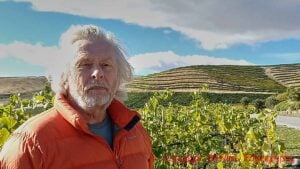
Few wine regions are so welcoming to visitors as New Zealand. That may be because it is far away (from everything). So when you come there, people are very happy that you have made the effort to travel all this way. We have been to Felton Road several times and have met both Blair Walter, the winemaker and co-owner, and Nigel Greening, who bought the winery in 2000. Recently, we had the chance to have a long talk with Nigel, who explained some of the history of the winery and some of the more curious points about the region and the winery. Read on.
Read more in Per’s article on BKWine Magazine: Nigel Greening of Felton Road on the winery, the climate, and the environment.
Travel: Come on a wine tour to New Zealand with BKWine.
See: See pictures and videos from New Zealand in the latest wine tour’s Facebook group.
—
Wine Tours
—
Details on our current and future wine tours. Book a wine tour with the “World’s Top Wine Tour Operator” today (or when you feel like travelling to wine country).
Treat yourself to an unforgettable experience in the beautiful wine-lands together with some of the most knowledgeable wine people around. Book now!
—
Get to Know South American wines in their true environment | Wine Tour to Argentina and Chile

VERY FEW PLACES LEFT ON THIS TOUR.
The reason for going on a wine tour is, of course, to taste good wines and to discover new ones. But just as important, we think, is that wine, when experienced in the place where it is made, falls into context in a completely different way than when you drink it at home. That place, that context, those people you’ve met, stay with you later, when you’re back home enjoying a malbec or a torrontés from Argentina, or a cabernet sauvignon or a carmenère from Chile.
Equally magnificent are the landscapes we encounter during our journey through these two countries. We see how the vines have adapted to their surroundings: the dry climate and heat in Mendoza, or the cool ocean winds along the Chilean Pacific coast.
Wine is, of course, the main focus of the tour. We taste at wineries, and during our vineyard lunches we continue tasting, but now together with gourmet food. Perhaps the wines will feel different, perhaps even better; food and wine are always at their best together. Everyone will undoubtedly discover new favourite wines.
But the tour is far from just about wine and fine dining. We meet in Buenos Aires where we learn the tango steps (by watching others, not by dancing ourselves. But the enthusiast can always find a milonga!). We end the tour in Santiago de Chile. Two big cities that are completely different. So it is with the two countries as well. Argentina and Chile lie close to each other but feel very different. Join us on the tour and discover these differences up close. We travel by bus over the Andes — that alone is an experience, actually worth a trip on its own! We travel to beautiful Colchagua in Chile and visit the port city of Valparaíso and Viña del Mar. And much more.
This is a chance to experience two dynamic wine countries in one unforgettable wine tour.
You will travel with both Britt and Per on this tour, two world-leading authorities on wine and wine travel, authors of 13 award-winning wine books.
Come on this exciting wine tour to Argentina and Chile with BKWine, one of the world’s leading wine tour operators (*).
Book now!
Very few places left.
(*) And the only one who has authored 13 award-winning wine books.
More inspiration: You can get an even better feeling for what you will experience on this tour if you visit the latest tour’s own Facebook group. Lots of pictures and videos from the tour: See pictures and videos from Chile and Argentina in the latest wine tour’s Facebook group.
A wonderful tour through wine regions, a myriad of landscapes and local flavours | wine tour New Zealand
URGENT! Book now!
Our wine tour in New Zealand takes you on a journey through the key wine regions of the country, in fact, almost all of them. Wine is the centre piece of our tour, of course, but we will experience many other things, such as glacial lakes, Māori culture, local food, geysers, mud pools (!), boat journeys and more. And since our bus will take us all the way from Auckland to Queenstown, we will have ample time to admire the ever-changing landscape.
Amazing vineyard lunches are part of the tour, with lamb, seafood (we will stop in Kaikoura for their famous crayfish, aka New Zealand lobster), salmon and celebrated cheeses. And other delicacies. New Zealand is famous for its sheep and, consequently, for its sheep dogs. We will get to know some of them together with one of the country’s top dog handlers. Quite stunning.
From the North Island, we cross the Cook Strait by boat, a memorable boat ride that is not only a transfer. Here you have to watch out for dolphins and gannets. And the majestic albatrosses if we’re lucky. We dock at Picton on the South Island, close to the biggest wine region, Marlborough. Sauvignon blanc dominates, but the region’s pinot noir and riesling are increasingly getting attention. Further south we will admire the Southern Alps and we will make a stop at the Mount Cook national park. Our last stop will be in Central Otago with is dramatic landscape and gold-digging history. Here, pinot noir gets flavours different from anywhere else. World class.
Join us on this adventure and discover a different wine country, far away. We promise you many surprises. Good ones!
You will travel with both Britt and Per on this tour, two world-leading authorities on wine and wine travel, authors of 13 award-winning wine books.
Come on this stunning wine tour to New Zealand with BKWine, one of the world’s leading wine tour operators (*).
Book now!
Watch this introductory video about our New Zealand wine tour.
(*) And the only one who has authored 13 award-winning wine books.
More inspiration: You can get an even better feeling for what you will experience on this tour if you visit the latest tour’s own Facebook group. Lots of pictures and videos from the tour: See pictures and videos from New Zealand in the latest wine tour’s Facebook group.
A World of Wine | Bordeaux Wine Tour
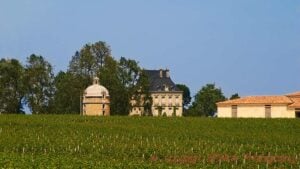
I have just returned from Bordeaux, one of the autumn’s wine tours to this the world’s most famous wine region. It’s a special tour with special experiences. A blend of elegant, not to say grandiose, and rustic. We have some of the most extraordinary meals you can get on a wine tour here – not least because the châteaux we visit have known us for many years and open their doors to us, to you, in a very special way. Star chef level. But the other side of Bordeaux is also important to see and understand. The small one-hectare vineyard that makes a wonderful 100% cabernet franc (have you ever tried that from Bordeaux?) or the vineyard that “diversifies” with pizza nights and outdoor cinema – and also makes some unique wines such as a 100% carménère and a 100% sauvignon gris (yes, really!). For me, having been to Bordeaux countless times, it’s still special to come back here. For someone who has never been here, it becomes a wine and gastronomy experience of grand proportions that will give you an insight into what Bordeaux is that simply cannot be gained from a distance. Honestly, I doubt you can get this kind of experiences on any other tour.
Come and discover French wine and food in Bordeaux on this luxurious wine tour with BKWine, one of the world’s leading wine tour operators (*).
- Bordeaux wine tour, September 2027, exact date to be announced
(*) And the only one who has authored 13 award-winning wine books, one of which is on Bordeaux wines.
We can add that we have also written an award-winning book about Bordeaux.
An unbeatable combination, Burgundy and Champagne | wine tour
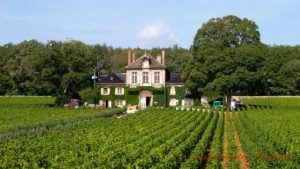
I’m writing this just before setting off on the next trip – one of this autumn’s wine tours to Burgundy. I have just been in Bordeaux and am preparing for almost the complete opposite, Burgundy. In a way. Bordeaux is (often) large estates, sometimes 100 hectares or more (that is, a million square metres…). In Burgundy the estates are often small – 12-15 hectares counts as quite large. And fragmented, it can be some twenty little plots. In Bordeaux there are large, beautiful châteaux. In Burgundy you rarely see a château, rather it’s farmhouses or houses within a small village. In Bordeaux it’s wide vistas, almost nothing but vines as far as the eye can see. Sure, there are plenty of vines in Burgundy too, but they’re mixed in with hills, villages, patches of forest and farmland. The city of Bordeaux is one of France’s most elegant and grandiose, a wealthy trading city. Beaune, the main town of Burgundy, is a small town, and along the country road are small villages with a bakery, a café, a restaurant. But both share the distinction of making some of the world’s finest wines. And for visitors the problem is the same – who should you visit, and how? We take you to places you may never have heard of but that make better wine than most. Usually small producers, personal, skilled. A Burgundy that is difficult to get to for an outsider.
After three days in the heart of Burgundy we head north, making a stop in Chablis to savour the northernmost Burgundy appellation and then continue to Champagne
It’s in a way difficult to explain why our tour to Champagne is so special. It has, of course, to do with history and experience. We have been travelling in Champagne for more than 20 years. We have written an internationally award-winning book on Champagne, probably one of the most fact-packed there is. We know producers and restaurants that are hard to find but hard to beat. We choose our visits with care, so that they give you as much experience, knowledge and joy as possible. The gastronomy on our tours is legendary (but balanced, you don’t need to eat five courses twice a day, unless you want to). The meals, always with exciting champagnes here in the region, show you what a fantastic food-pairing drink champagne is. Most visits are to family producers, often you’ll meet the winemaker or owner (often one and the same person). There will also be one large “house” to show you the grand (and slightly more industrial) side of Champagne. An unbeatable combination: Burgundy-Chablis-Champagne.
Join us for a behind‑the‑scenes deep dive on this Burgundy-Champagne tour, where we also enjoy some truly delicious lunches, always accompanied by top-quality Burgundy or different styles of Champagne.
Come on this exceptional tour to two of the world’s most respected wine regions with BKWine, one of the world’s leading wine tour operators (*).
- Burgundy – Champagne Grand Tour, September – October 2027, exact dates to be announced
Book now!