—
Creativity trumps origin?
—

There is no shortage of hard‑to‑grasp expressions in the world of wine. One of them is that “a wine expresses its origin.” We see it everywhere. Advertisers use it, and so do wine producers, wine enthusiasts, sommeliers — everyone involved. It’s what wine consumers want to hear today. It sounds good, down‑to‑earth, authentic.
But everyone knows how difficult it is to identify, blind, where a wine comes from. The expression is vague, elusive. Perhaps only the producers themselves understand it. Everyone else who says that “the wine tastes of its origin” probably already knows where the wine comes from.
–
Calling all wine lovers:
Do you know someone who might be interested in a wine tour?
Please tell them about BKWine Wine Tours! We do wine tours like no other. A leading wine tour operator since more than 20 years.
Have you already been on one of our tours? Tell your friends! Word-of-mouth is perhaps the most important way to spread the word of good wine, great food and exciting travel.
Thank you in advance for your help and support!
(If you have Swedish friends, please know that we have a separate, more extensive travel program in Swedish: BKWine Vinresor.)
–
A wine’s origin can be broad and wide. The broadest category in France is vin de france, which in 2009 replaced vin de table. Vin de france is currently a big success on the export market, 66% of this category is exported. And one must admit that vin de france sounds much nicer than vin de table. In the old days, these wines were almost entirely cheap, simple wines. It was forbidden to put the vintage or grape variety on the label. Today, that is no longer the case. Instead, “with creativity in tune with the times, the designation vin de France is establishing itself as a platform for expressing new wine trends,” says the umbrella organisation for its producers, Anivin de France.
For a vin de france, the origin is simply France; nothing more specific may be stated. That is the nature of the category. The wine comes from France. It is, however, mandatory to include “the identity and address of the producer or bottler” on the label, but this says nothing about where the grapes were grown. Other than somewhere in France. Sometimes you can guess, but you can never be certain, and it is not uncommon for producers to try to circumvent the rule. But if you have chosen to stand outside the system of controlled origins, IGP and AOP/AOC, perhaps you should refrain from making claims about origin?
So, vin de france cannot be sold based on origin. But since grape variety may be put on the label (as well as vintage), producers can instead attract wine enthusiasts with unusual grapes, such as the fungus resistant varieties souvignier gris or floréal, or something as exotic for France as pinotage, touriga nacional, or zinfandel. Or why not a 100% chardonnay from Médoc? At least one château is preparing to launch such a wine. Though, of course, they are not allowed to state that it comes from Médoc. (In many ways, it is reasonable to forbid this; the entire European wine system is built on following rules for origin, grapes, and methods. You can’t have your cake and eat it too.)
Pét‑nat, natural wines, juicy pale reds, orange wines, and low‑alcohol wines are all popular among vin de france producers. A playful, quirky label, far from the traditional, appeals to those who think wine is old‑fashioned. In other words, among vin de france producers you find a delightful mix of the wild and unconventional who don’t fit into the usual frameworks, and producers who feel that appellation rules no longer keep up with the times.
Sure, the guessing game gets harder if you buy a vin de france, especially if the winemaker has blended grapes from all over France (yes, that is allowed). But what does it matter if you get a bit of creativity in return? And a good wine.
Besides, a wine’s origin doesn’t disappear just because it can’t be written on the label. And perhaps, in the end, it is more important who made it.
Wine tours
We have three tours that we particularly want to bring to your attention: Bordeaux, Burgundy-Champagne, and New Zealand.
If you can’t come this time, maybe you can tell a friend who might want to join us on one of our upcoming tours.
Bordeaux luxury wine and gastronomy
13-19 September
Drawing on decades of experience (since 1986 actually), this Bordeaux tour takes you to private lunches and tastings and insider access at world-famous châteaux as well as family-run estates across the Médoc, Saint-Émilion, and Sauternes. A very special Bordeaux experience. More info and book here: Bordeaux, September 13-19, 2026
The Burgundy & Champagne Grand Tour
September 23 – October 1
This nine-day Grand Tour to Burgundy and Champagne pairs private visits to famous terroirs with intimate meetings with passionate Burgundy winemakers and outstanding grower-champagne producers. The wine is about the people behind it! Exclusive, private, gastronomic. Very enjoyable. More info here: Burgundy and Champagne, September 23 – October 1, 2026
New Zealand
The extraordinary adventure in one of the youngest wine countries,
March 10-25, 2027
A total road-trip, gastronomic, vinous adventure across breathtaking landscapes, blending meetings with the pioneers of the country’s wine industry, private wine tastings of international top-level sauvignon, pinot, cabernet and much more. And immersive cultural experiences, a private dinner with a Māori family to a stunning glacial lake excursion and tea with the Doonan family. All together with Britt and Per of BKWine. More info and book here: New Zealand, 10-25 March 2027
And also in winter (only a few places remaining):
- Chile-Argentina, in January 2027
- South Africa, in February 2027
They are already starting to fill up, so contact us now if you are interested!
More info on our wine tours here. “World’s Top Wine Tours“. Tours led by the people who know wine and who have an unrivalled experience of wine and wine tours.
Travel in wine regions with someone you trust.
Enjoy the Brief!
Britt & Per
Wine editors to the national encyclopaedia, Forbes.com contributors, award-winning wine book authors, wine tour advisors to the UN and national wine organisations, wine judges … and, above all, passionate wine travellers.


If you appreciate what we do, you can help us:
Tell your friends about the Brief or send it to them.
Like us and follow us on social media:
BKWine Magazine on Facebook | Wine Tours on Facebook
—
What’s on at BKWine Tours
BKWine is also one of the world’s leading wine tour operators. Here’s what we currently have on our scheduled wine tour program:
- Bordeaux, 13-19 September
- Burgundy and Champagne, 23 September – 1 October
–
- Chile-Argentina, 11-24 January 2027
- South Africa, 14-24 February 2027
- New Zealand, 10-25 March 2027
We also make custom designed wine tours.
And we have an extensive travel program in Swedish: BKWine Vinresor.
We’re different than most other wine tour operators. We are people who know wine inside out, who travel constantly in wine regions, who write award winning books about wine. Who do this out of passion.
Our wine tours are different from others.
A typical year we organise more than 30 wine tours to destinations across the world. In Europe: France, Italy, Spain, Portugal and more. World-wide: South Africa, Chile, Argentina, New Zealand. Thanks to our Scandinavian background we have a separate offer for the Scandinavian market. These are sometimes offered in English and also available as custom made tours. For example, these destinations:
—
Read our books
We have written eleven wine books. They have won awards from the Gourmand Awards, The International Organisation of Vine and Wine (OIV) and others.
Unfortunately, only one of them has been translated to English; the others are (so far) only available in Swedish. This is the one that is available in English:
Here’s the full list of our books:
- The Wonderful World of Wine
- Languedoc-Roussillon, the Wines of Southern France
- Champagne, the Wine and the Growers
—
News from the World of Wine
—
Short briefs on what’s been happening in the world of wine recently and other interesting things.
The mega-fires in France and the “Bordeaux wine catastrophe”
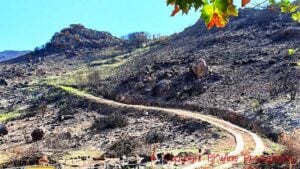
The fires that have raged and continue to rage in France and Spain are terrible. The have caused enormous material and human losses. It is a tragedy for those affected. As for the fires near Bordeaux, they are now under control, and people who were evacuated are starting to return home. But the municipalities that have been hardest hit are still desolately empty. The fires have been concentrated in forested coastal areas southwest of the city of Bordeaux (the Les Landes Forest and Cap Ferret). 42,000 hectares have burned. The vineyards in Bordeaux are located further inland, far outside the fire area. Agricultural land has not been affected and what has burned is almost exclusively pine forest and shrubland (and campsites, various holiday homes etc.).
The vineyards in Bordeaux have therefore not been directly affected by the fires. However, there may be an indirect risk for vines in a fire area even if the vines are not burning. The grapes can be damaged by smoke, the wines can get “smoke taint”, a problem well known in, for example, Australia and California. But even that risk seems to be small in Bordeaux. The vineyards are not close enough to the fire, and the harvest is far enough away that the grapes are most likely not in danger.
Travel: Come on a wine tour to Bordeaux with BKWine. (PS: We’ve written a prize-winning book on Bordeaux.)
The heat challenges the freshness of Champagne
A sparkling wine should ideally have a fresh acidity. The whole idea of drinking bubbles is that it should be refreshing, right? The bubbles themselves help, but in Champagne they have always claimed that it is (among other things) the unusually high acidity that makes a champagne rise above other sparkling wines (although they have always also considered it necessary to mask it with the addition of sugar, so called dosage). So what happens now, when temperatures rise in the summer and are more like the Mediterranean than northern France? On average, the alcohol content has increased by 0.8 percentage points in 20 to 30 years, while the total acidity has decreased by 1.3 grams/litre. However, it is still high compared to most other wines. The pH in Champagne is normally low (~pH3) and has not changed much so far, but it will increase, according to the Comité Champagne, which could change the stability of the wine. While it used to take 90 to 100 days between flowering and harvest, today it is 83 days (average over the last ten years). This can affect the typicality of the grape varieties. What also happens is a greater difference between “technological ripeness” (sugar/acidity balance) and aromatic and phenolic ripeness. “Tasting the berries is therefore extremely important nowadays,” says the Comité Champagne. This is nothing the champagne producers cannot handle. There is no reason to worry. Read more: vitisphere
Travel: Come on a wine tour to Champagne and Burgundy with BKWine. (PS: We’ve written a prize-winning book on Champagne and one on Burgundy.)
Cork is thriving, 75% market share in France
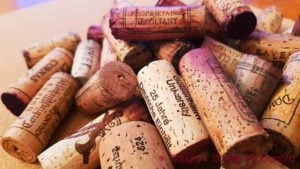
Did anyone think that natural cork would disappear? Yes, there was an Australian a few years ago who predicted that natural cork would completely die out as a closure for wine bottles. How wrong he was. Today, people realise the important role of cork oak forests, not only as a good bottle closure for wine but also in preserving biodiversity, storing carbon and fighting fires. Cork as a wine closure is popular with both producers and consumers. Current figures show that it has 70% of the market in France. 94% of wines in the United States over 20 USD are closed with cork.
Cork is the bark of the cork oak (Quercus suber L.), a tree that thrives in the area around the western Mediterranean and on the southern Atlantic coast, mainly in Portugal. Cork oak forests cover more than 2.1 million hectares worldwide, of which 34% are in Portugal, the majority in Alentejo. The unique thing about the cork oak is that the bark regenerates after each harvest, without the tree ever being cut down. 2.4 – 4 times more carbon dioxide is captured by a tree that is exploited (used for cork production). 3.3 million tons of carbon dioxide are absorbed by the Portuguese cork oak forests, which corresponds to 5% of the country’s emissions. It is from the third harvest, when the tree reaches approximately 38 to 45 years of age that cork of sufficient quality for the manufacture of natural corks is obtained. The same cork oak can then provide bark for many years, 200 years or more. Read more: apcor
BKWine interviewed in Metro UK about the heatwave’s effect on vineyards
At the end of June, we wrote an in-depth article about the heatwave’s effect on vineyards. Large parts of Europe have been hit by exceptional weather this year. We explained that the heat can lead to problems in many ways, drought, burnt grapes, imbalance, immaturity and over-ripeness and a lot more. It was a theme that interested the English publication Metro, so they called us and asked for an interview with Per, which we were happy to do. There is so much inaccurate writing. Recently, there has been a lot of completely incorrect and untrue writing (mainly in Sweden) about the fires in Bordeaux and how it will lead to “shortages”, to “disaster for winegrowers”, to make them “unable to make quality wines in the future”, “15% price hike”, and other overblown disaster scenarios. (Read more about that in another note in Briefen.) Therefore, it was positive that a publication like Metro UK took the issue more seriously than the Swedish press apparently does. Read the article based on the interview with BKWine by Luke Ashford about the climate challenges for vineyards here in Metro.co.uk.
Travel: Come on a wine tour to Bordeaux with BKWine. (PS: We’ve written a prize-winning book on Bordeaux.)
What happens if you re-enact ”The Judgment of Paris” with Virginia Wines?
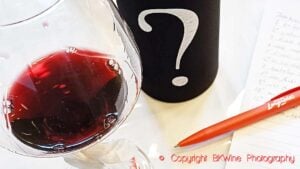
There have been many re-enactments this year of the Paris Judgement that took place 50 years ago, in 1976. That year wines from California famously obtained higher points than the French ones in a blind tasting. In June an unusual re-enactment took place, in Paris, but the wines were not from California but from Virginia on the east coast. But the result was similar. The Virginia wines did very well indeed. “This was not so much a competition”, says Frank Morgon, wine journalist from Virginia och one of the organisers, “as a way to celebrate how far Virginia wine has come”, but still, he looked very pleased with the result.
The tasting included four flights — chardonnay, petit manseng, cabernet franc, and red blends. Petit manseng may sound strange but it is actually one of Virginia’s signature grapes. Each flight included three wines from Virginia and three from France. These are the top scoring wines in each flight:
Chardonnay
- Chardonnay 2023 Michael Shaps Wild Meadow Vineyard AVA Monticello, Virginia
- 2023 Pollak Vineyards AVA Monticello Chardonnay, Virginia
- Les Chazots 2023 Maison Schaps AOP Bourgogne. France
An interesting twist here is that the Burgundy wine comes from Maison Schaps, an excellent winery run by Hanna Schaps (who we visit on our Burgundy tours), the daughter of Michael Shaps responsible for the number one chardonnay.
Petit manseng
- Petit Manseng 2023 Michael Schaps Honah Lee Vineyard, Virginia
- 2023 Veritas AVA Monticello Petit Manseng, Virginia
- 2024 Paradise Springs Vineyard AVA Middleburg, Virginia
I am a bit disappointed that neither of the French petit manseng from Jurançon – lovely wines – got better scores. Strange…
Cabernet franc
- Valley Road Vineyard Cabernet Franc Estate Reserve 2023, Virginia
- Château Daugay Le Piou 2023, Saint Emilion, France
- Château de Minière 2022, Bourgueil, France
Bordeaux blends
- 2019 King Family Vineyards Meritage, Virginia
- 2021 Pollak Vineyards Meritage, Virginia
- Octagon 2021 Barboursville Vineyard, Virginia
We congratulate Virigina Wines.
Sustainable Wine Roundtable encourages everyone to reduce bottle weight – with success
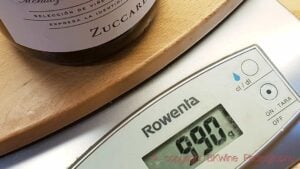
Sustainable Wine Roundtables (SWR) is an organization founded by various players in the wine industry: wine producers, distributors, wholesalers, retailers and more. Systembolaget (the Swedish retail state monopoly) was one of the founding members. Now more than 20 companies are involved; together they produce and sell more than 3 billion bottles of wine, around 10% of global wine production and sales. In 2023, SWR established a bottle weight agreement for its members. The goal is an average weight of 420 grams. During the first two years of the agreement, the average weight of a bottle decreased from the previous average of around 550 grams to 430 grams. This resulted in carbon dioxide savings of almost half a million tons, equivalent to the emissions of cities such as Cambridge in the UK and Hollywood in California. It is believed that the target of 420 grams will soon be reached. Reducing the weight of the wine bottle will improve sustainability both through the manufacturing of the glass and the transportation of the bottles. It will also make it easier for you and me to carry the bottles home. Read more: winebusiness
A summer wine: a French Albariño from Languedoc
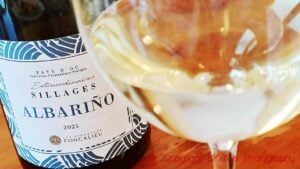
We were out shopping for food but couldn’t help walk past the wine shelf. There we saw a wine from Languedoc made from the albariño grape. Unusual! It went straight into the basket. It cost 10 euros. It’s made by the excellent cooperative Les Vignobles Foncalieu. Albariño has been a permitted grape in France for a few years now but it’s not often you come across it.
Sillages Albariño 2025, Les Vignobles Foncalieu, IGP Pays d’Oc
It’s lightly aromatic and floral, some citrus, quite light in the body but a certain fullness in the mouth, delicious, fresh and excellent value for money.
I take this opportunity to give a shout-out to IGP Pays d’Oc, wines from a huge area that encompasses all of Languedoc and Roussillon. These wines are often easy-going, unpretentious wines, in a good price range and without major pretensions other than being a pleasant wine that can be drunk outdoors and that does not require great effort or deep discussions. Sometimes they are excellent, like this albariño. Pays d’Oc is a good category if you are looking for a specific grape. The appellation has 58 approved grape varieties, more than any other AOP or IGP in France. More info: paysdoc-wines
A cocktail straight from the Douro Valley – Porto Rosé Tonic
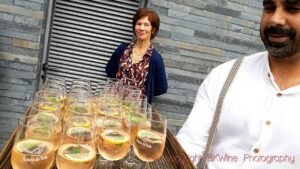
What should we have for aperitif today? Running out of ideas? Why not try a refreshing Porto Rosé Tonic, a recipe straight from Kay Bouchard at Quinta do Tedo in the Douro Valley. Here’s what Kay says: a Porto Rosé Tonic is easy, clean and timeless. Here’s how you make it:
Mix 2 parts Porto Rosé with 1 part Gin and a squeeze of lime or lemon in a balloon or wine glass (the wide bowl helps release the Porto Rosé’s delicate aromas).
Add some berries and macerate if you’d like to extract more of their colour and flavour.
Smack a few mint leaves between your hands to release their full aromatic potential and drop them into the glass with a few large ice cubes (which melt slower and won’t dilute your cocktail flavours so fast).
Fill the glass with 3 parts tonic (or 2 parts tonic and 1 part sparkling water, if you like it less sweet) and give it a gentle stir.
Garnish with a slice of lime and voilà, enjoy!
Travel: Come on a wine tour to the Douro Valley in Portugal with BKWine.
Time to get to know Marlborough even better, now with the help of drones
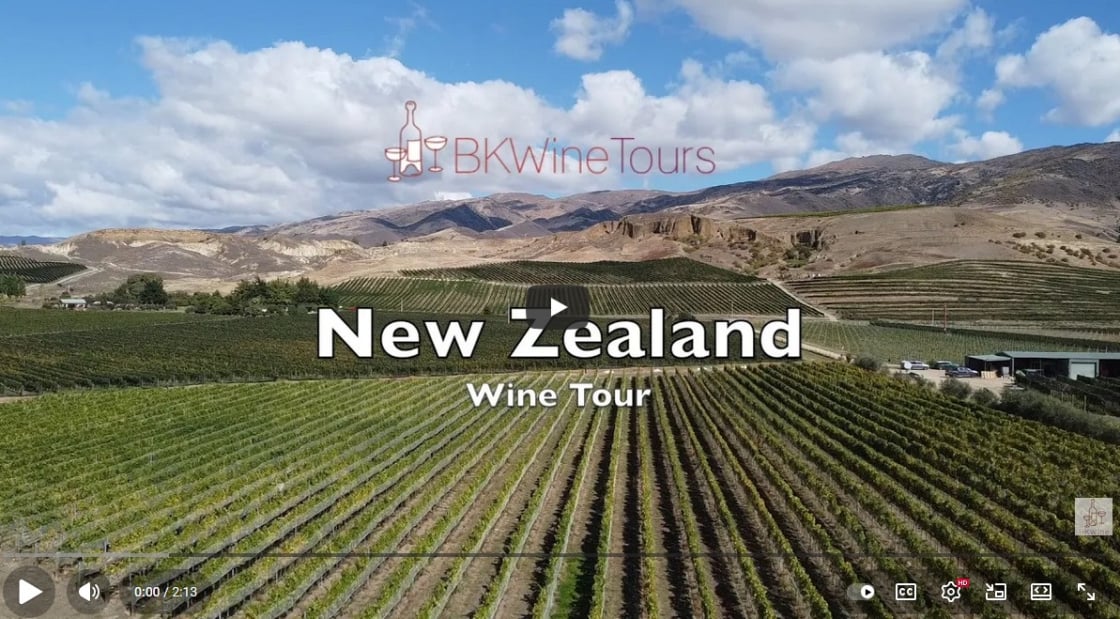
Marlborough, the famous wine region in New Zealand, has long been considered as one big region, mostly planted with sauvignon blanc. Now, there is a clear wish among the producers to understand more about the different sub-regions and how they actually influence the character of the wines. Also, other grape varieties are important for Marlborough and may need different conditions to sauvignon blanc to grow well. That is amply illustrated on our New Zealand wine tour where there is a wide range of varieties on the menu.
Drone imagery is now set to help producers better understand Marlborough’s diverse wine regions. AMW (Appellation Marlborough Wine) chairwoman Sophie Parker-Thomson says the drone imagery will be used as part of AMW’s digital wine map, an interactive map of the sub-regions, from the Southern Valleys and Central Wairau to Awatere and the Pacific wineries on the Southern Coast. The Marlborough geographical indication covers a fairly large area. In the north, it starts in Picton, where the ferry arrives from the North Island, and then extends down to just south of Kaikōura, the small town, famous for its delicious seafood.
Appellation Marlborough Wine is an organisation created in 2019 as a counter weight to the huge quantity of Marlborough sauvignon blanc that is sold in bulk. To be certified as AMW, the wines must be made from 100 % sauvignon blanc from Marlborough. And, very important, the wine must be bottled in New Zealand. The appellation has now been expanded to include all grapes grown in Marlborough, so it is no longer just sauvignon blanc. Read more: nzwine
Watch our intro video on New Zealand here.
Travel: Come on a wine tour to New Zealand with BKWine.
See: See pictures and videos from New Zealand in the latest wine tour’s Facebook group.
—
Features of the Month
—
Articles and features published on BKWine Magazine and on our wine travel blog and (occasionally) photography blog in the last month.
—
Discover the great wines of Romagna: Sangiovese, Albana, Rebola and more | Per on Forbes
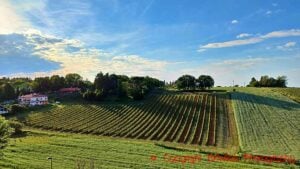
Romagna is positioning itself to be recognised on the world wine scene both for its red wines and for its white wines. The reds, called Sangiovese di Romagna, are elegant often with a charming cherry fruit. The whites, from the rare albana grape are often substantial food-oriented whites, going under the name Romagna Albana. You might think primarily of the gastronomic specialities of Emilia-Romagna, Parmigiano Reggiano (“parmesan” cheese), Parma ham, mortadella, balsamic vinegar (balsamico) from Modena and many others, but it is time to recognise the greatness of the Romagna wine, made in the eastern part of this Italian region, close to the Adriatic sea. Here’s your guide to the regions, appellations, grapes and producers.
Read more in Per’s article on BKWine Magazine, originally published on Forbes:
Discover the great wines of Romagna: Sangiovese, Albana, Rebola and more | Per on Forbes.
Grenache, a great grape: what wine does it make and which to drink?
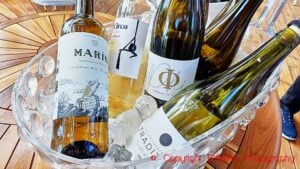
Grenache is one of the world’s most planted grape varieties, but it is often used in blends, e.g. “GSM” (grenache, syrah, mourvèdre). It deserves more attention on its own since it can make outstanding wines of all colours and types, red, white, rosé, dry, sweet, even sparkling. I have, on several occasions, participated as a taster and wine judge on the jury in the world grenache competition, Grenaches du Monde, so I have tasted quite a few! Here is an introduction to grenache and a selection of favourite wines from the Grenaches du Monde competition.
Read more in Per’s article on BKWine Magazine, originally published on Forbes:
Grenache, a great grape: what wine does it make and which to drink?
Get your facts right about Champagne; forget these three myths (plus 2) | Per on Forbes
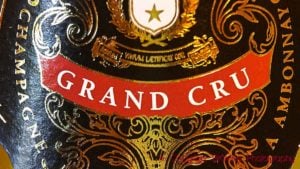
Are you letting outdated myths dictate your choice of sparkling wine? While Champagne boasts a legendary reputation, much of what we believe about it is shaped by marketing mystique, and old, outdated misconceptions. To fully appreciate this great wine, and find the best bottles, it is time to look behind the scenes and separate fact from fiction.
In this article, we debunk five often mentioned Champagne myths: the misunderstood “grand cru” concept, the unfortunate looking-down-the-nose at a great grape variety, and an overlooked sub-region producing amazing wines. Plus, we reveal the truth about pinot meunier and the actual number of permitted grapes in Champagne—is it three, seven, or nine?
Read more in Per’s’s article on BKWine Magazine, originally published on Forbes:
Free yourself from these outdated myths to discover exceptional bottles you might otherwise overlook.
Travel: Come on a wine tour to Champagne and Burgundy with BKWine. (PS: We’ve written a prize-winning book on Champagne and one on Burgundy.)
—
Wine Tours
—
Details on our current and future wine tours. Book a wine tour with the “World’s Top Wine Tour Operator” today (or when you feel like travelling to wine country).
Treat yourself to an unforgettable experience in the beautiful wine-lands together with some of the most knowledgeable wine people around. Book now!
—
Private tastings, luxury meals, personal visits, a wine tour like no other — in Bordeaux with BKWine

URGENT! BOOK NOW!
Bordeaux is admired but also endlessly discussed. Actually, Bordeaux is changing along with consumer preferences and to adapt to a warmer climate. This is a slow process, but you can already easily find high-quality Bordeaux wines meant to be enjoyed earlier, without requiring a deep cellar or decades of patience. On this tour, we invite you to get to know different aspects of Bordeaux, the big and famous and the small, family‑run estates where you meet the people behind the wines. We visit some of the region’s iconic châteaux: Château Lascombes, Château Beychevelle, and Château Haut‑Bailly, among others. We will stop in Sauternes for a memorable lunch at a Michelin‑starred restaurant, and several other meals will be hosted in private salons at the châteaux. The gastronomy on this Bordeaux tour is exceptional and perfectly paired with the wines.
On the tour, you will get to know Médoc, Graves, Sauternes, Saint‑Émilion, and Entre‑Deux‑Mers, five regions with very different characters.
Enjoy châteaux lunches, exquisite wines and that special feeling of being in the middle of one of the world’s most dynamic wine regions.
Come and discover French wine and food in Bordeaux on this luxurious wine tour with BKWine, one of the world’s leading wine tour operators (*).
URGENT! BOOK NOW!
(*) And the only one who has authored 13 award-winning wine books, one of which is on Bordeaux wines.
We can add that we have also written an award-winning book about Bordeaux.
Immerse yourself and learn all you can wish for in Burgundy and Champagne | an exceptional behind-the-scenes wine tour

URGENT! BOOK NOW!
Even if you know that Burgundy produces some of the world’s most expensive wines, it has a way of feeling unpretentious. Everything seems scaled down: small cellars, modest equipment, simple tasting rooms. But from these places that look anything but extravagant, some of the world’s most sought-after wines are made. During our days in the Côte d’Or, you’ll see for yourself that world‑class wines don’t need a grand cellar.
We’ll taste exceptional wines, including premier cru and grand cru, alongside classic Burgundian dishes, often rooted in traditional home cooking. The combination is remarkable, and our six‑grand‑cru lunch is something exceptional you won’t forget.(They make a special effort when BKWine arrives with guests!)
After Burgundy, we go north. We make a quick stop in Chablis, the region known for its crisp chardonnay wines, and then we continue to Reims, the capital of Champagne. Being here makes you realise how many different styles of champagnes there are. Various rules govern the production of champagne, but there are still many ways for the producers to make a champagne the way they want it. Conversations with the producers offer insights you can’t get from books; their stories, their challenges, and their passion bring the region to life.
Join us for a behind‑the‑scenes deep dive on this Burgundy-Champagne tour, where we also enjoy some truly delicious lunches, always accompanied by top-quality Burgundy or different styles of Champagne.
Come on this exceptional tour to two of the world’s most respected wine regions with BKWine, one of the world’s leading wine tour operators (*).
URGENT! BOOK NOW!
Book now!
(*) And the only one who has authored 13 award-winning wine books.
Argentina and Chile, the wine giants of South America | wine tour

South America has been making wine for more than 400 years, but its true modern era began only about fifty years ago. Since then, the two giants of the continent, Argentina and Chile, have transformed their wine industries. Today, both countries produce wines with ambition and often a remarkable personality. On this tour, you can explore that evolution firsthand: taste the wines, stroll through the vineyards, and meet the winemakers who shaped this new chapter. Along the way, you will enjoy magnificent landscapes, long leisurely lunches, and perhaps a pisco sour (in Chile) by the pool in the late afternoon.
Our adventure begins in Buenos Aires and ends in Santiago de Chile. From the Argentine capital, we fly to Mendoza, the beating heart of malbec. After four days of exploring Mendoza, we will cross the Andes by bus, a spectacular passage. Once in Chile, the focus shifts to cabernet sauvignon and carménère, grown in the famous Colchagua Valley, but also to the country’s vibrant white wines grown along the cool Pacific coast. On the coast, we will pay a visit to the colourful harbour city of Valparaíso, famous for its steep hills, street art, and bohemian charm.
This is a chance to experience two dynamic wine countries in one unforgettable wine tour.
Come on this exciting wine tour to Argentina and Chile with both Britt and Per of BKWine, one of the world’s leading wine tour operators (*).
Book now!
VERY FEW PLACES LEFT ON THIS TOUR.
(*) And the only one who has authored 13 award-winning wine books.
More inspiration: You can get an even better feeling for what you will experience on this tour if you visit the latest tour’s own Facebook group. Lots of pictures and videos from the tour: See pictures and videos from Chile and Argentina in the latest wine tour’s Facebook group.
A magnificent wine country that deserves more attention | wine tour in South Africa
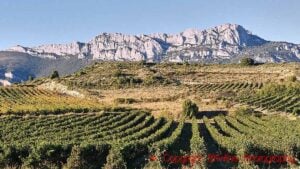
South Africa has a lot to offer the wine lover. The country has undergone a huge transformation in the last 30 years. It has taken time to change the image, and there is still a lot to do, but the quality wines deserve much more attention than they get. There is a new generation of winegrowers today in South Africa with ambition and a pioneering spirit that we, who drink the wines, feel in the glass.
When we arrive in February, the 2027 harvest has just begun, or the producers are in the starting blocks. It is a time of anticipation, and an exciting time to visit a wine region. And not least to see the beautiful, ripe grapes.
We will visit Franschhoek, Stellenbosch, Hermanus, where the sea is right outside the door, Swartland in the north, Paarl, and, of course, Cape Town with the mighty Table Mountain. Our lunches are often at the wineries. The gastronomy in South Africa is famous today.
South Africa is worth going to. It is a country that surprises and impresses. Join us this winter and discover a wine country that is both young and dynamic, looking towards the future.
Come on this fabulous wine tour to South Africa with both Britt and Per of BKWine, one of the world’s leading wine tour operators (*).
Book now!
VERY FEW PLACES LEFT ON THIS TOUR.
(*) And the only one who has authored 13 award-winning wine books.
More inspiration: You can get an even better feeling for what you will experience on this tour if you visit the latest tour’s own Facebook group. Lots of pictures and videos from the tour. See pictures and videos from South Africa in the latest wine tour’s Facebook group.
A young wine country with big ambitions | wine tour New Zealand

URGENT! Book now!
New Zealand is a faraway country that has a lot to offer wine lovers. But that’s certainly not all. Nature lovers and, not least, foodies will also get their fill. On our odyssey through the country (adventurous, though not quite as adventurous as the original), we experience the country’s largest city, Auckland, beautifully situated by the sea, and the capital, Wellington, also by the sea. In fact, you are rarely far from the sea in New Zealand. This also applies to the wine regions. We visit Waiheke Island, Hawke’s Bay, Wairarapa, Marlborough and Central Otago. We visit pioneers (New Zealand is a young wine country) and newly established, enthusiastic winegrowers. There is a lot of dynamism in New Zealand’s wine regions. With its relatively cool climate, wines with beautiful freshness are produced, which many consumers are looking for today.
We visit both small family-owned vineyards and some larger producers. Our lunches are often at the wineries, where we take the opportunity to taste even more of the estate’s wines, along with specialities such as salmon, lamb, local cheeses, mussels, and other seafood (we will eat the famous lobster from Kaikoura, of course). There will also be time to visit Rotorua, known for its geysers and mud pools.
Join us on this adventure and discover a different wine country, far away. We promise you many surprises. Good ones!
Come on this stunning wine tour to New Zealand with both Britt and Per of BKWine, one of the world’s leading wine tour operators (*).
URGENT!
Book now!
Watch this introductory video about our New Zealand wine tour.
(*) And the only one who has authored 13 award-winning wine books.
More inspiration: You can get an even better feeling for what you will experience on this tour if you visit the latest tour’s own Facebook group. Lots of pictures and videos from the tour: See pictures and videos from New Zealand in the latest wine tour’s Facebook group.
—
Bespoke Tours
—
(examples – we do others too)
—
Forget the myths, learn the truth and reality of Champagne | wine tour *

There are many myths and misconceptions about champagne. Let’s look at some? “Small, fine bubbles are a sign of quality.” Wrong. It could be a sign of a specially prepared (etched) or towel-dried glass (or some other effects) but it doesn’t tell you anything about the taste. “There are 49 million bubbles in a bottle.” No, it depends on many different factors, such as bubble formation points (nucleation sites) in the glass. And one of the big ones: “Grand cru is a sure sign of quality in champagne.” No, grand cru is an obsolete designation in a now abolished price control system. The quality depends primarily on the person who makes the wine. “There are seven, no, now with voltis, eight permitted grapes.” No, it’s actually nine. “The grape variety is no longer called pinot meunier but just meunier and it’s not a pinot at all.” Wrong. The grape variety is still called pinot meunier (sometimes meunier for short) and is actually technically (genetically) the same as pinot noir. You can dive into all this when you come to Champagne.
But the most important thing about champagne is that it is an outstanding wine. It is a fantastic wine in itself but also something that goes perfectly with food, as you will discover at our delicious gastronomic lunches. A champagne tour like no other with the people who wrote one of the most comprehensive book on champagne ever.
Come on this luxurious wine tour to Champagne with BKWine, one of the world’s leading wine tour operators (*).
(*) And the only one who has authored 13 award-winning wine books.
Tuscany, gentle hills with beautiful vineyards and olive trees | wine tour *

Vineyards are part of the Tuscan landscape. Grapevines thrive on the hills where the soil is poor but the sun exposure is excellent. The landscape is quite mountainous in places. The vines are grown between 200 and 600 meters above sea level. How the wine tastes depends on many factors: the grapes, the altitude, the soil and not least the philosophy of the wine producer. There are great variations in Tuscany and the producers like to emphasise these differences that the various districts within Tuscany have. Everyone is proud of their special part of Tuscany. Chianti conquered the world in the 70s with its straw-covered bottle. At that time it was known as an easy-drinking and unpretentious wine. Today we get Chianti in all versions, from top quality prestige wine to uncomplicated fruity lunch wines. The occasion will decide. We will of course visit both Chianti and Chianti Classico (two different geographical areas) and also Montalcino a little further south, known for its fantastic Brunello di Montalcino. Discover the enchanting Tuscany with us; not only the wines but also the landscape, the people and the gastronomy.
Come on this wonderful wine tour to Tuscany with BKWine, one of the world’s leading wine tour operators (*).
(*) And the only one who has authored 13 award-winning wine books.
Piedmont, the land of truffles and fog; and Barolo, Barbaresco | wine tour *

It is a beautiful landscape that meets us in Piedmont. The region certainly merits its name, “at the foot of the mountain”; the Alps tower at the horizon. The signature grape Nebbiolo also has good reason for its name; it is often foggy (nebbia) in the mornings in the hills. The Alps to the north are not far away. Around us lie medieval villages such as Barolo, La Morra, Serralunga, Gavi with their impressive defensive castles, often real fortresses. The autumn landscape is magnificent. Nebbiolo and the other grapes often grow on slopes, sometimes really steep. We taste our way through many fantastic wines, Barolo, Barbaresco and other nebbiolos, as well as slightly lesser-known but equally outstanding wines with arneis, barbera, dolcetto, etc. We enjoy the local cuisine. We visit the truffle market in Alba with its overwhelming scent experience (can you over-dose in truffles?) and we eat a delicious closing lunch with the famous white truffle.
Come and discover all the good things that Piedmont has to offer on this wonderful wine tour with BKWine, one of the world’s leading wine tour operators (*).
(*) And the only one who has authored 13 award-winning wine books.
Douro Valley: The unique landscape that cannot be described but must be seen | wine tour *

The Douro Valley impresses like few other wine regions. There is probably no other wine region that has so many steep slopes in such a large area. The Douro Valley must be seen with your own eyes. No pictures can really do it justice. When it comes to the Douro Valley, the word unique can be used without hesitation. On these difficult-to-work slopes, port wine has been made for many centuries. The “regular” (not fortified) red and white wines, called simply “Douro wines”, have not been known for as long. This combination of Douro wines and port wines makes this tour particularly interesting. We taste all types of wines. The red and also the white Douro wines (non-fortified wines) are fantastic. For many, port wines are an exciting (re-)discovery. You don’t always realise that port wine comes in so many different types and, for instance, what the differences are between an old tawny and a vintage. Completely new dimensions open up. We stay two nights in Porto, an exciting city to explore. On the other side of the river lies Vila Nova de Gaia and this is where the big port wine houses age their wines. We stay two nights at the luxurious Vintage House in the valley, close to the vineyards.
Come and discover the spectacular landscapes and wines of the Douro on this wine tour with BKWine, one of the world’s leading wine tour operators (*).
(*) And the only one who has authored 13 award-winning wine books.