Mendoza in Argentina has made a huge success of growing malbec and selling it to the world. It started at the end of the 1980s. Malbec from Argentina became a brand. For a while, everyone was happy, producers as well as consumers. But things have changed. The grape is no longer enough. Now, ambitious producers in Mendoza are looking to give their wines a local identity. We take a closer look at the now-famous Paraje Altamira GI in Uco Valley, southern Mendoza, and talk to Nicolas Goldberg at Finca La Igriega.
Originally published on Forbes.com, this article is republished here in an expanded form with additional context, content, updates, and editorial insights relevant to BKWine Magazine readers and other wine-lovers.
It matters where a wine comes from. Even if your Haut-Médoc wine is “better” than your colleagues’ Pauillac wine, they will always be paid more money for their wine because Pauillac is more prestigious (unless, of course, you are lucky enough to get a frantic media attention). So, it is not really surprising that the New World countries eventually abandoned their grape variety focus and began imitating Europe by creating geographical indications to put on labels. A more detailed origin on the label not only gives the producer a story to tell. It also lends the wine more exclusivity.
Mendoza is Argentina’s largest wine region, famous for its bold Malbec wines. Nowadays however you find a huge range of different styles of wine, from Malbec or other varieties. The growing season is hot, which explains the intense black fruit flavours you often find in the wines, but the vineyards at high altitude will temper the heat and add freshness.
Mendoza has three main subregions. Just south of Mendoza City, you find Luján de Cuyo and Maipú. About a 90-minute drive from the city, you end up in Uco Valley. It used to be less famous than the other two but is now a hotspot for malbec. It is also a place that focuses on terroir. Since a few years back, the Uco Valley has several geographical designations of origin (GI). The boundaries of some of these geographical areas are based on soil studies rather than on administrative boundaries, as is the case with the three subregions mentioned above.
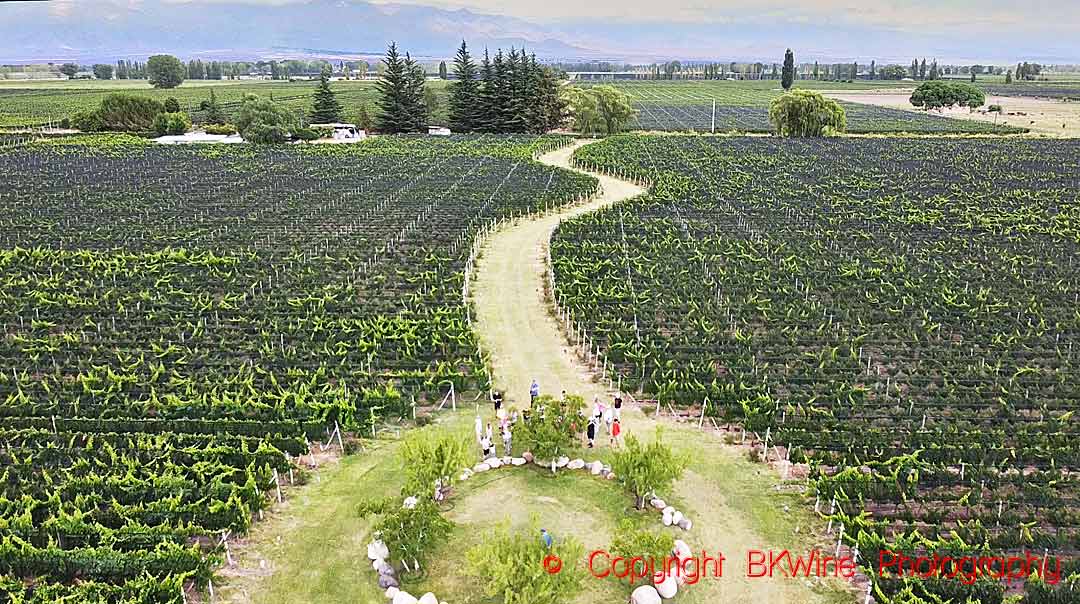
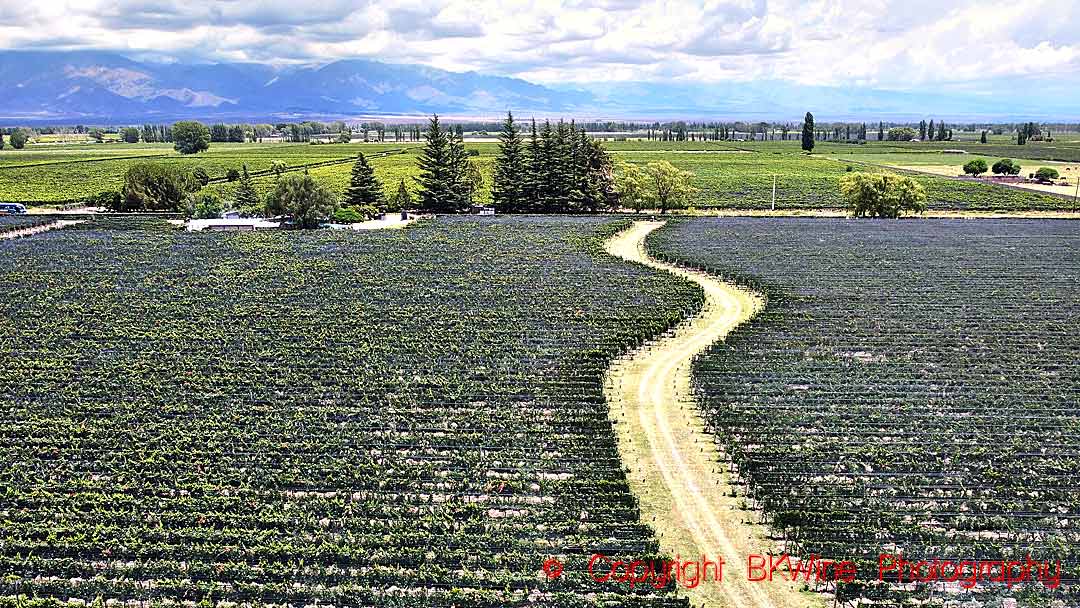
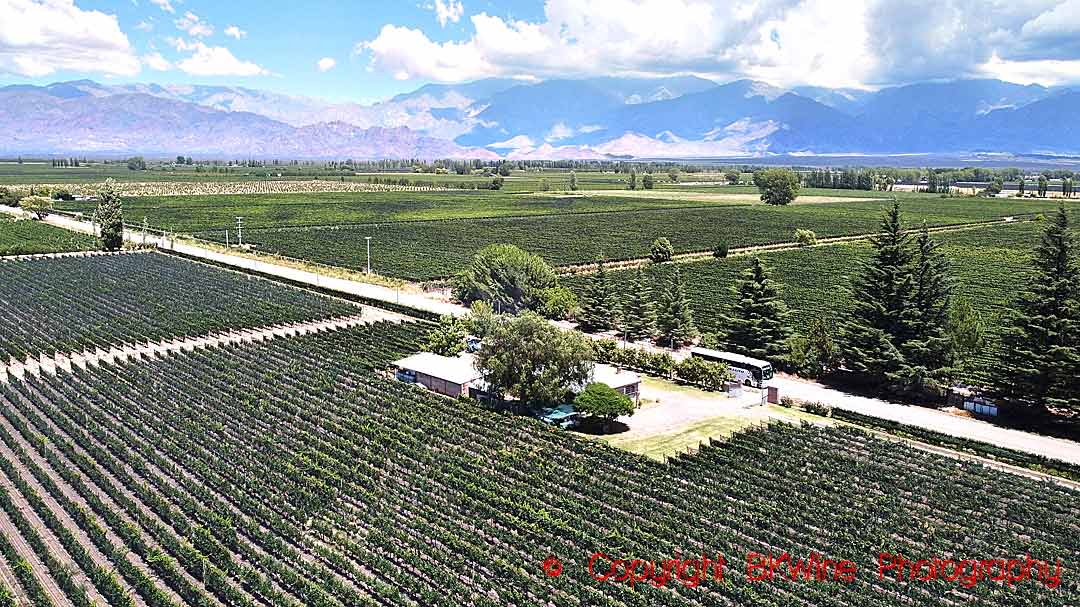
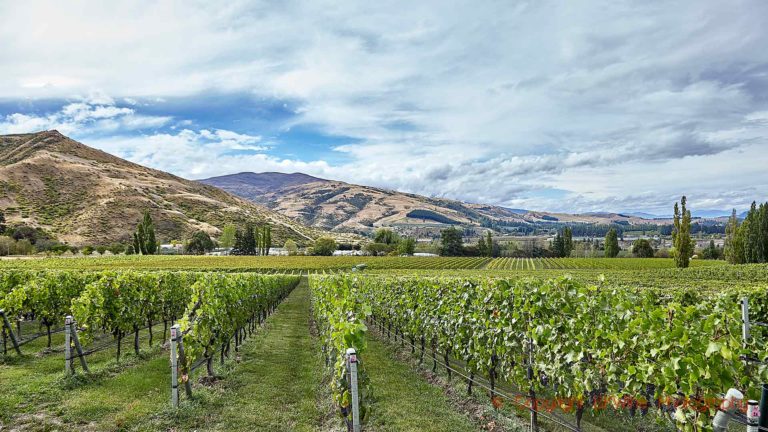
In 2013, Paraje Altamira became the first GI based on soil specifics in the Uco Valley. Altamira is in the south of the Uco Valley, close to the town of La Consulta, and is beautifully situated at the foothills of the Andes Mountains. There was a significant increase in vineyard plantings from 2000 onward, and now there are approximately 2,700 hectares of vines.
Quick facts on wines in Argentina, Mendoza and Uco Valley
Wine has been made in Argentina since the mid-1500s. In the second half of the 20th century it was mainly known for producing modestly prices bulk wine. Today, Argentina is one of the leading producer in South America with an exciting range of top quality wines. It has around 200,000 hectares of vineyards, which makes it the fifth biggest wine producer in the world.
Wine is made in several provinces in Argentina, from the far north to the south. Here are the main ones:
- Mendoza, by far the biggest region, accounting for about 75% of all production
- San Juan, the second biggest
- La Rioja, together with the two preceding ones the three make up Cuyo
- The North, with among others Salta, Catamarca, know for it’s very high altitude wines
- Patagonia, with Rio Negro, Neuquén, Chubut, vineyards mainly in the inland desert-like region
- The coast around Buenos Aires, recent plantings have developed around Buenos Aires
Mendoza is geographically split in several sub-regions. The main ones:
- Luján de Cuyo
- Maipú
- Valle de Uco
Valle de Uco (Uco Valley), one to two hours south of Mendoza city, was long a rural are attracting little attention. A few decades ago a handful of wine producers started to plant more vineyards there attracted probably by modest land prices and also by the higher altitude. Valle de Uco has since developed into a pioneer for the definition of “micro regions”, what is called “parajes” which can perhaps be compared to wine villages. One driver has been that the soil can be very varied and comples and thus – is the theory – result in different characteristics in the wines. This is a map that is still evolving. The main Parajes are
- Altamira
- Gualtallary
- San Pablo
- Los Chacayes
- La Consulta
- but there are others
However, the area had vineyards already a hundred years earlier. There is a book written in 1911 by the oenologist Leopoldo Suárez that describes the potential of its calcareous soils for semillon and malbec. However, it would be a while before Altamira was seriously discovered. But today wine producers find their way here. Some establish wineries, others take grapes from here. The famous Zuccardi is here and at excellent Finca Suárez, Juanfa Suárez continues the legacy of Leopoldo.
Leopoldo was right about the potential of the calcareous soils. The special thing about Altamira, and the reason for its GI, is its limestone soil, which is very unusual in Mendoza.
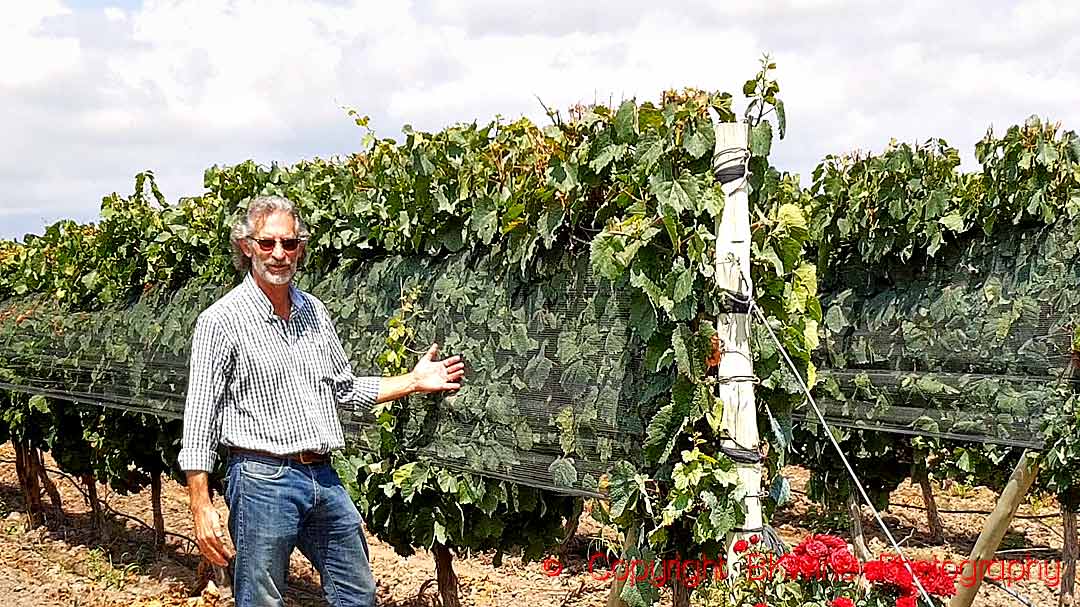
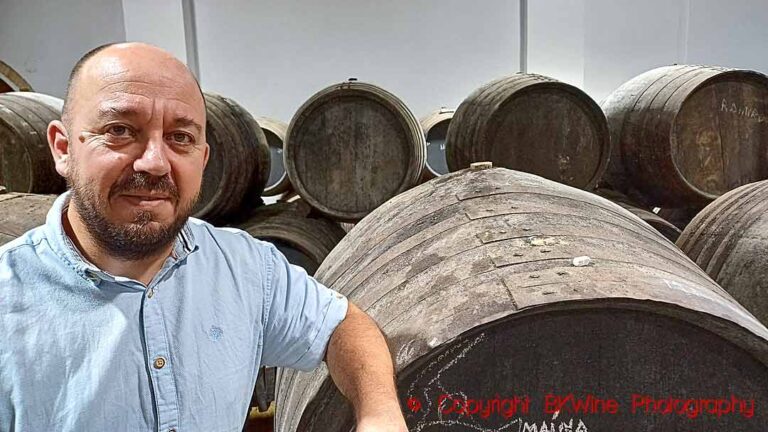
“It is an alluvial soil, with a huge presence of calcium carbonate”, says Nicolas Goldberg at Finca Igriega, adding that “the calcium carbonate helps balance the plant’s needs”. But for the character of the wine, he says, the altitude is also important. “Altitude brings cool nights, which enable the plant to rest at night. Also, the light intensity is high, which gives a slow ripening process that keeps the acidity and gives the wines a sensation of freshness”.
“Here at Finca Igriega, we are in the heart of Altamira, at 1100 metres above sea level”, he says. “By chance, we bought it… But we knew it was a good terroir”.
Nicolas’ father, Marcelo Goldberg, worked in the textile industry. At the beginning of 2000, friends told him to come and look at a property, and he fell for it. In 2006, he bought 25 hectares. There were no vines; only apples, rocks and white stones. It had water rights, which is important, as Mendoza gets very little rain.
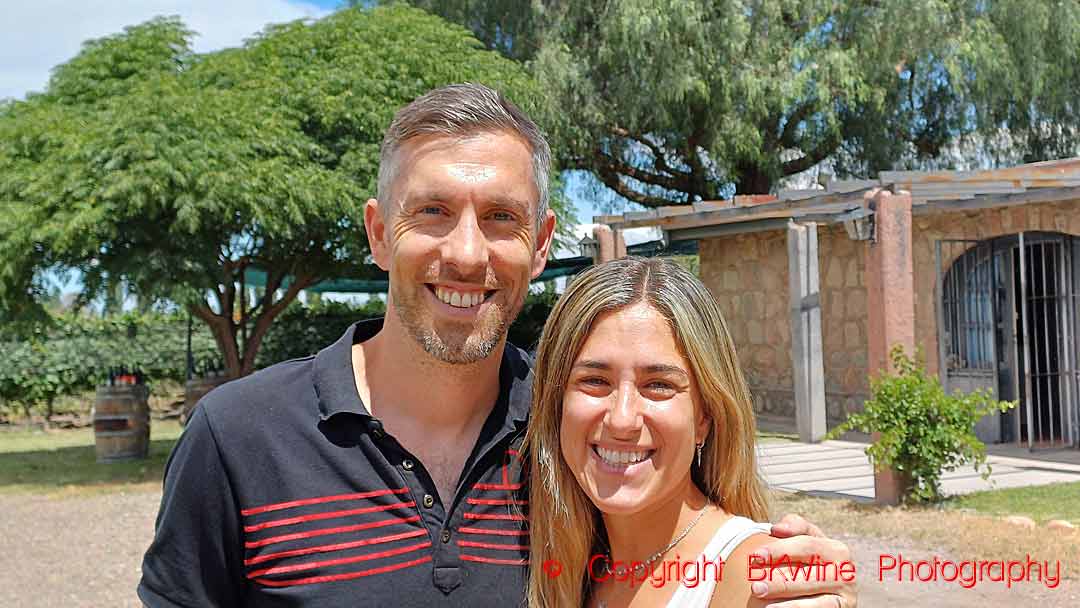
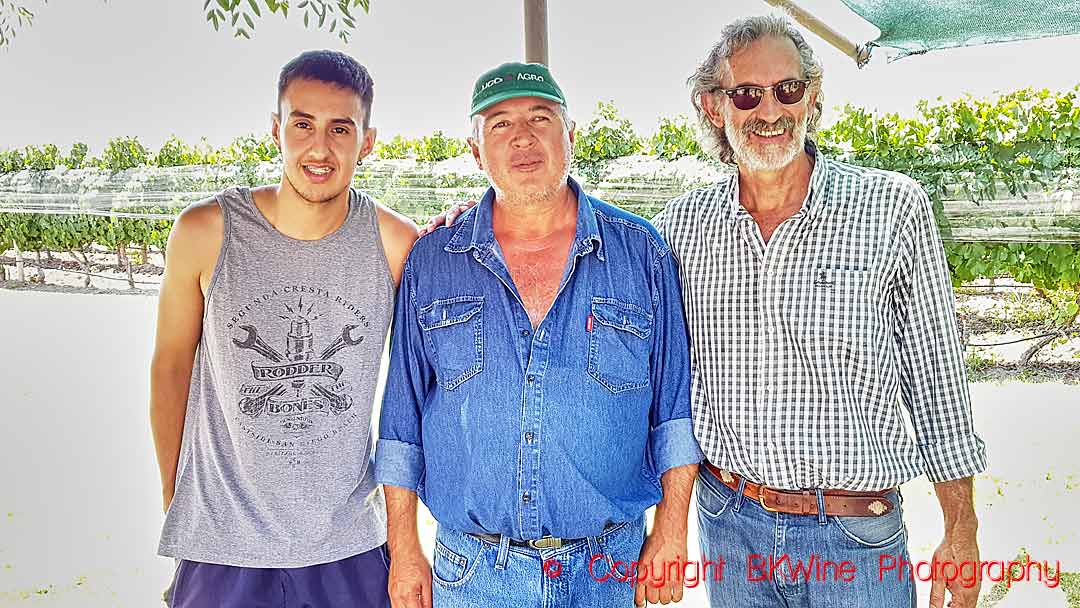
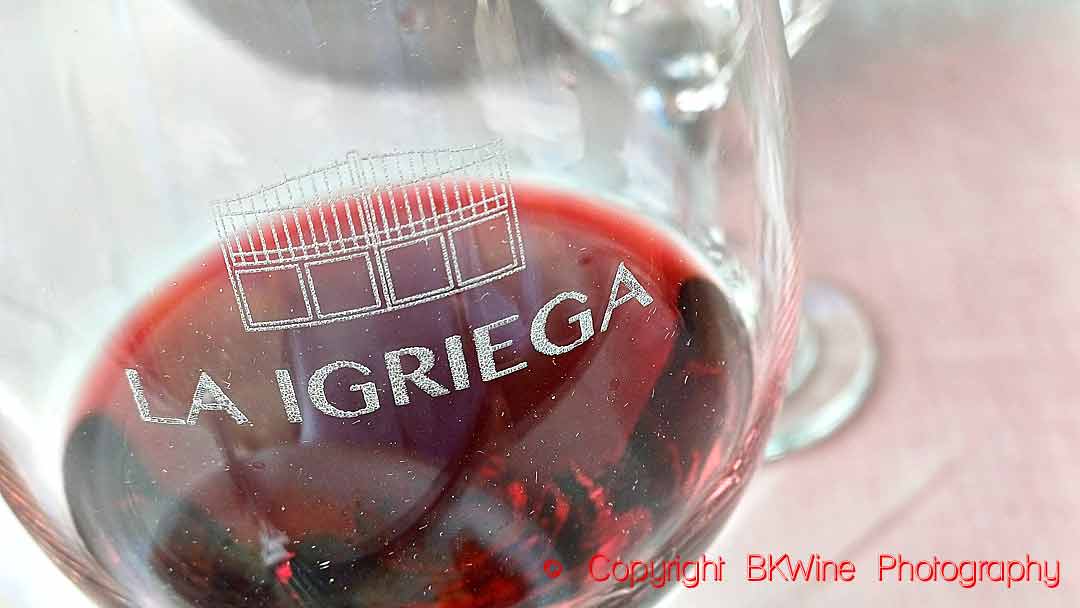
The name itself, Finca la Igriega, has an important symbolic meaning for the family. Literally, it is the Spanish word for the letter “Y”, so one could think that it mimics the famous white bordeaux called “Ygrec” (Y in French). But that’s not the case. “Y” in Spanish is a word that translates to “and” in English. Nicolas explains that it actually has to do with the family philosophy; it is many different things all joined by “and:s”: “Life is about union, bonds. Life for us is about family, and friends, and job, and passion and health, trying the get the balance and the equilibrium.” It is also something that links the family AND the people working there, “Igriega wouldn’t be possible without Javier, the man in charge of the vineyards every day, Carlos Caggiati who is vineyard manager, and then Felipe Stahlschmidt, the winemaker. And the last ‘and’ is the passion of the family, the Goldberg family. We are now starting the third generation, so we are starting the story,” referring to Nicolas own young children.
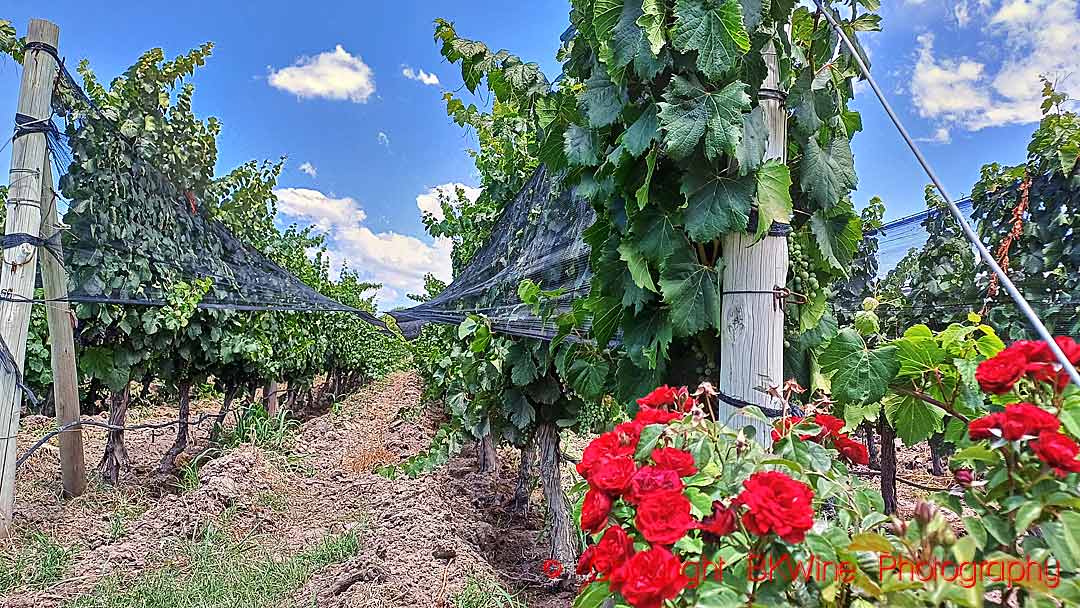
The climate is very dry here; rainfall is approximately 200-280 mm per year. Irrigation is necessary, and in Mendoza, melting water from glaciers and winter snow from the Andes Mountains provides the water for vineyards and other crops through a sophisticated canal system.
The Goldbergs planted malbec on their land. And so Finca Igriega was born. To start with, they sold their grapes to other producers. However, a meeting in 2011 with Felipe Stahlschmidt, a renowned winemaker, changed things dramatically. With Felipe’s help, they decided to produce their own wines. They started slowly, making wine from a small portion of their grapes, and even today, they produce only around 15,000 bottles. “We could do 10 times more, so 150,000 bottles. We plan to increase, but we will grow little by little”, says Nicolas. The aim from the start was to make high-end malbec.
Later, they also planted cabernet franc, petit verdot, and cabernet sauvignon through top grafting on a small portion of their malbec vines. But malbec continues to be the signature grape at Finca Igriega. And although their wines show many of the typical malbec characteristics such as a great concentration of fruit, they also have the freshness that is important to many consumers today. And they have a lovely mouthfeel and texture.
The harvest of malbec is normally mid-March, except for the rosé, which starts at the beginning of March. “We harvest the grapes for our rosé earlier as we want a natural higher acidity”, says Felipe. The La Igriega Malbec Rosé gets a quick press, which, as the malbec skin is thick, still gives it a lot of colour. The fermentation is slow and cool to protect the aromas. Until bottling in June, the wine stays in stainless steel tanks, partly on its lees with some lees stirring (batonnage) to get a fuller mouthfeel.
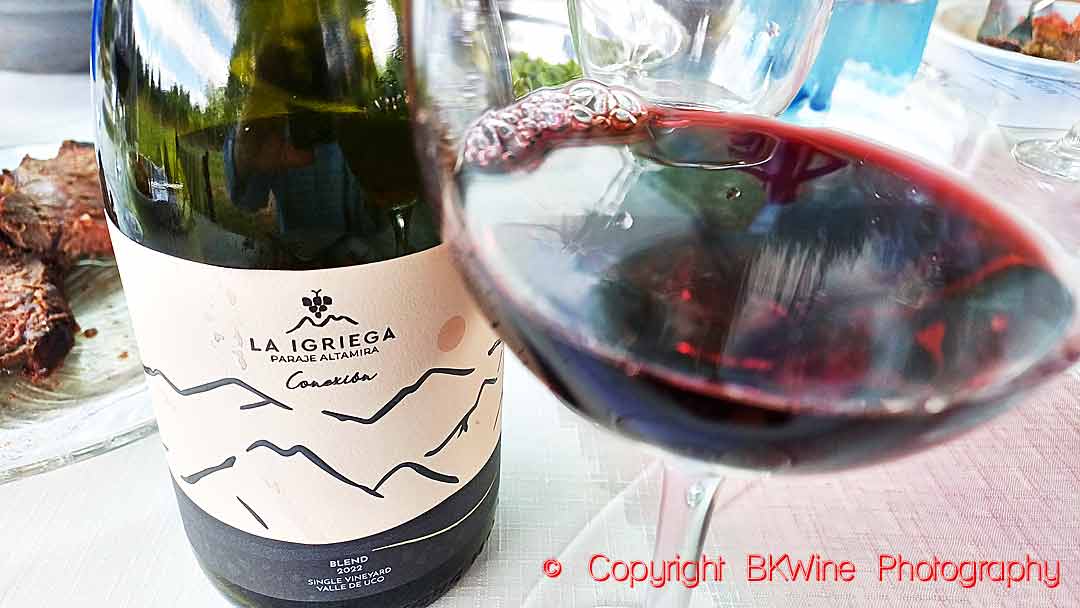
La Igriega Conexion Malbec 2022 is a wine with fruit, freshness and vitality. It has no oak ageing, only concrete vats. “Without the oak, you have the effect of only grape + soil, Nicolas explains. It has high drinkability; it is very refreshing, with fresh fruit aromas. They are always looking for natural acidity; they don’t want to add acidity. This is a lovely example of a lighter style malbec and, as Nicolas says, not always what people expect.
The “Blend” 2020 is a more classic malbec, denser but still with a superb freshness. It is fermented warmer, at around 30 degrees C. Here, they are looking for more extraction and a bit more complexity. Malbec dominates with 70% and is blended with the estate’s three other varieties, cabernet sauvignon, cabernet franc and petit Verdot. “This is a Bordeaux blend Altamira style”, says Nicolas. The Blend spend 9 months in 3–4-year-old oak barrels.
Malbec Superior 2018 differs from the others in many ways. It is fermented with native yeast in small, open-top barrels, resulting in a slower fermentation that is completed only after 30-45 days. The cap, that is the skins and the seeds, is regularly punched down manually, twice per day in the beginning and once per day later in the fermentation or according to need. The wine then ages for 18 months in first- and second-use barrels. Powerful, dense fruit, but not lacking finesse, balanced oak, hint of spices. Serve it with a grilled steak. You will not regret it.
Finca La Igriega’s biggest export market is the USA.
Read more on Argentina on BKWine Magazine:
- Mendoza in Argentina is a gold mine for those who have the courage to make the effort to seek out the most exciting wine producers
- A Mendoza Report
- Argentina, the country with real high-altitude wines, e.g. Estancia Uspallata
- In search of the soul of Mendoza Malbec, a talk with Sebastian Zuccardi | Per on Forbes
- High-level wines at high altitude from Catena Zapata and Adrianna Vineyards in Mendoza
- Discover something new: Criolla grapes from Argentina, from Juanfa Suarez at Rocamadre
- Ver Sacrum, Mendoza – an unusual grenache from Argentina
- Clos de los Siete, a fantastically successful wine from Argentina with an unusual concept | Britt on Forbes
- Making unusual and extraordinary malbec wine at Bodega Weinert in Mendoza | Britt on Forbes
- Mendoza’s new denominations highlights the different terroirs
- Mendoza: What to see and do, and where to eat | a quick introduction
Travel
The best place to discover the true soul of The wines of Mendoza is in Argentina! Explore the wines of Argentina on a wine tour to Argentina and Chile with BKWine.
Travel to the world’s wine regions with the wine experts and the wine travel specialist.
Wine tours that give you insight. BKWine wine tours.