—
Should we pour fine wine down the sink?
—

Some words slip into everyday vocabulary without anyone really noticing. Minerality comes to mind — a term that suddenly appeared out of nowhere and began taking up space, a lot of space. These days, minerality is sprinkled over wines as if writers were paid by the syllable. Another one is “fine wine”. Admittedly, it has been around for longer than minerality.
Fine wine is easier to grasp than minerality, but that doesn’t make it self‑evident. Is it simply something that rises above the ordinary — in other words, particularly good wines?
–
Calling all wine lovers:
Do you know someone who might be interested in a wine tour?
Please tell them about BKWine Wine Tours! We do wine tours like no other. A leading wine tour operator since more than 20 years.
Have you already been on one of our tours? Tell your friends! Word-of-mouth is perhaps the most important way to spread the word of good wine, great food and exciting travel.
Thank you in advance for your help and support!
(If you have Swedish friends, please know that we have a separate, more extensive travel program in Swedish: BKWine Vinresor.)
–
Or are we talking about classic age‑worthy wines, famous bottles whose names have travelled the globe, wines that routinely receive high critic scores? In other words, expensive prestige wines?
In many parts of the world, that’s exactly what people mean. If we look at how critics, merchants, and others use the term, it encompasses all of this — and especially the idea that the wine has resale value. Cellaring potential seems to be a magic word. Then there are those who add vaguer notions, like a fine wine should “move you emotionally,” create an unforgettable memory, or even possess an “objective” (objective?) dimension of finesse (as Areni Global suggests, adding the winemaker’s intentions to the mix). It all feels a bit affected. Sustainability is also sometimes mentioned as a criterion. Admirable, yes, but hardly something that would raise the price at auction.
For most of the 20th century, fine wine came from the classic regions: the top wines of Bordeaux, Burgundy, Champagne, occasionally from Napa, and perhaps a few extraordinarily age‑worthy sweet wines from Germany. Italy’s top wines were relatively late to be elevated into the fine wine pantheon.
Because the ability to age gracefully was a key criterion, vintages were judged by their cellaring potential. “Lesser vintages,” meaning those meant to be enjoyed earlier, received lower scores and lower prices. That’s still the case, though thankfully, more people now appreciate the virtues of lighter years.
But the traditional image of fine wine has changed, or is in the process of changing. The French classics still dominate auction houses, but more countries and regions are appearing. And perhaps most strikingly, the light, fruity, easy‑drinking wine is now being celebrated. No real tannins to speak of, but wonderfully refreshing and thirst‑quenching. Not for ageing — for drinking now. A wine that once would have been dismissed as simple. Today, long‑held assumptions are being turned upside down. What is quality in wine, really? Quality means different things to different people. A quality wine doesn’t have to be expensive, but can a cheap wine ever be considered a fine wine? Hardly, given today’s prevailing definition. Reputation and critical acclaim tend to bring high prices.
It’s easy to disprove many of the attempted definitions of fine wine mentioned above. There are plenty of wines that deliver deep emotional impact, that are of outstanding quality (if tasted blind), that are produced in small quantities (and many so‑called fine wines are produced in huge volumes), that age beautifully — yet they are not typically classified as fine wine.
So perhaps “expensive and famous” is the most accurate definition. It certainly fits the wines most often promoted as fine wine. It’s difficult to imagine a fine wine that doesn’t fall under that description.
Fine wine may be a convenient shorthand for a certain category of wines, without sounding as blunt as saying “expensive wines,” but the term feels old‑fashioned and dusty. (As, frankly, does fine dining.) It feels like a relic of the late 20th century.
Not exactly the ideal expression for breathing new life into the wine world.
Travel
Now it’s time to plan your trip for this year and next.
In the fall/autumn we do
- Bordeaux, and
- Burgundy and Champagne.
We have also launched the all three winter wine tours:
- Chile-Argentina
- South Africa
- New Zealand
They are already starting to fill up, so contact us now if you are interested!
More info on our wine tours here. “World’s Top Wine Tours“. Tours with the people who know wine and who have an unrivalled experience of wine and tours.
Travel in wine regions with someone you trust.
Enjoy the Brief!
Britt & Per
Wine editors to the national encyclopaedia, Forbes.com contributors, award-winning wine book authors, wine tour advisors to the UN and national wine organisations, wine judges … and, above all, passionate wine travellers.


If you appreciate what we do, you can help us:
Tell your friends about the Brief or send it to them.
Like us and follow us on social media:
BKWine Magazine on Facebook | Wine Tours on Facebook
—
What’s on at BKWine Tours
BKWine is also one of the world’s leading wine tour operators. Here’s what we currently have on our scheduled wine tour program:
- Bordeaux, 13-19 September
- Burgundy and Champagne, 23 September – 1 October
- Maybe more. What would you like?
–
- Chile-Argentina, 11-24 January 2027
- South Africa, 14-24 February 2027
- New Zealand, 10-25 March 2027
We also make custom designed wine tours.
And we have an extensive travel program in Swedish: BKWine Vinresor.
We’re different than most other wine tour operators. We are people who know wine inside out, who travel constantly in wine regions, who write award winning books about wine. Who do this out of passion.
Our wine tours are different from others.
A typical year we organise more than 30 wine tours to destinations across the world. In Europe: France, Italy, Spain, Portugal and more. World-wide: South Africa, Chile, Argentina, New Zealand. Thanks to our Scandinavian background we have a separate offer for the Scandinavian market. These are sometimes offered in English and also available as custom made tours. For example, these destinations:
—
Read our books
We have written eleven wine books. They have won awards from the Gourmand Awards, The International Organisation of Vine and Wine (OIV) and others.
Unfortunately, only one of them has been translated to English; the others are (so far) only available in Swedish. This is the one that is available in English:
Here’s the full list of our books:
- The Wonderful World of Wine
- Languedoc-Roussillon, the Wines of Southern France
- Champagne, the Wine and the Growers
—
News from the World of Wine
—
Short briefs on what’s been happening in the world of wine recently and other interesting things.
—
Chianti DOCG revamp – now with rosé – will it be the saviour?
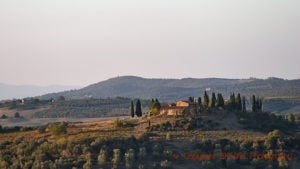
Like many others, Chianti DOCG winemakers have seen their sales decline in recent years. Therefore, the official approval of a new category, Chianti Rosé, will surely come as good news. Until now, Chianti has been red and nothing else. Sales of rosé wines are still doing well in many markets. Chianti is a well-known brand, and with the right packaging, Chianti Rosé has all the makings of a success. The wine can be sold from December 1 of the harvest year, a kind of rosé nouveau if you like. Skin contact is limited to a few hours and must be followed by a gentle pressing. The colour should be light salmon pink; the rosé wine should not be confused with a bright red Chianti. Chianti’s flagship grape, sangiovese, must be included at 50% minimum and for the rest, the producers can use any of the other permitted grapes for a red Chianti: colorino, merlot, cabernet sauvignon, canaiolo and up to 10% of certain white varieties. Read more: weinplus
Between the red carpet and the film sessions, which wines are served at the Cannes Festival?

As I write this, the Cannes Film Festival is in full swing. Between red-carpet appearances and film sessions, wine is needed to wash it all down. But not just any wine. The official festival wines are strictly selected. The only still wine served to the guests during the festival days is Château Margüi, a 22-hectare estate just over 100 kilometres west of Cannes, in the Coteaux Varois en Provence appellation. Since 2017, it is owned by none other than George Lucas and is part of his Skywalker Vineyards collection, along with vineyards in Italy and California.
Two wines from the estate are served, Château Margüi and Bastide de Margüi. It won’t be too one-sided, since both are available in white, rosé, and red. Then, of course, there’s champagne. Once again, it’s Champagne Telmont, an innovative house that makes big investments in sustainability, that has been given the honour of providing the festival crowd with bubbly. And why Telmont specifically? Well, I am sure that the fact that Leonardo DiCaprio is a big shareholder in the house plays a part. Read more: larvf
Cellar-door sales in Sweden: verbal information about the harmful effects of alcohol abolished

A press release published on May 8 (2026) from the Swedish Public Health Agency announces that “as of June 1 this year, the requirement to verbally inform about the harmful effects of alcohol at cellar doors will disappear. Instead, salespeople must provide the Public Health Agency’s information sheet to visitors.”
This is a somewhat unexpected relaxation of the regulations on cellar door sales at Swedish wineries that were introduced in on June 1, 2025. Read more about it here: Finally! Cellar-door sales legal in Sweden. At that time, the rule said that the staff verbally had to inform the potential buyers about the harmful effects of alcohol. This requirement is now abandoned. However, the requirement that you “have participated in a paid visit arrangement” before making a purchase remains. So, the question that arose last summer also remains: if you come back regularly and buy wine, do you have to take the tour every time? The fact that the requirement for an oral presentation has been removed is probably at least partly due to the absurd repetition for a return visitor. But the same applies to the requirement for a paid tour. For a return visit, in practice, it is nothing more than an extra fee on the purchase. Perhaps the Public Health Agency should have thought a little more about how things would work in practice when they set up the rules? Read more: folkhalsomyndigheten
What wines do people actually drink at Michelin-starred restaurants?

What do guests drink at Michelin-starred restaurants? The answer is obvious. Expensive wines. Everyone who goes to a restaurant regularly knows that the more expensive the food, the more expensive the wines. And now this is confirmed, at least according to writer Sara Danese, who has analysed wine lists from over 1,000 Michelin-starred restaurants worldwide. And she is not very happy with the result. These restaurants are simply boring, she says. Her analysis shows that Krug and Dom Pérignon appear on 42% of all the wine lists at the Michelin-starred restaurants. And then it continues with the most famous and most expensive. Around 60% of the wine lists are dominated by France, mainly Burgundy, Bordeaux and Champagne, with a few newcomers from the Rhône and Loire. Italy has a modest presence with 10–20%.
The median price of bottles increases with star level: $197 for one-star restaurants, $325 for two-star restaurants, and $446 for three-star restaurants. Only 6 % of the wines on the lists cost under $100.
Danese is certainly right that expensive can be boring. But the range probably suits the guests that the restaurants have. Or maybe sommeliers live under the belief that it is expected of a starred restaurant to have the most famous, classic, and most expensive wines. Maybe Michelin requires it? But Noma, with its natural wines, showed that this is probably not the case. But please remember that if you are adventurous, but still like starred restaurant food, there will be exciting wines, maybe not as many, but definitely cheaper. Apparently, sommeliers are bolder when creating wine-pairing offers. Read more: everydaydrinking
Poland knows how to use well-adapted grape varieties – we tasted Dom Janton Rondo 2024
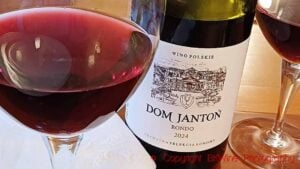
Poland, like Sweden, is not an obvious wine country. It is too cold and too rainy, with a too-short growing season, for most pure Vitis vinifera. Instead, Polen has planted hybrid grapes that are crosses between Vitis vinifera (for the taste) and a grape from another Vitis family that provides the characteristics required in a cool climate. The Dom Janton Rondo that we drank recently, purchased when Per made a short stopover in Warsaw on his way home from Croatia, is made from the Rondo grape. It is a grape variety created in 1964 in Czechoslovakia, a cross between an Asian Vitis amurensis grape and the Vitis vinifera Sankt Laurent, well-known in Austria. Rondo buds early in the season and can therefore be harvested early. It has good resistance to both frost and fungal diseases, such as the dreaded mildew. In other words, it is perfect for a cool climate. In addition to Poland, the grape is grown in Sweden, Denmark, and England, among other countries.
So, what did we think of Dom Janton Rondo? Well, I tasted it blind, and my comments were positive: light in style and body, quite juicy and with plenty of red berries such as strawberries and raspberries on the nose. A bit discreet on the palate. The overall impression? A pleasant everyday wine. Dom Janton is a specialist in sparkling wines made with the traditional method, using another famous hybrid, seyval blanc.
Champagne trends: single vineyard designation and low dosage, with Champagne Penet Chardonnet as one of the pioneers
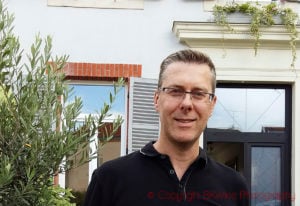
Often, people talk about new trends every year, but trends in the wine world develop slowly and last for many years. For instance, we met him Alexandre Penet of Champagne Penet-Chardonnet in Verzy on our wine tour in Champagne late April. When asked how his winemaking has evolved since he took over the family business in 2009, he said that 15 years ago, he already began with what has become the trend in Champagne today: low dosage and a focus on terroir in single-vineyard champagnes.
And these two subjects are very much in the news right now in Champagne. The volume champagnes – made to be consistent year after year (the big and famous house brands) – are still there, of course. But we see more and more single-vineyard champagnes. To highlight the origin of the grapes and show what these plots can offer in terms of character and taste, a growing number of producers keep grapes from certain vineyard plots separate, vinify them, and bottle them separately. Champagne used to be all about blending; that is no longer the case.
Adding the dosage, the small portion of sugar as the final step to finalise your champagne, is definitely not made on a whim today. It demands careful consideration. It is both about giving your champagne the right amount of sugar and about knowing your customers’ preferences. Alexandre Penet likes brut nature, so no sugar added, but he might go up to 3-4 grams, but never more than that. Low-dosage champagnes are a growing segment, but they still account for a small share of total volume. 6-8 grams seems to be the dosage chosen by many, both grower champagnes and houses. (By the way, here are the correct sugar levels for sparkling wines.)
Travel: Come on a wine tour to Champagne and Burgundy with BKWine. (PS: We’ve written a prize-winning book on Champagne and one on Burgundy.)
Top South African producers – according to us and according to Platter’s South African Wine guide

In the 2026 edition of the excellent “Platter’s South African Wine Guide”, we read that the guidebook has named Diemersdal Wine Estate in Durbanville “Winery of the Year 2026”. The estate is known, among other things, for its brilliant Sauvignon Blanc wines but also for pinotage and cabernet sauvignon. A total of 6 wines from Diemersdal received the highest award, 5 stars.
Some other favourites with five and four stars for several of their wines are Brookdale (Paarl), Gabriëlskloof (Overberg), Kaapzicht (Stellenbosch), Klein Goederust (Franschhoek), Lievland Vineyards (Stellenbosch), Springfontein (Stanford, Walker Bay), Stark-Condé (Stellenbosch), Wildeberg Wines (Franschhoek). Wildeberg also received the “Semillon of the Year” award for its excellent Wildeberg White 2023. And Peter-Allan Finlayson was richly rewarded for his superb Crystallum wines. Crystallum Mabalel 2024 was awarded “Pinot Noir of the Year” and Crystallum Clay Shales 2024 “Chardonnay of the Year”. Congratulations to everyone! We visit many of these producers on our legendary South Africa wine tour!
Travel: Come on a wine tour to South Africa with BKWine.
See: See pictures and videos from South Africa in the latest wine tour’s Facebook group.
—
Features of the Month
—
Articles and features published on BKWine Magazine and on our wine travel blog and (occasionally) photography blog in the last month.
—
Frantzén & Cauble Cabernet Sauvignon, Napa Valley
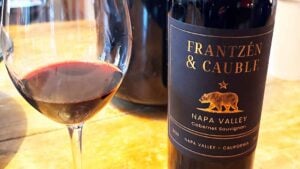
“Vinoteket and Winefinder (a Swedish online wine shop) held a tasting with the first wines from a collaboration between three-star Michelin chef Björn Frantzén and Master Sommelier Ian Cauble. They presented 3 wines, of which I tasted two. The first was the wine that was launched at this event, their Frantzén & Cauble Cabernet Sauvignon 2023 from Napa Valley. The wine is available at Vinoteket and Winefinder, and can be ordered now for direct delivery since January 2026.”
Read more in Anders Åhlén’s article on BKWine Magazine: Frantzén & Cauble Cabernet Sauvignon, Napa Valley.
Yes, we use AI at BKWine. Here’s how

We use artificial intelligence (AI) in our work. The use of AI is a hotly debated topic, especially in writing and journalism. Will AI destroy journalism? Is AI a useful tool? Is it perhaps even a danger to society? At BKWine, we use AI quite extensively. But we do not use AI to write texts. So, how do we use AI? Let’s take a look at some of the areas where it can come into play. And then I will introduce you to my great-grand aunt Aina.
Read more in Per’s article on BKWine Magazine: Yes, we use AI at BKWine. Here’s how.
German pinot noir: from abysmal to world-class
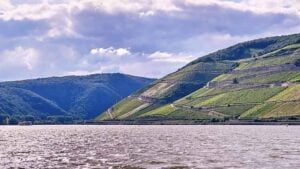
German pinot noir has undergone a remarkable transformation over the past two decades, shifting from widely dismissed, overripe and heavily oaked wines to elegant, precise and terroir-driven expressions. Producers now focus on earlier harvests, lower yields, cooler fermentation and less oak, resulting in lighter, more refined styles. Germany’s diverse soils add further complexity, and with competitive pricing, the country may well be the next big success story in the wine world. BKWine’s reporter Göran van den Brink reports from a meeting with Romana Echensperger.
Read more in Göran van den Brink’s article on BKWine Magazine: German pinot noir: from abysmal to world-class.
Utiel-Requena: one of Spain’s most misunderstood wine regions?
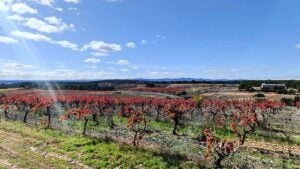
Utiel-Requena is perched on a high-altitude plateau, a short hour west of Valencia. The wines from there today achieve a striking balance of elegance, concentration, and a sense of their origin. The main grape is the autochthonous bobal. This overlooked Spanish wine region has a harsh continental climate that preserves a striking grape acidity. Bobal is a thick-skinned native red, long dismissed as a bulk-blending workhorse, but is now being reimagined through skilful winemaking into structured, fresh, and deeply expressive wines. You can also find rare but characterful indigenous white wine varieties such as merseguera and the ubiquitous macabeo. Utiel-Requena is undergoing a quiet revolution. BKWine Magazine guest contributor Michael Pope goes exploring.
Read more in Michael Pope’s article on BKWine Magazine: Utiel-Requena: one of Spain’s most misunderstood wine regions?
Finally, the spotlight is on Côte des Bar, the southern Champagne region, with an amazing array of grower champagnes | Britt on Forbes
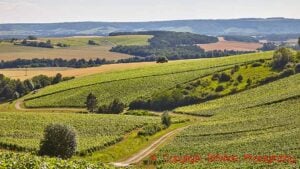
The Côte des Bar, the southernmost part of Champagne, is a gold mine for those looking for exciting grower champagnes. The district is a bit isolated from the rest of Champagne. The city of Troyes is nearby, as is the border with Burgundy. It was previously not talked about much. But 24% of the total champagne vineyard area is here, so it is not a negligible part of the appellation. As interest in grower champagnes has increased, the Côte des Bar has come into the spotlight. These interesting growers are well worth the attention.
Read more in Britt’s article on BKWine Magazine, originally published on Forbes: Finally, the spotlight is on Côte des Bar, the southern Champagne region, with an amazing array of grower champagnes | Britt on Forbes.
Travel: Come on a wine tour to Champagne and Burgundy with BKWine. (PS: We’ve written a prize-winning book on Champagne and one on Burgundy.)
—
Wine Tours
—
Details on our current and future wine tours. Book a wine tour with the “World’s Top Wine Tour Operator” today (or when you feel like travelling to wine country).
Treat yourself to an unforgettable experience in the beautiful wine-lands together with some of the most knowledgeable wine people around. Book now!
—
In Bordeaux, you will visit historic, prestigious châteaux, but not only | wine tour

In Bordeaux, some of the world’s most famous wines are made in magnificent châteaux. These famous wines are expensive, sometimes very expensive. Yes, some luxury wines are made in Bordeaux. But that’s only half the truth. In a wine region as large as Bordeaux, there is a little bit of everything. And that’s what we want to show you on our tour this autumn. Luxury sometimes, and a little less pretentious sometimes. But always fantastic wines that show Bordeaux’s strong sides today. The ability to make wines that can be aged yet remain enjoyable and drinkable early. Come with us to some of the prestigious châteaux in Médoc, such as Château Beychevelle and Château Lascombes, and in Pessac-Léognan, such as Château Haut-Bailly, as well as the smaller, family-owned ones in Saint-Émilion and Entre-deux-Mers. Prepare yourself for magnificent lunches at the châteaux and exciting vertical tastings. And some insider tips about the new vintage, of course.
Come and discover French wine and food in Bordeaux on this luxurious wine tour with BKWine, one of the world’s leading wine tour operators (*).
Book now!
(*) And the only one who has authored 13 award-winning wine books, one of which is on Bordeaux wines.
We can add that we have also written an award-winning book about Bordeaux.
Discover on-site the world-famous wines and villages of Burgundy and Champagne | wine tour

Burgundy and Champagne, the best combination for a tour with the best French wine and food. We start in Burgundy and finish in Champagne!
The Côte d’Or in Burgundy, where this tour takes us, is teeming with world-famous names. The Côte d’Or is only a small part of the whole of Burgundy, but an important one in terms of prestige and history. There are some extremely expensive wines here, yes, but if you scratch the surface a little, you will find an abundance of producers who make exquisite wines at more reasonable prices, even though Burgundy is never a cheap wine. Pinot noir and chardonnay are grapes that are now grown all over the world. Sometimes other regions try to imitate Burgundy. It is difficult. The wines from here have a very special character, partly due to the climate, which is just right, not too hot, not too cold. You will discover the balance that the wines get here during our many tastings and lunches, where Burgundian specialities and fantastic wines are served. There will be no shortage of premier cru or grand cru. We stay in the charming town of Beaune, strategically located and surrounded by vineyards.
After enjoying some of the best wines in the Côte d’Or, we will travel north. We will make a short stop in Chablis, famous for its lovely crisp chardonnay. We then continue to Reims, the capital of Champagne, for the next part of our tour.
Much has been said about Champagne. Famous people have coined immortal quotes. But there is still a lot to learn about Champagne when you actually come here. It is really only when you are here that you can truly understand Champagne. You will realise the importance of the climate. You begin to understand the rules governing champagne production. The technology, the geography, the history, and, of course, the philosophies of the various producers. We go out into the vineyard and look at the vines; we go down into magnificent old cellars, former quarries, where thousands of bottles will stay on the lees for many years. But perhaps most importantly, on-site, you get to hear about the current events in Champagne. What trends are driving it, and how can Champagne stay on top amid increasingly fierce competition? We will discuss all this and much more during our tour.
Join us for a behind‑the‑scenes deep dive on this Burgundy/Champagne tour, where we also enjoy some truly delicious lunches, always accompanied by top-quality Burgundy or different styles of Champagne.
Come on this exceptional tour to two of the world’s most respected wine regions with BKWine, one of the world’s leading wine tour operators (*).
Book now!
(*) And the only one who has authored 13 award-winning wine books.
South America – formidable, impressive and different | wine tour

Argentina is a major wine-producing country, ranking about fifth in the world. It is a country with a long wine tradition. It is certainly a New World country, but it is also strongly influenced by the Old World, partly thanks to many Italian and Spanish immigrants. Among the New World countries, Argentinians have always drunk the most wine, and the country has a long-standing wine culture. We visit Mendoza, the country’s largest wine region and a magnificent sight with the snow-capped Andes as a backdrop. In recent years, domestic producers and foreign investors have invested in Argentine vineyards. Some have large, impressive wineries equipped with the latest technology and staffed by well-trained winemakers.
The Andes Mountains separate Argentina from Chile. After our days in Mendoza, our bus will take us over the mighty Andes, a great experience. Up here in the mountains is the border control between the two countries. Once on the other side, we head west to the Pacific Ocean and the city of Viña del Mar. We visit cool coastal vineyards in Casablanca and San Antonio before continuing to charming Santa Cruz and well-known Colchagua, known for its cabernet sauvignon and carménère. If you haven’t tasted a pisco sour yet, now is the time to do it. It is a Chilean national drink.
We meet in Buenos Aires, and the tour ends with a night in Santiago de Chile.
“C’est formidable!”
Our South America is an experience, a feast with fantastic lunches in the vineyards, great wines and welcoming people.
Come on this exciting wine tour to Argentina and Chile with Britt and Per of BKWine, one of the world’s leading wine tour operators (*).
Book now!
(*) And the only one who has authored 13 award-winning wine books.
More inspiration: You can get an even better feeling for what you will experience on this tour if you visit the latest tour’s own Facebook group. Lots of pictures and videos from the tour: See pictures and videos from Chile and Argentina in the latest wine tour’s Facebook group.
Amazingly many styles of wine, landscapes and regions | wine tour in South Africa
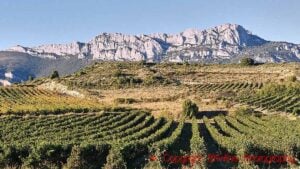
Making wine in South Africa may seem easy; the climate seems ideal. Dry Mediterranean climate with cooling sea breezes and rarely too high temperatures. A really pleasant growing season for the vines. Often it is, but unfortunately, drought is a problem that appears from time to time. Nothing is perfect, but the fact that South Africa makes great wines is undeniable. The vines are found in a relatively limited area in the Western Cape, in the southernmost part of the country. But the growing conditions vary. There is a big difference between the southern areas that are influenced by the cool Ocean stretching towards Antarctica and the northern, warmer parts inland. Today, the producers are keen to take advantage of these differences to make wine in different styles.
After a couple of days in Cape Town, we travel around the wine regions and then have the opportunity to see and feel these differences in the wines for ourselves. We visit classic regions such as Franschhoek and Stellenbosch, Swartland and Tulbagh in the north, Paarl, and Walker Bay on the cool south coast.
We also have time for some sightseeing in Cape Town. Table Mountain is a must, and also the Cape of Good Hope, where wild waves crash against the rocks. You have time to stroll around Stellenbosch and look at the unique chalky-white Cape Dutch houses. And admire the beautiful mountains that watch over Franschhoek. And walk along the sea in Hermanus.
The wine country that has everything?
Come on this fabulous wine tour to South Africa with Britt and Per of BKWine, one of the world’s leading wine tour operators (*).
Book now!
(*) And the only one who has authored 13 award-winning wine books.
More inspiration: You can get an even better feeling for what you will experience on this tour if you visit the latest tour’s own Facebook group. Lots of pictures and videos from the tour. See pictures and videos from South Africa in the latest wine tour’s Facebook group.
Weather, wind and wine in New Zealand | wine tour

New Zealanders talk a lot about the weather. Maybe to be expected in this country, a narrow country, an island thrown out into the Pacific Ocean. Almost all of New Zealand is influenced by the sea and ocean winds. It is not an obvious wine country, and it is also, without competition, the youngest of the New World countries. Success has come quickly. The vineyard area has grown at a record rate. Today, it is around 43,000 hectares, distributed across the North and South Islands. Here, it is still something of an adventure to make wine.
We take you on a road trip through almost the entire country (at least a big part), from Auckland, the largest city, to Queenstown in Central Otago. On the way, we stop in Rotorua and look at geysers and other geothermal wonders. If we are lucky, we see a kiwi (the bird, that is). We stop in Hawke’s Bay, the second-largest wine region, and in Wairarapa/Martinborough, and taste, among other wines, their world-famous pinot noir. We make a quick stop in Wellington, the capital, then take the ferry to the South Island (3 hours, with a chance to see albatrosses and dolphins), and on to new adventures. We start with the largest wine region, Marlborough, which, you will see, is not only about sauvignon blanc. After Marlborough, we head for nature experiences at Mount Cook and the Southern Alps before continuing down to Central Otago and charming Queenstown. In between all this, we have also had time to get to know the Maori culture. We will taste many wines, enjoy delicious lunches, meet some of the country’s most famous wine producers, and sample local seafood.
Join us on this adventure and discover a different wine country, far away. We promise you many surprises. Good ones!
Come on this stunning wine tour to New Zealand with Britt and Per of BKWine, one of the world’s leading wine tour operators (*).
- New Zealand, 10-25 March 2027 (detailed programme coming soon)
Book now!
(*) And the only one who has authored 13 award-winning wine books.
More inspiration: You can get an even better feeling for what you will experience on this tour if you visit the latest tour’s own Facebook group. Lots of pictures and videos from the tour: See pictures and videos from New Zealand in the latest wine tour’s Facebook group.
—
Bespoke Tours
(examples – we do others too)
Forget the myths, learn the truth and reality of Champagne | wine tour *

There are many myths and misconceptions about champagne. Let’s look at some? “Small, fine bubbles are a sign of quality.” Wrong. It could be a sign of a specially prepared (etched) or towel-dried glass (or some other effects) but it doesn’t tell you anything about the taste. “There are 49 million bubbles in a bottle.” No, it depends on many different factors, such as bubble formation points (nucleation sites) in the glass. And one of the big ones: “Grand cru is a sure sign of quality in champagne.” No, grand cru is an obsolete designation in a now abolished price control system. The quality depends primarily on the person who makes the wine. “There are seven, no, now with voltis, eight permitted grapes.” No, it’s actually nine. “The grape variety is no longer called pinot meunier but just meunier and it’s not a pinot at all.” Wrong. The grape variety is still called pinot meunier (sometimes meunier for short) and is actually technically (genetically) the same as pinot noir. You can dive into all this when you come to Champagne.
But the most important thing about champagne is that it is an outstanding wine. It is a fantastic wine in itself but also something that goes perfectly with food, as you will discover at our delicious gastronomic lunches. A champagne tour like no other with the people who wrote one of the most comprehensive book on champagne ever.
Come on this luxurious wine tour to Champagne with BKWine, one of the world’s leading wine tour operators (*).
(*) And the only one who has authored 13 award-winning wine books.
Tuscany, gentle hills with beautiful vineyards and olive trees | wine tour *

Vineyards are part of the Tuscan landscape. Grapevines thrive on the hills where the soil is poor but the sun exposure is excellent. The landscape is quite mountainous in places. The vines are grown between 200 and 600 meters above sea level. How the wine tastes depends on many factors: the grapes, the altitude, the soil and not least the philosophy of the wine producer. There are great variations in Tuscany and the producers like to emphasise these differences that the various districts within Tuscany have. Everyone is proud of their special part of Tuscany. Chianti conquered the world in the 70s with its straw-covered bottle. At that time it was known as an easy-drinking and unpretentious wine. Today we get Chianti in all versions, from top quality prestige wine to uncomplicated fruity lunch wines. The occasion will decide. We will of course visit both Chianti and Chianti Classico (two different geographical areas) and also Montalcino a little further south, known for its fantastic Brunello di Montalcino. Discover the enchanting Tuscany with us; not only the wines but also the landscape, the people and the gastronomy.
Come on this wonderful wine tour to Tuscany with BKWine, one of the world’s leading wine tour operators (*).
(*) And the only one who has authored 13 award-winning wine books.
Piedmont, the land of truffles and fog; and Barolo, Barbaresco | wine tour *

It is a beautiful landscape that meets us in Piedmont. The region certainly merits its name, “at the foot of the mountain”; the Alps tower at the horizon. The signature grape Nebbiolo also has good reason for its name; it is often foggy (nebbia) in the mornings in the hills. The Alps to the north are not far away. Around us lie medieval villages such as Barolo, La Morra, Serralunga, Gavi with their impressive defensive castles, often real fortresses. The autumn landscape is magnificent. Nebbiolo and the other grapes often grow on slopes, sometimes really steep. We taste our way through many fantastic wines, Barolo, Barbaresco and other nebbiolos, as well as slightly lesser-known but equally outstanding wines with arneis, barbera, dolcetto, etc. We enjoy the local cuisine. We visit the truffle market in Alba with its overwhelming scent experience (can you over-dose in truffles?) and we eat a delicious closing lunch with the famous white truffle.
Come and discover all the good things that Piedmont has to offer on this wonderful wine tour with BKWine, one of the world’s leading wine tour operators (*).
(*) And the only one who has authored 13 award-winning wine books.
Douro Valley: The unique landscape that cannot be described but must be seen | wine tour *

The Douro Valley impresses like few other wine regions. There is probably no other wine region that has so many steep slopes in such a large area. The Douro Valley must be seen with your own eyes. No pictures can really do it justice. When it comes to the Douro Valley, the word unique can be used without hesitation. On these difficult-to-work slopes, port wine has been made for many centuries. The “regular” (not fortified) red and white wines, called simply “Douro wines”, have not been known for as long. This combination of Douro wines and port wines makes this tour particularly interesting. We taste all types of wines. The red and also the white Douro wines (non-fortified wines) are fantastic. For many, port wines are an exciting (re-)discovery. You don’t always realise that port wine comes in so many different types and, for instance, what the differences are between an old tawny and a vintage. Completely new dimensions open up. We stay two nights in Porto, an exciting city to explore. On the other side of the river lies Vila Nova de Gaia and this is where the big port wine houses age their wines. We stay two nights at the luxurious Vintage House in the valley, close to the vineyards.
Come and discover the spectacular landscapes and wines of the Douro on this wine tour with BKWine, one of the world’s leading wine tour operators (*).
(*) And the only one who has authored 13 award-winning wine books.