—
The Dangers of Wine Education
—

Can you know too much about something? Probably not — knowledge is almost always a positive thing. On the other hand, you must learn how to handle your knowledge, for example, by cultivating a flexible and critical mindset. You need to realise that everything you’ve learned does not apply everywhere, and not all the time.
This is especially true in the world of wine. Of course, there are hard facts you simply memorise, just like when you studied grammar in school. The sugar level in a Brut Champagne is a maximum of 12 grams per litre, and there are five Bordeaux châteaux classified as Premier Grand Cru Classé in 1855. No debate there.
But much of the wine world is vague, nuanced, and full of generalisations.
–
Calling all wine lovers:
Do you know someone who might be interested in a wine tour?
Please tell them about BKWine Wine Tours! We do wine tours like no other. A leading wine tour operator since more than 20 years.
Have you already been on one of our tours? Tell your friends! Word-of-mouth is perhaps the most important way to spread the word of good wine, great food and exciting travel.
Thank you in advance for your help and support!
(If you have Swedish friends, please know that we have a separate, more extensive travel program in Swedish: BKWine Vinresor.)
–
We often say “it depends”, and it applies to almost everything in viticulture and winemaking. Many wine courses probably still teach that high-density planting is best, slopes are best, hand‑harvesting is best, old vines are best, low yields are best. But the truth is that none of these things is a universal truth. In every case, it depends on the circumstances. Sometimes these things are better, but sometimes they are not.
Economic reality plays a major role. Take high-density planting as an example. Every vine requires a certain amount of work throughout the year. The more vines you have, the more labour you need — and the more expensive the wine becomes. But not everyone can charge high prices for their wines. And it is by no means guaranteed that the wine becomes better simply because the vines are planted more densely. The same goes for yield. In autumn, when the grape bunches hang ready to be picked, people sometimes ask me: “Why are there so many bunches per vine? I’ve learned there should be far fewer.” Well, that too depends. Too few bunches can make the wine unbalanced or overly dense. And perhaps not at all the style customers actually want.
Many wine courses are far too dogmatic. “This is how it is.” In our book on wine growing and wine making this is a key message. It depends! The risk with wine education is that you learn “this is how it must be,” which is why a flexible mindset is so important once you graduate and get your diploma.
The greatest risk, however, is being taught that “this is how the wine should taste” — for example, “this is how a sauvignon blanc tastes”, or a syrah. A Sancerre is how sauvignon blanc should taste: nettles, elderflower… or if you want an exaggerated example, you choose one from New Zealand. But no. Per recently served on the tasting jury at the international competition Sauvignon Selection by CMB, with around a thousand sauvignon wines from all over the world. There is an enormous range of styles. For example, some excellent oak‑aged sauvignon blancs from Styria in Austria — far from both Sancerre and Marlborough, yet absolutely delicious. Or some wonderfully tasty “SBs” that were slightly oxidative in style. But a sauvignon from 2024 shouldn’t be oxidative, one might object. Why not? If it tastes good? If the winemaker and the consumer want that style?
Or take syrah. The archetype of classic syrah is the northern Rhône — Hermitage and Côte Rôtie — with leather, spice, violets, asphalt and so on. But travel only as far as Languedoc and you’ll find syrah that tastes very different. Or travel to New Zealand, and you’ll experience yet another expression: fresh, juicy, vibrant — not at all like the northern Rhône, and certainly not worse for it. Another example is cabernet franc, which we’ve been taught has green, herbal notes and often bell pepper, as illustrated by Chinon. But Chinon has changed dramatically, and in Chile cabernet franc is something else entirely. This you can experience, for example, at Viña Maquis in Colchagua (on our South America wine tour), they make one of the world’s finest cabernet francs — at least according to many critics — yet not particularly herbal or peppery.
Didactic teaching can easily turn into narrow‑mindedness about how wines “should” taste.
Another risk of studying on wine courses is to “over‑analyse” wine, which leads you to find faults; you reckon the wine is thin, lacks finish, lacks aroma — when in fact it might be an excellent wine if you simply drank it and enjoyed it.
Perhaps the best approach is what several winegrowers have told me: they complete their education, then start working, and do the exact opposite of what they were taught.
But certainly learning is valuable, not least because it allows you to make your own decisions more confidently. If you want to — and dare to.
Travel
Now it’s time to plan your trip for this year and next.
In the fall/autumn we do Bordeaux, Burgundy and Champagne.
We have also launched the two first winter wine tours, to Chile-Argentina and to South Africa. The one to New Zealand will come soon. They are already starting to fill up, so contact us now if you are interested!
More info on our wine tours here. “World’s Top Wine Tours“. Tours with the people who know wine and who have an unrivalled experience of wine and tours.
Travel in wine regions with someone you trust.
Enjoy the Brief!
Britt & Per
Wine editors to the national encyclopaedia, Forbes.com contributors, award-winning wine book authors, wine tour advisors to the UN and national wine organisations, wine judges … and, above all, passionate wine travellers.


If you appreciate what we do, you can help us:
Tell your friends about the Brief or send it to them.
Like us and follow us on social media:
BKWine Magazine on Facebook | Wine Tours on Facebook
—
What’s on at BKWine Tours
BKWine is also one of the world’s leading wine tour operators. Here’s what we currently have on our scheduled wine tour program:
- Bordeaux, 13-19 September
- Burgundy and Champagne, 23 September – 1 October
- Maybe more. What would you like?
–
- Chile-Argentina, 11-24 January 2027
- South Africa, 14-24 February 2027
- New Zealand, 10-25 March 2027
We also make custom designed wine tours.
And we have an extensive travel program in Swedish: BKWine Vinresor.
We’re different than most other wine tour operators. We are people who know wine inside out, who travel constantly in wine regions, who write award winning books about wine. Who do this out of passion.
Our wine tours are different from others.
A typical year we organise more than 30 wine tours to destinations across the world. In Europe: France, Italy, Spain, Portugal and more. World-wide: South Africa, Chile, Argentina, New Zealand. Thanks to our Scandinavian background we have a separate offer for the Scandinavian market. These are sometimes offered in English and also available as custom made tours. For example, these destinations:
—
Read our books
We have written eleven wine books. They have won awards from the Gourmand Awards, The International Organisation of Vine and Wine (OIV) and others.
Unfortunately, only one of them has been translated to English; the others are (so far) only available in Swedish. This is the one that is available in English:
Here’s the full list of our books:
- The Wonderful World of Wine
- Languedoc-Roussillon, the Wines of Southern France
- Champagne, the Wine and the Growers
—
News from the World of Wine
—
Short briefs on what’s been happening in the world of wine recently and other interesting things.
—
Bordeaux vintage 2025 scrutinised during primeur week, and by BKWine
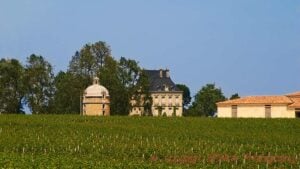
The annual Bordeaux Primeur Week has just concluded. The 2025 vintage from the most prestigious and renowned châteaux has been tasted and judged by a large number of buyers, importers and journalists. What they have tasted is not a finished wine, of course; the 2025 is still resting in the châteaux’s cellars and will do so for another 12 months or so before it is delivered to the buyer. However, the châteaux’s cellar masters have made a blend that is (hopefully, and theoretically) close to the finished wine.
2025 was an excellent vintage with high expectations. The flowering was early, rapid, and without incident; the summer was warm and dry, some rain in August came at the right time, and all the grape varieties reached perfect ripeness. The volume is possibly slightly lower than hoped, but on the other hand, this may be an advantage, given that there are many unsold vintages from previous years. What happens now is that the chateaux announce their prices. This usually happens in May, and then the buyers will decide whether to bet on this vintage and buy en primeur, or not. We tasted 2025 on our Bordeaux tour earlier in April. They were remarkably fruity wines, delicious despite their youth.
Travel: Come on a wine tour to Bordeaux with BKWine. (PS: We’ve written a prize-winning book on Bordeaux.)
Concours Mondial de Bruxelles (CMB) launches partnership with Swedish online wine retailer Free Grape Society and Italy’s 5 Hats
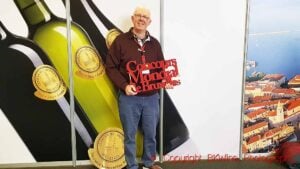
The Concours Mondial de Bruxelles (CMB) has announced a new strategic collaboration with the Italian marketing and event company firm 5 Hats and the young Swedish online wine platform, Free Grape Society. The partnership centres around the “CMB Guide,” a new concept developed by CMB and 5 Hats. Currently in its early stages, the initiative is designed to help winemakers who have medalled in CMB competitions market their products more effectively. The collaboration has attracted our attention partially due to the involvement of Free Grape Society (FGS), a young Swedish-based (although legally Danish) digital marketplace catering to both private consumers and restaurants. As a result of this agreement, Free Grape Society will offer its customers a curated selection of wines featured in the CMB Guide. The CMB medal-winning wines are typically mid-range wines that have achieved significant success and earned medals at the Concours Mondial de Bruxelles. The CMB competitions are similar to the Decanter competition or the International Wine Challenge but to focus more on quality than on “typicity”. Free Grape Society is not a traditional online retailer but instead operates as a trading platform connecting producers to the end customer. Read more: freegrapesociety
Spring frosts are devastating vineyards in Champagne and elsewhere

Our Champagne tour at the end of April brought fantastic spring weather and high temperatures (albeit lower in the mornings and evenings). Spring has been early and warm in Champagne. This has caused problems. Vegetation and budding are three weeks ahead of normal. This means that the tender buds and leaves are very vulnerable if the night temperatures drop below freezing. And they do. Many vineyards have been hit by frosty nights in recent weeks, resulting in destroyed buds. Flavien Rutat at Champagne René Rutat says he has lost grapes from one hectare (out of his 7 in total) of the 2026 harvest. And the danger is not over yet. There could also be frost in May. Tender leaves and buds freeze at -4°C when the weather is dry, but in damp weather, -2°C is enough to freeze them. But frost in some of the vineyards is not always as devastating as you might think. It is common for Champagne vineyards to “overproduce” grapes for just these eventualities. If there is no frost, the excess production is thrown away, if there is frost, it is used from frost-free land.
Travel: Come on a wine tour to Champagne and Burgundy with BKWine. (PS: We’ve written a prize-winning book on Champagne and one on Burgundy.)
Vintage port 2024 has been declared, the first in a long time

2024 was a brilliant vintage for port wine, and many of the major Port wine houses have “declared” in April (as is done in the Port wine district) that they will make a vintage port 2024. This is long-awaited news for port wine lovers. Vintage port is only declared in years that the producers consider exceptional, and “general declarations” – which means that most of the major houses release a Vintage – are relatively rare. The most recent year was 2017.
2024 offered a warm summer and a relatively cool autumn, resulting in a classic vintage port. But, of course, we see vintage port from years other than those that are “general declarations”. Some years, only a few houses declare a vintage, or none at all. Fonseca, for example, declares a “classic vintage port” only in exceptional years. In some other years, the house chooses to release a Fonseca Guimaraens Vintage Port, which is made in a style that makes it available earlier than a classic Vintage and at about half the price. The decision to declare a vintage is made in the spring of the second year after the harvest. A port that is to be vintage is usually bottled after two years and, according to the rules, no later than three. Another rule says that you should wait a long time before opening a vintage port. But the fact is that already when young, it offers an irresistible fruity sensation. Ead more: theportugalnews
Travel: Come on a wine tour to the Douro Valley in Portugal with BKWine.
Record price for a bottle of Romanée-Conti Grand Cru 1945, $812,500
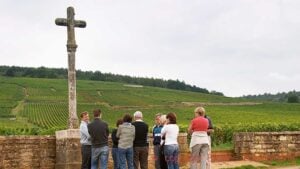
It’s hard not to raise an eyebrow when you see that a bottle of wine has been sold at auction for 800,000 USD. But everything is explained when you see that it is a Romanée-Conti 1945, a legendary grand cru from Burgundy from a legendary year. The auction was held in New York by Acker Wines and makes this wine one of the most expensive bottles of wine ever sold and breaks the previous record for Romanée-Conti 1945 of 558,000 USD from 2018.
1945, the end of the war and an exceptional year. But it was also an exceptional year for Romanée-Conti. It was the end of an era. It is the last vintage made with pre-phylloxera vines. These old vines were pulled up shortly after and the vineyard was replanted with grafted stocks. In fact, by 1945, almost all the other vineyards belonging to the Domaine de la Romanée Conti had already been replanted on grafted vines. Only 600 bottles of Romanée-Conti were made in 1945, an extremely small harvest from the vineyard, which totals 1.7 hectares. The vines were probably (evidently!) already quite tired. But the result is said to have been an incredibly concentrated wine. Read more: ackerwines
Travel: Come on a wine tour to Burgundy (and Champagne) with BKWine. (PS: We’ve written a prize-winning book on Burgundy and one about Champagne.)
DNA analysis of thousands of years old grape seeds sheds light on surprising facts about the history of wine
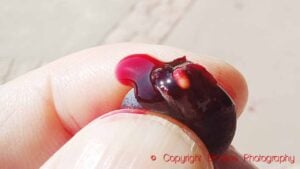
There is still much we don’t know about the history, origins, and relationships of different grape varieties. A report in the scientific journal Nature provides us with a wealth of new insights into this fascinating subject. Using groundbreaking DNA techniques, researchers have analysed 54 archaeological grape seeds, including 49 newly sequenced samples mainly from France. They focused on seeds from the Bronze Age to the Middle Ages, allowing them to trace the genetic evolution of grapevines over roughly 4,000 years to the present day, yielding some fascinating discoveries.
Genetic analyses show what the wild, local grapevines looked like during the Bronze Age and that cultivated vines were already being used around 625–500 BCE. Genomes from the Roman era suggest long-distance exchange of grape varieties from the Iberian Peninsula, the Balkans, the Levant, and the Caucasus. Vegetative propagation (i.e. planting cuttings instead of seeds) — visible through genetically identical clones found at different sites and across centuries — appears in the mid–Iron Age and then becomes an important part of viticulture. And remarkably, one medieval sample from Valenciennes is genetically identical to today’s pinot noir (!), showing that the same clone has persisted for nearly 600 years. Read more: nature
Auction wines not just for the super-rich, average price of 137 euros, a trend report
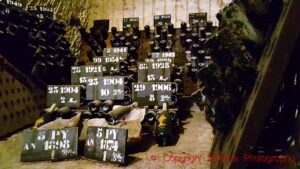
We often read about wine auctions where wines go for prices worthy of a Picasso painting. But wine auctions are not just about super expensive and exclusive wines. You can buy wine at auction at more normal prices. iDealwine offers online wine auctions and in their latest trend report the company says that the average price for wine auctioned in 2025 was 137 euros. They sell wine from many different regions in France and abroad. Burgundy is still the leading region in terms of value (41.3%), while Bordeaux dominates in terms of volume (34%). The three largest regions – Bordeaux, Burgundy and the Rhône Valley – account for 72% of the volume sold. However, their dominance has decreased and more and more regions are having success at auction such as Champagne, Beaujolais, Alsace, South West… Organic and natural wines are also increasingly seen in the auction scene. The proportion of these wines sold at auction continues to grow. Read more: idealwine
Time to rediscover aligoté
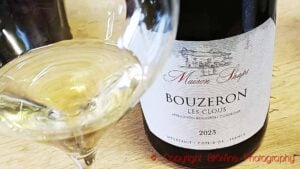
There’s something of the ugly duckling about the aligoté grape in Burgundy. For a long time, it was relegated to being blended with blackcurrant liqueur for the aperitif kir. But things are happening now — in fact, they have been for several years. Aligoté is starting to take a more prominent place among the white Burgundy wines. During our visit this spring on the Burgundy wine tour to Hanna Schaps at Maison Schaps just outside Beaune, we tasted, among other things, her intriguing Bouzeron Les Clous 2023. Bouzeron is an appellation in the Côte Chalonnaise that is 100% aligoté. Hanna gives it 24 hours of skin contact and a bit of oak aging, and she uses a special, more flavourful, she says, variant of aligoté called aligoté dorée. A very delicious wine — golden yellow in colour, distinctive, full-bodied, and with a wonderful mouthfeel. You will hopefully find many aligoté in your wine store. Here are just a few suggestions.
- Bourgogne Aligoté Joseph Drouhin, ~18 euro
- Bourgogne Aligoté Domaine Sylvain Pataille, ~25 euro
- Bourgogne Aligoté, Alice et Olivier De Moor ~30 euro
Curious fact: aligoté is the most planted grape variety in Moldova! It is also widely planted in some of the neighbouring countries. Perhaps you’d be interested in a wine tour to Moldova? We know the country better than most.
Travel: Come on a wine tour to Burgundy (and Champagne) with BKWine. (PS: We’ve written a prize-winning book on Burgundy and one about Champagne.)
—
Features of the Month
—
Articles and features published on BKWine Magazine and on our wine travel blog and (occasionally) photography blog in the last month.
—
Explore some of the world’s best vermouth *
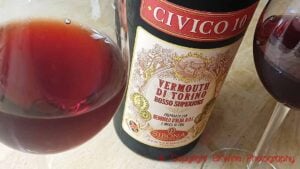
At home, we like to drink vermouth when it is time for an aperitif. Although vermouth is essentially a fortified wine flavoured with herbs and spices, it can taste very different. A Martini Rosso or Bianco does not show the most interesting side of vermouth. Right now, there is a Vermouth di Torino in our fridge, purchased in Piedmont, where some of the world’s best vermouth is made. Vermouth from Torino has been in the spotlight now at the end of 2025. The Italian Ministry of Agriculture has officially recognised the Vermouth di Torino Consortium, which brings together 40 producers (90% of the production of 6 million bottles). This, it is said, marks a milestone in the promotion and protection of this classic vermouth from Piedmont.
Read more in Per’s article on BKWine Magazine: Vermouth di Torino, the classic bittersweet red vermouth, and other delicious vermouths.
Travel: Come on a wine tour to Piedmont with BKWine. (PS: We’ve written a prize-winning book on Piedmont.)
—
Wine Tours
—
Details on our current and future wine tours. Book a wine tour with the “World’s Top Wine Tour Operator” today (or when you feel like travelling to wine country).
Treat yourself to an unforgettable experience in the beautiful wine-lands together with some of the most knowledgeable wine people around. Book now!
—
In Bordeaux, each vintage is different | wine tour

In Bordeaux, one expects firm, tannic wines that require ageing. These certainly exist, but today the variation is greater, and the wines are a bit softer. They can be enjoyed with pleasure much earlier than before. It can be a revelation to taste they young wines and discover how absolutely delicious they are. Some people prefer their Bordeaux well‑aged, while others enjoy the fresh fruit and youthful tannins that pair so beautifully with a fine piece of meat. On our tour, we enjoy a beautiful, still, summery landscape and lots of activity in the cellars as harvest approaches. We will visit famous, elegant châteaux where we sometimes have lunch (and not just any lunch, true gastronomic wonders, with wines to match!), or just a magnificent tasting. We will also have informative walks through the vineyards. You might even get to taste lesser-known grape varieties, such as petit verdot. You will get to know both the grand, famous châteaux and the more down‑to‑earth family estates. Bordeaux is also becoming very environmentally conscious, and we will discuss both organic and regenerative farming (we’ve written a ground-breaking book on sustainability). There will of course also be a lot of talk about different vintages, that is how it is in Bordeaux. Each vintage is different. Even if you visit Bordeaux for the first time, a wine lover immediately feels at home.
Come and discover French wine and food in Bordeaux on this luxurious wine tour with BKWine, one of the world’s leading wine tour operators (*).
Book now!
(*) And the only one who has authored 13 award-winning wine books, one of which is on Bordeaux wines.
We can add that we have also written an award-winning book about Bordeaux.
Burgundy is the land of a thousand vineyard plots, and Champagne that is no longer just about blending and safety | wine tour

Burgundy and Champagne, what can be a better combination for a tour with top-notch French wine and food? We start in Burgundy and finish in Champagne! Burgundy consists of thousands of tiny vineyard plots, each said to give the wine its own character. Not so easy to understand how they can. But after a few days in Burgundy — and after tasting some fantastic wines, some of them premier cru and grand cru — you start getting a feel for it. We will spend four nights in Beaune, a charming small town strategically located in the Côte d’Or, the region home to many famous Burgundy villages, such as Gevrey-Chambertin, Pommard, Aloxe-Corton, Meursault, and more. We will spend some time in the vineyard to talk about the important work done there, the foundation of the wine’s final quality. Vinification in Burgundy is often simple: fermentation in open vats with manual punch‑downs, then into the oak barrels where the wine rests for a while. The magic lies in treating the grapes correctly in the vineyard and harvesting at the right moment. We will enjoy Burgundian specialties with fantastic wines and there will be no shortage of premier cru or grand cru. We are certainly big advocates of not being blinded by the label “grand cru”, simple labels are reliable, but when you choose them carefully, as at our grand cru lunches, it becomes a great (grand!) experience.
After enjoying some of the best wines in the Côte d’Or, we will travel north. We will make a short stop in Chablis, famous for its lovely crispy chardonnay. We then continue to Reims, the capital of Champagne, for the next part of our tour.
Champagne has changed in recent years. It is no longer only a blended wine where different vintages, sub‑regions, and vineyard sites are combined into one cuvée. More and more producers now focus on expressing the specific character of individual sites, especially the smaller family estates. One of the producers we visit, Alexandre Penet, is specialised in this. We visit one of his single vineyards, Les Fervins, which we later taste during lunch. Champagne no longer wants to be only an aperitif or wine for celebration, but also a complex food wine, with the refreshing bubbles as a bonus. Traditionally, Champagne is blended: vintages, grape varieties, sub‑regions, and vineyard plots. This is how the Champagne houses make their BSA (brut sans année — non‑vintage brut), the so‑called “standard” champagne. And there is absolutely nothing wrong with blending (it is even necessary in a cool climate, as in Champagne). But tasting a champagne made from grapes from a single small vineyard — one that you have actually visited — is something special.
Join us for a behind‑the‑scenes deep dive on this Burgundy/Champagne tour, where we also enjoy some truly delicious lunches, always accompanied by top-quality Burgundy or different styles of Champagne.
Come on this exceptional tour to two of the world’s most respected wine regions with BKWine, one of the world’s leading wine tour operators (*).
Book now!
(*) And the only one who has authored 13 award-winning wine books.
South America – a feast for the senses | wine tour

A tour through the wine regions of Argentina and Chile is a feast for the senses with dramatic landscapes, generous people and some of South America’s most exciting wine producers. The tour begins in the big city of Buenos Aires. We then continue to Mendoza, the wine region at the foothills of the Andes, where vineyards stretch higher and higher up the mountains. Here, malbec is king, but malbec can take many different shapes in Mendoza depending on where it is grown (see our grape profile on malbec on BKWine Magazine). You will hear the stories of wine families, traditions, experimentation, and the challenges – and advantages – of farming at high altitude.
We cross the Andes Mountains into Chile by bus, which is truly spectacular. The scenery shifts in Chile but remains just as captivating. The valleys open toward the Pacific, and the cool coastal breezes shape a completely different style of wine. In Casablanca and San Antonio, we visit producers known for their expressive sauvignon blancs (see our grape profile on sauvignon blanc on BKWine Magazine) and elegant pinot noirs (see our grape profile on pinot noir on BKWine Magazine). In Colchagua, where we will spend four nights in the pretty town of Santa Cruz, the wines are more powerful and often made from cabernet sauvignon (see our grape profile on cabernet sauvignon on BKWine Magazine) and carménère. Many of the producers we meet are pioneers in sustainable viticulture, and they will tell us their secrets how they work with the land.
Food is an essential part of our experience. In Argentina, our long lunches often stretch into the afternoon, featuring grilled meats, fresh empanadas, and delicious salads, all paired with the wines of the estate, genuine asados. Chile is also meat country but as we are closer to the Ocean, the cuisine also leans toward ceviche and fresh fish. And pisco sour!
Come on this exciting wine tour to Argentina and Chile with Britt and Per of BKWine, one of the world’s leading wine tour operators (*).
Book now!
(*) And the only one who has authored 13 award-winning wine books.
More inspiration: You can get an even better feeling for what you will experience on this tour if you visit the latest tour’s own Facebook group. Lots of pictures and videos from the tour: See pictures and videos from Chile and Argentina in the latest wine tour’s Facebook group.
An inspiring tour through a vibrant wine culture | Wine tour in South Africa
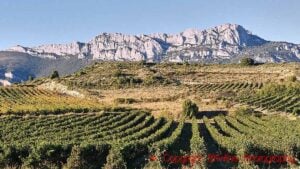
This wine tour will take you through some of the most important wine regions of South Africa and will offer you a deeper look into South Africa’s vibrant wine culture. You will visit the historic heart of the winelands, Stellenbosch, with its oak‑lined streets, Cape Dutch architecture, and famous vineyards surrounded by mountains. We will go to Franschhoek, often called the culinary capital of South Africa, situated in a breathtakingly beautiful valley framed by dramatic peaks. We also explore Paarl which has some pioneering wine estates. Here, the landscape opens up, with wide valleys and granite outcrops that glow in the afternoon sun. The mountains in the winelands are fascinating.
We go as far as Swartland, in a sense a new wine region although vineyards have been here many, many years. But the fame Swartland has now, thanks to its characterful wines, old bush vines and minimal intervention wines, is new. On the south coast we visit Walker Bay, a pioneering region when it comes to pinot noir (see our grape profile on pinot noir on BKWine Magazine) and chardonnay (see our grape profile on chardonnay on BKWine Magazine) in South Africa. But other grapes also thrive here, not least pinotage as we will see during a memorable visit to an innovative wine estate in Stanford. Of course, the tour is not only about wine. We make time for some of South Africa’s iconic sights, Table Mountain, with its sweeping views over Cape Town, and the Cape of Good Hope, where impressive waves crash against wild cliffs to mention a few.
It’s a tour that blends wine, food, landscapes, and culture. You will experience South Africa at its most vibrant and beautiful.
Come on this fabulous wine tour to South Africa with Britt and Per of BKWine, one of the world’s leading wine tour operators (*).
Book now!
(*) And the only one who has authored 13 award-winning wine books.
More inspiration: You can get an even better feeling for what you will experience on this tour if you visit the latest tour’s own Facebook group. Lots of pictures and videos from the tour. See pictures and videos from South Africa in the latest wine tour’s Facebook group.
Go far in March with us, all the way to New Zealand | Wine Tour

New Zealand has, in just 20–25 years, become a well‑known and highly respected wine country. It all began with sauvignon blanc from Marlborough, a style that put New Zealand on the wine map with its intense aromas and crystal‑clear freshness (see our grape profile on sauvignon blanc on BKWine Magazine). But as you will discover during this tour, there is so much more to enjoy here. Today, New Zealand produces some of the world’s most elegant pinot noir, especially from regions such as Central Otago and Martinborough (see our grape profile on pinot noir on BKWine Magazine). Syrah, pinot gris, cabernet sauvignon, merlot and riesling also thrive in the cool climate and varied soils. The diversity is remarkable for such a small country, and each region has its own personality and charm.
We begin in Auckland, the country’s largest city. Here we find local wines, not least on the picturesque Waiheke Island, where we make our first winery visit. From there, we continue to Hawke’s Bay and Wairarapa, home to the renowned sub‑region of Martinborough. After that, a spectacular ferry journey takes us from the North Island to the South Island, followed by visits to Marlborough and Central Otago. Along the way, we also spend a few hours in Wellington, the capital, experience natural wonders such as glacier lakes and geysers, and get to know Māori culture. Because New Zealand is, of course, much more than wine. It is a land of dramatic landscapes, intensely green hills, and breathtaking scenery. The food is equally inspiring — fresh fish and seafood, top‑quality lamb, local cheeses and much more.
Join us on this adventure and discover a different kind of wine country — far away and full of surprises.
Come on this stunning wine tour to New Zealand with Britt and Per of BKWine, one of the world’s leading wine tour operators (*).
- New Zealand, 10-25 March 2027 (detailed programme coming soon)
Book now!
(*) And the only one who has authored 13 award-winning wine books.
More inspiration: You can get an even better feeling for what you will experience on this tour if you visit the latest tour’s own Facebook group. Lots of pictures and videos from the tour: See pictures and videos from New Zealand in the latest wine tour’s Facebook group.
—
Bespoke Tours
(examples – we do others too)
—
Forget the myths, learn the truth and reality of Champagne | wine tour *

There are many myths and misconceptions about champagne. Let’s look at some? “Small, fine bubbles are a sign of quality.” Wrong. It could be a sign of a specially prepared (etched) or towel-dried glass (or some other effects) but it doesn’t tell you anything about the taste. “There are 49 million bubbles in a bottle.” No, it depends on many different factors, such as bubble formation points (nucleation sites) in the glass. And one of the big ones: “Grand cru is a sure sign of quality in champagne.” No, grand cru is an obsolete designation in a now abolished price control system. The quality depends primarily on the person who makes the wine. “There are seven, no, now with voltis, eight permitted grapes.” No, it’s actually nine. “The grape variety is no longer called pinot meunier but just meunier and it’s not a pinot at all.” Wrong. The grape variety is still called pinot meunier (sometimes meunier for short) and is actually technically (genetically) the same as pinot noir. You can dive into all this when you come to Champagne.
But the most important thing about champagne is that it is an outstanding wine. It is a fantastic wine in itself but also something that goes perfectly with food, as you will discover at our delicious gastronomic lunches. A champagne tour like no other with the people who wrote one of the most comprehensive book on champagne ever.
Come on this luxurious wine tour to Champagne with BKWine, one of the world’s leading wine tour operators (*).
(*) And the only one who has authored 13 award-winning wine books.
Tuscany, gentle hills with beautiful vineyards and olive trees | wine tour *

Vineyards are part of the Tuscan landscape. Grapevines thrive on the hills where the soil is poor but the sun exposure is excellent. The landscape is quite mountainous in places. The vines are grown between 200 and 600 meters above sea level. How the wine tastes depends on many factors: the grapes, the altitude, the soil and not least the philosophy of the wine producer. There are great variations in Tuscany and the producers like to emphasise these differences that the various districts within Tuscany have. Everyone is proud of their special part of Tuscany. Chianti conquered the world in the 70s with its straw-covered bottle. At that time it was known as an easy-drinking and unpretentious wine. Today we get Chianti in all versions, from top quality prestige wine to uncomplicated fruity lunch wines. The occasion will decide. We will of course visit both Chianti and Chianti Classico (two different geographical areas) and also Montalcino a little further south, known for its fantastic Brunello di Montalcino. Discover the enchanting Tuscany with us; not only the wines but also the landscape, the people and the gastronomy.
Come on this wonderful wine tour to Tuscany with BKWine, one of the world’s leading wine tour operators (*).
(*) And the only one who has authored 13 award-winning wine books.
Piedmont, the land of truffles and fog; and Barolo, Barbaresco | wine tour *

It is a beautiful landscape that meets us in Piedmont. The region certainly merits its name, “at the foot of the mountain”; the Alps tower at the horizon. The signature grape Nebbiolo also has good reason for its name; it is often foggy (nebbia) in the mornings in the hills. The Alps to the north are not far away. Around us lie medieval villages such as Barolo, La Morra, Serralunga, Gavi with their impressive defensive castles, often real fortresses. The autumn landscape is magnificent. Nebbiolo and the other grapes often grow on slopes, sometimes really steep. We taste our way through many fantastic wines, Barolo, Barbaresco and other nebbiolos, as well as slightly lesser-known but equally outstanding wines with arneis, barbera, dolcetto, etc. We enjoy the local cuisine. We visit the truffle market in Alba with its overwhelming scent experience (can you over-dose in truffles?) and we eat a delicious closing lunch with the famous white truffle.
Come and discover all the good things that Piedmont has to offer on this wonderful wine tour with BKWine, one of the world’s leading wine tour operators (*).
(*) And the only one who has authored 13 award-winning wine books.
Douro Valley: The unique landscape that cannot be described but must be seen | wine tour *

The Douro Valley impresses like few other wine regions. There is probably no other wine region that has so many steep slopes in such a large area. The Douro Valley must be seen with your own eyes. No pictures can really do it justice. When it comes to the Douro Valley, the word unique can be used without hesitation. On these difficult-to-work slopes, port wine has been made for many centuries. The “regular” (not fortified) red and white wines, called simply “Douro wines”, have not been known for as long. This combination of Douro wines and port wines makes this tour particularly interesting. We taste all types of wines. The red and also the white Douro wines (non-fortified wines) are fantastic. For many, port wines are an exciting (re-)discovery. You don’t always realise that port wine comes in so many different types and, for instance, what the differences are between an old tawny and a vintage. Completely new dimensions open up. We stay two nights in Porto, an exciting city to explore. On the other side of the river lies Vila Nova de Gaia and this is where the big port wine houses age their wines. We stay two nights at the luxurious Vintage House in the valley, close to the vineyards.
Come and discover the spectacular landscapes and wines of the Douro on this wine tour with BKWine, one of the world’s leading wine tour operators (*).
(*) And the only one who has authored 13 award-winning wine books.