We use artificial intelligence (AI) in our work. The use of AI is a hotly debated topic, especially in writing and journalism. Will AI destroy journalism? Is AI a useful tool? Is it perhaps even a danger to society? At BKWine, we use AI quite extensively. But we do not use AI to write texts. So, how do we use AI? Let’s take a look at some of the areas where it can come into play. And then I will introduce you to my great grand aunt Aina.
“Do you use AI?” is a question often asked. But today, it is no longer a valid question. We use AI. Everyone uses AI. You cannot refuse to use AI. It is a bit like saying in the 90s, “I won’t use the internet,” or “I have no email.” Maybe it worked for a while, but in the end, you just had to give in and start using it. And once you did, it actually turned out to be a great tool, provided you are aware of its limitations and deviations and use it with care and intelligence. Soon, you couldn’t do your work or live your life without it. Not without email. Not without the internet. Not without artificial intelligence.
You might even be using AI today far more than you realise.
Here’s how we use artificial intelligence, plus some more.
- Translation
- Photo and video (in a way)
- Transcription
- Texts (in a way)
- Data mining and research
- Daily life
- Proofing, spellchecking and grammar checking
- Tools and technology
But what AI? And how?

What we do not use AI for
But before diving into how we use AI, I want to make it clear how we do not use it.
- We do not publish texts written by AI
- We do not use photography or images created by AI
- For our tour business, we do not use AI for tour or visit planning
Translations
If you have ever needed to translate a text and used a tool to help, you have used AI. There was a time when, for example, Google Translate used linguistic logic, analysing sentences and applying rules to translate. Then they changed it to use an AI engine for translation. At the very beginning, the AI translations sometimes came out a bit curious. But very soon they were much, much better than before. That change was in 2016, so you have probably used AI for quite a while.
Since we at BKWine, Britt and I, write in Swedish, English, and sometimes French, we use this all the time. It gives excellent results, but it always has to be checked manually. That’s a good description of most things that come out of AI: good results, not 100% reliable, always need to be checked manually.
There are different levels of AI use here. The simple use of Google Translate (or others: LanguageTool, ChatGPT Translate, DeepL, Hix, Hemingway, SlickWrite (?), Reverso, Wordreference…). But you can also use one of the chatbots (more on those later) for more specific translation work. For example, “translate in a very formal way”, “make this text very enthusiastic”, etc.
(Yes, AI could translate the text in the book below, as well as give me a pretty accurate estimate of what kind of book it was.)
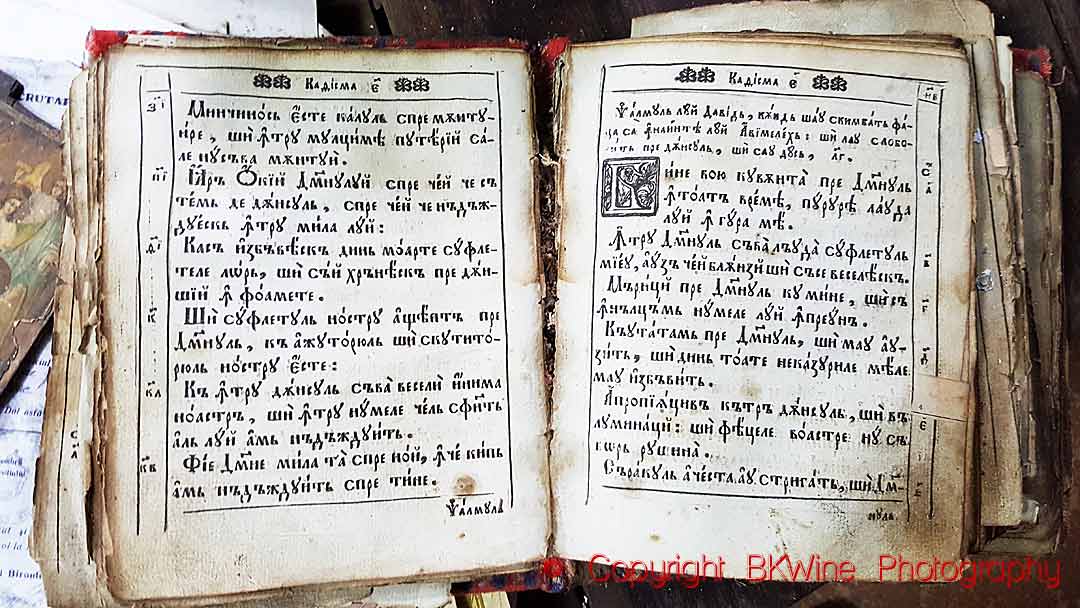
Photo and video
We do not use AI to create images. This is perhaps partly because we are also photographers, so we always use only our own images. We know some people who use AI-generated images extensively, but the images are often striking for their “AI feel” and underwhelming in their impact, not to mention their personality.
Important: With AI in photography, you can encounter questions about copyright and copyright infringement. (Also true for texts, of course.)
But AI can probably play a more important role in photography soon, too. But – for us! – perhaps more in video, especially when it comes to editing. Some AI-based video editing and creation tools are becoming increasingly interesting. We have done some trials. Descript is one of the video editors that looks very interesting, though we have not used it yet. Blackmagic DaVinci Resolve is also set to release its own AI tools soon. And others.
Come to think of it, my main photo-editing software, Phase One’s Capture One, already includes some minor AI features.
What I mainly do use AI for in photography is cataloguing. With a few hundred thousand photos in my archive, I need a way to find them. I use a catalogue program, a “digital asset management” (DAM) tool. The one I use most is called Daminion (I also use Photo Supreme, which I find a bit less elegant and less user-friendly). (No, Lightroom is not really a grown-up DAM, not a DAM at all.) Daminion has a clever feature that uses AI to automatically “tag” or “keyword” the images. This means they become searchable. I can, for example, search for “amphora” and it will find pictures of amphorae. I can even search for, say, “Languedoc”, and it will find wine bottles with that word on the label. It is not perfect, but it is tremendously helpful. It does this by using an API that connects to either OpenAI (of ChatGPT fame) or Google. This has added tremendous value to me.
Transcription
Another area where artificial intelligence is very helpful is transcription. This works, for example, for interviews you record or a presentation you’re listening to, but it also works for videos. Most of these services can handle different languages.
The service we use is Otter.ai. It’s not free (at least not if you use it frequently), but it is very useful. There are several others, many of which offer free trial accounts.
Text and writing with AI
This is, of course, the main area of debate and the most contentious for journalists. We work with one media outlet whose guidelines state “DO NOT PUBLISH TEXTS WRITTEN BY AI.” We agree.
Not everyone agrees, it seems.
Sadly, we see many texts that give the impression of having been written by AI, or with only a very slight human touch-up, and then published under some supposed journalist’s name. We also see many texts taken directly or almost directly from marketing materials (e.g., a wine region’s or producer’s promotional site), slightly changed and then published as if they were journalistic writing. I don’t know which is worse, publishing texts written by AI or copying texts from marketing materials. Both are ethically wrong and discredit the wine journalism profession.
That should make it clear: we do not use AI-generated text in our articles.
But there are several other ways artificial intelligence tools can contribute positively to text creation.
Data mining and research
AI is a powerful tool for background research and, to some extent, data mining (if you need it). You can ask it any question, and it will come up with an answer – almost always. We use it to some extent as background for what we write on BKWine Magazine and Forbes.com, as well as for travel pieces on BKWineTours.com and for our wine-tour activities. (One simple example: finding alternatives to NannyBag in this article: What do you do with your suitcase when you want to go for a walk and can’t find a locker at the station?) You could see this as an alternative to regular web searches, which would take more time.
But, and this is a big BUT, AI can “hallucinate”. You cannot entirely trust what comes out of artificial intelligence. It can easily get the facts wrong, so any information you get from it should, in some way, be double-checked (and preferably not with another AI chatbot), at least if you are going to use it for something “public”. Otherwise, it may thoroughly embarrass you. I’ve seen it give incorrect information many times, not least when it comes to wine questions. But for a general overview and quick facts on various subjects, it is very effective.
We often use it to get an overview of a subject or to find inspiration for how to approach or structure an idea.
Some AI tools can also produce quite in-depth research papers if you ask the right questions. But here too, you cannot entirely trust the facts. That is an important point: how you ask a question of AI can matter a great deal.
Daily questions…
We often ask AI almost any question that comes up in daily life, too. “What happened in 1628?” “How do I best get from Pézenas to Montpellier?” “Is there a better camera app than the generic one on my phone?”… Not always 100% reliable, but often good enough.
Another “daily task” we all do is reading and managing email. If you use Gmail, you have a built-in AI assistant. I don’t use it, so I don’t know how useful it is. I find the auto-text suggestions mainly annoying.
Proofing, spellchecking and grammar checking
Artificial intelligence is also very helpful for improving the “technical” quality of your writing. One good tool is Grammarly, which is both a spell-checker, grammar checker, and style checker, as well as a “general improvement tips” tool. Unfortunately, it is only available in English. Actually, strike that. I just discovered by accident that it also works in Swedish.
Sometimes we use one of the AI chatbots for similar things – spell-checking, grammar, style…
I’m sure many other tools in this area are worth exploring.
Technology
One area where artificial intelligence really comes into its own is in technology, broadly speaking. If I have a problem with Windows, I ask AI for help. “What do I need to do to make our file server accessible while my VPN is on?” “What does this error message mean and how do I fix it?” “How do I make Windows Sandbox work?” (this one, it actually failed)…
If I am looking for a program to do a specific task, I ask AI. For example: “Are there any good and simple programs to trim videos without having to re-render them?” or “I am fed up with the intrusive McAfee. What other good antivirus and security programs are there?”
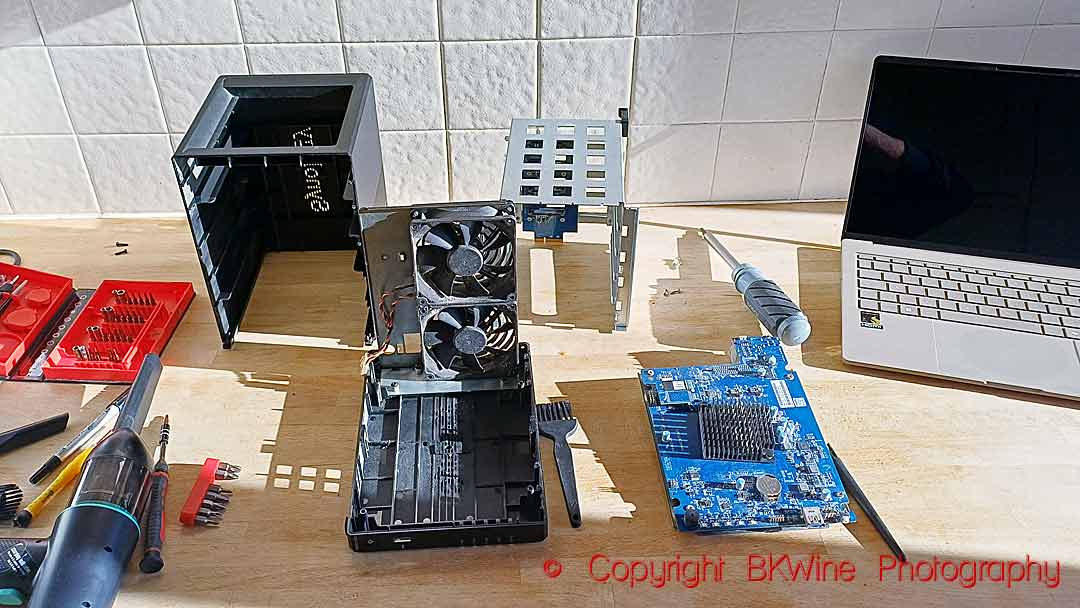
We also run several websites for our business, built on WordPress and the Elementor page builder: BKWine Magazine, BKWine Tours, BKWine Vinresor (our Swedish travel site) and a few others. They require constant maintenance and adjustments. For example, I recently had an issue with the “hero image” on the pages not behaving as it should. I asked AI, and it gave me a small piece of CSS that fixed the issue.
For anything related to technology, artificial intelligence is exceptionally helpful. But again, it can “hallucinate”.
More?
I am sure I have forgotten some of the ways we currently use artificial intelligence, and that there are areas we have not yet explored.
I gave this text to an AI chatbot and asked, “What have I missed?” Sure enough, it came up with a few suggestions. Here are a few:
- Personalised Itinerary Summaries (for our tour business) – no, I don’t think I’d do that, it’s one of our core competencies
- Train a private AI instance to do FAQ – a bit over-reaching, I think
- Content Repurposing, “The Content Squeezer” (rewriting a long article for social media posts) – perhaps, but at most as a support tool
- Multilingual Voice-overs – for our videos, not sure we have a use for that
- AI Video Subtitling – we already get that through YouTube
- Podcast summaries – I actually already do this, but more as a tool to get video interview summaries (for internal use)
I asked three bots the question. Two gave similar, concrete feedback (Gemini and Manus). The third, Perplexity, did something very different. It also questioned some fundamentals of working with AI and pointed out issues it can cause for you (copyright, bias, privacy, etc.), as well as other suggestions for improving this article. So, in a way, this article was written with the help of AI (although not much), highlighting some important aspects I had not mentioned.
Some while ago I organised an event with an AI consultant at CapGemini, Maxime Girardeau VP of AI, around what AI can do and in particular, on the book he had written. He had co-written a book (a thriller novel) with AI where one of the persons in the book was 100 % written by ChatGPT. You can read more on that in this article on the Lunch at the Circle website (a networking talk shop that I run): Can AI imitate a real person? Interview with Maxime Girardeau and his co-author Loïe. (The article is in French but you can easily translate it with an AI tool…)
Who is Aina?
I find it tedious and inelegant to keep referring to “artificial intelligence”, and a bit sterile to say “AI”. Naming a specific AI brand is often meaningless and can be confusing. And I hate calling it “it”. “It said this or that.”
So we have created a namesake for anything that comes from an AI chatbot. We call her “Aina”. Aina is an old-fashioned Swedish girl’s name. I had a great-aunt named Aina. So, it becomes, “Aina told me that the Swedish warship Wasa was launched in 1628 and sank 20 minutes after being put into the water,” for example. In addition, Aina is also Stockholm slang for “the police”, who is also there to try and make order in things.
And it so happens that Aina can also be short for Artificial Intelligence Natural Assistant.
We ask Aina!

The dangers of AI (or Aina)
Many people are concerned about the dangers of artificial intelligence. Of course, there are dangers, but I do not think it will destroy the world. However, there are smaller dangers and perils specifically for writers and journalists.
Copyright: Using AI-generated images can raise copyright infringement issues, as can AI-generated text.
Privacy: Depending on how you use AI, privacy questions can arise. For instance, if you upload an interview transcript, how does Aina handle it?
Hallucination: as mentioned before, Aina can be wrong, which is called “hallucinations”.
Bias: Aina may be my great grand aunt, but she can also generate bias, which can affect what you are working on.
Deflection of traffic: This is a different risk, inevitable bot good to keep in mind. With increasing AI use, fewer people use the “traditional” search engines, so you may get less traffic to anything that has been published online.

But which AI?
Some of the tools and apps mentioned earlier have their own “built-in” AI, but when it comes to chatbots, which do you choose?
I use several different ones. They work differently and give different kinds of answers. It can be wise not to rely on a single one.
The two Aina I use most are Google’s Gemini and ChatGPT (ChatGPT is also the “engine” behind many apps). In most cases, I prefer those two.
Both offer free and paid versions. We pay for Gemini (as part of our Google Workspace subscription) but not for ChatGPT.
Gemini has different levels of “thinking”: Fast, Thinking, Pro, and Plus. You can choose which one to use. Many others have similar tiers.
Given the investments behind these systems, it is surprising that so much is free.
Others I have looked at or occasionally use: Manus – a bit quirky. Claude – sometimes seems a bit outdated (but is said to be good at linguistics in its latest version). Perplexity – sometimes provides more references than others. Copilot – Microsoft’s version, not too bad, actually, and now built into many computers… Some I have not tried: Elicit, DeepSeek, ChatPDF AI, Humata…
Originally, most chatbots did not cite their sources. Now, it seems increasingly that many of them do. This is good.
The cost of AI
Amazingly, many of these tools are free today, particularly the chatbots, at least to some extent. Sometimes you pay for them indirectly. We use Google Workspace to manage our email, a paid Google service that includes Gemini. Some computers today come with Copilot built in. I imagine that is then included in the price of the computer.
Other services charge a fee: Grammarly, Otter, Descript…

Final words
You can never fully trust artificial intelligence (AI). One has always to doubt what Aina says to some extent. As mentioned above, she sometimes “hallucinates” (i.e., produces incorrect, made-up, or ungrounded-in-real-data information) and exhibits bias or other off-flavours. If you use Aina for something important, you have to double-check.
However, there is no way to avoid artificial intelligence. Aina is here and will remain. It is better to embrace AI and understand it as much as possible, while remaining aware of its limitations and dangers. Embracing and understanding it also means not abusing it, which is a danger, not least in journalism.
What do you think? How do you use AI? Is it a danger or a valuable tool for you? What have I missed in this overview? Write a comment!