Are you letting outdated myths dictate your choice of sparkling wine? While Champagne boasts a legendary reputation, much of what we believe about it is shaped by marketing mystique, and old, outdated misconceptions. To fully appreciate this great wine, and find the best bottles, it is time to look behind the scenes and separate fact from fiction.
In this article, we debunk five often mentioned Champagne myths: the misunderstood “grand cru” concept, the unfortunate looking-down-the-nose at a great grape variety, and an overlooked sub-region producing amazing wines. Plus, we reveal the truth about pinot meunier and the actual number of permitted grapes in Champagne—is it three, seven, or nine?
Free yourself from these outdated myths to discover exceptional bottles you might otherwise overlook.
Innumerable books and articles have been written about Champagne (the region) and champagne (the wine) (*). But even though so much has been produced, there are some facts that are far too often misrepresented. These range from small details to rather fundamental things that can seriously affect your appreciation of this sparkling wine. Why let yourself be influenced by wrong or misleading facts? So, come with me behind the scenes in Champagne and discover three myths about Champagne, plus two bonus facts (or myths).
(*) We typically follow the writing habits of the country of origin, writing the region with a leading upper-case and the wine with lower case.
Originally published on Forbes.com, this article is republished here in an expanded form with additional context, content, updates, and editorial insights relevant to BKWine Magazine readers and other wine-lovers.
No other sparkling wine commands the same global reverence, or is shrouded in marketing mystique, as Champagne. Today, it has created an almost religious following and a next to sacred reputation. Some of this is motivated, it is an excellent wine (usually). But it is still just a wine and one among many. What this has also created is a certain amount of misguided ideas, that sometimes contribute to wine-lovers being slightly misled or in some cases even mis-informed.
Some of these myths may contribute to the image of exclusivity, or may contribute to the guru image of the people who repeat them. The downside of this is that it can limit the enjoyment you get out of champagne. Rid yourself of these myths and you can perhaps get even more enjoyment out of champagne.
In short, here are these 3+2 myths, or rather, the truth behind them:
- Grand cru does not guarantee the best quality, it is not a quality seal
- Pinot meunier makes outstanding wines, just as excellent as pinot noir and chardonnay
- Cote des Bar is a very exciting sub region making some of Champagne’s top wines
And also:
- The correct name for meunier is pinot meunier, and it is actually pinot noir
- There are nine (yes, nine) permitted grape varieties in Champagne
Let’s start from the beginning!
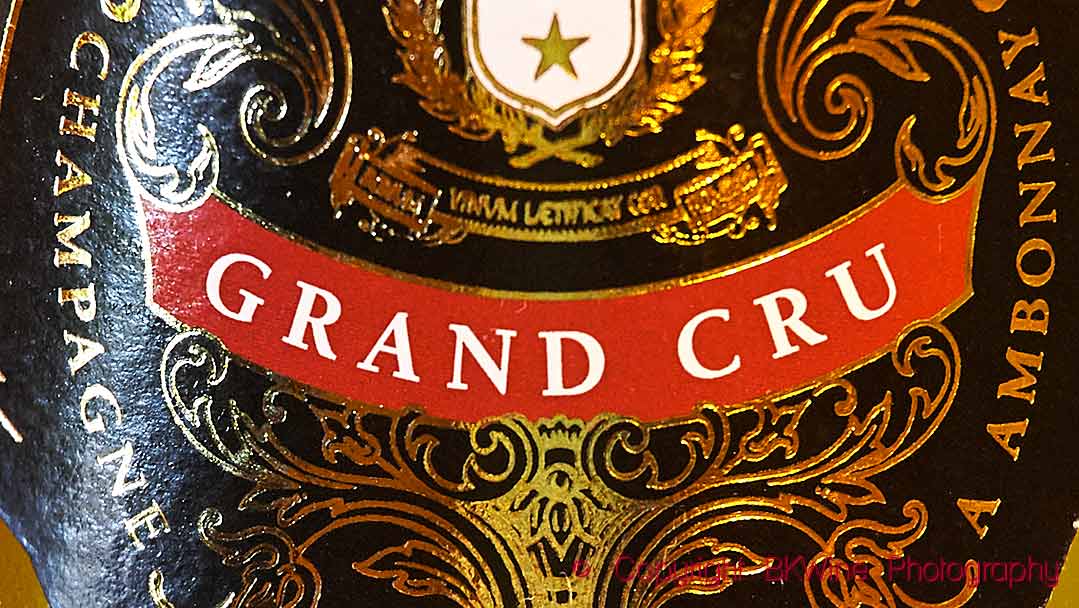
Myth 1: “Grand Cru is the best soil and the best wines”.
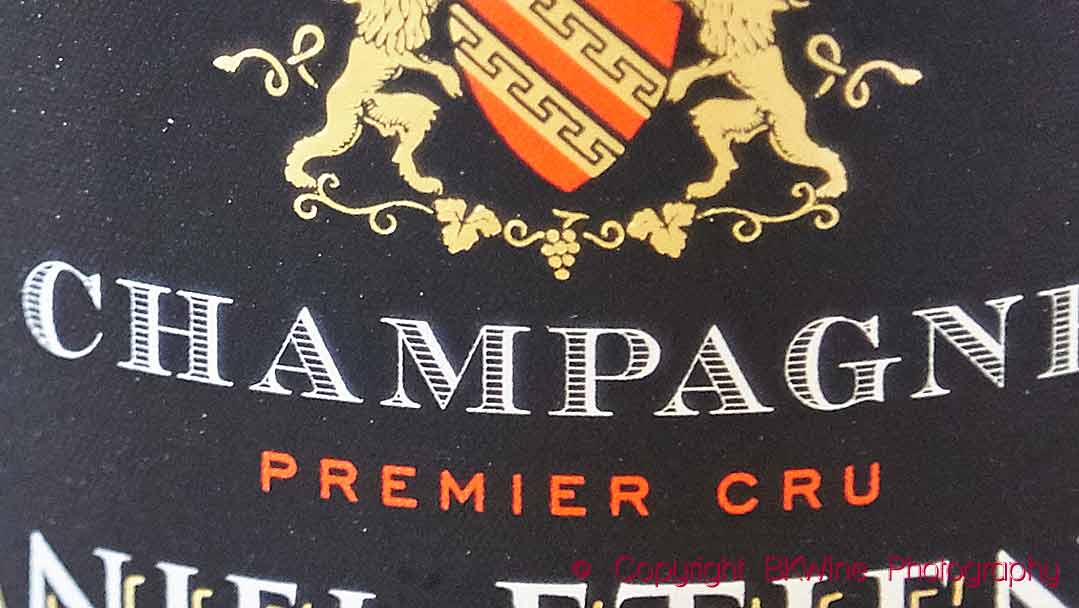
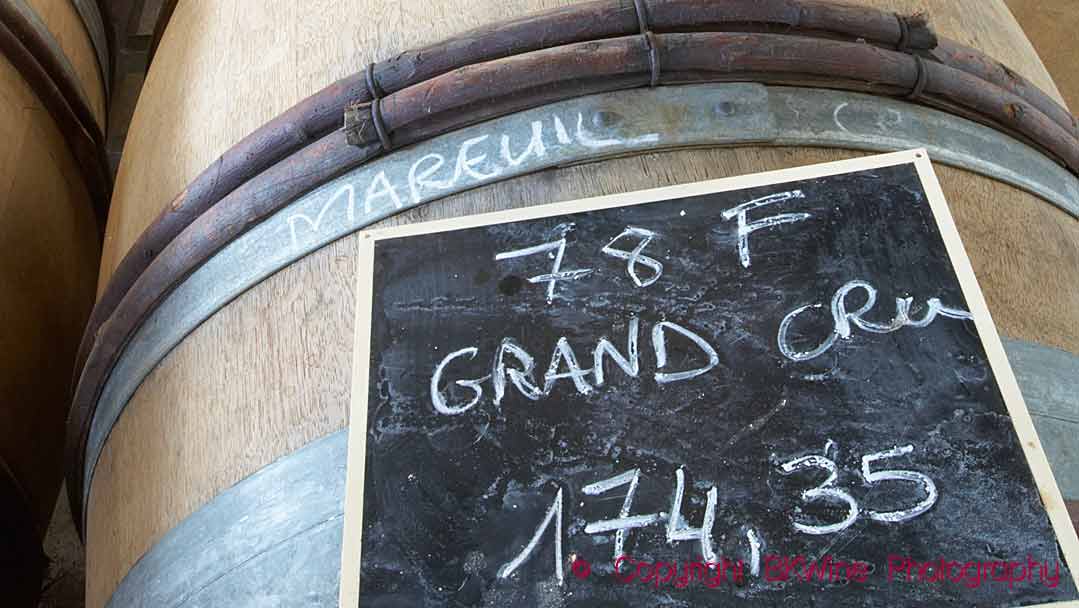
No, “grand cru” (with its little brother “premier”) was a price-fixing scheme (cartel-like system) created some originally in 1911 and the modified several times over the years. To some extent, this was based on soil, but the objective was to prevent sellers and buyers of grape decided on prices independently. Those villages that got the label “grand cru” had the right to the highest price. In 2004 it was completely abandoned and has since no official value at all, but is tolerated as a mention on labels for historical and political reasons.
Much has changed in 100 years. Why would you believe that what someone thought was top-quality, or at least worth the highest price, 115 years ago is still top-quality, and, above all, that still, no one else can match it?
Today, grand cru and premier cru have no legal or practical significance. We all know (I hope) that the talent of the winemaker is as important, if not more important, than the dirt the vines grow on. Great champagnes, just as great, can come from non-cru villages as from the premier and grand crus. Grand cru (or premier) is not a guarantee of quality.
Read more in this BKWine Magazine article: “Grand cru” and “premier cru” on Champagne, what does it mean? Why was it abandoned?
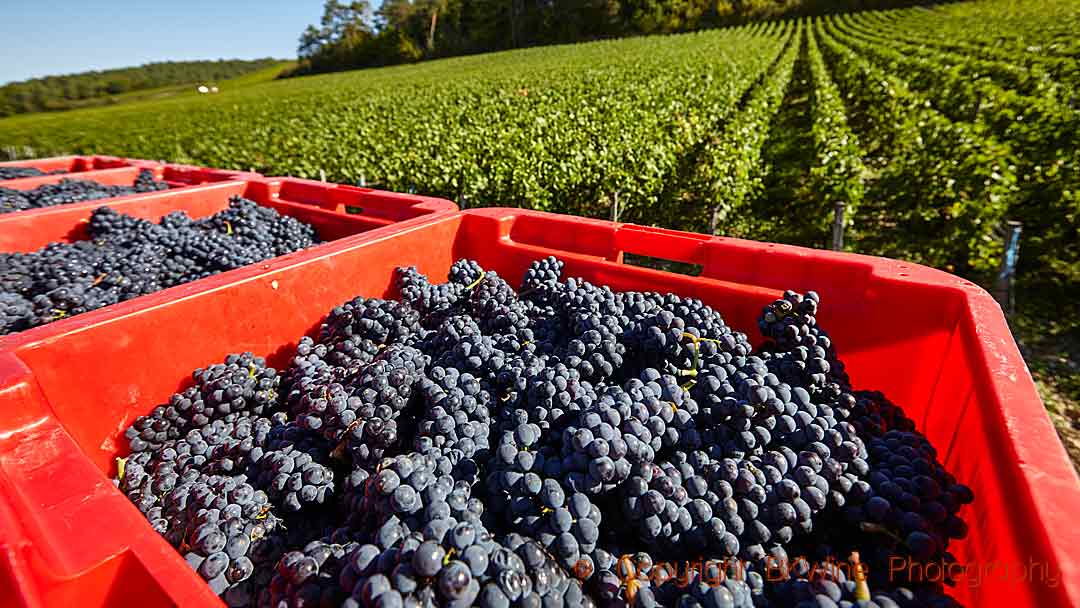
Myth 2: “The two great quality grape varieties are chardonnay and pinot noir; pinot meunier is secondary and only sometimes helpful”
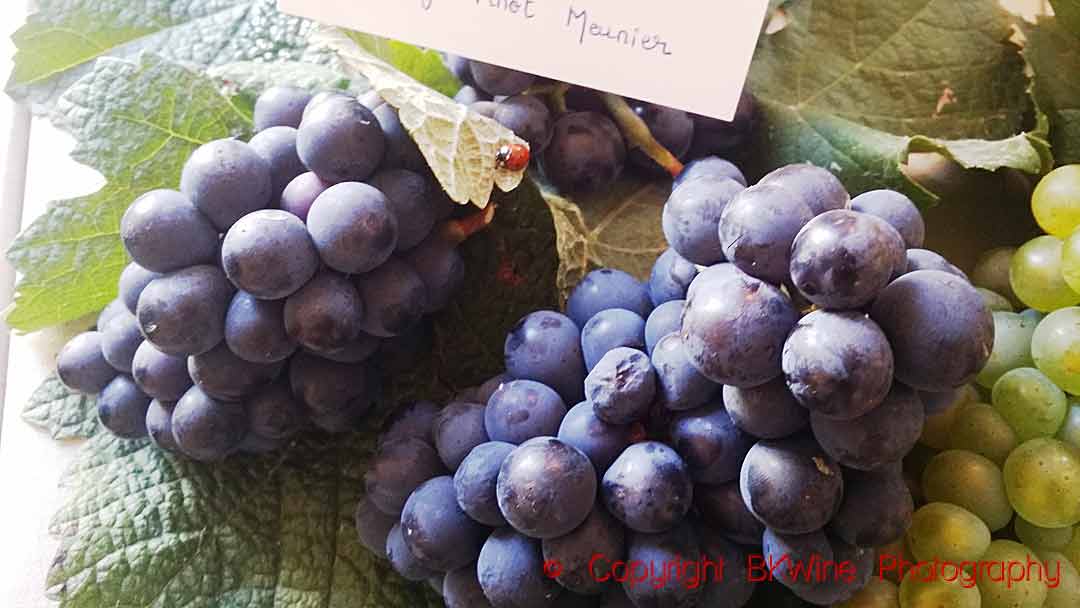
No, this also belongs to ancient times (if it was even true then). Today, anyone who has tasted pinot meunier-dominated champagnes to some extent would most likely agree that the grape is on par with the other two. It is different, yes, but as great and as good. Perhaps it’s reputation as the poor cousin from the country comes from that it was often planted in places where the microclimate was challenging, since it can take low temperatures better.
In fact, pure pinot meunier can have a depth and aromatic spectrum that the others sometimes struggle to match. It is often more full-bodied with more intense aromas and fresh fruit and red berries.
Viva meunier.
Myth 3: “Champagne from the Côte des Bar region is useful as a filler, but it does not make great wines”
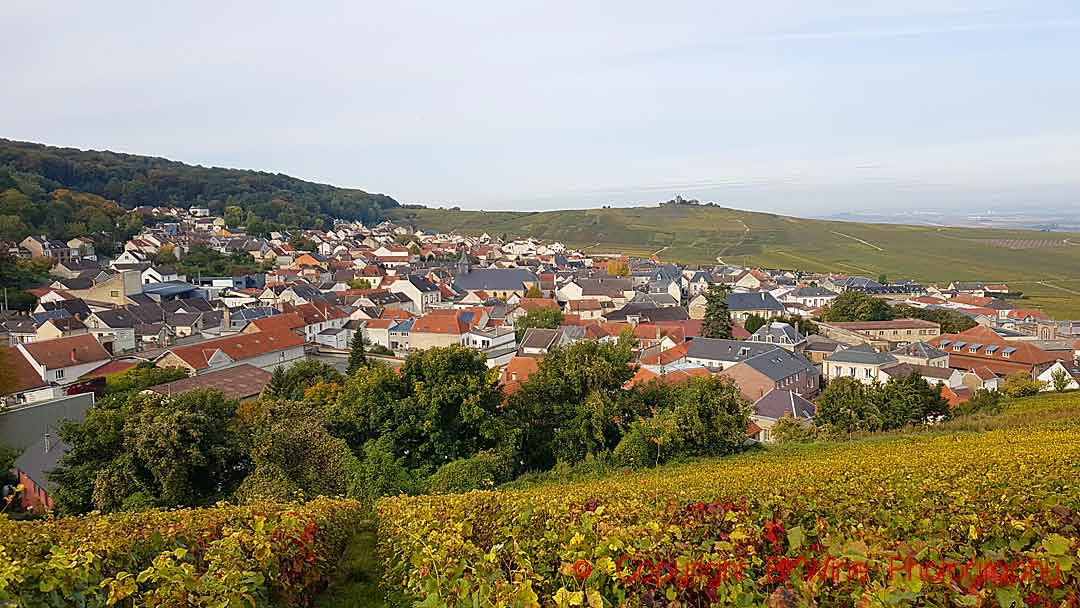
No, just like Myth 2, this sounds like a dinosaur talking. Côte des Bar (sometimes called Aube, which is the name of the départment where it is located) was originally excluded from the appellation, mainly for political reasons. That was more than a century ago.
Wines from here have for a long time been a key ingredient in many of the finest champagnes from respected houses. But they don’t necessarily tell you. It is also home to many top-quality grower champagnes, as well as a some quality houses.
The wines from here often have often more depth and body than those further north, thanks to its more southerly location (it’s warmer) and different soils. Côte des Bar is close to Chablis, the northernmost part of Burgundy and the soil here is more marl and limestone, often considered excellent for white wines. It also happens to be a much prettier landscape than the intensive vineyard cultivation around Reims and Epernay. By the way, the name may look strange if you know a bit of French. What’s this plural? It’s origin is that there are two different villages called Bar here, Bar-sur-Aube and Bar-sur-Seine. You don’t put a plural “s” on town names.
If you’re skipping the Côte des Bar champagnes, you’re missing some of the great ones.
Read more on BKWine Magazine:
Two bonus myths
As if that was not enough, here are two bonus myths, or I should perhaps call it “little-known facts”.
Myth 4: “Pinot meunier should really be called just ‘meunier’”
No, you can call it meunier if you want. It’s common that people say just meunier. But it is a shorthand. The correct name is pinot meunier. It is a version of pinot with leaves that look like they have flour on them when young, hence the name. Or you could say the leaves are “furry”. There are other examples of that, like grenache poilu.
I will also give you a corollary to Myth 4: Pinot meunier and pinot noir are actually genetically the same grape variety. Pinot meunier is a mutation of pinot noir. This is a mutation that has happened naturally in the vineyards, like nature’s own GMO (genetically modified organism). We name it differently mainly out of tradition and convenience – and the wines are quite different. But, in fact, pinot meunier is pinot noir.
Myth 5: “There are three grape varieties in Champagne: chardonnay, pinot noir, and pinot meunier”.
No, or yes: From a practical standpoint, this is almost true: chardonnay (read our grape profile), pinot noir (read our grape profile), and pinot meunier. Those three main grapes account for 99+% of the plantings.
But no, there are seven. No, eight. No, nine grape varieties are allowed in champagne. Or…?
In addition to the three, there are these four traditional but extremely rare varieties:
- pinot blanc,
- pinot gris,
- arbanne,
- petit meslier
Which makes seven.
A few years ago, a grape called voltis, a “hybrid” (!), was approved for limited experimental plantings due to environmental concerns. A hybrid is a crossing between Vitis vinifera and another Vitis species, simply speaking. (In fact, voltis comes from V vinifera and also V. rupestris, V. rotundifolia, and Muscadinia rotundifolia.) This group of grape varieties is sometimes called “piwi”. It has been developed as a particularly resistant variety against fungus attacks, thus needing little spraying.
Eight.
And then, more recently, they also approved (or, actually, reintroduced) a variety called chardonnay rose, a pink-skinned version (mutation) of chardonnay.
Nine.
Some people claim there’s also gamay, but that is anecdotal. It is not a permitted grape variety, but perhaps there are a few vines dating back a hundred years or so.
If you really want to complicate things even more you can say that chardonnay and chardonnay rose are one and the same (as they are, genetically), and pinot noir, pinot blanc, pinot gris and pinot meunier are also the same, genetically speaking… Reducing the number to five. But let’s not go there. It is rare that things are 100% black or white in wine.
Read more on BKWine Magazine: Voltis, Champagne’s ninth grape, finally makes wine.
With this knowledge, you can prove yourself to be a real champagne lover and focus on the delicious taste instead of outdated information.