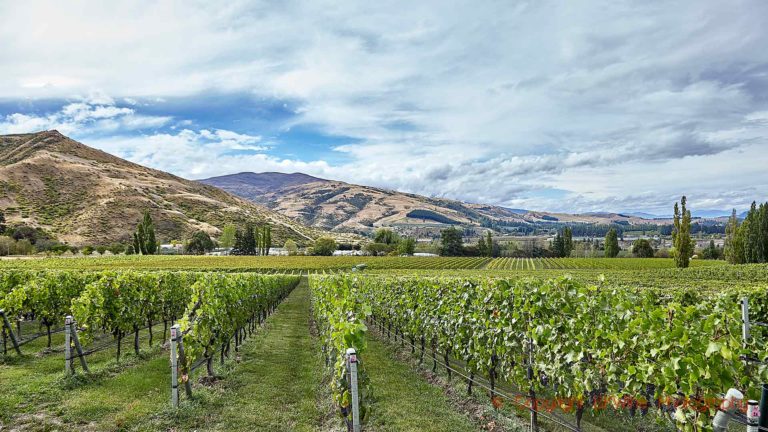
Romagna is positioning itself to be recognised on the world wine scene both for its red wines and for its white wines. The reds, called Sangiovese di Romagna, are elegant often with a charming cherry fruit. The whites, from the rare albana grape are often substantial food-oriented whites, going under the name Romagna Albana. You might think primarily of the gastronomic specialities of Emilia-Romagna,Parmigiano Reggiano (“parmesan” cheese), Parma ham, mortadella, balsamic vinegar (balsamico) from Modena and many others, but it is time to recognise the greatness of the Romagna wine, made in the easter part of this Italian region, close to the Adriatic sea. Here’s your guide to the regions, appellations, grapes and producers.
The Romana wine region has around 28,000 hectares, about the same size as Burgundy (excluding Beaujolais) or Champagne, or half the size of Rioja.
Originally published on Forbes.com, this article is republished here in an expanded form with additional context, content, updates, and editorial insights relevant to BKWine Magazine readers and other wine-lovers.
Quick facts about Romagna and Italian wine
Italy is the world’s largest wine producer (most years), followed by France and Spain. Italy is divided into 20 regions. All of them produce wine. The largest producer is Veneto, not least because of the vast volumes of Prosecco produced there. Emilia-Romagna comes in as number five. In between the two, we have Tuscany, Piedmont and Sicily. Even if Emilia-Romagna is formally a single region, from a wine perspective it makes sense to divide it into two: Emilia, mainly producing lambrusco and some other local wines, and Romagna, which produces a number of different wines. Romagna makes around two-thirds of all of Emilia-Romagna’s production.
Romagna’s most famous wines are one red and one white: The red is Sangiovese di Romagna DOC, and the white is Romagna Albana DOCG.
In the rest of this article we’ll go into some depth of the variety of wines in Romagna.
Albana DOCG
Romagna has one DOCG (denominazione di origine controllata e garantita), the top level of the Italian wine classification system: the white Albana DOCG (or Albana di Romagna). It is said it was the first white DOCG in Italy, which may be true, although the first DOC (later elevated to DOCG) was Vernaccia di San Gimignano. It really doesn’t matter; it’s a wine with a long history. Albana DOCG must be made from at least 95% albana and can be produced in a variety of styles: amabile, dolce, passito, and passito riserva. But the most prominent wines are still and dry.
Albana is a small appellation with only just under 800 hectares of vineyards, which is unfortunate since the wines are so delicious and flavourful. It is sad to see the evolution of the albana plantings (considering the quality of the wines): in 1970 they had 7418 hectares, in 2010 there was 1522 ha, and today only 768 ha. The wines have impressed me, so I hope the downward trend will be reversed!
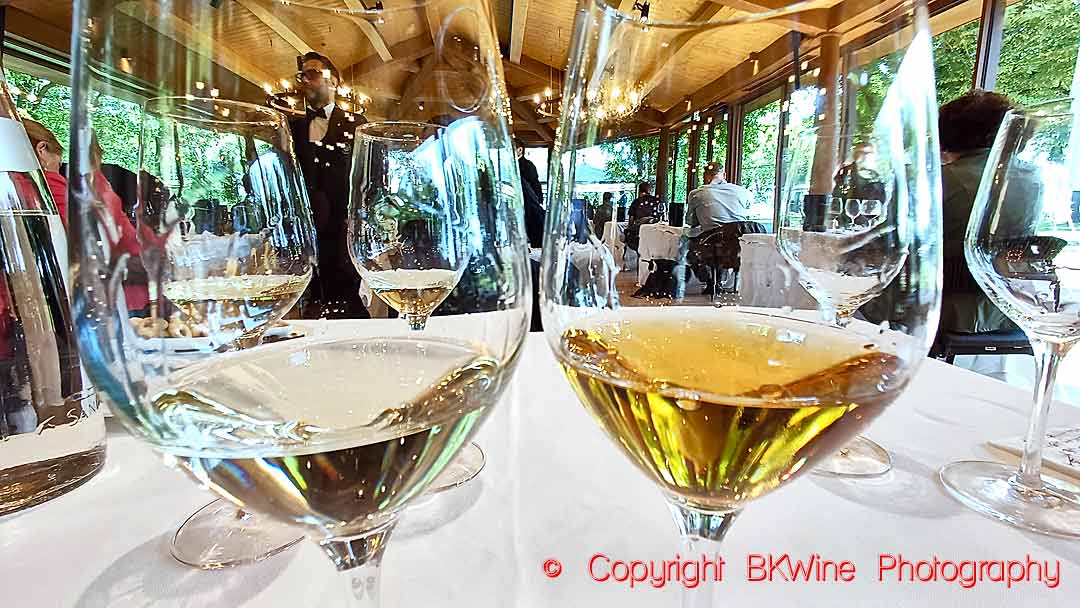
Traditionally, the wine was made with skin maceration and with an oxidative winemaking. This style still exists, and is thus not a fad generated by the popularity of “orange” wine (skin-macerated white wines). But today you find them in all styles, steely dry and fresh to botrytised. Generally, they have a deep colour.
If I tries to summarise the albana whites, it is wines with a significant amount of substance. Ranging from quite light, uncomplicated and fresh to much, much more substantial. In general, a good structure and body (what we call “structure wines” rather than aroma wines) with a little bit of tannins. Most have some “grape skin feeling”—hints of tannins, that some call saltiness, or astringency, which gives them a lot of freshness—even if they have not had any skin maceration. In general, plenty of character for a white.
A few examples that I tasted as an illustration of the appellation:
Fattoria Zerbina, “Bianco Di Ceparano” 2023
Albana di Romagna DOCG
Light, elegant, flowery, white flowers, hits of fresh lemons. Quite light and moderate length, mainly citrus aromas, dry, fresh, elegant and easy-drinking.
Branchini, “Dutia”, 2023
Albana di Romagna DOCG
Light and shy nose with a touch of lime. Slightly fuller body but still quite light, very fresh, lime, white flowers. Good length, nice dry finish.
Zavalloni, 2023
Albana di Romagna DOCG
Very aromatic with some tutti-frutti and sweet flowers. On the palate, also very aromatic, a touch of (refreshing) tannic astringency, perfumed, flowery, a hint of residual sugar. Medium length.
Cantina Di Cesena, “Dancing Albana, Like No Tomorrow”, 2022
Albana di Romagna DOCG
The nose is light, elegant, flowery, with a hint of almonds. On the palate, medium body, very fresh citrus acidity, some slight tannins, very dry. Good citrusy finish.
Tenuta La Viola, “Frangipane”, 2023
Albana di Romagna DOCG
The nose is quite elegant, very citrusy, slightly “green”, carambola fruit (star fruit). On the palate, it has a good body, lots of citrus, nice astringency, and green apples. The finish is very dry, very fresh citrus. (Frangipane is a type of almond paste.)
Giovanna Madonia, “Neblina” 2023
Albana di Romagna DOCG
Grown at a higher altitude, with no skin contact. A nose that is very different, with more vegetable notes, crunchy melons, and a little bit of aromatics. The palate is quite full-bodied, a touch of carbon dioxide (slight prickliness), very fresh acidity, freshly cut green apples. The finish is dry, slightly astringent, but with good freshness.
Masselina, 2023
Albana di Romagna DOCG
The first attack is quite light with yellow flowers on the nose. It has distinct tannins on the palate, dry, citrus aromas. The finish is long, intense, and citrusy.
Giovannini “G.G.G.”, 2021
Albana di Romagna DOCG
To the eye, it has lots of colour, pretty golden. The nose is quite full, hints of terpenes, dry apricots, lots of freshness. On the palate, it is full-bodied, a touch astringent, lots of acidity, and very dry apricots. The finish is long, intense, with high acidity. A very nice and characterful wine.
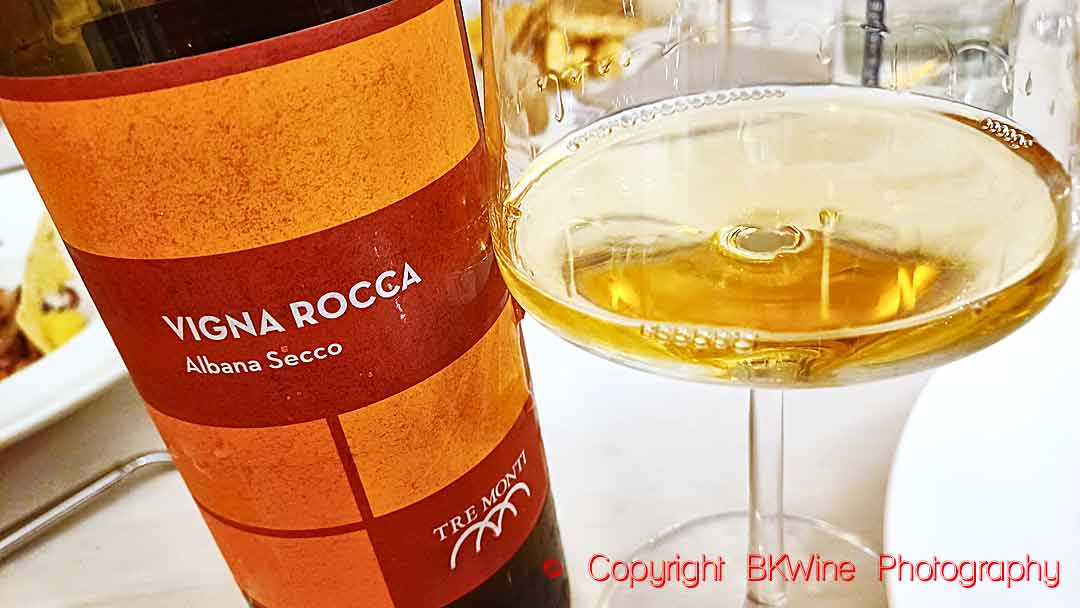
Tre Monti “Vitalba”, 2023
Albana di Romagna DOCG
In the glass, it has lots of colour, golden. On the nose, very intense, apricot jam, very high acidity. The palate is very concentrated, very high acidity, citrus, lots of tannins (astringency), and apricot jam. The finish is intense, with high acidity and balsamic notes.
The last wine is around €22 in a shop (in Italy), the others range from 8 to 15 or slightly higher, so overall very modestly priced wines (in Italy).
And also:
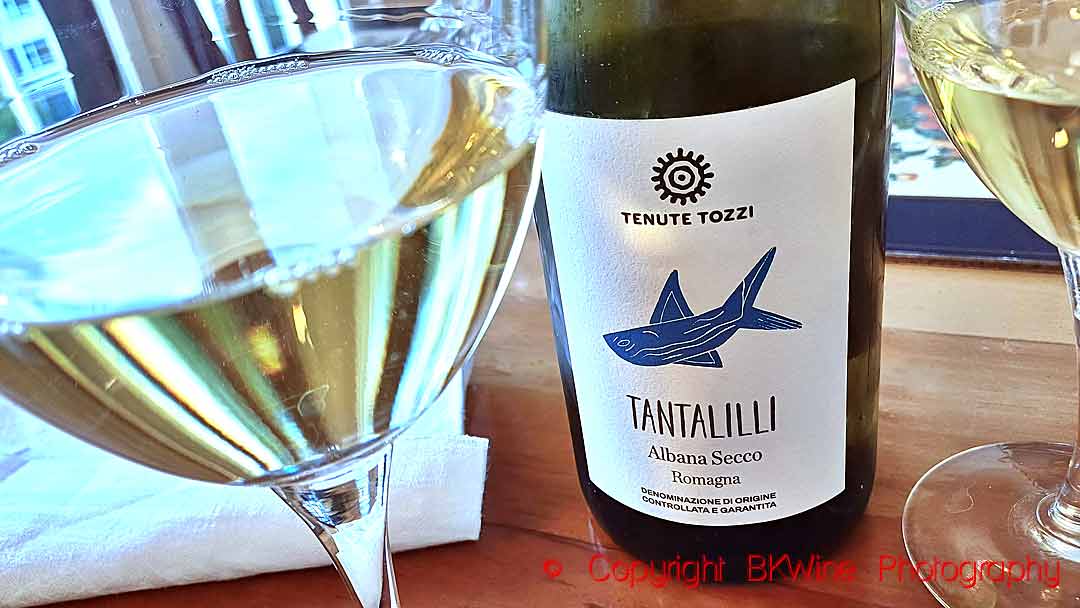
Tenute Tozzi ‘Tantalilli’ 2021
Albana di Romagna DOCG
Quite full-bodied with a good mouth-feel, citrus notes and pineapple, lots of fresh fruit. (around 17 euro)
Arlùs Trerè 2023
Albana di Romagna DOCG
A bit shy on the nose but with a very refreshing citrus character, good body and some elegance. (~10 euro)
Remark: Many wines show tannins or astringency, as you can see. This is a positive trait, also in white wines, although it is perhaps unusual to describe them in that way. It contributes to the wine’s structure and freshness. Some people may sometimes talk about “salinity” instead, a descriptor I prefer not to use since I never perceive a wine as having salt.
Albana di Romagna selection
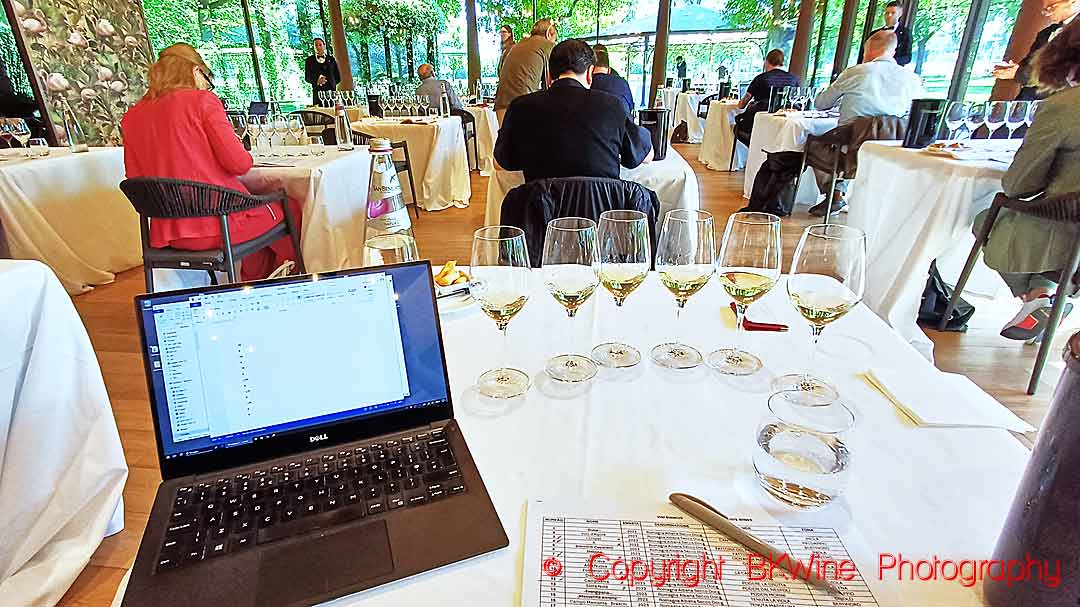
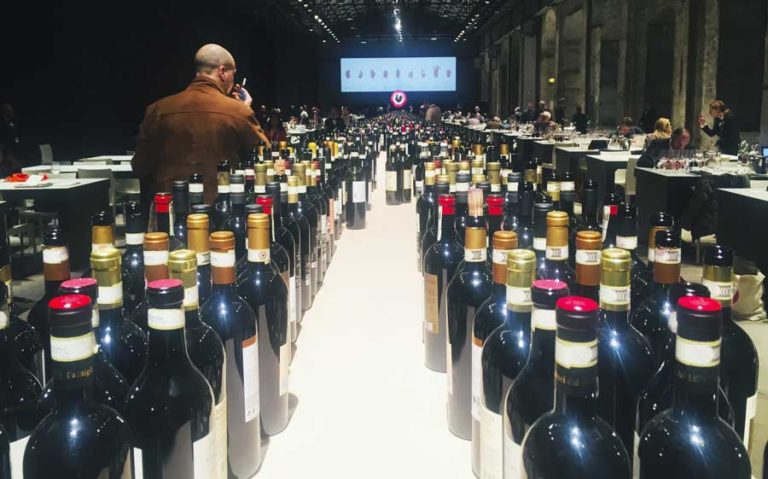
I tasted over 100 wines at a big Romagna presentation, the Romagna Prima, mainly Romagna Sangiovese and Romagna Albana. Rather than giving you specific wines that you might not find, here are the producers of Romagna Albana that impressed me most:
- Giovannini Gioja
- Poderi dal Nespoli
- I Sabbioni
- Tenute Tozzi
- Tre Monti
- Trerè
- Umberto Cesari
- Zavalloni
- Cantina Mingazzini
However, if you find any Romagna Albana, do try it.
Romagna Sangiovese DOC
There are a number of DOCs, the tier under DOCG, in Romagna. However, the “hierarchy” of DOCG, DOC IGT etc is not a quality ranking. It is primarily an indication of geography plus tradition and history.
The main red wine in Romagna is the Romana Sangiovese DOC. It covers almost 6000 hectares. This is the most important of the appellations due to its size and the quality of its wines. All wines are made almost exclusively with sangiovese, although the regulation allows 15% other grapes.
The Sangiovese di Romagna appellation has what they call a “quality pyramid” with Romagna Sangiovese at the base, on top of which there is the Romagna Sangiovese Superiore. The top of the pyramid is Sangiovese Sottozone, i.e. with the designation of a specific sub-zone. As is often the case in Italy, the wines can come with a number of different additional tags: riserva, superiore, superiore riserva, sottozone riserva, passito, novello. The most important version is the dry red wine.
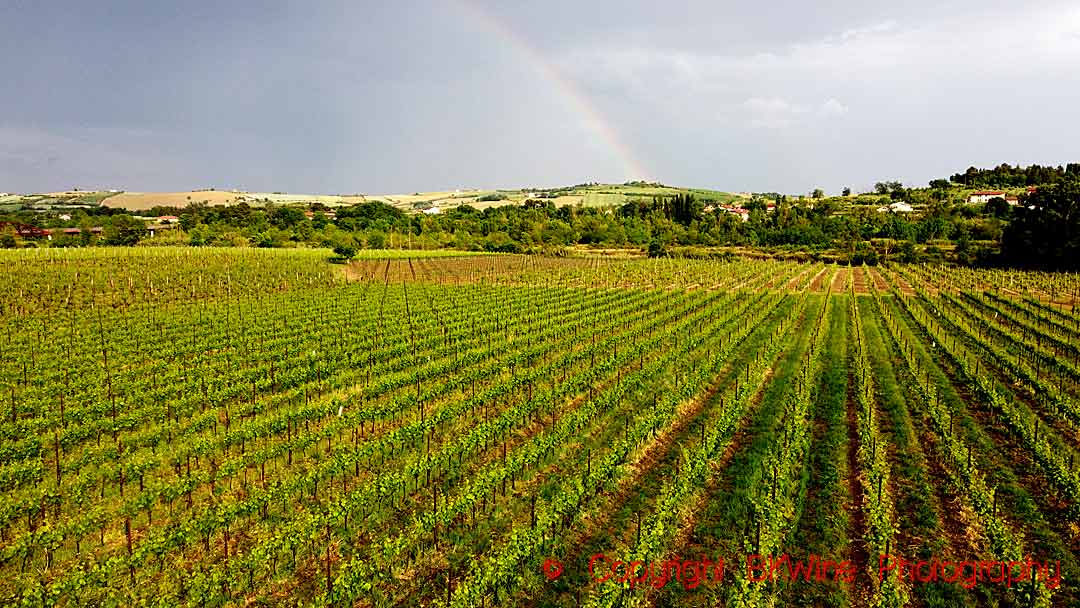
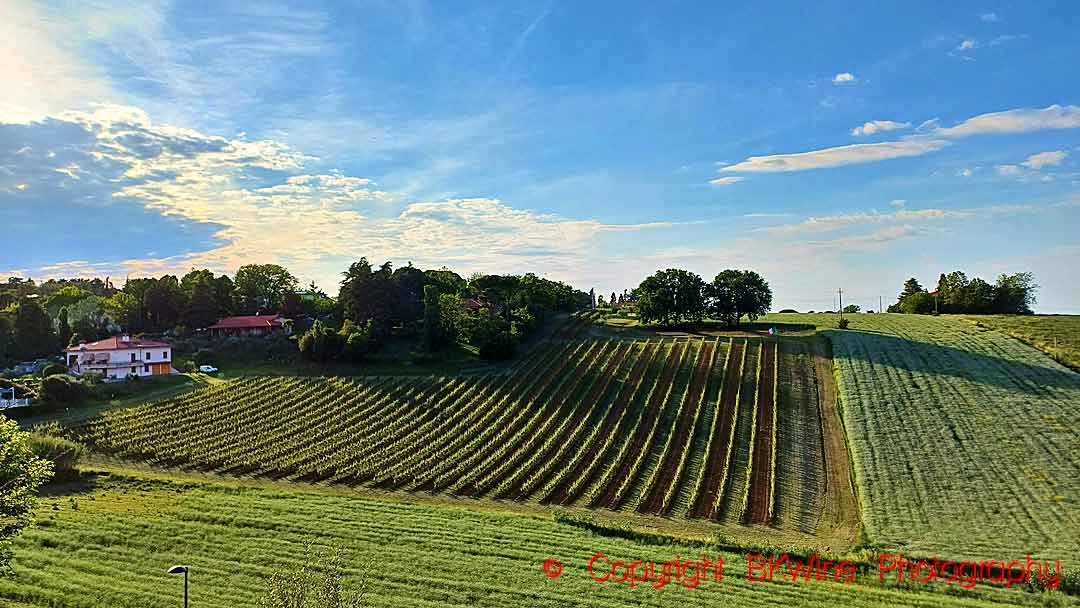
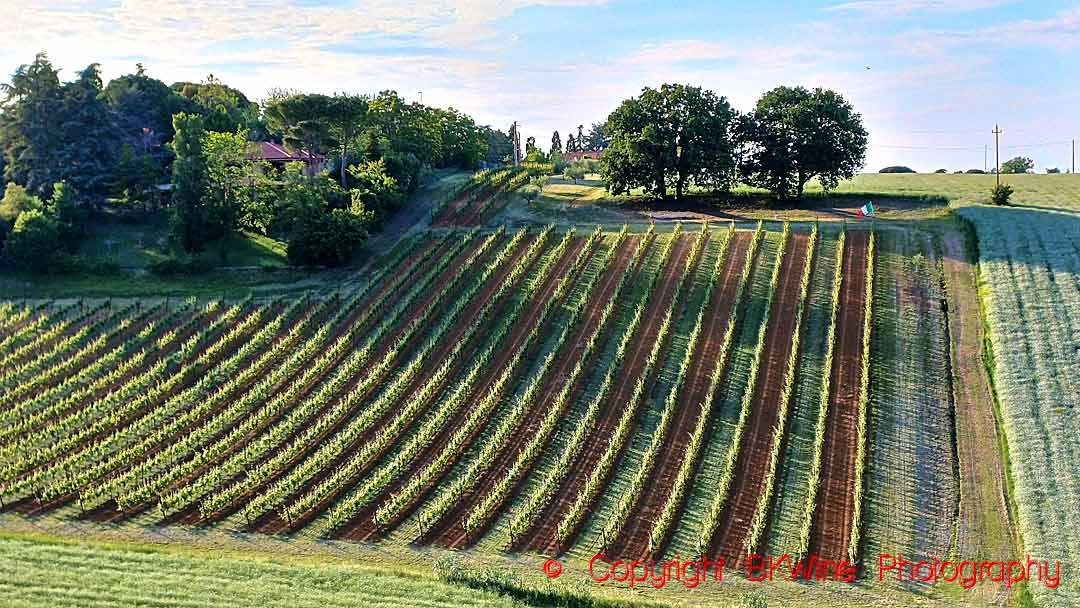
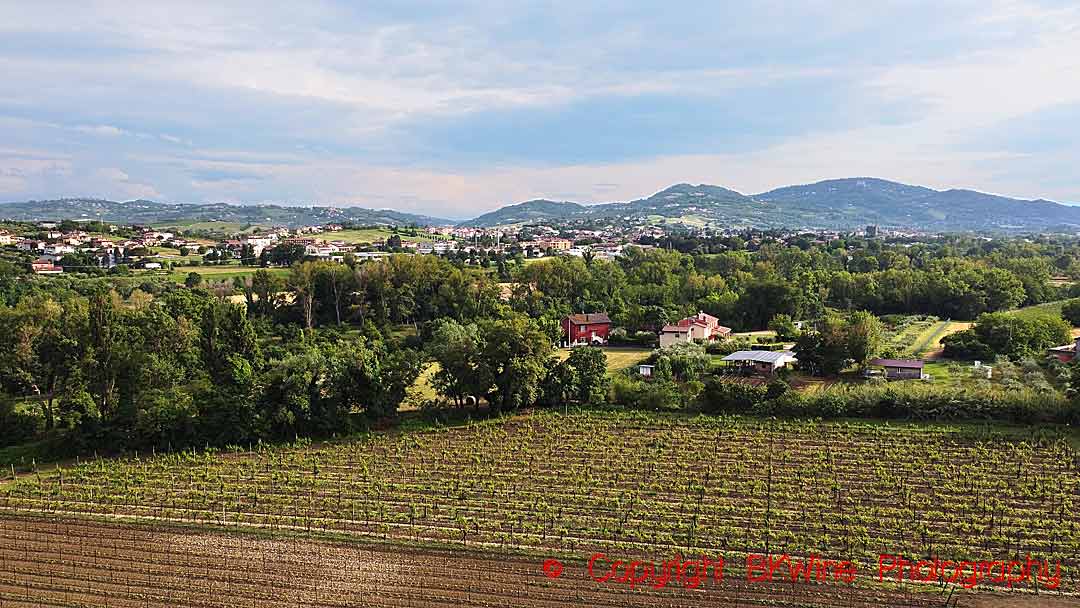
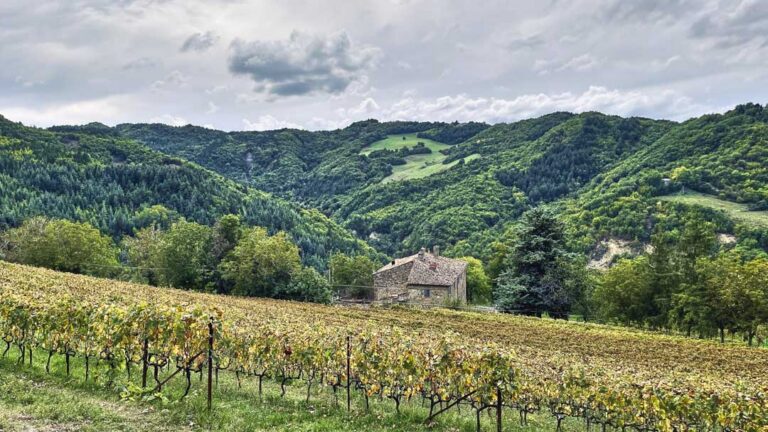
Overall, it is relatively low-lying vineyards at altitudes between 100 and 300 metres, with a few climbing up to around 500 m. Driving along the main roads, you tend to be at the lower part of the valley with vineyards on the slopes edging up towards the mountains in the distance.
Romagna Sangiovese sub-zones
There are 16 sottozone, subzones, with the right to their own name on the label:
- Serra,
- Brisighella,
- Modigliana,
- Marzeno,
- Oriolo,
- Castrocaro,
- Predappio,
- Meldola,
- Bertinoro,
- Cesena,
- Mercato Saraceno,
- Longiano,
- Imola,
- Coriano,
- San Clemente, and
- Verucchio
This should perhaps be considered a work-in-progress. The zoning is fairly recent. I was also told that some of the sub-zones currently don’t claim any production under their name. Any grapes planted there are presumably going into a more generic appellation. The zoning is intended to highlight differences in soil types and climate, and thus wine style.
If, today, it makes any sense for a consumer to worry about the sub-zones is perhaps doubtful. If you find a Romana Sangiovese, from whichever subzone, just try it!
Likewise for the region – it would be more important for the region to put forward the global appellation “Romagna Sangiovese” as a first step and only later focus on promoting sub-regional (sottozone) styles. In some of the zones there is only a small number of producers and a modest production which also speaks in favour of focusing on “Sangiovese di Romagna” and a collective identity.
Nevertheless, let’s take a look at some of the sub-zones. The ones that usually are considered most important are Predappio, Modigliana, Bertinoro, Brizigella and Marzeno.
The wines mentioned below were tasted in 2024 so the currently available vintage may have changed.
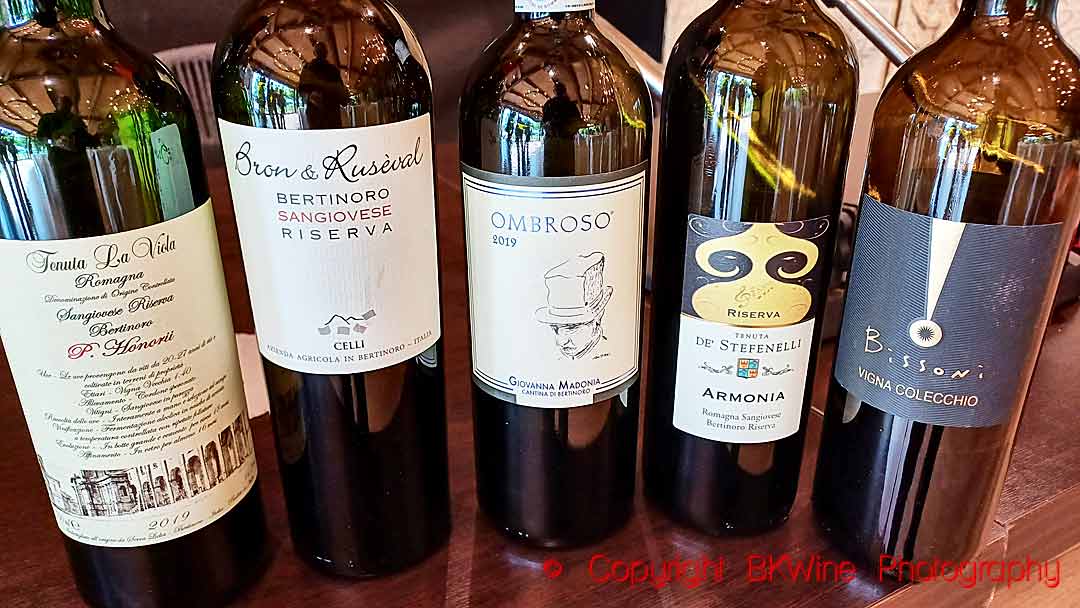
Bertinoro
A selection of the wines I tasted from Bertinoro.
Tenuta La Viola, “P.Honorii”, 2019 Stefano Gabellini
Sangiovese di Romagna Bertinoro
A vineyard facing the sea. Light colour, as is often the case with sangiovese, which is not a deep-coloured grape. The nose is quite light, with fresh cherry acidity and crunchy strawberry notes. On the palate, it is quite light, with smooth, elegant tannins and a cherry-like acidity. Overall, an elegant light-bodied wine. Retail around 25€.
Celli, “Bron & Ruseval” 2019
Sangiovese di Romagna Bertinoro
The nose has ripe fruit, plums, and more sweet fruit, with a nice, smooth expressiveness. In the mouth, it has a good body, light cherry acidity, ripe fruit, and some fresh plums. The finish is quite light and elegant with some tannins. Retail: ~€22
Giovanna Madonia, “Ombroso”, 2019
Sangiovese di Romagna Bertinoro
In the glass, it is quite light red with a brown tinge. The nose is a bit closed, slightly earthy, moving towards ripe cherries. On the palate, it is quite tannic, quite intense, with a bit of rough edges. The finish had lots of tannins, a quite light body, was dry, and a bit rustic. More of an old-fashioned wine. Retail ~€25.
Tenuta De Stefenelli, “Armonia” 2019
Sangiovese di Romagna Bertinoro
This wine is much darker. The nose has very ripe fruit, some chocolate, spicy and a touch of burned aromas. Quite different from the preceding ones. The palate has a good body, quite ripe cherries, high acidity, and dry tannins. Both body and length, and good fruit on the finish. Retail: ~€23
Bissoni, “Vigna Colecchio” 2019
Sangiovese di Romagna Bertinoro
In the glass, it has a medium density with a touch of brown. The nose leans towards ripe fruit, but certainly not over-ripe, with hints of barrel ageing. On the palate, it is relatively full-bodied with ripe cherries. The finish has lots of tannins and quite ripe fruit.
The general impression of the Bertinoro sangiovese is of wines with a quite light body, cherry acidity, a good dose of tannins, somewhat rough edges, and a distinctive dry finish, sometimes a bit rustic.
Serra, Marzeno, Oriolo, Mercato Saraceno
Serra
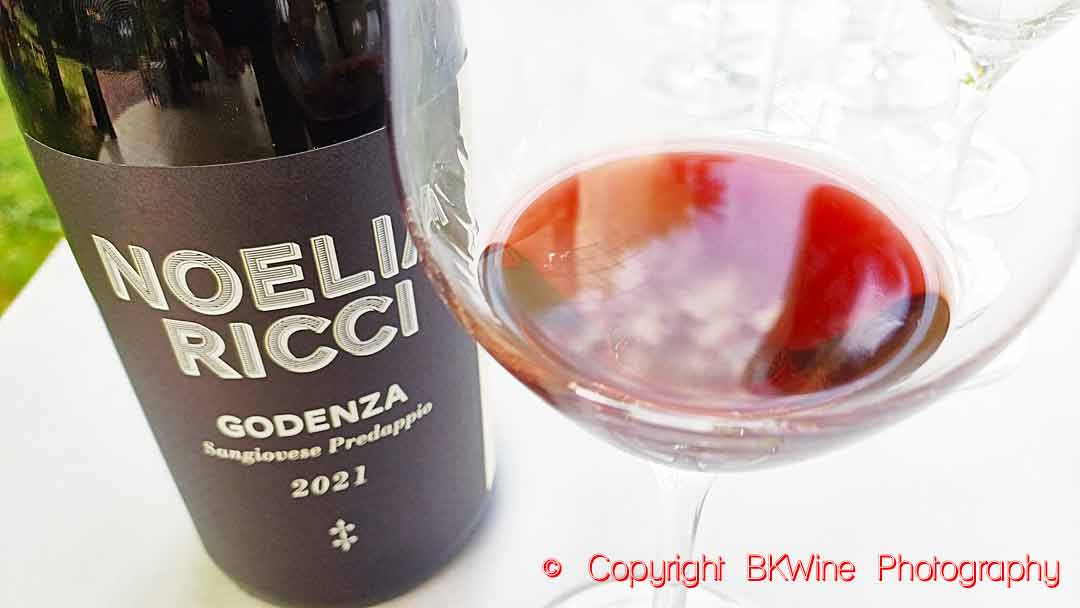
Tre Monti, “Classe 33”, 2022
Sangiovese di Romagna Serra
Comparatively dark colour. The nose has fairly ripe fruit with hints of sweet cherry. On the palate, it has a good body, solid ripe cherry fruit, and nice, smooth tannins. Good balance. The extra body nicely balances the tannins, with a very nice finish. Retail ~€25-35
Ferrucci, ‘Legio’ 2020
Sangiovese di Romagna Serra
The nose has a nice ripe fruit, with good ripe cherries and black fruit. On the palate it has good balance but perhaps a bit dry tannins, a refreshing cherry acidity. Medium body. Retail: ~20€
Judging from this, Serra has a more consequential body and a good balance between tannins and fruit.
Marzeno
Ca’ Di Sopra, Vigna Ca’ Del Rosso, 2019
Sangiovese di Romagna Marzeno
A nice colour with some brown tinge on the edge. (The brown tinge, which some other wines also had, is in this case not necessarily coming from the age of the wine. It is something that is quite coming in some sangiovese.) The nose has nice ripe fruit with some cedarwood. On the palate, the fruit is pronounced, but it also has very present tannins, some spices and red/black fruit. The finish is dry, intense, with a lot of tannins and long. Retail: ~25-30 €
Fattoria Zerrbina, Monografia, 2019
Sangiovese di Romagna Marzeno
The colour is quite light with a touch of brown. The nose is expressive, slightly aromatic, with a touch of cedar (barrel ageing?). On the palate, it has a good body, with nice, solid fruit, chocolate, and ripe black/red fruit. Quite a long finish. Retail: ~50€.
Judging from these two, Marzeno has rounder, riper fruit, smooth tannins and more body.
Oriolo
La Sabbiona, Mammutus, 2021
Sangiovese di Romagna Oriolo
The nose presents ripe, crunchy, dark fruit. The palate has quite full fruit and also very pronounced tannins that are, however, quite smooth. Medium finish. Retail: ~18 €
Poderi Morini, Nonno Rico 19, Oriolo Riserva
Sangiovese di Romagna Oriolo
A 10 ha vineyard. In the glass it presents itself with a denser colour. The nose has good red cherries, slightly “lactic” (is there a hint of VA?) but still good fruit. On the palate it is more full-bodied with plenty dark fruit and good and smooth tannins. Retail: ~25€

Mercato Saraceno
Mercato Saraceno, formerly known as San Vicino, produces around 35,000 bottles. However, in terms of the size of the sottozone, it is the biggest one.
Tenuta Casali, Baruccia, 2021
Sangiovese di Romagna Mercato Saraceno
A 5 ha vineyard. It is comparatively dark in the glass. The nose has nice, expressive red and dark fruit, crunchy fruit. On the palate, it has quite intense tannins and lots of red fruit. The finish is intense with quite a lot of tannins. Retail: ~€20-25
Cantina Braschi, Terre Cevico, Monte Sasso, 2019
Sangiovese di Romagna Mercato Saraceno
Light colour. The nose is quite light and elegant, with ripe cherries and ripe fruit sweetness. On the palate, it has lots of very fresh fruit, some crunchy acidity, and plays nicely with the fruit. Retail: ~15-18€
Sangiovese di Romagna selection
I tasted over 100 wines at a big Romagna presentation, Romagna Prima, mainly Romagna Sangiovese and Romagna Albana. Rather than giving you specific wines that you might not find, here are the producers of Romagna Sangiovese that impressed me most:
- Condé (Predappio) (the family estate of Chiara Condello, one of the most internationally famous producers, but not her own range that is sold under her own name)
- Fattoria Zerbina (Marzeno)
- La Sabbiona (Oriolo)
- Piccolo Brunelli (Predappio)
- Poderi dal Nespoli (Predappio)
- Tre Monti (Serra)
- Poderi Morini (Oriolo)
- Celli (Bertinoro)
- Palazzo di Varignana (Imola)
- Podere la Grotta (Cesena)
- Tenuta Casali (Mercato Saraceno)
- Bissoni Raffaella (Bertinoro)
- Terre Cevico (Verucchio)
- Villa Poggiolo (Imolese)
- Fattoria Zerbina (Marzeno)
- Tenuta de Stefenelli (Bertinoro)
- Domini Glicine (Cesena)
More DOC and IGT in Romagna
There are several other DOCs and IGTs. Trebbiano DOC is the biggest appellation (over 14,000 ha) making generally easy-drinking still or sparkling whites. Pagadebit DOC is a white wine made from an autochthonous grape with that name, more often in other regions called bombino bianco that is very productive. The Romagna name translates to “pay the debts”. There is no more than 130 ha. Cagnina DOC is a small unusual appellation making sweet red wines from the local terrano grape variety on 133 ha of vines.
One tasting note:
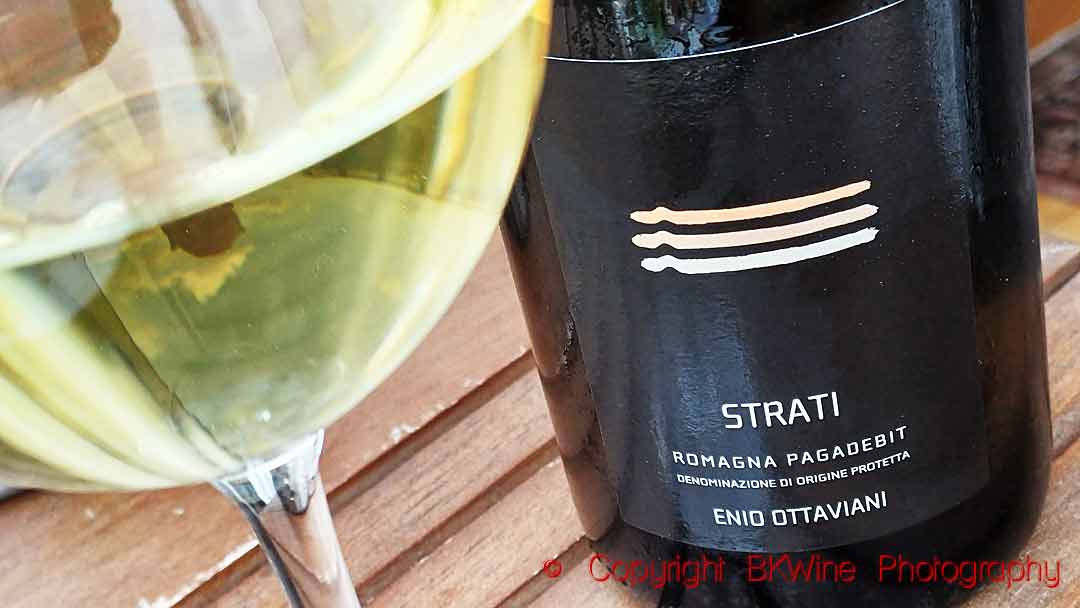
Strati, Enio Ottaviani
Romagna Pagadebit DOC
A very unusual grape variety. Delicious white that made me think of sancerre in style with a certain body, fairly aromatic with citrus notes and a good finish. (~12 euro)
And there are more.
DOCs: Romagna Spumante, a new DOC that can be made from both trebbiano and sangiovese which is, in fact, a sub-category of the Romagna DOC, Colli d’Imola (60 ha), Collie di Faenza (4 ha), Colli Romagna Centrale (6 ha), and Rimini DOC (94 ha).
IGTs: Rubicone (4150 ha), Forlì (83 ha), Ravenna (600 ha), and Sillaro (50 ha).
Perhaps a little bit too fragmented?
If you get the chance to taste any of these rare wines, do take it.
One tasting note:
Clemente Primo 2022, Enio Ottaviani
Bianco Rubicone IGP
Rubicone is a comparatively big region (IGT), almost a “catch-all” denomination. It can be made from a wide variety of grapes. This wine made me think of sauvignon blanc and riesling, a quite light body with aromatic, fragrant character, some citrus
Rimini DOC and Rimini Rebola DOC
Another curiosity to mention is Rimini Rebola. Rimini is one of the very small DOC in Romagna, sometimes called Rimini DOC, sometimes Colli di Rimini DOC. Although it only has less than 100 hectares according to the official numbers (less than a biggish chateau in Bordeaux), it comes in a dozen different sub-categories: rosso, bianco, biancame, passito, sangiovese riserva etc. One that is particularly interesting is Rimini Rebola DOC (“tipo secco”). This is a dry white wine made from a very unusual grape called rebola. It also goes under the name pignoletto and grechetto di todi (not to be confused with the grechetto di orvieto).
These wines are not very easy to find on the international market, but they certainly impressed me when I tasted a selection: Delicious white wines with plenty of fresh fruit and sprightly acidity, have a very good backbone structure and hints of tannin (skin character), very dry.
Podere dell’Angelo Giulietta 2023
Rimini Rebola DOC
Quite full-bodied with the character of yellow flowers, yellow fruit, melon, and a touch of refreshing astringency.
Le Roche Maletestiano 2023
Rimini Rebola DOC
Aromatic nose with yellow flowers, pineapple, a touch of sweet fruit. Very dry on the palate, with ripe yellow fruit, some astringency, and, again, a good touch of aromatic character, with a long finish.
Tenuta Santini Isotta, 2023
Rimini Rebola DOC
The nose has ripe yellow fruit and is a bit herbal, with a hint of perfume. On the palate, it is full-bodied with citrus freshness and yellow fruit. A long and very dry finish with refreshing astringency. (Retail ~11 euro)
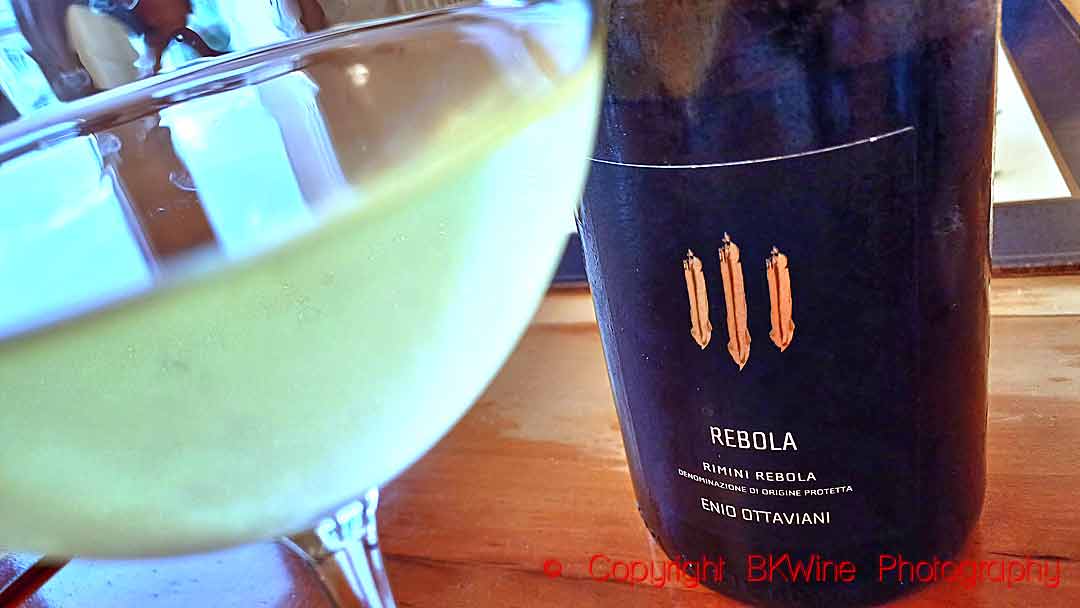
Enio Ottaviani 2022
Rimini Rebola DOC
Very aromatic and intense nose with citrus, fresh, acidic melons, and a hint of reduction (which is not a bad thing at all; quite the opposite). The palate is full-bodied, with citrus, melon, and peach, along with smoky notes and good astringency. A long finish with good fruit. An excellent wine. (Retail ~17 euro)
Enio Ottaviani 2020
Rimini Rebola DOC
Very expressive, intense nose with some “dry honey” and a touch of flint. On the palate, it is full-bodied, quite astringent, and also has honey notes, but is bone dry. Long, almost fiery finish.
Rebola is certainly a grape that deserves to be better known and more planted. Just like albana.
–
Read more on Romagna wines on BKWine Magazine: