—
All those stories you hear in the vineyards…
—

There are different ways of talking about wine. In fact, these days there is a great deal of discussion about how we talk about wine. Some believe that the current discourse is elitist, exclusionary (that is, alienating), overly complicated, and unappealing to younger consumers. Some even argue the opposite of appealing: that it actively drives them away. Perhaps that is true. In any case, it is always a good idea to put yourself in the shoes of your reader or listener and adapt accordingly.
Marketers and advertising people (sometimes disguised as wine writers) talk about wine the way they are paid to talk about it. They often become like coin-operated machines, for those who remember such things: put in a coin and something comes out. The result is a particular kind of jargon that is hard not to spot, as with all advertising. Simple wines are praised to the skies. No one really believes it (I hope!), and people buy because the price is right. Often, the emphasis is not only that the price is right, but that it is the lowest possible price.
–
Calling all wine lovers:
Do you know someone who might be interested in a wine tour?
Please tell them about BKWine Wine Tours! We do wine tours like no other. A leading wine tour operator since more than 20 years.
Have you already been on one of our tours? Tell your friends! Word-of-mouth is perhaps the most important way to spread the word of good wine, great food and exciting travel.
Thank you in advance for your help and support!
(If you have Swedish friends, please know that we have a separate, more extensive travel program in Swedish: BKWine Vinresor.)
–
Of course, wineries too promote their wines. It would be strange if they did not. One of the charms of visiting wine regions is meeting all sorts of people at the estates. You meet those who live and work in the wine world. Recently, in the Douro Valley, there were many with deep local roots, from the guide at a major Port house who told us that, as a boy, he used to tread grapes at his grandparents’ estate, to winemakers representing the fifth and sixth generations of their families. The same was true in Bierzo, where we listened to a brother and sister, each running their own winery. And so it goes in Burgundy, Languedoc, Piedmont, and elsewhere.
The stories behind the wines matter. How a British family in the Southern Rhône Valley, after overcoming various challenges, was eventually welcomed warmly into the village by both the mayor and the residents. How a family in Barbaresco actually has its winery in what is technically an “illegal” location, outside the official Barbaresco area, but is allowed to remain there because they were established long before the appellation boundaries were drawn up. How a Burgundy domaine possesses an extraordinary collection of vineyard parcels, including several grand cru sites, because both great-grandfather and great-grandmother brought vineyards into the marriage, and because the family never saw large numbers of siblings who would otherwise have divided the land through inheritance. And so on.
One advantage of meeting many different people is hearing different perspectives. You get a technical viewpoint from the winemaker, an economic one from the owner, and perhaps an explanation of the challenges posed by American tariffs from the export manager. They all talk about wine differently. These are their truths. Of course, we believe what they tell us. But their observations apply to that particular estate and that particular wine region. They are not necessarily universal truths.
The person standing in front of us today is presenting their views and their way of doing things. Tomorrow we may meet someone who says the exact opposite. And indeed, that happens quite often. “After three years, we either sell or burn our oak barrels.” Then from another producer: “We never use new barrels and are happy to keep using them for at least ten years.”
Those of you who have travelled with us on wine tours know that we sometimes point this out on the bus between visits: what is best for one producer is not necessarily best for everyone.
Occasionally, when one of our travellers asks a producer a question, the producer might reply: “Perhaps you should rather ask Britt and Per. They have experience from travelling throughout the wine world.”
Of course, that is said with a twinkle in the eye, but it is not entirely untrue. Wine producers work in very different ways. They often have quite different philosophies and employ different techniques, methods, and priorities in different parts of the wine world. That is one of the fascinating things you discover when travelling through wine regions.
But now, end of October, our busiest travel season is soon over and then we will have time to spend a few days at home.
NEW BOOK IN ENGLISH: MAKING WINE SUSTAINABLE
Yes, we are shouting. We are so happy to finally see our latest book published in English.
It is a book about all things around sustainability and wine. We aim to explain what all that is rather than tell anyone what to do. A book for those who are curious about how the wine business can works sustainably.
More on the book further down in the Brief.
Brief Brief
This montH, you get a BKWine Brief that is a little bit briefer than usual. It is shorter since this is peak travel season and we are almost constantly on the road.
Per is two days at home in between wine tours in Bierzo (Spain) and Piemonte (Italy) after having done Bordeaux, Burgundy, Champagne, Piedmont, Burgundy and probably some more.
Britt is currently in Porto having two Douro Valley wine tours one after the other, preceded by Languedoc, Rhone Valley, Champagne, Loire, and probably some more. Hard to remember the details.
We’ve been busy so this is a short Brief.
Next month we will be back to normal with even more wine reading.
Wine tours
Focus this month:
New Zealand
The extraordinary adventure in one of the youngest wine countries
A total road-trip, gastronomic, vinous adventure across breathtaking landscapes, blending meetings with the pioneers of the country’s wine industry, private wine tastings of international top-level sauvignon, pinot, cabernet and much more. And immersive cultural experiences, a private dinner with a Māori family to a stunning glacial lake excursion and tea with the Doonan family. All together with Britt and Per of BKWine.
More info and book here:
More tours in 2027:
The rest of the year, we are planning a number of other exciting tours. For example:
- Burgundy and Champagne, 19-27 September, 2027
- Bordeaux, 4-10 October, 2027
More info on our wine tours here. “World’s Top Wine Tours“. Tours led by the people who know wine and who have an unrivalled experience of wine and wine tours.
Travel in wine regions with someone you trust.
Enjoy the Brief!
Britt & Per
Wine editors to the national encyclopaedia, Forbes.com contributors, award-winning wine book authors, wine tour advisors to the UN and national wine organisations, wine judges … and, above all, passionate wine travellers.


If you appreciate what we do, you can help us:
Tell your friends about the Brief or send it to them.
Like us and follow us on social media:
BKWine Magazine on Facebook | Wine Tours on Facebook
—
What’s on at BKWine Tours
BKWine is also one of the world’s leading wine tour operators. Here’s what we currently have on our scheduled wine tour program:
–
- Chile-Argentina, 11-24 January 2027
- South Africa, 14-24 February 2027
- New Zealand, 10-25 March 2027
–
- Bordeaux, 19-27 September 2027
- Burgundy and Champagne, 4-10 October 2027
- Maybe more. What would you like?
–
We also make custom designed wine tours.
And we have an extensive travel program in Swedish: BKWine Vinresor.
We’re different than most other wine tour operators. We are people who know wine inside out, who travel constantly in wine regions, who write award winning books about wine. Who do this out of passion.
Our wine tours are different from others.
A typical year we organise more than 30 wine tours to destinations across the world. In Europe: France, Italy, Spain, Portugal and more. World-wide: South Africa, Chile, Argentina, New Zealand. Thanks to our Scandinavian background we have a separate offer for the Scandinavian market. These are sometimes offered in English and also available as custom made tours. For example, these destinations:
—
Read our books
We have written eleven wine books. They have won awards from the Gourmand Awards, The International Organisation of Vine and Wine (OIV) and others.
Unfortunately, only one of them has been translated to English; the others are (so far) only available in Swedish. This is the one that is available in English:
Here’s the full list of our books:
- The Wonderful World of Wine
- Languedoc-Roussillon, the Wines of Southern France
- Champagne, the Wine and the Growers
—
News from the World of Wine
—
Short briefs on what’s been happening in the world of wine recently and other interesting things.
—
EXCITING! Our book on sustainability in wine is now available in English!!!
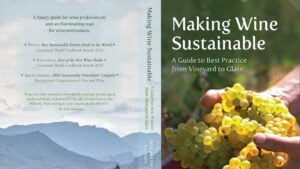
Finally! After a long wait! Our book on all things about “sustainability” in wine is now available in English. It was published by Floris Books on October 22. And we have a great offer for you: Save 20% on Making Wine Sustainable. Enter offer code BK926 to apply the discount. Offer valid until 30th November 2026. Here’s the publisher’s description:
“In this timely book, respected wine journalists Britt and Per Karlsson explore the different approaches to sustainability taken by organic, biodynamic, natural and conventional wine producers around the world. They examine the different rules and restrictions governing winemaking, including spraying in the vineyard; additives and processing aids employed during fermentation; and how wine is packaged and transported. The authors also consider the impact of climate change on the current industry and how it is affecting both the taste of wines and which grape varieties are grown.”
New on the travel site: Live, Dispatches from The Vineyards and Wine Regions *
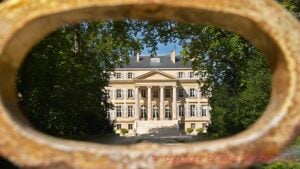
We continue our experiment on the wine travel site. We want to share more of all the beautiful, exciting, interesting things that we encounter on our wine tours. The best thing is of course to be on the tour, but the next best thing is to see pictures from what happens on the visits. Very short texts but with lots of pictures, directly (or almost directly) from the tours, in the travel blog. Simple. Fast. Inspiring.
We call it “Live, Dispatches from The Vineyards and Wine Regions”. We will organise it a little better in the future, but for now you can find it on the home page of BKWineTours.com. There are two easy ways: A) just add “live” at the end of the travel site URL, like this, BKWineTours.com/live/, or B) just below the intro on the travel site there’s a blue button you can click/tap: “Live Update from Current Tours”. Some examples, pictures and short texts:
In other words, follow along among the vineyards with Vineyard Dispatches.
Alta Langa, a young sparkling denomination in Piedmont
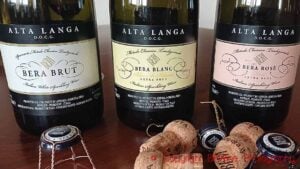
Although Alta Langa was created as a sparkling wine denomination in 2002, it is only recently that it has started to gain some traction in the international markets. It is a small appellation in Piedmont, exclusively for sparkling wine, that was created as a DOC in 2002. It was “elevated” to DOCG in 2012 (but with a retroactive validity to 2008). Elevated is a carefully chosen word since “alta” means “high” in Italian and indeed the vineyards are located on high altitude. It is a small denomination that today only covers some 500 hectares (about a third of the small Margaux appellation in Bordeaux). The project was initiated by some of the large houses as well as a few small growers. One of them was Bera in Barbaresco. It is positioned as a high-quality sparkling wine made with the traditional methods (second fermentation in bottle) made from pinot noir and chardonnay. A recent tasting at Bera showed some of its unique personalities. Tasting the Bera Alta Langa Blanc de Blanc (100% chardonnay) along the Berra Alta Langa blanc de noir (a rosé, 100% pinot noir) the BdB was fuller and rounder, and the BdN lighter, quite the opposite to what one would expect in champagnes with the same descriptors.
Bourgogne aims to reduce chemicals in the vineyards with new varieties
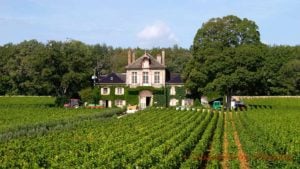
One of the main concerns in viticulture today is spraying to fight diseases and the need to reduce the quantities of pesticides. Mildew (downy mildew) and oidium (powdery mildew) are two almost ubiquitous diseases that can seriously damage vineyards. In practice, everyone sprays to fight them. (Don’t believe those who say “XYZ does not spray with chemicals or other poisons” – they tend to forget copper and sulphur.)
Burgundy has now joined the ranks of those who will try and reduce spraying by introducing more resistant grape varieties. But it is currently a long-term research project, CEPinnov. They started with 16,000 seeds in 2015 and are now testing three white and five red new grape varieties, crossings with various hardy (resistant) varieties paired mainly with chardonnay and pinot noir. A test vineyard has been planted with these eight (more will be added later) and will be made into wine once they give grapes. The objective is to have selected suitable varieties by 2035… The varieties do not yet have names but are be so-called hybrids (interspecific), piwi.
Read more in these BKWine Magazine articles, new hybrids, Bouquet varieties, interspecific hybrids, and already in 2015.
Travel: Come on a wine tour to Burgundy (and Champagne) with BKWine. (PS: We’ve written a prize-winning book on Burgundy.)
New on the travel site: Highlighting useful travel info for you *

Another improvement we’ve been working on for our wine travel site is a better organisation of all the travel and tour information we have on BKWineTours.com.
We’ve been writing about wine touring there for many years and have many texts that give you useful advice, insider tips and other things that will make your travel better, give you more knowledge about the wine regions we visit, and highlight some of the destinations we have. We have sorted everything in more easily accessible categories. You can find all of them on the front page and also on dedicated category pages:
- Upcoming Wine Tours on the Schedule
- Wine Travel Guides and Tips
- Live, Dispatches from The Vineyards and Wine Regions (as described elsewhere)
- From BKWine Magazine (about the wine regions that are our wine tour destinations)
- Wine Travel Stories and Highlights (stories, short and long from our wine tours)
- Wine Tourism News and Insights (on the wine tourism and wine travel business)
- And, “What Others Think, Customers, Media”:
California’s vineyard area shrinks by almost 20,000 hectares, and they’re not alone
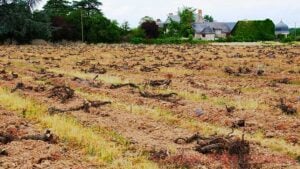
There has been much talk about the 10,000 ha being pulled up in Bordeaux. But the situation is just as dramatic in California and other parts of the wine world. 19,100 ha (47,229 acres) of vineyards were pulled up in California between 1 August 2025 and 1 August 2026. With a total vineyard area of almost 180,000 ha (439,115 acres), this is a reduction of the same order of magnitude as in Bordeaux, around 10%. Both regions have reduced their area considerably more than that over the past few years. California is roughly twice the size of Bordeaux, and both regions have followed a similar pattern. Bordeaux had around 120,000 ha in the mid-2000s, and California had just over 240,000 ha in the early 2020s. Today they have around 86,000 ha and 178,000 ha respectively. A straight comparison is not easy to make, however. In France, grubbing-up is controlled and state-subsidised. In California, growers often abandon fields without pulling up the vines, which is prohibited in France because of the high risk of spreading disease. Note also: this type of statistics is always uncertain due to a number of factors. Read more:winebusiness
Travel: Come on a wine tour to Bordeaux with BKWine. (PS: We’ve written a prize-winning book on Bordeaux.)
Premiere for 2024 Vintage Port, We Have Tasted It

During one of our recent Douro Valley tours, we had the pleasure of tasting the 2024 Vintage Port from two different producers: Wine & Soul and Alves de Sousa. The wines had only recently been bottled. A vintage port is typically bottled about two years after the harvest. We were told that 2024 might well be the best vintage port in 20 years. It is a classic vintage—a “general declaration”—the first of its kind since 2017 (!).
The 2024 growing season began following a rainy winter, which built up significant water reserves in the soil. Both spring and summer saw relatively cool daytime temperatures (below average) along with cool nights. This contributed to a slow, steady ripening process. Light rain showers in September helped preserve good acidity and fresh aromas. Naturally, a classic vintage port should have the potential to age for decades; however, the two we tasted were already incredibly enjoyable, boasting fantastic fruit aromas and a relatively soft structure. It appears to be a hallmark of the 2024 vintage that the wines are accessible to drink even at a young age. But perhaps also something that is an illustration of a more general truth: the vast majority of wines are good to drink young; the myth of “wines must be aged” is usually just that, a myth.
Travel: Come on a wine tour to the Douro Valley in Portugal with BKWine.
New Zealand focus on BKWine Magazine *

We have written a lot about New Zealand on BKWine Magazine. This is mainly based on our extensive travel in the New Zealand wine regions. We’ve been going to New Zealand since 2019 and have seen a lot and established some really good contacts. Here’s a selection of some of our best articles:
- Trailblazing in Hawkes Bay, a conversation with the winemaker at Black Barn Vineyards | Per on Forbes
- Around New Zealand with Pinot Noir | Britt on Forbes
- New Zealand is much more than just sauvignon blanc
- Felton Road: quality Pinot Noir from Central Otago, New Zealand | Britt on Forbes
- New Zealand pioneerUnison Vineyard interprets Gimblett Gravels terroir | Britt on Forbes
- Jenny Dobson, legendary Kiwi winemaker, talks about changes and challenges in New Zealand | Britt on Forbes
- New Zealand, a “new” wine country with a great future enters a new phase says Emma Jenkins MW | Britt on Forbes
If you’re interested in New Zealand wine you should definitely consider coming on the BKWine tour of the country. You too will meet some of these living legends too.
–
Travel: Come on a wine tour to New Zealand with BKWine.
See: See pictures and videos from New Zealand in the latest wine tour’s Facebook group.
Historically low harvest volume in France in 2026, with significant regional variations
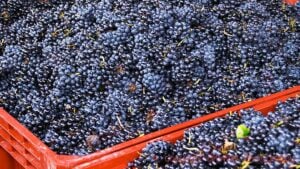
France is producing 34.9 million hectolitres of wine this year. While the total vineyard area has decreased slightly due to the uprooting of vines, it is primarily the weather that has caused complications this year, including spring frosts, heatwaves, drought, and hail. The 2026 volume is even lower than the historically low figure of 2025 (35.9 million hectolitres). Not all producers or wine regions have been affected; some are satisfied with their yields and have achieved normal volumes.
In Languedoc, yields were higher than anticipated. The harvest in southern France is now estimated at 10.6 million hectolitres, a 20% increase compared to 2025, as some rainfall toward the end of the summer helped mitigate the effects of the drought and heatwaves. Bordeaux also saw an increase in production compared to 2025, with a projected output of 3.5 million hectolitres. Conversely, Burgundy, Beaujolais, Champagne, and the Jura have experienced historically low yields during this climatically challenging year. In Champagne, however, there is cause for satisfaction: despite the heat and rapid ripening, acidity levels have remained remarkably well-preserved. Read more: vitisphere
—
Features of the Month
—
Articles and features published on BKWine Magazine and on our wine travel blog and (occasionally) photography blog in the last month.
—
Turning dirt into sunshine, composted wines at Te Whare Ra in New Zealand *
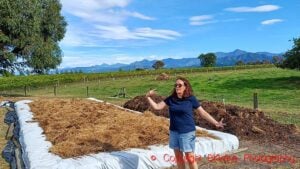
More and more wine producers talk about the importance of compost. For biodynamic wineries, it is almost a question of religion or faith; using compost is compulsory. For others, it can be an important tool to keep the soil alive and the vines growing on it healthy. But few people I have met have talked with such passion and precision about compost as Anna Flowerday at Te Whare Ra (TWR) in Marlborough, New Zealand. Here’s how they work with compost to make great wines.
Read more in Per’s article on BKWine Magazine: Wines Made With Cow Shit, Not Bullshit: Inside Te Whare Ra’s Compost in Marlborough NZ.
Travel: Come on a wine tour to New Zealand with BKWine.
Felton Road owner Nigel Greening tells the story of this Central Otago pioneer *
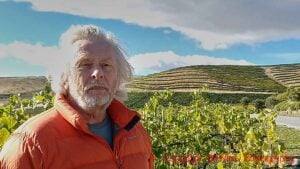
Few wine regions are so welcoming to visitors as New Zealand. That may be because it is far away (from everything). So when you come there, people are very happy that you have made the effort to travel all this way. We have been to Felton Road several times and have met both Blair Walter, the winemaker and co-owner, and Nigel Greening, who bought the winery in 2000. Recently, we had the chance to have a long talk with Nigel, who explained some of the history of the winery and some of the more curious points about the region and the winery. Read on.
Read more in Per’s article on BKWine Magazine: Nigel Greening of Felton Road on the winery, the climate, and the environment.
Travel: Come on a wine tour to New Zealand with BKWine.
See: See pictures and videos from New Zealand in the latest wine tour’s Facebook group.
—
Wine Tours
—
Details on our current and future wine tours. Book a wine tour with the “World’s Top Wine Tour Operator” today (or when you feel like travelling to wine country).
Treat yourself to an unforgettable experience in the beautiful wine-lands together with some of the most knowledgeable wine people around. Book now!
—
A wonderful tour through wine regions, a myriad of landscapes and local flavours | wine tour New Zealand *
URGENT! Book now!
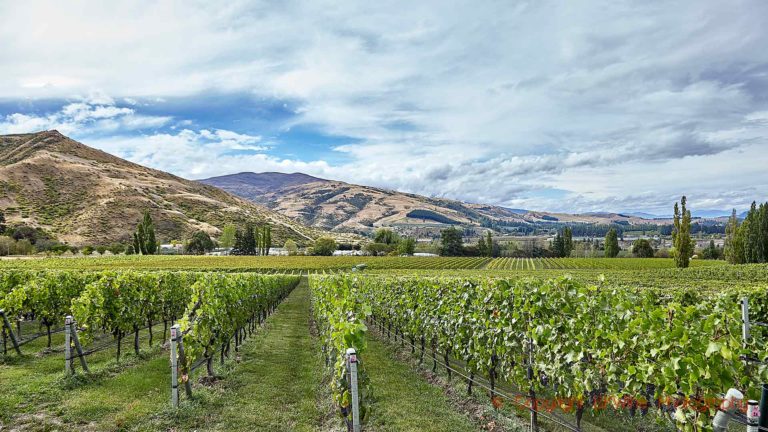
Our wine tour in New Zealand takes you on a journey through the key wine regions of the country, in fact, almost all of them. Wine is the centre piece of our tour, of course, but we will experience many other things, such as glacial lakes, Māori culture, local food, geysers, mud pools (!), boat journeys and more. And since our bus will take us all the way from Auckland to Queenstown, we will have ample time to admire the ever-changing landscape.
Amazing vineyard lunches are part of the tour, with lamb, seafood (we will stop in Kaikoura for their famous crayfish, aka New Zealand lobster), salmon and celebrated cheeses. And other delicacies. New Zealand is famous for its sheep and, consequently, for its sheep dogs. We will get to know some of them together with one of the country’s top dog handlers. Quite stunning.
From the North Island, we cross the Cook Strait by boat, a memorable boat ride that is not only a transfer. Here you have to watch out for dolphins and gannets. And the majestic albatrosses if we’re lucky. We dock at Picton on the South Island, close to the biggest wine region, Marlborough. Sauvignon blanc dominates, but the region’s pinot noir and riesling are increasingly getting attention. Further south we will admire the Southern Alps and we will make a stop at the Mount Cook national park. Our last stop will be in Central Otago with is dramatic landscape and gold-digging history. Here, pinot noir gets flavours different from anywhere else. World class.
Join us on this adventure and discover a different wine country, far away. We promise you many surprises. Good ones!
You will travel with both Britt and Per on this tour, two world-leading authorities on wine and wine travel, authors of 13 award-winning wine books.
Come on this stunning wine tour to New Zealand with BKWine, one of the world’s leading wine tour operators (*).
Book now!
Watch this introductory video about our New Zealand wine tour.
(*) And the only one who has authored 13 award-winning wine books.
More inspiration: You can get an even better feeling for what you will experience on this tour if you visit the latest tour’s own Facebook group. Lots of pictures and videos from the tour: See pictures and videos from New Zealand in the latest wine tour’s Facebook group.
A World of Wine | Bordeaux Wine Tour *
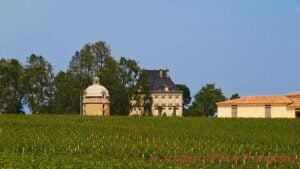
I have just returned from Bordeaux, one of the autumn’s wine tours to this the world’s most famous wine region. It’s a special tour with special experiences. A blend of elegant, not to say grandiose, and rustic. We have some of the most extraordinary meals you can get on a wine tour here – not least because the châteaux we visit have known us for many years and open their doors to us, to you, in a very special way. Star chef level. But the other side of Bordeaux is also important to see and understand. The small one-hectare vineyard that makes a wonderful 100% cabernet franc (have you ever tried that from Bordeaux?) or the vineyard that “diversifies” with pizza nights and outdoor cinema – and also makes some unique wines such as a 100% carménère and a 100% sauvignon gris (yes, really!). For me, having been to Bordeaux countless times, it’s still special to come back here. For someone who has never been here, it becomes a wine and gastronomy experience of grand proportions that will give you an insight into what Bordeaux is that simply cannot be gained from a distance. Honestly, I doubt you can get this kind of experiences on any other tour.
Come and discover French wine and food in Bordeaux on this luxurious wine tour with BKWine, one of the world’s leading wine tour operators (*).
- Bordeaux wine tour, 4-10 October 2027
(*) And the only one who has authored 13 award-winning wine books, one of which is on Bordeaux wines.
We can add that we have also written an award-winning book about Bordeaux.
An unbeatable combination, Burgundy and Champagne | wine tour *
I’m writing this just before setting off on the next trip – one of this autumn’s wine tours to Burgundy. I have just been in Bordeaux and am preparing for almost the complete opposite, Burgundy. In a way. Bordeaux is (often) large estates, sometimes 100 hectares or more (that is, a million square metres…). In Burgundy the estates are often small – 12-15 hectares counts as quite large. And fragmented, it can be some twenty little plots. In Bordeaux there are large, beautiful châteaux. In Burgundy you rarely see a château, rather it’s farmhouses or houses within a small village. In Bordeaux it’s wide vistas, almost nothing but vines as far as the eye can see. Sure, there are plenty of vines in Burgundy too, but they’re mixed in with hills, villages, patches of forest and farmland. The city of Bordeaux is one of France’s most elegant and grandiose, a wealthy trading city. Beaune, the main town of Burgundy, is a small town, and along the country road are small villages with a bakery, a café, a restaurant. But both share the distinction of making some of the world’s finest wines. And for visitors the problem is the same – who should you visit, and how? We take you to places you may never have heard of but that make better wine than most. Usually small producers, personal, skilled. A Burgundy that is difficult to get to for an outsider.
After three days in the heart of Burgundy we head north, making a stop in Chablis to savour the northernmost Burgundy appellation and then continue to Champagne
It’s in a way difficult to explain why our tour to Champagne is so special. It has, of course, to do with history and experience. We have been travelling in Champagne for more than 20 years. We have written an internationally award-winning book on Champagne, probably one of the most fact-packed there is. We know producers and restaurants that are hard to find but hard to beat. We choose our visits with care, so that they give you as much experience, knowledge and joy as possible. The gastronomy on our tours is legendary (but balanced, you don’t need to eat five courses twice a day, unless you want to). The meals, always with exciting champagnes here in the region, show you what a fantastic food-pairing drink champagne is. Most visits are to family producers, often you’ll meet the winemaker or owner (often one and the same person). There will also be one large “house” to show you the grand (and slightly more industrial) side of Champagne. An unbeatable combination: Burgundy-Chablis-Champagne.
Join us for a behind‑the‑scenes deep dive on this Burgundy-Champagne tour, where we also enjoy some truly delicious lunches, always accompanied by top-quality Burgundy or different styles of Champagne.
Come on this exceptional tour to two of the world’s most respected wine regions with BKWine, one of the world’s leading wine tour operators (*).
- Burgundy – Champagne Grand Tour, 19-27 September 2027
Book now!
(*) And the only one who has authored 13 award-winning wine books.