—
“What’s in a name?” The wine world’s love affair with place names
—

Before you dive into this month’s editorial, a quick call-to-action: vote today (March 31) in the Wine Travel Awards. See info just below the editorial.
In the world of wine, as in real estate, the magic word is location. Or at least, that is what we are meant to believe. The world’s vineyards are increasingly being divided into separate geographical indications, smaller units, and even smaller single vineyards. This boosts the wine producer’s confidence. It is, after all, a recognition of their land. And it could be good for sales. Consumers tend to be willing to pay more for a well-defined place name, however, perhaps not if that name is totally unknown to them.
In the EU alone, there are 3,500 registered geographical indications for food products and wines. Wines account for about half of them. The USA will soon have 300 AVAs (American Viticultural Area); other countries outside of Europe have fewer, but they are getting there. Only a few years ago, I never thought South Africa’s many wards would have any relevance. (A ward is a small unit within a district, which in turn is part of a larger region.) Now, however, producers in Stellenbosch are talking about and promoting their specific ward and how it differs from the other wards. And they put the name of the ward on the label.
–
Calling all wine lovers:
Do you know someone who might be interested in a wine tour?
Please tell them about BKWine Wine Tours! We do wine tours like no other. A leading wine tour operator since more than 20 years.
Have you already been on one of our tours? Tell your friends! Word-of-mouth is perhaps the most important way to spread the word of good wine, great food and exciting travel.
Thank you in advance for your help and support!
(If you have Swedish friends, please know that we have a separate, more extensive travel program in Swedish: BKWine Vinresor.)
–
Wine enthusiasts love to know where their wine comes from; actually, they demand it, they would not buy an anonymous wine brand without a clear geographical indication.
So even if the New World revolution that started in the 1980s-1990s was all about focusing on the grape variety, this has now changed back to the way it used to be, pre-New World, when provenance was the main thing and the grape variety was of minor importance.
Albeit with more names to remember.
Linked to the notion of geographical indications is the concept of “a sense of place”. This is an expression we hear all the time nowadays. It is not so easy to understand, though. The winemaker wants to bring out the character of the place. I interpret that as “I can make this particular wine right here, but nowhere else.” It sounds attractive. What you get in the glass is hopefully a delicious wine. But it is far from given that you, the wine enthusiast, sense the place in the same way that the winemaker does. The whole notion of sense of place touches on the philosophical. It is rarely so obvious that, say, you would exclaim, “yes, this wine must be from Jonkershoek, I can feel it.”
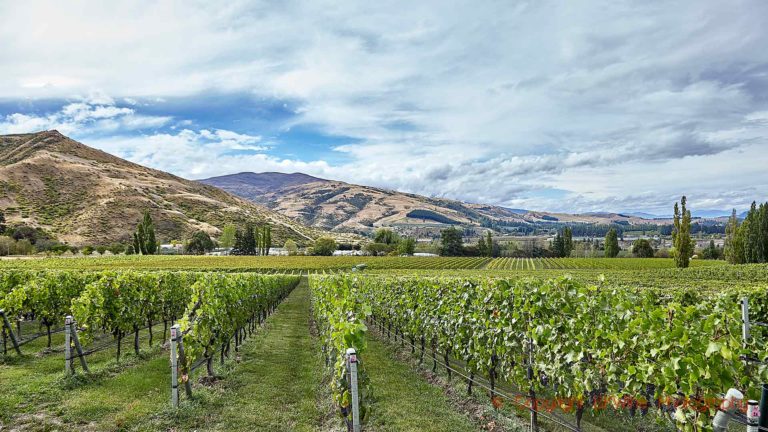
But when we were in Marlborough, New Zealand recently, we drove through the different sub-regions, from the Wairau Valley to the more southern Awatere Valley. We sensed that the wines from the hilly, spectacularly beautiful Awatere would be different. Were they?
Well, they were different in the way that most good quality wines are different from each other. Would we have said, “This tastes like the beautiful Awatere Valley,” if we didn’t know it? Hardly. But of course, it is never only the place; all the decisions the viticulturist and the winemaker make along the way impact the result. And the fact that one can not necessarily pinpoint the place from tasting the wine doesn’t mean that the origin is less interesting. Both the place and the person are important to the enjoyment of a wine.
Climate change, which brings with it different weather patterns, more drought, more rain, etc., is sometimes presented as a threat to appellations/geographical indications. That is because grape varieties, vineyard management practices, planting density etc., may need to be adjusted. Would this reduce the relevance of the geographical indications? Absolutely not. It is all about geography. The place is still the same, even if you must adapt.
Or as it were, “This blessed plot, this earth, this realm, this vineyard”.
Wine Travel Awards – VOTE TODAY!
Wonderful news to share! We are honoured to announce that we have been nominated for the Wine Travel Awards 2025–2026 in the Travel Operator of the Year category.
Public voting is open through March 31. If you could take a minute to visit our nominee profile via the link below and cast your vote, we would truly appreciate your support. These awards enable wine professionals to be recognized by a fantastic global community. Let’s connect over our shared passion!
Vote for us at BKWine here: https://winetravelawards.com/nominee/bkwine-tours-5/
If you want a broader view of the nominees, in many different categories, you can see all of the Wine Travel Award’s nominees here.
Travel
Now it’s time to plan your trip for this year and next.
In the fall/autumn we do Bordeaux, Burgundy and Champagne.
We have also launched the two first winter wine tours, to Chile-Argentina and to South Africa. The one to New Zealand will come soon. They are already starting to fill up, so contact us now if you are interested!
More info on our wine tours here. “World’s Top Wine Tours“. Tours with the people who know wine and who have an unrivalled experience of wine and tours.
Travel in wine regions with someone you trust.
Enjoy the Brief!
Britt & Per
Wine editors to the national encyclopaedia, Forbes.com contributors, award-winning wine book authors, wine tour advisors to the UN and national wine organisations, wine judges … and, above all, passionate wine travellers.


If you appreciate what we do, you can help us:
Tell your friends about the Brief or send it to them.
Like us and follow us on social media:
BKWine Magazine on Facebook | Wine Tours on Facebook
—
What’s on at BKWine Tours
BKWine is also one of the world’s leading wine tour operators. Here’s what we currently have on our scheduled wine tour program:
- New Zealand, 10-25 March 2026
–
- Bordeaux, 13-19 September
- Burgundy and Champagne, 23 September – 1 October
- Maybe more. What would you like?
–
- Chile-Argentina, 11-24 January 2027
- South Africa, 14-24 February 2027
- New Zealand, 10-25 March 2027
We also make custom designed wine tours.
And we have an extensive travel program in Swedish: BKWine Vinresor.
We’re different than most other wine tour operators. We are people who know wine inside out, who travel constantly in wine regions, who write award winning books about wine. Who do this out of passion.
Our wine tours are different from others.
A typical year we organise more than 30 wine tours to destinations across the world. In Europe: France, Italy, Spain, Portugal and more. World-wide: South Africa, Chile, Argentina, New Zealand. Thanks to our Scandinavian background we have a separate offer for the Scandinavian market. These are sometimes offered in English and also available as custom made tours. For example, these destinations:
—
Read our books
We have written eleven wine books. They have won awards from the Gourmand Awards, The International Organisation of Vine and Wine (OIV) and others.
Unfortunately, only one of them has been translated to English; the others are (so far) only available in Swedish. This is the one that is available in English:
Here’s the full list of our books:
- The Wonderful World of Wine
- Languedoc-Roussillon, the Wines of Southern France
- Champagne, the Wine and the Growers
—
News from the World of Wine
—
Short briefs on what’s been happening in the world of wine recently and other interesting things.
—
Free trade agreement finally concluded between the EU and Australia
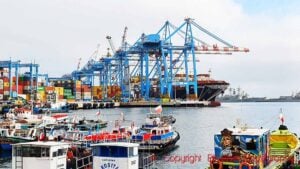
After eight years of discussions, a free trade agreement between the EU and Australia has now been signed. The ratification process remains, but as soon as the agreement enters into force, Australia will be opened to EU wines and the EU to Australian wines without import duties. This will be positive for the European Union’s wine sector, says Marzia Varvaglione, President of the Comité Européen des Entreprises du Vin (CEEV). This opening of the Australian market is good news, not least for French wines. Australia is France’s thirteenth-largest export market in terms of volume (190,000 hl in 2025, +9% compared to 2024) and its fifteenth-largest market in terms of value (225 million euros, +20%). These positive figures are encouraging, given that French wine exports to countries such as China and the United States are declining, not least because of increasing protectionist trade barriers there.
Europe already plays a significant role in Australia’s wine exports. According to figures from Australian Grape and Wine, Europe is Australia’s largest export market by volume. Among non-EU countries, Chile and South Africa (which already have free trade agreements with the EU) currently export the most wine to EU countries. Australia is in third place. The new trade agreement also means regulatory simplifications for wine producers who export, which is not least important. The free trade agreement will also include protection for many geographical indications. The issue of the use of prosecco has been hotly debated. In Australia, prosecco is still used as a grape name, while the EU protects Prosecco as a geographical indication. According to the agreement, Australian producers can continue to use prosecco as a grape variety name on the domestic market. However, exports labelled as Australian Prosecco will be phased out over ten years. So, one more win for free trade and an open world at a time when some countries are instead putting up destructive protectionist trade barriers. Read more: thedrinksbusiness.
We also recently wrote about the EU’s new trade deal with India. These follow quickly on the hells of the EU’s comprehensive trade deal with Mercosur (in South America) in January. A more open world is a freer and more prosperous world!
Winds of change are blowing in Bordeaux, modern wine styles
Bordeaux is the stronghold of structured, age-worthy red wine. Without intending to stop producing this type of wine that many chateaux do so well, Bordeaux today realises that some changes are needed. Bordeaux has lost 20% of its vineyard area since 2021, and plans are to tear up more of it. For some producers, it is no longer profitable to produce wine.
Some of these changes were recently presented by Bernard Farges, president of the Conseil Interprofessionnel du Vin de Bordeaux (CIVB). The important thing today, he says, is to try to attract new consumers. He believes that Bordeaux must recreate a sense of surprise and go beyond the stereotype of red Médoc wines as the only wine for formal meals. Today, no one associates Bordeaux with dry white wines, which is unfortunate, as demand for white wines is increasing worldwide while demand for red wines is decreasing. But dry white wines are slowly gaining ground in Bordeaux. In 2025, they accounted for 13% of Bordeaux production, up from 9.3% in 2016. The Médoc Blanc appellation was created in 2025, with the first bottles expected to be sold by the end of April. Others, such as Saint-Emilion, are also considering a white wine appellation, while producers in Sauternes are ready for a “dry” appellation, according to Bernard Farges. Read more: larvf
Travel: Come on a wine tour to Bordeaux with BKWine. (PS: We’ve written a prize-winning book on Bordeaux.)
Allowing wine sales at the winery cellar-door in Sweden: a great success, says report

Just in time for the summer of 2025, sales of wine at the winery became possible in Sweden, even though Sweden has a state monopoly on all sales of alcoholic beverages; cellar-door sales or in Swedish “gårdsförsäljning”. Small-scale producers can now, under certain conditions, sell their own wine directly to consumers on site. The producer organisation Svenskt Vin (Swedish Wine) has now produced the first statistics. “We were convinced that direct sales at the winery would be positive for both customers and our members. Now that we have received current figures, they confirm that this will be an important sales channel for Swedish wineries,” says Sveneric Svensson, chairman of Svenskt Vin.
In 2025, cellar-door sales accounted for 45% of total sales. A total of 145,000 litres of Swedish wine were sold, of which 65,000 litres came from direct sales. There has also been a marked increase in visitor frequency. Many of the visits have resulted in visitors buying a couple of bottles to take home. According to the statistics, the vineyards estimate that 70% of visitors buy wine to take home. Of those who buy wine, most buy at least two bottles of wine (a maximum of 3 litres of wine is allowed). One requirement for being allowed to buy is that one must participate in an “awareness-raising” event (at the winery) that includes information about the dangers of alcohol. Visitors seem to be positive about this, but have difficulty understanding why they must go through the same procedure if they come back to buy a few weeks later. This is something that Svenskt Vin believes should be reviewed in the legislation.
Phylloxera – still a threat in the vineyard
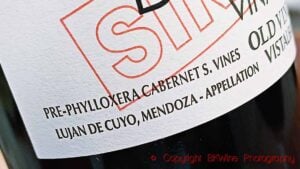
Phylloxera is still a threat, mainly to those vineyards that have chosen not to plant grafted vines but instead graft own-rooted vines. But it turns out that even grafted vines can be at risk. The small aphid-like insect ravaged vineyards across Europe, starting in France in the 1860s. It came from America, and the solution eventually became grafting European grape varieties onto American vine roots that are immune to phylloxera. Today, most vineyards around the world are planted with grafted vines to protect against Phylloxera vastatrix, which is by no means eradicated. (The grafted plants survive the louse but it remains in the ground.)
In those parts of the world that are currently spared, people are aware of the risks. Chile is still one of the few major wine-producing countries where no cases of the insect have been officially reported in recent years, and where most vineyards are ungrafted. But the routes of infection are many, not least the movement of people, plants and machinery across borders. In Australia, strict quarantine measures have limited phylloxera infestations, and some areas are phylloxera-free. However, new areas are regularly affected. In 2019, phylloxera was discovered in the Walla Walla region of Washington. Many local vineyards there had relied on their sandy soil for protection (phylloxera does not thrive in sand) and did not use grafted vines. In 2025, phylloxera first appeared on Tenerife, an island that had previously been spared, maybe thanks to its isolation.
Austrian researcher Astrid Forneck believes that climate change may be changing the behaviour of the phylloxera. Warmer temperatures could lead to earlier spread and higher survival rates of the insect. The trend towards reduced pesticide use may also contribute to higher phylloxera survival rates. Read more: vinetur
Travel: Come on a wine tour to Chile and Argentina with BKWine.
See: See pictures and videos from Chile and Argentina in the latest wine tour’s Facebook group.
Five new Guarda Superior Paraje Calificado – the pinnacle of Cavas
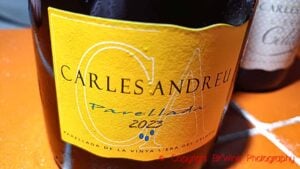
Five new Guarda Superior Paraje Calificado Cavas have been approved in Spain. The DO CAVA category Guarda Superior Paraje Calificado now includes 15 wines that represent the very highest quality of Cava. Three of the new additions come from the producer Sumarroca: Núria Claverol Allier Finca Cols, Núria Claverol Homenatge Finca Peretes and Núria Claverol Blanc de Noirs Finca Rosendo. In addition, L’Era del Celdoni from Carles Andreu and MIM Natura Blanc de Noirs from Vins El Cep have been added to the list.
A paraje calificado comes from a specific vineyard on the producer’s property, and the requirements are much stricter than for a regular cava. The vines must be at least 10 years old, the harvest must not exceed 8,000 kilos/ha, and the extraction must not exceed 48 hl/ha. It can be produced only as brut nature, extra brut or brut. It must be aged on the lees for at least 36 months. From vintage 2025, they must be certified organic. Read more about Paraje Calificado Cavas and how they taste on BKWine Magazine: Cava with long ageing: outstanding tasting of Cavas de Paraje Calificado and also here: cava.
Record 2025 harvest in England and Wales
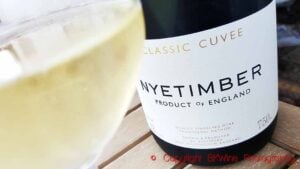
Growing wine in the UK has its weather challenges. But sometimes everything is perfect, and 2025 was one such year, an exceptional year for wine from England and Wales. Total production increased by 55% compared to 2024. More than 16.5 million bottles of wine were produced in England and Wales in 2025. According to WineGB, the 2025 vintage benefited from a remarkably warm, dry growing season, resulting in both high yields and good fruit ripening. An early, dry spring allowed the vines to grow quickly, while unusually warm weather in June and July accelerated ripening. Southern England experienced four heatwaves during that period, creating the conditions for what is being described as the earliest and ripest grape harvest on record in the country. Most English wine is sparkling and is made primarily from pinot noir, chardonnay, and pinot meunier, which together account for 70% of the plantings. Other important grapes are pinot gris and hybrids such as solaris and bacchus. Great Britain has around 4800 ha of vines, slightly less than e.g. Saint Emilion or Chablis. Read more: food
A new marketing initiative to promote Swedish wines: Terra Skåne
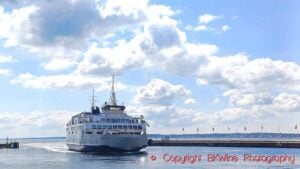
Most Swedish vineyards are in the southernmost region named Skåne, not surprising given the warmer climate this part of Sweden offers compared to the rest of the country. Some of them are in the northwest part of Skåne, and now the main cities here, Helsingborg, Höganäs, Ängelholm and Båstad, are collaborating to highlight the region’s vineyards through a marketing initiative named Terra Skåne – Sweden’s Wine Region. Terra Scaniae was the name of Skåne during the Middle Ages, when the region was part of Denmark. Nine wine estates and the participating municipalities will work to attract more visitors to the wineries and to this part of Skåne. “There is enormous knowledge and passion among the wine producers, and through this collaboration, we want to make it easier for more people to discover Swedish wines and visit the region,” says Linus Svensson, Höganäs municipality. For Viktor Dahl, CEO of Kullaberg Vineyards, Terra Skåne is an important step forward that will provide better opportunities to reach new target groups. The nine wineries in Terra Skåne are Kullaberg Vineyards, Aplagården Boutique Winery, Ljungbyholms Vineyards, Vejby Vineyards, Thora Vineyards, Halldora, Lottenlund Estate, Aftonmora Vineyards and Arilds Vineyards. Read more: terra-skane
—
Features of the Month
—
Articles and features published on BKWine Magazine and on our wine travel blog and (occasionally) photography blog in the last month.
—
Explore some of the world’s best vermouth *
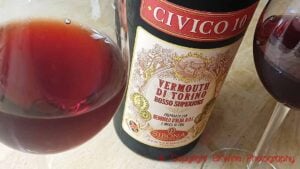
At home, we like to drink vermouth when it is time for an aperitif. Although vermouth is essentially a fortified wine flavoured with herbs and spices, it can taste very different. A Martini Rosso or Bianco does not show the most interesting side of vermouth. Right now, there is a Vermouth di Torino in our fridge, purchased in Piedmont, where some of the world’s best vermouth is made. Vermouth from Torino has been in the spotlight now at the end of 2025. The Italian Ministry of Agriculture has officially recognised the Vermouth di Torino Consortium, which brings together 40 producers (90% of the production of 6 million bottles). This, it is said, marks a milestone in the promotion and protection of this classic vermouth from Piedmont.
Read more in Per’s article on BKWine Magazine: Vermouth di Torino, the classic bittersweet red vermouth, and other delicious vermouths.
Travel: Come on a wine tour to Piedmont with BKWine. (PS: We’ve written a prize-winning book on Piedmont.)
—
Wine Tours
—
Details on our current and future wine tours. Book a wine tour with the “World’s Top Wine Tour Operator” today (or when you feel like travelling to wine country).
—
Treat yourself to an unforgettable experience in the beautiful wine-lands together with some of the most knowledgeable wine people around. Book now!
—
Experience the uniqueness in Bordeaux | wine tour

Bordeaux wines are among the easiest to recognize in a blind tasting. Most (but admittedly not all) have a very special style. Of course, it has to do with the grape varieties, the climate, the soil and so on. But not only that. There are “Bordeaux blends” from around the world, but they rarely taste like a genuine Bordeaux. Even though the grape composition in a Bordeaux can be anything with the five grapes, there is often a common and unique style. What is the reason for this? Well, who knows? Bordeaux magic? Of course, a lot lies in the above mentioned factors and in the winemaking tradition. But to really experience the character you need to go there. On our tour you get to try both the “right bank” and the “left bank”. Very different grape compositions and very different soils, and also climates. Large chateaux and small family estates. All to give you a better insight into this fantastic unique wine.
As a bonus, you also get to enjoy a series of delicious meals at a high gastronomic level, on par with starred restaurants, but which you will relish in the chateaux’ private salons along with their wines.
Come and discover French wine and food in Bordeaux on this luxurious wine tour with BKWine, one of the world’s leading wine tour operators (*).
Book now!
(*) And the only one who has authored 13 award-winning wine books, one of which is on Bordeaux wines.
We can add that we have also written an award-winning book about Bordeaux.
Burgundy, a treasure trove, and Champagne that combines technology and delicious soul | wine tour

Burgundy and Champagne, what can be a better combination for a tour with top-notch French wine and food? We start in Burgundy and finish with Champagne!
Burgundy is a treasure trove of fantastic wines. But, as with other treasure troves, you need a certain talent to search so that you find the right ones. The big, famous “negociants” (wine houses) that usually find their way into international distribution chains and stores around the world are often reliable (today more than in the past), but it is when you look further to smaller, more artisanal producers that you find the real gems (as befits a treasure trove). If you have unlimited money, there are great celebrities that are easy to find – after all, here we have some of the world’s most expensive wines and most highly valued vineyards. But for the rest of us, there is also plenty to choose from, of fantastic quality – chardonnay and pinot noir, and sometimes another grape too, césar, pinot gris… – and at reasonable prices, if you know where to look. We have been travelling in Burgundy for well over twenty years and have also written a book about Burgundy (plus 12 other wine books) so we have some experience and contacts. As, of course, you will benefit from and enjoy on this trip.
The Burgundy “leg” of this tour is filled with extraordinary wines and genuine Burgundian gastronomy (our lunch with 8 grand crus is legendary). The landscape is pastoral and the villages have charm oozing from their stone walls.
We then travel north, make a “transit” stop, but oh, how nice!, with some delicious wine in Chablis on the way to Champagne.
Champagne is one of the most “technical” wines. Making sparkling wine with the so-called traditional method, including a second fermentation in the bottle, is far more complicated than making a regular still wine. It is also to a large extent the work in the cellar that determines the character and taste of the champagne. So to really understand champagne, it is good to have a grasp of how it is made, because this makes a difference. You can get that best by visiting Champagne and letting yourself be guided by someone who has written one of the most comprehensive and fact-filled books about Champagne (the region) and champagne (the wine): namely, us at BKWine.
But what makes champagne an exciting wine is of course the “soul” of the wine. Although much stems from the work in the wine cellar, the most important things are 1) which grapes are used, 2) where in Champagne they grew, and, of course, 3) the winemaker. A wine dominated by chardonnay is completely different from one made mainly of pinot noir. But don’t forget pinot meunier (to give this grape its correct and full name); previously overlooked, today a grape that produces some of the most exciting wines.
You’ll get a deep dive into all of this, plus you’ll get to enjoy a number of outstanding gastronomic meals, of course accompanied by delicious champagnes. Truly divine! A nine-day extravaganza in Burgundy and Champagne.
Come on this exceptional tour to two of the world’s most respected wine regions with BKWine, one of the world’s leading wine tour operators (*).
Book now!
(*) And the only one who has authored 13 award-winning wine books.
Chile and Argentina, an adventure tour with world-class wines, food and spectacular landscapes | wine tour

Touring South America is a great adventure. During our wine tour in January, we explore the two giants of the region, Argentina and Chile, neighbours separated by the mighty Andes. Today, both countries make top-class wines. We start in Argentina and, after a week, cross the Andes Mountains into Chile, a passage that offers unforgettable views. Our lunch that day will be at 3000 m (9000 ft) altitude. We will taste wines that showcase the countries’ wine traditions, as well as the innovative initiatives that exist today. We meet exciting winemakers and enjoy lunches that are often barbecues in the garden with treats such as juicy meat, freshly baked empanadas, and other local specialities.
In Mendoza, we experience high altitude vineyards, while the Chilean coast offers a cooler climate and elegant, fresh wines. In the Colchagua Valley, we encounter the classic Carmenère and Cabernet Sauvignon wines. And enjoy (or are introduced to) the pisco sour rite. In Buenos Aires, we learn about the history of tango through a superb tango show, and in the legendary port city of Valparaíso, we enjoy incredible street art. Between all the visits and tastings, we also have time to get to know the cities/towns where we stay during the trip, Buenos Aires, Mendoza, Viña del Mar, Valparaíso, Santa Cruz and Santiago. In Chile, a pisco sour as an aperitif always feels right.
Come on this exciting wine tour to Argentina and Chile with Britt and Per of BKWine, one of the world’s leading wine tour operators (*).
Book now!
(*) And the only one who has authored 13 award-winning wine books.
More inspiration: You can get an even better feeling for what you will experience on this tour if you visit the latest tour’s own Facebook group. Lots of pictures and videos from the tour: See pictures and videos from Chile and Argentina in the latest wine tour’s Facebook group.
An underrated wine country that will impress you | wine tour in South Africa
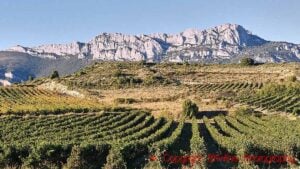
South Africa has long been an underrated wine country and still is to some extent. But when you come here and taste the wines and see the ambition, it is difficult not to be impressed. South Africa is undoubtedly one of the world’s most exciting wine countries. And one of the most beautiful. The vineyards are located (at least 96%) in the Western Cape, the south-westernmost part of the country. Here, both the sea and the mountains influence winegrowing conditions and produce wines with great variation. There is just as much white wine as red wine. Chenin blanc is the major grape for white wines, and we will try some of the country’s best.
We will travel through the different wine regions and see the changing scenery up close. We meet in Cape Town and then continue down to the south coast and stay in the small town of Hermanus. Here, in the Walker Bay district, chardonnay and pinot noir take on an elegance that feels European. We then continue to picturesque Franschhoek, a classic wine region in South Africa and from there to the warm Swartland, which feels very different. The growers in Swartland have received significant international attention and are often featured in wine bars around the world. We finish in Stellenbosch with its fine Cabernet Sauvignon and Pinotage, a grape to discover.
During the tour, gastronomic experiences also await. South Africa is today a prominent food country. One of our lunches is at one of the country’s most acclaimed vineyard restaurants, and another offers exciting, local flavours. When we return after the day’s visit, you will probably enjoy a dip in the pool. February is a wonderful summer month in South Africa. Our hotels maintain very high standards, and all of them have pools, of course.
Come on this fabulous wine tour to South Africa with Britt and Per of BKWine, one of the world’s leading wine tour operators (*).
Book now!
(*) And the only one who has authored 13 award-winning wine books.
More inspiration: You can get an even better feeling for what you will experience on this tour if you visit the latest tour’s own Facebook group. Lots of pictures and videos from the tour. See pictures and videos from South Africa in the latest wine tour’s Facebook group.
Adventure and discovery in New Zealand | wine tour

A wine tour in New Zealand is both a great adventure and a fantastic journey of discovery. For example, you don’t have to be a dedicated sauvignon blanc enthusiast to go there (although you can be). One discovers rapidly that there is plenty of other wines. It is certainly the dominant grape, but you hardly notice it when you are there. I think we actually tasted more pinot noir than sauvignon blanc when we were there in March. But there is so much more, absolutely outstanding and impressive riesling (both in Otago and Hawkes Bay), surprising albariño, wonderfully fruity syrah, elegant cabernet sauvignon from Waiheke Island and much more. One of the lasting impressions from the latest tour is precisely the elegance. It is always there almost completely independent of district and grape variety, in everything from warm Northlands to southernmost Otago. The whole country could be classified as a cool climate district, never more than two hours from the sea.
The other thing that is both an adventure and a discovery is the experience of the country. The tour gives you some very special experiences. For example, a boat trip on a glacial lake (weather permitting) in the shadow of 3800 m high Mount Cook, a traditional Maori meal at the home of a Maori family (yes, actually) that shows us a lot of their traditional culture, including the haka, a meeting with New Zealand’s national champion in driving sheep with dogs (very impressive) and much more. Indeed, truly an outstanding adventure tour and discovery journey in wine, gastronomy, nature and culture.
Come on this stunning wine tour to New Zealand with Britt and Per of BKWine, one of the world’s leading wine tour operators (*).
- New Zealand, 10-25 March 2027 (detailed programme coming soon)
Book now!
(*) And the only one who has authored 13 award-winning wine books.
More inspiration: You can get an even better feeling for what you will experience on this tour if you visit the latest tour’s own Facebook group. Lots of pictures and videos from the tour: See pictures and videos from New Zealand in the latest wine tour’s Facebook group.
—
Bespoke Tours
(examples – we do others too)
—
Forget the myths, learn the truth and reality of Champagne | wine tour *

There are many myths and misconceptions about champagne. Let’s look at some? “Small, fine bubbles are a sign of quality.” Wrong. It could be a sign of a specially prepared (etched) or towel-dried glass (or some other effects) but it doesn’t tell you anything about the taste. “There are 49 million bubbles in a bottle.” No, it depends on many different factors, such as bubble formation points (nucleation sites) in the glass. And one of the big ones: “Grand cru is a sure sign of quality in champagne.” No, grand cru is an obsolete designation in a now abolished price control system. The quality depends primarily on the person who makes the wine. “There are seven, no, now with voltis, eight permitted grapes.” No, it’s actually nine. “The grape variety is no longer called pinot meunier but just meunier and it’s not a pinot at all.” Wrong. The grape variety is still called pinot meunier (sometimes meunier for short) and is actually technically (genetically) the same as pinot noir. You can dive into all this when you come to Champagne.
But the most important thing about champagne is that it is an outstanding wine. It is a fantastic wine in itself but also something that goes perfectly with food, as you will discover at our delicious gastronomic lunches. A champagne tour like no other with the people who wrote one of the most comprehensive book on champagne ever.
Come on this luxurious wine tour to Champagne with BKWine, one of the world’s leading wine tour operators (*).
(*) And the only one who has authored 13 award-winning wine books.
Tuscany, gentle hills with beautiful vineyards and olive trees | wine tour *

Vineyards are part of the Tuscan landscape. Grapevines thrive on the hills where the soil is poor but the sun exposure is excellent. The landscape is quite mountainous in places. The vines are grown between 200 and 600 meters above sea level. How the wine tastes depends on many factors: the grapes, the altitude, the soil and not least the philosophy of the wine producer. There are great variations in Tuscany and the producers like to emphasise these differences that the various districts within Tuscany have. Everyone is proud of their special part of Tuscany. Chianti conquered the world in the 70s with its straw-covered bottle. At that time it was known as an easy-drinking and unpretentious wine. Today we get Chianti in all versions, from top quality prestige wine to uncomplicated fruity lunch wines. The occasion will decide. We will of course visit both Chianti and Chianti Classico (two different geographical areas) and also Montalcino a little further south, known for its fantastic Brunello di Montalcino. Discover the enchanting Tuscany with us; not only the wines but also the landscape, the people and the gastronomy.
Come on this wonderful wine tour to Tuscany with BKWine, one of the world’s leading wine tour operators (*).
(*) And the only one who has authored 13 award-winning wine books.
Piedmont, the land of truffles and fog; and Barolo, Barbaresco | wine tour *

It is a beautiful landscape that meets us in Piedmont. The region certainly merits its name, “at the foot of the mountain”; the Alps tower at the horizon. The signature grape Nebbiolo also has good reason for its name; it is often foggy (nebbia) in the mornings in the hills. The Alps to the north are not far away. Around us lie medieval villages such as Barolo, La Morra, Serralunga, Gavi with their impressive defensive castles, often real fortresses. The autumn landscape is magnificent. Nebbiolo and the other grapes often grow on slopes, sometimes really steep. We taste our way through many fantastic wines, Barolo, Barbaresco and other nebbiolos, as well as slightly lesser-known but equally outstanding wines with arneis, barbera, dolcetto, etc. We enjoy the local cuisine. We visit the truffle market in Alba with its overwhelming scent experience (can you over-dose in truffles?) and we eat a delicious closing lunch with the famous white truffle.
Come and discover all the good things that Piedmont has to offer on this wonderful wine tour with BKWine, one of the world’s leading wine tour operators (*).
(*) And the only one who has authored 13 award-winning wine books.
Douro Valley: The unique landscape that cannot be described but must be seen | wine tour *

The Douro Valley impresses like few other wine regions. There is probably no other wine region that has so many steep slopes in such a large area. The Douro Valley must be seen with your own eyes. No pictures can really do it justice. When it comes to the Douro Valley, the word unique can be used without hesitation. On these difficult-to-work slopes, port wine has been made for many centuries. The “regular” (not fortified) red and white wines, called simply “Douro wines”, have not been known for as long. This combination of Douro wines and port wines makes this tour particularly interesting. We taste all types of wines. The red and also the white Douro wines (non-fortified wines) are fantastic. For many, port wines are an exciting (re-)discovery. You don’t always realise that port wine comes in so many different types and, for instance, what the differences are between an old tawny and a vintage. Completely new dimensions open up. We stay two nights in Porto, an exciting city to explore. On the other side of the river lies Vila Nova de Gaia and this is where the big port wine houses age their wines. We stay two nights at the luxurious Vintage House in the valley, close to the vineyards.
Come and discover the spectacular landscapes and wines of the Douro on this wine tour with BKWine, one of the world’s leading wine tour operators (*).
(*) And the only one who has authored 13 award-winning wine books.