More and more wine producers talk about the importance of compost. For biodynamic wineries, it is almost a question of religion or faith; using compost is compulsory. For others, it can be an important tool to keep the soil alive and the vines growing on it healthy. But few people I have met have talked with such passion and precision about compost as Anna Flowerday at Te Whare Ra (TWR) in Marlborough, New Zealand. Here’s how they work with compost to make great wines.
“A lot of the things that we do in our vineyard is the same things that my grandfather did in his vineyard. We just kind of forgot how to do them for about 50 years in the middle.” That was the simple starting point when I met with Anna Flowerday at Te Whare Ra to take a close look at her compost heap.
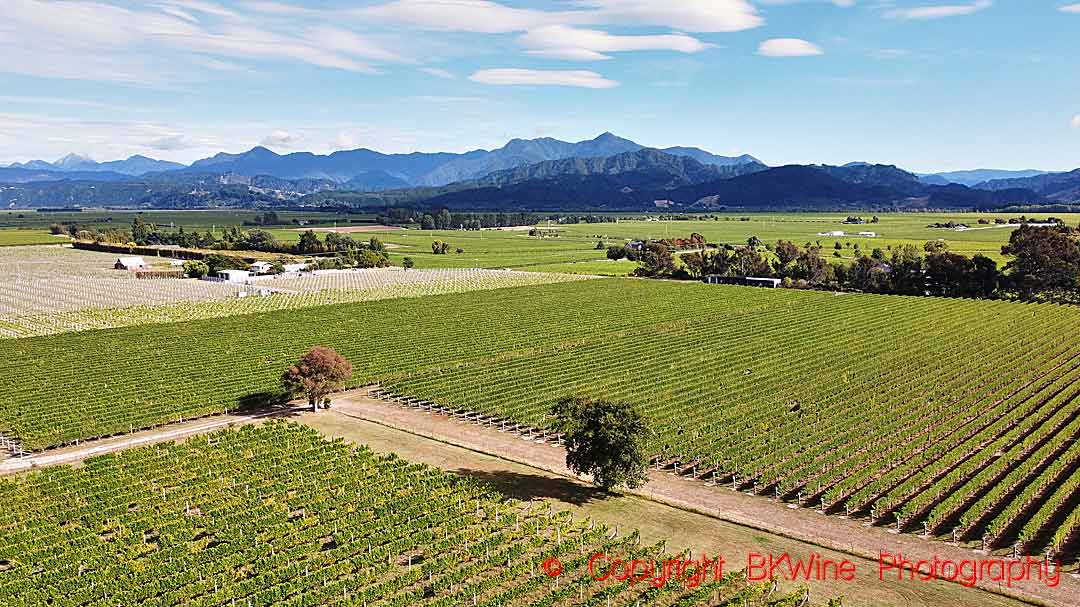
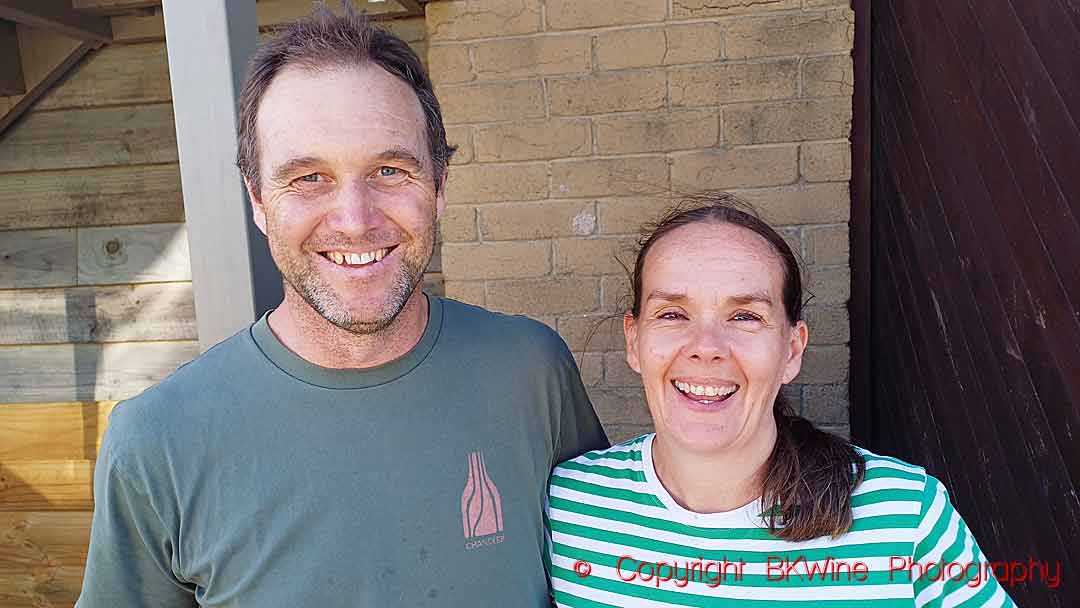
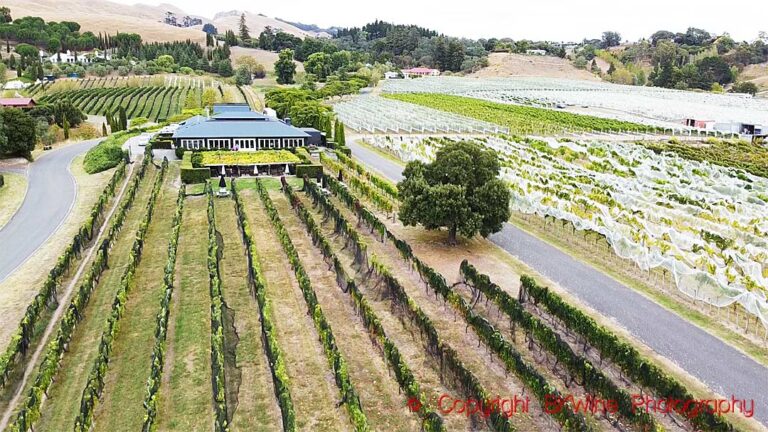
Te Whare Ra is a small family-run winery in New Zealand’s Marlborough, in the Wairau Valley. Unlike may in the region, they do a range of wines from many different grape varieties, not only sauvignon blanc. It is owned and run by Anna and Jason Flowerday. The name, Te Whare Ra means “the house of the sun” in Māori.
But step back a little first. When wine lovers come visiting a winery, many show them an elegant tasting room or, to make it a bit more technical, shiny steel tanks and oak barrels.
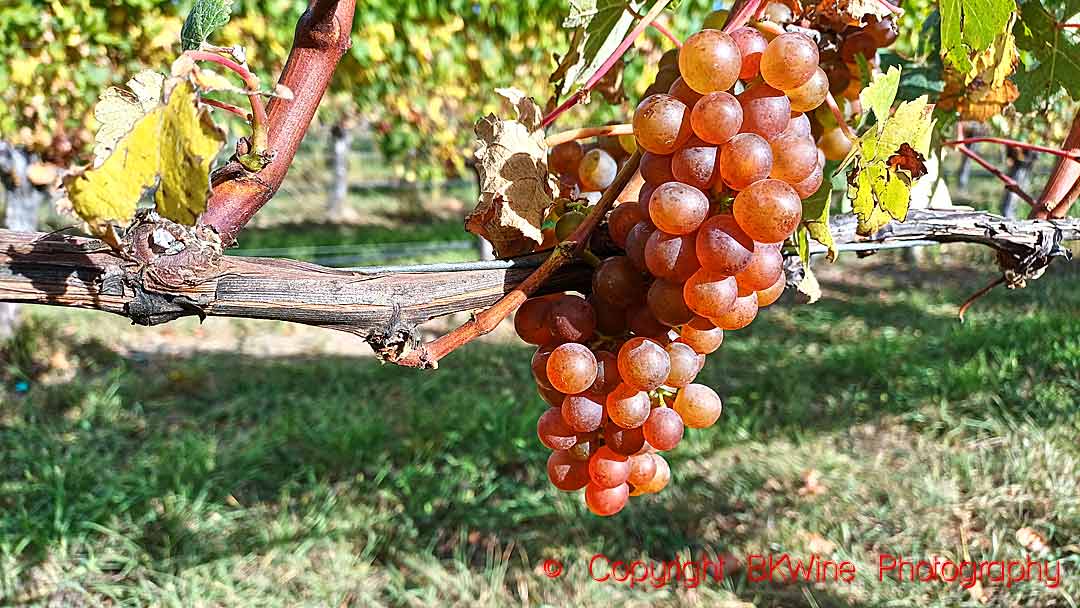
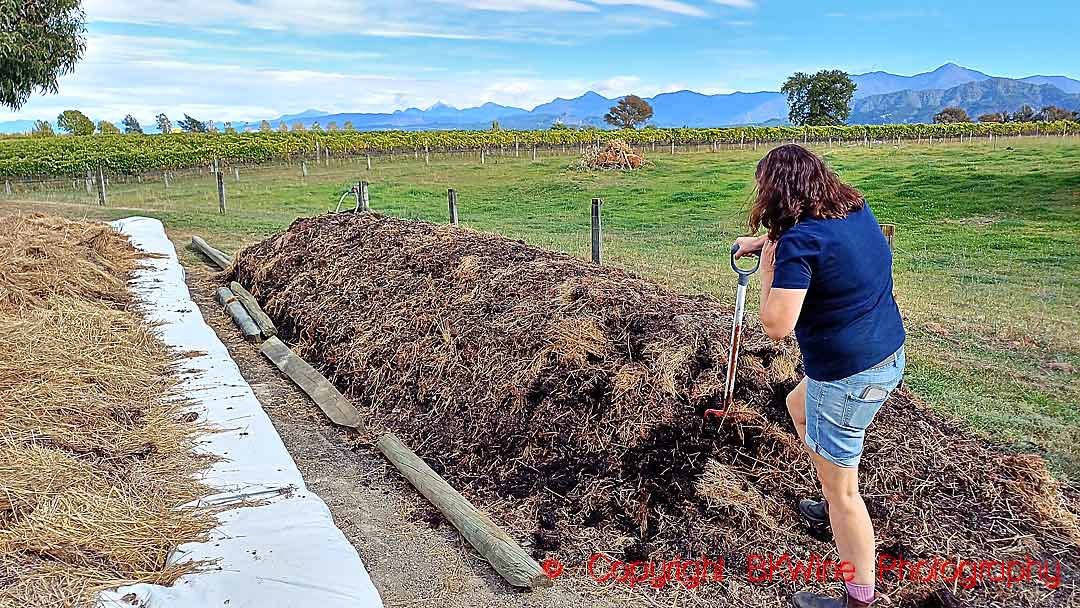
When we visited Te Whare Ra in Marlborough on our New Zealand wine tour, the first thing that happened was that Anna took us on a walk through the vineyard, to taste some gewurztraminer (yes, gewurz in Marlborough!), and look at the soil. Then Anna quickly brought us over to the compost heap, where we spent a good while getting all the details on how to build nutritious compost. It was far more interesting than what it sounds and a good illustration of the winery philosophy.
They build the compost from different materials, often considered waste, from the vineyards and the fields: what’s left over from the wine pressings, cuttings from the vines or from the ground growth, straw, and – yes – cow shit (or dung or manure, if you prefer).
Te Whare Ra is certified organic but not biodynamic, but I have the impression that, for Anna, what matters isn’t the labels but the thought behind them. The certifications matter for the market and for customers to know what’s being said is true, but here what matters most seems to be to do what is good for the soil, the animals, and the wine.
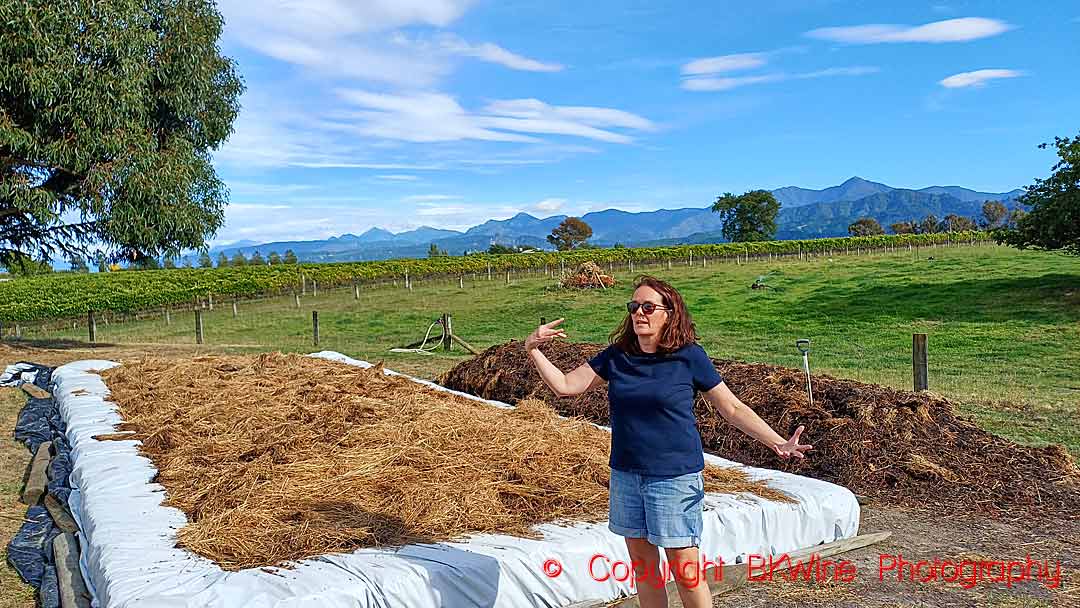
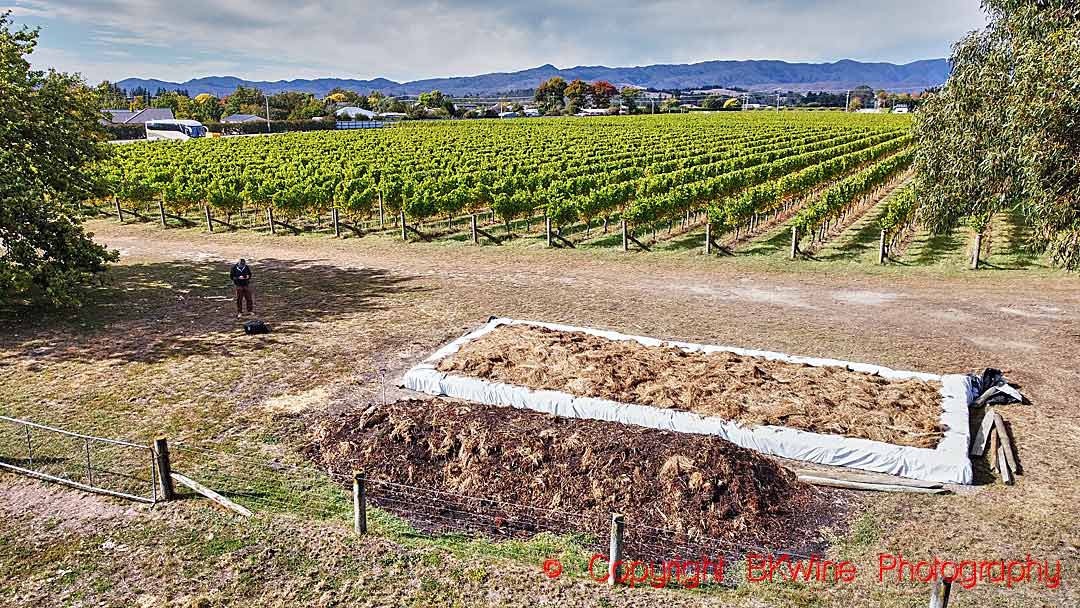
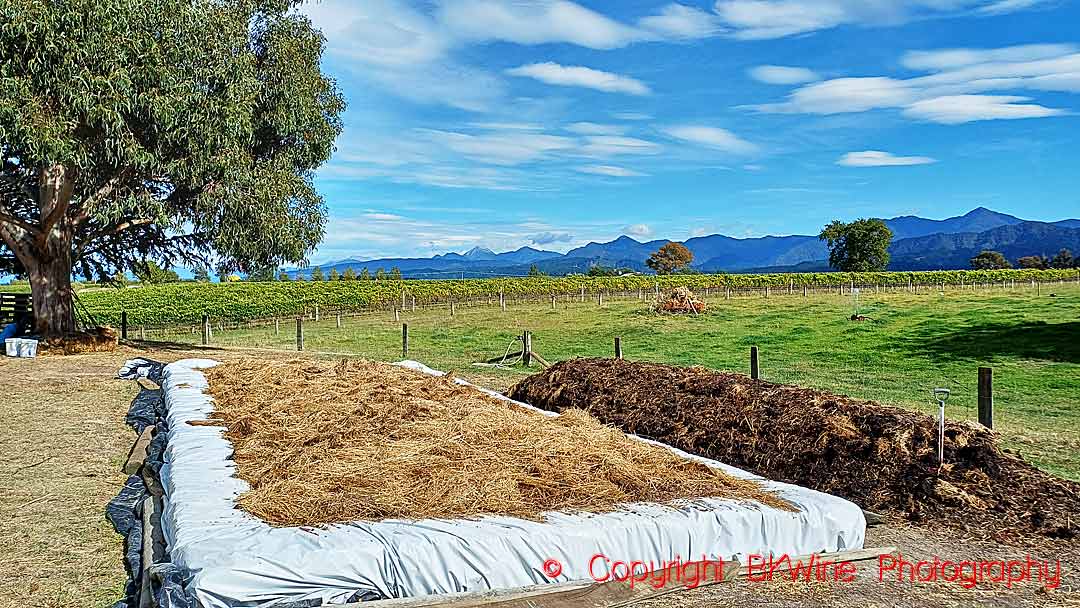
When we visited, we even had a “vertical of composts”. In tasting terms, a vertical is when you compare different vintages. That’s exactly what we had at the compost heap. Well, not a tasting but (thankfully) only a comparison of vintages. In front of us, we had this year’s compost that was just building up as well as last year’s. They were adding wine press cake, cuttings, straw and cow dung in layers when we were there. “We basically put a layer of hay on the bottom, then the stalks and then the skins on top, and it’s basically made like a layer cake over harvest,” Anna explains. “We prefer doing it this way because it gets the compost going quicker.” Others put it all in a heap to the side and wait until after harvest to construct the compost.
Back to granddad: “my granddad used to get his marc [from the wine press] back from the winery that he sold his grapes to. He used to mix it up with chicken manure and hay and stuff like that and obviously compost it down and put it back on the vineyard.” Just like at TWR, except now they make their own wine.
“It’s the ultimate version of recycling,” says Anna. “Every day at the end of the day, we take what we’ve taken out of the presses and the destemmer [and put it on the compost].”
Next to this year’s compost was last year’s compost that was ready for use – with a myriad of microscopic animals, earthworms and other goodies for the soil and for the vines. A fresh-smelling compost soil. Sometimes they even provide their compost to others if they don’t need it all.
So it is not as simple as piling up organic material in a heap and letting it do its thing. After preparing the cake, they cover it with a tarpaulin, not primarily to protect it from rain but to create the proper micro-environment. Anna explains, “This is actually really important in the wintertime because it helps keep the heat in the compost so it breaks down a lot faster. It’s also really important to make sure that it gets hot enough because then it kills off any spores of fungal diseases that otherwise might be on those stalks. Even now, the bottom layers of this would be too hot to put your hand in.” But protecting from the rain is also important. Too much rain will suffocate the compost; it needs moisture, but it also needs air for the process to continue.
As is also done in biodynamics, they use various preparations on the compost to encourage the microbial growth: “we also brew up our own compost tea which is basically a mix of microbes that will help break that down a lot faster. And then we just sprinkle that on with a watering can each time when we’re making a new layer.”
The cows in the vineyard
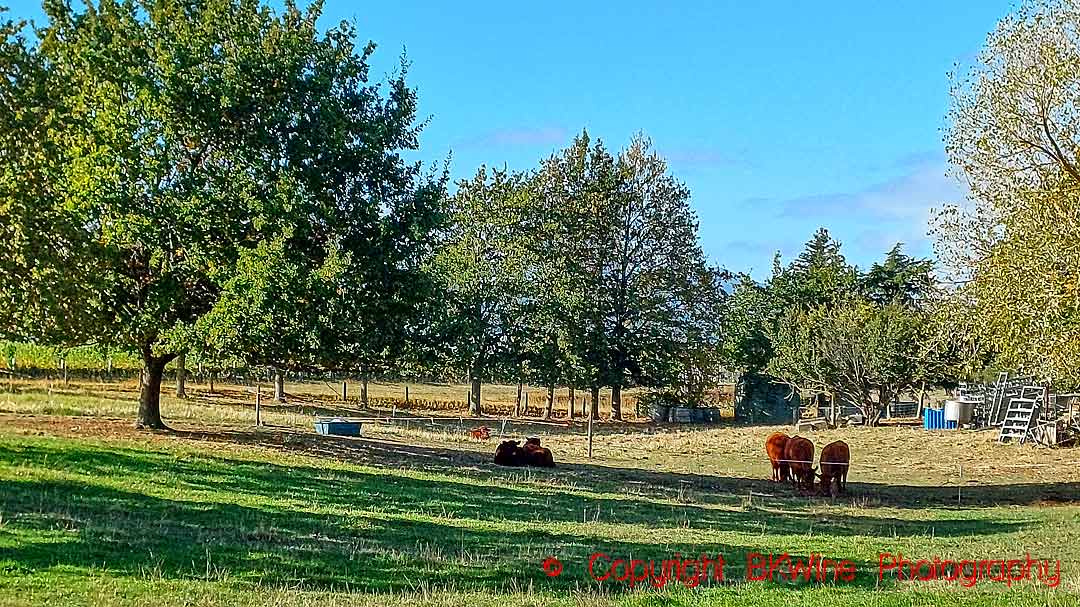
At Te Whare Ra they also have cows. During the growing season for the vines, the cows are in their own field. We saw them just behind the compost. In the winter, they let them into the vineyard, where they do good work with the soil by grazing and letting the end result out at the other end: “In the wintertime the cows are in the vineyard, so we rotationally graze them through the vineyard. You don’t have to drive in it with a tractor — you’re not burning diesel, you’re not compacting soil.”
Which is where I stole the quote from Anna for the headline, as she said about the Te Whare Ra wines: “wines made with cow shit, not bullshit.” And frankly, in the wine world, there is a bit too much bullshit (and perhaps not enough cow shit).
Another aspect of “the ultimate recycling” is their water management. Three important words in winemaking are cleaning, cleaning, and cleaning. It uses up a lot of water. They avoid using any strong cleaning products and just rinse the tanks and equipment with water. This water is then collected and used to irrigate the fields. To the benefit of the clover and the cows. Nothing wasted.
Biodynamic inspiration
Te Whare Ra is not biodynamic, but they do use some of the ideas that have become famous thanks to biodynamics, like, for instance, the compost. They also use different kinds of “sprays” in the vineyard to help the vines grow better and stay healthy, and to avoid using curative chemical sprays as much as possible.
For instance, they use a product made from seaweed from the water, not far away, from Marlborough Sound. The seaweed brings minerals to the vineyard, but it also contains plant growth hormones. “It can help encourage root growth; it can help lengthen the stem of the bunches; it can change the architecture of the bunches. So, it’s really, really clever stuff.” This would give looser grape bunches that will retain less humidity between the berries and reduce the risk of rot and fungal diseases. “We’re trying to find a biological solution to the problem, or a natural solution to the problem, rather than something out of a packet.”
Walking back to the winery for the tasting, we go again through the vineyard. It is harvest time; some of the harvest is done, and some remains. The vines do look healthy, and the ground is lush with green grass. They have some cover crop in winter but remove it in summer. Cover crops add different kinds of value to the soil, depending on what they are. “What we’re trying to do is feed the soil, and that feeds the vines, rather than drip-feeding stuff through the irrigation system or spraying on a lot of foliar fertiliser,” says Anna.
It is making nature work, in a natural way, but clearly also in a very planned and controlled way. It is obviously not by chance that Jason, Anna’s husband and co-winemaker, has been named New Zealand Viticulturalist of the Year. And not by chance, Te Whare Ra makes some of Marlborough’s most exciting wines. As we were about to experience in the wine cellar at the tasting.
Watch Anna explain all this and more on the video below.
Travel
THE best place to discover the true soul of New Zealand wine (and compost turbo charged with algae) is New Zealand. Explore New Zealand wine on a wine tour to New Zealand with BKWine.
Travel to the world’s wine regions with the wine experts and the wine travel specialist.
Wine tours that give you insight. BKWine wine tours.