—
No, it is not difficult to choose a wine for the barbecue!
—

“Choosing wine for a barbecue can be a challenge.” That’s what it said in a food magazine I read last week when we were in Sweden (in the middle of barbecue season, and indeed, we barbecued every day for a week, drank a variety of different wines, and they were all a perfect match to what was on the grill). In fact, choosing wine for a barbecue is easy: you take a wine you like and in the price range that suits the occasion. This simple rule is actually a very good advice that applies to 99% of all meals with wine.
The food magazine talked about the accompaniments, the sauces, the spices, the barbecue smoke, the glaze (do you still use it?) and other things. Every little detail makes the match change from one wine to another. But no, it’s not like that, at least not for us. Thyme in the sauce, grilled corn on the side, a bearnaise, garlic or new potatoes. All of this does not make a particularly decisive difference to our choice of wine. The weather plays a bigger role. Very hot? A lighter wine served chilled. Or (God forbid) even a well-chilled white wine with a piece of meat, perhaps. Eating in the garden or in the dining room? Invited the neighbours? Or your friends from the wine club? This matters a lot more when it comes to choosing the “right” wine.
–
Calling all wine lovers:
Do you know someone who might be interested in a wine tour?
Please tell them about BKWine Wine Tours! We do wine tours like no other.
A leading wine tour operator since more than 20 years.
Thank you in advance for your help and support!
(If you have Swedish friends, please know that we have a separate,
more extensive travel program in Swedish: BKWine Vinresor.)
–
Sometimes we wonder why wine writers want to make it harder than it is? Is it to maintain their position as “experts”? By scaring people into thinking that wine is difficult, so that they keep wine on a mythical pedestal?
If we look at it from the wine producers’ perspective, that’s exactly where we should not put wine. Not on a pedestal. We rather have it the glass!
Wine consumption is declining today. The wine industry is struggling with profitability (with some exceptions of course). Every other day we see reports showing that young people are drinking less wine and that baby boomers (born between 1945 and 1962) are holding up the entire wine industry. But for how long? Young people are choosing beer instead of wine and one reason is the price. Another is – perhaps – that they think wine is complicated. Could it be because of all the hocus-pocus that is said and written about wine. About food and wine. About traditions and principles. And rules(!!). About do this but absolutely do not do that…
Wine needs to be removed from its pedestal. Is there any reason to preserve the mystique aura that surrounds wine and wine handling? (Which wine glasses to choose is a whole science—please note our irony. All glasses are equally good, except the bad ones. And we all know which those are.) And not least the combination of food and wine? Sometimes when I read about how wine and food should harmonize with each other I wonder if anyone, including the person who wrote it, really understands the absurdity of it all. Because what they are saying is that to get the harmony right you must know the exact spiciness, saltiness, bitterness, sweetness and so on in the food and the exact taste of the wine. When does that ever happen? When do you know exactly how the wine will taste before you pour it in the glass? (And that is, of course, part of the charm.)
Some people make it sound as if everything about wine requires knowledge, thus that wine is complicated. Which is of course nonsense. People have always drunk wine without knowing anything about it. It is not rocket science.
Wine is a source of joy, a lubricant for conversation, something to enjoy, preferably with food. It is not an academic chemo-bio-tech-laboratory experiment.
Let’s not despair. The future does not look completely black. There are many young people who drink wine, we know several. Many of these are also curious and want to know more. But the positive thing is that even if they sometimes want to know what the rules and rituals are, I get the feeling that in the end they will not care so much about following them. It is more fun to break the rules when you know they exist.
Speaking of learning about wine, I am almost certain that there are more wine geeks today than there used to be in the world. More people who really dig into the details and want to know everything.
The conclusion is that there are all types of wine drinkers. Just as there are all types of winemakers. Which of course can make it a bit complicated…
In the end, however, the most important thing is that a wine should be delicious, which only you can decide, and enjoyable, and that depends on you and your guests.
Wine tours
A few words on the upcoming tours:
Burgundy and Rhone Valley wine tour
The Burgundy and Rhone Valley wine tour is fully booked this year. Why not come to Bordeaux instead?:
Exclusive Bordeaux Tour
We still have a few places available on our exceptional Bordeaux tour in October.
What would one have on a Bordeaux wine tour “bucket list”? To taste the five First Growths plus Pétrus and Le Pin? That is of course possible. We would suggest something different, more special.
One can always buy expensive wines. Anywhere. But one cannot meet the people. And see the places. Come into the private chateaux. That’s what we’re giving you on our Bordeaux tour. Great wines, of course, but also meeting some very special people that will tell you their stories, exploring some vineyards that are not on the front page of Wine Spectator or Decanter (and, by the way, is where everyone else goes also).
Together with this you will get some outstanding gastronomic meals, private meals with – perhaps… – some very special wines from the cellar, brought up just for you.
The “First Growth bucket list tour” that I alluded to is like going to Paris and only see Notre Dame, Tour d’Argent and the Eiffel Tower while missing out on the food market, the neighbourhood bistro with the very special wine list, the private art collections, a walk along the Seine, and, above all, missing out on the Paris (and Bordeaux) atmosphere.
So, if you are a curious person, who wants to discover more about wine than just choosing the most expensive wine on the list, then this tour is for you. As a bonus, you’ll get beautiful chateaux and top level French cuisine.
Only a few places left, so book now!
Winter Wine Tours
All three winter wine tours will be back in 2026. We don’t promise summer, sun, and beach in the middle of northern winter, but we can without hesitation promise summer, sun, wine and gastronomy (and a little beach if you want).
- Chile-Argentina, January 12-25, 2026
- South Africa, February 15-25, 2026
- New Zealand, March 10-25, 2026
Book now! Only a limited number of places left.
See how it’s been this year in these three tour Facebook groups:
- Chile and Argentinas wine tour on Facebook
- South Africa wine tour on Facebook
- New Zealand wine tour on Facebook
Click Join and then choose how many notifications you want – everything, the most important, nothing.
More info on our wine tours here. “World’s Top Wine Tours“. Tours with the people who know wine and who have an unrivalled experience of wine and tours.
Travel in wine regions with someone you trust.
Enjoy the Brief!
Britt & Per
Wine editors to the national encyclopaedia, Forbes.com contributors, award-winning wine book authors, wine tour advisors to the UN and national wine organisations, wine judges … and, above all, passionate wine travellers.


If you appreciate what we do, you can help us:
Tell your friends about the Brief or send it to them.
Like us and follow us on social media:
BKWine Magazine on Facebook | Wine Tours on Facebook
—
What’s on at BKWine Tours
BKWine is also one of the world’s leading wine tour operators. Here’s what we currently have on our scheduled wine tour program:
- Burgundy and the Rhone Valley, 17-25 September 2025
- Bordeaux, wine, gastronomy, chateaux, 28 September – 4 October 2025
–
- Chile-Argentina, 12-25 January 2026
- South Africa, 15-25 February 2026
- New Zealand, 10-25 March 2026
We also make custom designed wine tours.
And we have an extensive travel program in Swedish: BKWine Vinresor.
We’re different than most other wine tour operators. We are people who know wine inside out, who travel constantly in wine regions, who write award winning books about wine. Who do this out of passion.
Our wine tours are different from others.
A typical year we organise more than 30 wine tours to destinations across the world. In Europe: France, Italy, Spain, Portugal and more. World-wide: South Africa, Chile, Argentina, New Zealand. Thanks to our Scandinavian background we have a separate offer for the Scandinavian market. These are sometimes offered in English and also available as custom made tours. For example, these destinations:
—
Read our books
We have written eleven wine books. They have won awards from the Gourmand Awards, The International Organisation of Vine and Wine (OIV) and others.
Unfortunately, only one of them has been translated to English; the others are (so far) only available in Swedish. This is the one that is available in English:
Here’s the full list of our books:
- The Wonderful World of Wine
- Languedoc-Roussillon, the Wines of Southern France
- Champagne, the Wine and the Growers
—
News from the World of Wine
—
Short briefs on what’s been happening in the world of wine recently and other interesting things.
—
Congratulations to Cloudy Bay in New Zealand for turning 40
New Zealand’s wine history is short but intense. It was not until the 1980s that it became famous for its sauvignon blanc. Montana (now called Brancott Estate) planted its first vineyards in Marlborough in 1973. Another pioneer was Cloudy Bay, founded in 1985 by Australian David Hohen, already known at the time for his Cape Mentelle Vineyards in Margaret River, Western Australia. Together with winemaker Kevin Judd, Hohen began making sauvignon blanc – and then chardonnay, sparkling and pinot noir – which would become among New Zealand’s most acclaimed.
In 2009, Kevin Judd moved on to create his own brand in Marlborough, Greywacke. But Cloudy Bay lives on; now, since 2003, as part of the French luxury company LVMH (Louis Vuitton Moët Hennesy). Read more: cloudybay
Travel: Come on a wine tour to New Zealand with BKWine.
See: See pictures and videos from New Zealand 2025 in the wine tour’s Facebook group.
Mateus Rosé, a legendary Portuguese rosé wine, celebrates 70 years at the Swedish Monopoly
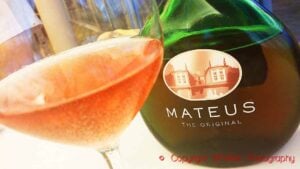
In 1955, Systembolaget, the Swedish alcohol monopoly stores, started selling Mateus Rosé. For 70 years, this legendary, unpretentious rosé wine has been on its shelves. In other words, drinking rosé wine is not a new trend in Sweden (or anywhere else for that matter). In 1955, Mateus Rosé was just over 10 years old. Fernando van Zeller Guedes founded the brand in Porto (Portugal) amid a raging war in 1942. The Douro Valley was experiencing a severe economic crisis, perhaps not surprisingly. But at these difficult times, what would become Portugal’s leading wine company – Sogrape – and a wine that would become a best-seller worldwide was founded. Mateus Rosé was born, and the success it would eventually have was enormous.
The chateau on the label exists; it is a beautiful chateau in the northern Douro Valley called Mateus, which Van Zeller thought would be a suitable image for the label. The owner agreed after negotiations to let his palace adorn the label. Van Zeller also persuaded, with some difficulty, a glass manufacturer to produce the bottle with the characteristic round flask-shape. Initially, it was exported to Brazil and then, in the 1960s, Mateus conquered the British market. Famous people appeared in the advertising for the wine, among them Elton John and Jimi Hendrix (!). (So, using celebrities for wine marketing, like Lady Gaga today, is nothing new.) And then it was not long before conquering the rest of Europe, the USA, Japan… Mateus Rosé became a wine that everyone drank. Today, not everyone drinks Mateus Rosé, but it still has its loyal customers.
However, a lot has changed over the years: the bottle shape, colour and label have been modernised and the wine has changed, for example becoming drier. The brand has also expanded to include white, sparkling, Spanish and other wines.
Travel: Come on a (bespoke) wine tour to the Douro Valley in Portugal with BKWine.
Chenin blanc is getting drier and more bubbly

Chenin blanc, one of the world’s top white wine varieties, is planted in 29 wine countries, but 98% of the area is in five countries: South Africa (16,200 ha), France (10,700 ha), the USA (1,900 ha), Argentina (1,500 ha), and Australia (400 ha). South Africa and France together have 85% of the plantations. This you can read in an extensive study of the grape that has been published by Inter Loire.
Chenin blanc is one of the world’s great white wine varieties, and it can produce fantastic wines, both dry and sweet. But it is the dry wines that really stand out, and therefore, we are happy to read that the majority of chenin blanc wines today, everywhere, are made dry. We are perhaps less enthusiastic to learn that so much is made into sparkling wine. They can, of course, be excellent, but rarely reach the heights that the still dry wines can achieve. More than half of the chenin vineyard surface in France is made into bubbles. The grape is found mainly in the Loire Valley, where six appellations make sparkling wine with chenin: Vouvray and Montlouis (100% Chenin), Crémant de Loire, Saumur, Anjou and Touraine (allows blends but Chenin dominates). Crémant de Loire has significantly increased in volume in recent years and is now the second largest sparkling wine in France after Champagne. In Limoux in the Languedoc region, chenin is used for Crémant de Limoux.
Chenin blanc is South Africa’s most planted grape variety. It is grown in several different regions in the Western Cape and is also used for their excellent brandy.
Although chenin blanc is primarily produced in the Southern Hemisphere (60% of the world’s chenin area), 8 out of 10 bottles are consumed in the Northern Hemisphere. The grape variety is particularly popular in Europe, which accounts for two-thirds of global consumption, including Germany (20%), France (17%), the United Kingdom (11%), Sweden (9%), the Netherlands (5%), Belgium and Luxembourg (3%). Read more: observatoire-cepages
Travel: Come on a wine tour to South Africa with BKWine.
See: See pictures and videos from South Africa 2025 in the wine tours Facebook group.
Will a new 300-gram glass bottle persuade consumers that lighter is better?
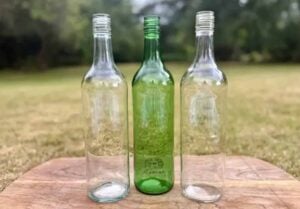
Ardagh Glass Packaging-Europe (AGP-Europe) has recently launched a super-light 300-gram lightweight glass bottle. The idea behind this bottle is to combine a stylish design with high performance. It is crucial to change the minds of all wine producers and consumers who still doubt that a lightweight bottle can contain high-quality wine. Sustainability is a key concern in the wine industry, and reducing the weight of the glass bottle is something that many producers are tackling today. The glass bottle requires a lot of energy to manufacture, and the heavier the bottle, the more energy it needs. It is also heavy to transport. Thus, a lighter bottle gives double the benefits in terms of carbon footprint. The fact that bottle producers make stylish, lightweight bottles is an essential part of the change. That the bottle still looks attractive is important because some consumers still associate thinner glass with cheap wine and thicker glass with prestige wine. Read more: ardaghgroup
A low harvest yield 2025 for a pessimistic Champagne
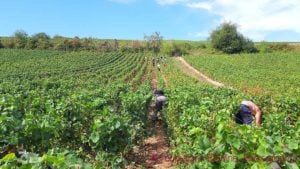
The 2025 wine-growing season looks promising in Champagne. The vineyards are relatively homogeneous thanks to generally mild weather conditions that have limited fungal diseases. While the vineyards offer promising prospects, the global economy is still characterised by uncertainty and instability. Consumers are also increasingly unpredictable. That is why the Comité Champagne recently announced that the 2025 harvest will be set at 9,000 kg/ha, which, it says, will allow production to be adapted to market conditions. This annual decision is taken jointly by the grape growers, independent producers, and the houses, but that does not mean that they always agree.
The houses are concerned about the large stocks that the Champagne region currently has (4.8 annual productions) and this is one reason why they want to keep the harvest low. They were arguing for an even lower limit this year. Some of the independent producers (who make “grower champagnes”) sell everything they make and would have preferred a higher yield of 11,500 kg/ha which probably is more in line with the volume that will hang on the vines when it is time to harvest.
This strange annual market manipulation of limiting yields to keep prices up (a bit like OPEC) thus resulted in a compromise of 9000 kg/ha this year in spite of an agronomic yield that is likely to be much higher. Will it be a repeat of 2020 and 2021? In 2020, a very low yield was decided (to keep prices up) despite having large quantities of very good quality grapes, which resulted in growers being forced to throw a large part of the harvest on the ground (literally). The following year, 2021, the weather was bad and many had a shortage of grapes and swore at everything they had thrown away the year before and lost.
Read more about harvest and yield in Champagne:
Travel: Come on a wine tour to Champagne with BKWine. (PS: We’ve written a prize-winning book on Champagne.)
Languedoc status report: white and sparkling wines are on the rise, and premiumisation is paying off
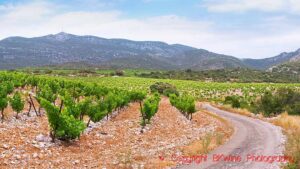
As in several other wine regions right now, it is whites and sparkling wines that are gaining ground in Languedoc-Roussillon. White wines increased by 5% in 2024, and sparkling wines from Limoux, especially Crémant de Limoux, increased by 12.2%. The category has increased by 40% in five years. Red wines decreased slightly (-3%). Languedoc still has healthy exports even though they decreased by 6%, mainly due to the decline in the Chinese market (-47%). Outside China, the main markets are the USA, UK, Belgium, Germany, and Canada. The USA grew by 11% but as a group they were almost stagnat (+1.7%).
A very positive development is that Languedoc can show an increase in value (+2%), thanks to the success of relatively new appellations such as Pic Saint Loup (+8%), La Clape (+17%) and Terrasses du Larzac (+22%), confirming that premiumisation pays off. They were previously part of the greater Languedoc AOP but have recently been granted their own AOP. And these wines are primarily red, a category otherwise not on the up. Read more: www.languedoc-wines.com
Characterful wines from the Etna volcano in Sicily

Etna in Sicily is Europe’s highest active volcano. And one of Europe’s most spectacular wine regions. Nerello mascalese is grown here, planted on the slopes of the volcano in the black lava soil. Andrea Franchetti was one of the first in modern times to recognize the quality potential here and in 2000 he created his Tenuta di Passopisciaro, located on the north side of Etna, 1000 meters above sea level. The vines are old, around 100 years old and pruned with traditional albarello to low and gnarled bushes. Nerello mascalese thrives here in the dark lava soil that is often eroded almost to sand. Sometimes a bit of nerello cappuccio is added. The whites are made from carricante (mainly) and cataratto. Hot days and cool nights give a long growing season and a harvest that can be as late as the end of October or November. It certainly feels like this gives wines with character. Here are some recommendations from Etna from producers that you might find in a wine shop near you.
- Benanti Etna Rosso 2023, ~25 euro, nerello mascalese and nerello cappuccio, another pioneer on Etna
- Tornatore Etna Rosso 2022, ~22 euro, 95% nerello mascalese, 5% nerello cappuccio
- Dea Vulcano Etna Rosso 2022, Donnafugata, ~27 euro, nerello mascalese, nerello cappuccio, a relative newcomer on Etna with long-time fame from other regions in Sicily
- Mandrarossa Etna Rosso, 2018, Cantine Settesoli, ~25 euro, nerello mascalese, nerello cappuccio, a successful co-operative
- Tornatore Etna Bianco 2024, ~22 euro, 100 % carricante
Travel: BKWine organises bespoke wine tours to Sicily and Etna.
—
Features of the Month
—
Articles and features published on BKWine Magazine and on our wine travel blog and (occasionally) photography blog in the last month.
—
OIV Congress 2025 : Moldova becomes the first global stage for wine’s next century

As wine consumers and wine lovers we tend to focus on what good wine to drink next, read about exciting wine regions and talented producers. It is easy to forget that before the wine gets on to our tables there is a complex production process as well as extensive regulations for wine, in place not least in order to make the wine in the glass safe and healthy. But it is worth giving this a thought once in a while. Technical standards, regulations, trade, health and safety, as well as laws and legal frameworks do not sound very sexy. Mundane? Boring? But all this is fundamental to make sure when we buy a bottle of wine the contents is what it says on the label and that it is not dangerous to drink (at least not more dangerous that the alcohol in it). What probably is the wine world’s most important annual event deals with exactly these issues. It is The World Congress of Vine and Wine organised by The International Organisation of Vine and Wine (OIV).
Read more in Jeanne Peixian Qiao’s article on BKWine Magazine: OIV Congress 2025 : Moldova becomes the first global stage for wine’s next century.
Rare syrah wines from the northern Rhône Valley from Vidal Fleury | Britt on Forbes
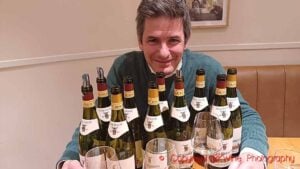
Wines from the Northern Rhône Valley are almost always produced in small quantities. The appellations here are among the smallest in France. There is no doubt however that syrah is particularly expressive here. Not surprisingly, many wine lovers are eager to find these wines. They are mostly red, but the rare whites are equally delicious. Vidal Fleury is the oldest producer in the northern Rhône Valley still in operation. The house makes some excellent wines from syrah, the only red grape variety permitted in the region, and the three whites, viognier, marsanne and roussanne.
Read more in Britt’s article on BKWine Magazine, originally published on Forbes: New vintages of Côte Rôtie, Condrieu and more from Vidal Fleury | Britt on Forbes.
Travel: Come on a wine tour to the Rhone Valley with BKWine.
Inside a Mondavi Masterclass: Napa’s Legacy Meets Its Future
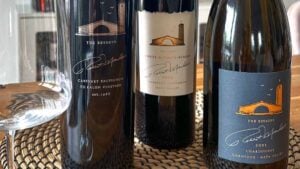
In a recent digital masterclass hosted by Robert Mondavi Winery (*), participants were invited to take a closer look at one of Napa Valley’s most recognised names. With Kurtis Ogasawara, director of winemaking, leading the conversation from Oakville, California, and Konstantin Baum, a German wine consultant, moderating the conference offered both a structured tasting and background on the winery’s philosophy and direction.
With this article BKWine Magazine introduces a new guest contributor: Han Luu.
Read more in Han Luu’s article on BKWine Magazine: Inside a Mondavi Masterclass: Napa’s Legacy Meets Its Future.
—
Wine Tours
—
Details on our current and future wine tours. Book a wine tour with the “World’s Top Wine Tour Operator” today (or when you feel like travelling to wine country).
Treat yourself to an unforgettable experience in the beautiful wine-lands together with some of the most knowledgeable wine people around. Book now!
—
Bordeaux, chateaux and shacks, prestige and farmers | wine tour

Wine is a lot about fashion. Some 30–40 years ago, it was enough to have “château” on the wine label for the wine to sell. That’s not the case any more, and a good thing that is. It’s good that producers have to make an effort to make quality wine. And those who can’t make nice wine, well, they might as well grub up their vines. That’s what’s happening in Bordeaux today. Around 10,000 hectares are torn up (which, on the other hand, is less than 10% of the total). Bordeaux has always been both about prestige and small farmers with modest wines. And a big segment in the middle that has had to work hard to be seen. On our Bordeaux tour, we’ll show you different types of chateaux. No real shacks, but some of the “chateaux” are very small, even humble. Others are among the grandest of the grandest. On our tour, everyone we visit makes exceptionally good wines, do not doubt that (!), but, as you’ll see, the price range varies a lot. And that depends, among other things, on where on the prestige scale the property is located. A famous name does not always equate to quality. We visit prestigious chateau (with top quality as well as fame) in Pauillac, Margaux, Pessac-Léognan and Saint Emilion and passionate winemakers in Entre-deux-Mers. Our chateau lunches are now legendary, better French gastronomy than that is hard to find. Don’t miss this opportunity. The tour as it is today is the result of many years travelling in the region. Extra bonus: we might see some harvest although we cannot guarantee that.
Come and discover French wine and food in Bordeaux on this luxurious wine tour with BKWine, one of the world’s leading wine tour operators (*).
Book now!
(*) And the only one who has authored 13 award-winning wine books, one of which is on Bordeaux wines.
Two neighbouring South American countries with many differences | wine tour in Chile and Argentina
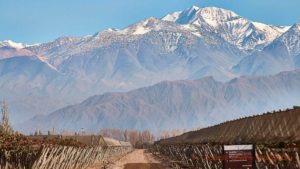
Although Chile and Argentina are geographical neighbours, these two wine giants offer distinct identities. Both their cultural differences and the different growing conditions are evident in the glass. The countries lie on opposite sides of the mighty Andes Mountain range. Mendoza, the largest wine region in Argentina, is dominated by high mountains and dry plains. Here, it rains no more than 200 mm a year, and irrigation by meltwater from the mountains is vital. Malbec dominates. Chile’s vineyards are spread out and are found both inland, closer to the mountains, around the capital Santiago and out on the Pacific coast, where producers take advantage of the cool winds and make phenomenal cool-climate wines, both white and red. In Chile, Cabernet Sauvignon dominates, but the grape palette is large; there is a lot of variety.
There is diversity also in Argentina, today even more than before. The vineyards climb higher and higher along the mountain sides, the interesting white wine from the local grape torrontes is starting to gain ground, and cabernet sauvignon also produces characterful wines here. In short: fabulous wines, dramatic and beautiful landscapes, delicious gastronomy and intriguing cultures. What more can you wish for? Discover even more on our wine trip to two wonderful wine countries. We drive with our bus across the Andes, a great experience.
Come on this exciting wine tour to Argentina and Chile with Britt and Per of BKWine, one of the world’s leading wine tour operators (*).
- Chile-Argentina, 12-25 January 2026
Book now!
(*) And the only one who has authored 13 award-winning wine books.
More inspiration: You can get an even better feeling for what you will experience on this tour if you visit the latest tour’s own Facebook group. Lots of pictures and videos from the tour (join the group and you’ll get an update when we post new contents): The wine tour to Chile and Argentina 2025.
South African wines, landscapes, food, and people impress | wine tour

In South Africa you will discover some excellent wines but also fascinating landscapes and a delicious cuisine with influences from different part of the world. Cape Malay curries are worth trying more than once. More and more regions produce world-class wines. We will visit Stellenbosch, Franschhoek, Paarl, Swartland, Tulbagh and Walker Bay, almost all regions of note and more than any other wine tour we know of covers. You will get a good sense of how South African wines have developed during the last 30 years. Chenin blanc, for example, once used only for brandy (delicious!), is now a variety for top-quality white wines. And pinotage, South Africa’s own crossing, has come a long way since it was created in 1925. Now it delights us with fresh and charming wines as well as richer, deeper and powerful ones.
We meet in beautiful Cape Town and we will spend all our time in the Western Cape where practically all South African vineyards are located. We will also discover (in addition to the classics already mentioned) small towns such as Hermanus and Riebeek Kasteel. The scenery everywhere is incredible; the mountains are omnipresent. In February it is late summer in South Africa, the weather is beautiful but not too hot and the producers are preparing the harvest or are even harvesting. As an extra bonus, all our hotels have a pool.
Come on this fabulous wine tour to South Africa with Britt and Per of BKWine, one of the world’s leading wine tour operators (*).
Book now!
(*) And the only one who has authored 13 award-winning wine books.
More inspiration: You can get an even better feeling for what you will experience on this tour if you visit the latest tour’s own Facebook group. Lots of pictures and videos from the tour (join the group and you’ll get an update when we post new contents): The wine tour to South Africa 2025.
New Zealand, the world’s most famous sauvignon blanc and much more | wine tour

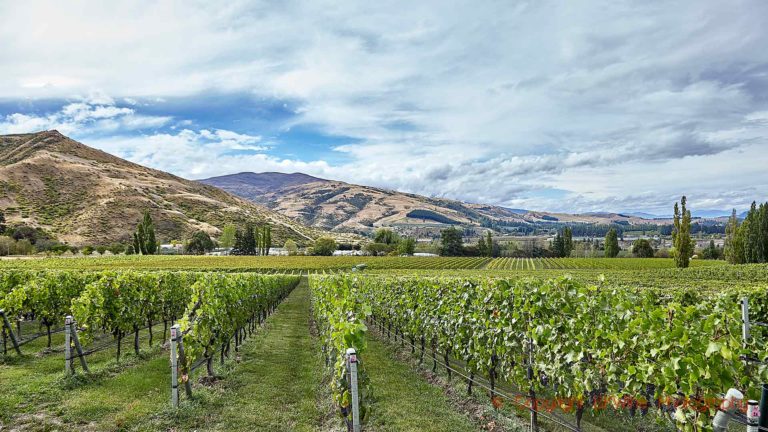
New Zealand may be small, but it’s a giant in the wine world. It has almost as much sauvignon blanc planted as France. In New Zealand, it is grown primarily in Marlborough. It gives crisp and fresh wines, often with tropical fruit aromas and sometimes with more depth and complexity. Sauvignon blanc helped put New Zealand on the wine map in the 1980s.
But there are many more regions and grape varieties to explore, as you will notice if you join us on this fantastic New Zealand adventure in March. In Central Otago on the South Island, pinot noir has found a home, in the eyes of many connoisseurs rivalling Burgundy. Hawke’s Bay has rich syrah and full-bodied chardonnays. Martinborough also has superb pinot noir. Waiheke Island, a short ferry ride from Auckland, is famous for its cabernet sauvignon. Despite New Zealand being a small country, the growing conditions differ. The North Island is much warmer than the South Island, for instance. We will see them both, and we will have ample time to enjoy the magnificent landscape of this faraway country. A true journey of discovery.
Come on this stunning wine tour to New Zealand with Britt and Per of BKWine, one of the world’s leading wine tour operators (*).
Book now!
(*) And the only one who has authored 13 award-winning wine books.
More inspiration: You can get an even better feeling for what you will experience on this tour if you visit the latest tour’s own Facebook group. Lots of pictures and videos from the tour (join the group and you’ll get an update when we post new contents): The wine tour to New Zealand 2025.
—
Bespoke Tours
—
(examples – we do others too)
—
Forget the myths, learn the truth and reality of Champagne | wine tour *

There are many myths and misconceptions about champagne. Let’s look at some? “Small, fine bubbles are a sign of quality.” Wrong. It could be a sign of a specially prepared (etched) or towel-dried glass (or some other effects) but it doesn’t tell you anything about the taste. “There are 49 million bubbles in a bottle.” No, it depends on many different factors, such as bubble formation points (nucleation sites) in the glass. And one of the big ones: “Grand cru is a sure sign of quality in champagne.” No, grand cru is an obsolete designation in a now abolished price control system. The quality depends primarily on the person who makes the wine. “There are seven, no, now with voltis, eight permitted grapes.” No, it’s actually nine. “The grape variety is no longer called pinot meunier but just meunier and it’s not a pinot at all.” Wrong. The grape variety is still called pinot meunier (sometimes meunier for short) and is actually technically (genetically) the same as pinot noir. You can dive into all this when you come to Champagne.
But the most important thing about champagne is that it is an outstanding wine. It is a fantastic wine in itself but also something that goes perfectly with food, as you will discover at our delicious gastronomic lunches. A champagne tour like no other with the people who wrote one of the most comprehensive book on champagne ever.
Come on this luxurious wine tour to Champagne with BKWine, one of the world’s leading wine tour operators (*).
- This tour is currently available as a bespoke tour for small groups.
(*) And the only one who has authored 13 award-winning wine books.
Tuscany, gentle hills with beautiful vineyards and olive trees | wine tour *

Vineyards are part of the Tuscan landscape. Grapevines thrive on the hills where the soil is poor but the sun exposure is excellent. The landscape is quite mountainous in places. The vines are grown between 200 and 600 meters above sea level. How the wine tastes depends on many factors: the grapes, the altitude, the soil and not least the philosophy of the wine producer. There are great variations in Tuscany and the producers like to emphasise these differences that the various districts within Tuscany have. Everyone is proud of their special part of Tuscany. Chianti conquered the world in the 70s with its straw-covered bottle. At that time it was known as an easy-drinking and unpretentious wine. Today we get Chianti in all versions, from top quality prestige wine to uncomplicated fruity lunch wines. The occasion will decide. We will of course visit both Chianti and Chianti Classico (two different geographical areas) and also Montalcino a little further south, known for its fantastic Brunello di Montalcino. Discover the enchanting Tuscany with us; not only the wines but also the landscape, the people and the gastronomy.
Come on this wonderful wine tour to Tuscany with BKWine, one of the world’s leading wine tour operators (*).
- This tour is currently available as a bespoke tour for small groups.
(*) And the only one who has authored 13 award-winning wine books.
Piedmont, the land of truffles and fog; and Barolo, Barbaresco | wine tour *

It is a beautiful landscape that meets us in Piedmont. The region certainly merits its name, “at the foot of the mountain”; the Alps tower at the horizon. The signature grape Nebbiolo also has good reason for its name; it is often foggy (nebbia) in the mornings in the hills. The Alps to the north are not far away. Around us lie medieval villages such as Barolo, La Morra, Serralunga, Gavi with their impressive defensive castles, often real fortresses. The autumn landscape is magnificent. Nebbiolo and the other grapes often grow on slopes, sometimes really steep. We taste our way through many fantastic wines, Barolo, Barbaresco and other nebbiolos, as well as slightly lesser-known but equally outstanding wines with arneis, barbera, dolcetto, etc. We enjoy the local cuisine. We visit the truffle market in Alba with its overwhelming scent experience (can you over-dose in truffles?) and we eat a delicious closing lunch with the famous white truffle.
Come and discover all the good things that Piedmont has to offer on this wonderful wine tour with BKWine, one of the world’s leading wine tour operators (*).
- This tour is currently available as a bespoke tour for small groups.
(*) And the only one who has authored 13 award-winning wine books.
Douro Valley: The unique landscape that cannot be described but must be seen | wine tour *

The Douro Valley impresses like few other wine regions. There is probably no other wine region that has so many steep slopes in such a large area. The Douro Valley must be seen with your own eyes. No pictures can really do it justice. When it comes to the Douro Valley, the word unique can be used without hesitation. On these difficult-to-work slopes, port wine has been made for many centuries. The “regular” (not fortified) red and white wines, called simply “Douro wines”, have not been known for as long. This combination of Douro wines and port wines makes this tour particularly interesting. We taste all types of wines. The red and also the white Douro wines (non-fortified wines) are fantastic. For many, port wines are an exciting (re-)discovery. You don’t always realise that port wine comes in so many different types and, for instance, what the differences are between an old tawny and a vintage. Completely new dimensions open up. We stay two nights in Porto, an exciting city to explore. On the other side of the river lies Vila Nova de Gaia and this is where the big port wine houses age their wines. We stay two nights at the luxurious Vintage House in the valley, close to the vineyards.
Come and discover the spectacular landscapes and wines of the Douro on this wine tour with BKWine, one of the world’s leading wine tour operators (*).
- This tour is currently available as a bespoke tour for small groups.
(*) And the only one who has authored 13 award-winning wine books.