—
When wine is too cheap
—

What is the right price for a wine? It depends on the perspective from which you look at it. For the consumer, it is a price that makes them happy. For the producer, it is also a price that makes them happy and, above all, that gives them a reasonable income in the business. As a consumer, you often want the lowest price possible, but that is not always a good idea. What you can be sure of, however, is that there is no “fair” price based on the cost of production.
As I write this, I am sitting in the shade of a tree in a garden in Stellenbosch, the last day of this year’s wine tour in South Africa, and then “the right price” takes on a slightly different meaning. We have had ten days of fantastic experiences, breathtakingly beautiful landscapes, delicious lunches and – not least – many good wines. You get a slightly different perspective after so many vineyard visits with world-class wines.
–
Calling all wine lovers:
Do you know someone who might be interested in a wine tour?
Please tell them about BKWine Wine Tours! We do wine tours like no other. A leading wine tour operator since more than 20 years.
Have you already been on one of our tours? Tell your friends! Word-of-mouth is perhaps the most important way to spread the word of good wine, great food and exciting travel.
Thank you in advance for your help and support!
(If you have Swedish friends, please know that we have a separate, more extensive travel program in Swedish: BKWine Vinresor.)
–
When one is curious and looks at the price list of wines at the vineyards we have visited, it almost makes you rub your eyes and look again. We have tried outstanding chenin blanc, one of South Africa’s flagship grapes, stylish cabernet and syrah, lush but fresh pinotage (if you still think of “bakelite” and “smoke”, you are welcome here so you can change your mind). And much more.
But the prices are really eyebrow-raising.
Can it really be that cheap? International top-class wines rarely cost more than 20 euros (dollars), and there are plenty of really good wines around 10-15 euros (200-300 rand).
That’s fantastic, you think.
But maybe not…
One of the big problems in South Africa’s wine industry is profitability. Wine producers have difficulty getting paid enough for their wines. Today, the acreage is decreasing and wineries are closing down. Sometimes we in richer countries worry about how little those who work in the vineyards are paid and how miserable their homes look. There are even TV programs about how scandalous this is. But how are wine producers supposed to pay decent wages to those who work in the fields if we wine consumers don’t pay decent prices for the wines, prices that correspond to the quality of what they do and that provide a reasonable income?
Of course, it has to do with sustainability. Sustainability is about packaging (which is unfortunately almost the only thing Systembolaget, the very influential Swedish monopoly, cares about when it comes to sustainability), the environment and biodiversity. But it is also about economic and social sustainability. If wine producers don’t make enough money, they are forced to close down, jobs disappear, their delicious wines no longer exist.
Now, this is not something that is unique to South Africa. South Africa just happens to illustrate this so dramatically after this wonderful wine tour. There are many wine countries or wine regions that suffer from the same thing. Many struggle with profitability. They are not famous enough to get paid reasonably for their wines. Languedoc, Loire, Soave, Bierzo, Alentejo, Mendoza, Chile… A few producers have gained their own notoriety but many others – just as talented – struggle.
The “big names” – famous wine regions, famous producers – are doing well. They are often the ones who are well-known and have resources for international marketing, the ones who find their way into, for example, the monopoly in Sweden or the complicated distribution channels in the USA. Who are written up in advertising-financed wine magazines and who can effectively massage and oil the wheels in their relationships with large buyers in monopolies and grocery chains.
So what can we ordinary consumers do (if, at all, we care)?
There is no easy solution. But we can do a little anyway! We can contribute.
Broaden your perspective and don’t just drink the “big names” that are written about in magazines given high ratings and wine-scores and by “influencers” or certain websites (which are financed in the same way), and who are the ones that appear again and again on the monopoly shelves.
Be curious and try something different.
Sometimes take a chance on something unknown.
Look among the smaller producers.
And be prepared to pay a little more. Even if it is not an internationally famous name or brand on the label. It will still be cheaper (and better?) than for wines where half the price goes to advertising and marketing.
Travel
Now it’s time to plan your trip for this year and next.
In the fall/autumn we do Bordeaux, Burgundy and Champagne.
We do not have any places left on the winter wine tours, but soon we will publish the entire autumn travel program for 2026, as well as the winter of 2027. You will get a sneak peek below.
More info on our wine tours here. “World’s Top Wine Tours“. Tours with the people who know wine and who have an unrivalled experience of wine and tours.
Travel in wine regions with someone you trust.
Enjoy the Brief!
Britt & Per
Wine editors to the national encyclopaedia, Forbes.com contributors, award-winning wine book authors, wine tour advisors to the UN and national wine organisations, wine judges … and, above all, passionate wine travellers.


If you appreciate what we do, you can help us:
Tell your friends about the Brief or send it to them.
Like us and follow us on social media:
BKWine Magazine on Facebook | Wine Tours on Facebook
—
What’s on at BKWine Tours
BKWine is also one of the world’s leading wine tour operators. Here’s what we currently have on our scheduled wine tour program:
- Chile-Argentina, 12-25 January 2026
- South Africa, 15-25 February 2026
- New Zealand, 10-25 March 2026
–
- Bordeaux, 13-19 September
- Burgundy and Champagne, 23 September – 1 October
- Maybe more. What would you like?
–
- Chile-Argentina, 11-24 January 2027
- South Africa, 14-24 February 2027
- New Zealand, 10-25 March 2027
We also make custom designed wine tours.
And we have an extensive travel program in Swedish: BKWine Vinresor.
We’re different than most other wine tour operators. We are people who know wine inside out, who travel constantly in wine regions, who write award winning books about wine. Who do this out of passion.
Our wine tours are different from others.
A typical year we organise more than 30 wine tours to destinations across the world. In Europe: France, Italy, Spain, Portugal and more. World-wide: South Africa, Chile, Argentina, New Zealand. Thanks to our Scandinavian background we have a separate offer for the Scandinavian market. These are sometimes offered in English and also available as custom made tours. For example, these destinations:
—
Read our books
We have written eleven wine books. They have won awards from the Gourmand Awards, The International Organisation of Vine and Wine (OIV) and others.
Unfortunately, only one of them has been translated to English; the others are (so far) only available in Swedish. This is the one that is available in English:
Here’s the full list of our books:
- The Wonderful World of Wine
- Languedoc-Roussillon, the Wines of Southern France
- Champagne, the Wine and the Growers
—
News from the World of Wine
—
Short briefs on what’s been happening in the world of wine recently and other interesting things.
—
Vineyard prices fell in France in 2024, but Champagne, Burgundy and (some) Bordeaux remain high

There is a lot of talk about a “crisis” in the wine industry today. If the market is working, it should lead to falling prices for vineyard land. We do not have any really up-to-date statistics, it will take some time. But we do have figures from 2024 from French SAFER which will be an interesting comparison for the 2025 figures (when they arrive). The number of transactions fell by 1.4% to 8650 (purchase+lease). The area increased marginally by 0.1% to 16,000 ha (out of a total of around 780,000 ha in France). Bordeaux and Rhône had the largest increase in the number of transactions (just over 7%). Loire, Charentes-Cognac and Corsica fell. And the prices? They fell overall. AOP/AOC -1.1% to €176,400/ha, and if excluding Champagne (which is doing better) -3.9% to €93,800/ha, land without AOP (i.e. IGP, VDF) -7% to €13,800/ha.
The price range is enormous. The most famous appellations (Champagne, Burgundy Grand Cru, Bordeaux famous communes) cost at least one or sometimes several million €/ha, well over several hundred times more than the cheapest land. Region by region: Alsace-Est €117,000/ha (-0.7%), Bordeaux-Aquitaine €101,000/ha (-18.4% – the crisis in Bordeaux is showing), Burgundy-Beaujolais-Savoie-Jura €295,900/ha (+11% – a curious mix of regions that is likely to be dominated by Burgundy), Champagne €1,121,800/ha (+1.7% – compared to everyone else they are doing excellently), Corsica €23,700/ha (0%), Languedoc-Roussillon €14,300/ha (-5.1%), Sud-Ouest €13,400/ha (-9.1%), Val de Loire-Centre €51,000/ha (-2.2% – where some of the most famous AOPs are probably keeping the level up ) and Vallée du Rhône-Provence €58,700 (-0.5% – where probably the trophy vineyards on the Riviera’s Millionaire’s Row with fortune-costing pale rosé will push up the average). The risk is that the figures for 2025 will not be any rosier. The statistics will be published in May. All data from SAFER and le-prix-des-terres . Here are some comparable numbers from 2023.
Vineyard prices around the world, €5,000 to €5,000,000/ha

As in France, where vineyard prices vary from under €10,000/ha to over €5 million, the range is enormous around the world. It is primarily the prestige of the name of the label that drives prices, rather than the inherent quality of the product (the wine). Here are some examples.
Italy: Average €84,000/ha. Barolo at the top with some prices over €2 million/ha. Prosecco Valdobbiadene (DOCG) €300,000+/ha, Bolgheri-Montalcino €0.25-1 million/ha, Chianti Classico €100,000-300,000/ha. Spain: Average: €16,300/ha. Rioja 40,000+ €/ha, Rias Baixas 60,000+ €/ha, Castilla-La Mancha 7,000-14,000 €/ha, Murcia 5,000 €/ha. USA: Napa premium 1-2+ million €/ha, Napa base 250,000 €/ha. Australia: Barossa Valley 50,000 €/ha. New Zealand: Marlborough 95,000 €/ha (severe price drop of ~30% recently). South Africa: Stellenbosch 70,000 €/ha. Chile: Colchagua 25,000-60,000 €/ha. Argentina: Mendoza 35,000 €/ha (also seems to have suffered a major drop).
These are all figures from various sources that should be taken with a big pinch of salt. Statistics (outside of France) are not always reliable and the changes have in some cases been dramatic in recent years.
Systembolaget’s 2025 profit plummets by 93%, with stable sales

There was a dramatic profit decline for Systembolaget in 2025. Operating profit for the full year was 30 million SEK, compared to 338 million SEK in 2024 (-91.1%), net profits 24 MSEK (92.7%). Sales, however, were almost unchanged at 39,046 million SEK (-0.9%). Systembolaget explains the meagre result with increased salary and development costs as well as a capital gain that came in 2024 (which was a modest 64 MSEK; gross profits in 2023 was 418 MSEK). (For comparison, in 2024, the remuneration of the seven in the management team plus the board was SEK 44.2 million, of which 11.8 MSEK to the CEO.)
CEO Ann Carlsson Meyer emphasizes the changed purchasing pattern: “More and more people are choosing beer and drinks with lower alcohol content. We also see a lower sales volume during the (fourth) quarter, a development that is in line with the long-term decrease in alcohol consumption in Sweden.” Carlsson Meyer also comments on one of the major events during the year: “In June 2025, farm sales were introduced in the form of limited direct sales from smaller producers, such as distilleries and wineries. Systembolaget’s mission and work are not affected by farm sales,” which may seem a strange comment considering how Systembolaget opposed farm sales before their introduction. She comments on the fall in profits with “This is mainly explained by a changed sales pattern with lower volumes and an increased proportion of drinks with lower alcohol content, which results in lower gross profit. Sales volume fell, -1.7%, but “was met by a positive price development of 1.2%” (a higher average price?). In February, the company gave notice to 25 employees.
Change in turnover by category: Spirits -1.6%, wine -1.5%, strong beer +0.2%, cider & mixed drinks +6.6%, non-alcoholic (in competition with normal non-monopoly retail) +6.6%, other goods and services (i.e. not drinks) -4.1%. The product categories’ share of total turnover: spirits 20.2% (a decrease; -0.2 percentage points), wine 49.8% (-0.3), strong beer 25.2% (+0.3), cider & mixed drinks 3.5% (+0.2), non-alcoholic 0.7% (0), other 0.5% (-0.1). As expressed in sales volumes: spirits -2%, wine -3.7%, strong beer -0.7%, cider & mixed drinks +1.7%, non-alcoholic +6.2%. Perhaps I should add that Systembolaget is an incorporated company (AB) owned by the state, not a government agency. Read more at Cision.
Less spraying and better climate resistance with five new grape varieties in Languedoc
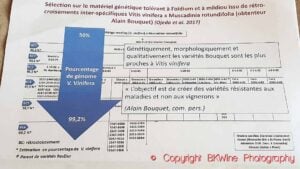
Five new grape varieties are well on their way to being approved in Languedoc-Roussillon. They belong to a group of grapes called “bouquet” after the person who developed them, Alain Bouquet. The grapes are “hybrids” (piwi), i.e. crosses between the “European” grape Vitis vinifera and an American species called Muscadinia rotundifolia. Hybrids are an important technological development in today’s wine world. These crosses, if successful, produce good wines, with the style of the European species, combined with good resistance to diseases (e.g. oidium and mildiou) and/or climate change, from the American species. An example is Voltis, which was recently approved in Champagne. The five Languedoc grapes are currently called 3159, 3160, 3176, 3179 and 3196 (or G9). 3151 originates from chasan and is similar to chardonnay, 3160 comes from fer servadou, 3176 and 3179 from grenache and 3196 from italia. This is how unsexy the names of new grape varieties look before they are “christened”. Giving them names and final official approval remains. For now, it is just a matter of experimental planting; 62 producers have in total 61 ha. Some believe that they should be given a name that sounds familiar, such as grenache bouquet, but French authorities think that is inappropriate because it is not Vitis vinifera, and therefore misleading. In the past, people have succeeded well with unfamiliar names, such as marselan (which is not a hybrid, however) and voltis. Italian grape developers, however, are more maverick; they have launched, for example, merlot khorus and cabernet cortis – perhaps a little misleading. Read more: vitisphere .
In winter, the winegrower does perhaps the most important work of the year: pruning
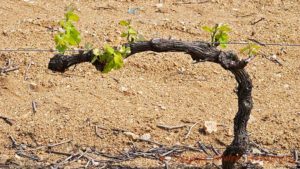
Harvest may seem important and in a way it is. But it is relatively simple: harvest ripe, healthy grapes. Pruning, which is done in winter, is far more complicated and requires both knowledge and skill. It is almost always done entirely manually. You cut off almost all the branches, leaving only a skinny skeleton. But it is absolutely crucial which buds and shoots you leave. If you get it wrong, it can be a disaster. There are a variety of different pruning and training methods, each with advantages and disadvantages. Here are the most important ones: Guyot (single or double, “cane pruning”), you only keep the trunk itself plus one (or two) vertical one-year branch(es) (canes), which is (are) later bent down and tied. A productive pruning. Cordon royat
(single or double, “spur pruning”), a permanent branch (or two) with a number of buds extends from the trunk, making an inverted L or a T. These are the two most common. Both are tied up on steel wires and can be harvested by machine. Gobelet
(bush vine), all one-year branches (canes) are cut down and grow during the year up to an independent bush. They can be supported by a stake and can then be called “en echalat”. Pergola, the vine grows with permanent branches like a roof. Good for warm climates and table grapes. Winter pruning is one of the most important tools for controlling yield. (The image: cordon simple)
OIV opens the door to “new genomic techniques” (NGT) in viticulture
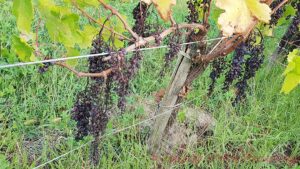
In September 2025, the OIV (International Organisation of Vine and Wine) published a report on “new genomic techniques” (NGT) to improve and develop the planting material (vines) used in viticulture. This is an area of great importance for world wine production. NGT includes, of course, techniques for developing new grape varieties, crosses and hybrids (see separate note). But it is also about improving existing grape varieties. In both cases, it can lead to plants that are more resistant to diseases and thus reduce the need for spraying, or less sensitive to global warming. But it can also be a question of improving the quality of the grapes (one can compare it to the selection of clones, to understand its importance). The OIV is careful to emphasise that NGT is not about traditional gene modification (GMO), which is an almost taboo area in the wine industry, but other types of techniques, including Crispr, which has recently received a lot of attention. The OIV report is an overview of the current situation and what techniques are available and where different countries stand today. A very interesting “collective expertise document” for those interested in viticulture, botany, climate and the environment. Read more: New Genomic Techniques (NGTs) in Viticulture — OIV, 2025.
—
Features of the Month
—
Articles and features published on BKWine Magazine and on our wine travel blog and (occasionally) photography blog in the last month.
—
Explore some of the world’s best vermouth *
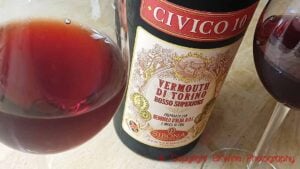
At home, we like to drink vermouth when it is time for an aperitif. Although vermouth is essentially a fortified wine flavoured with herbs and spices, it can taste very different. A Martini Rosso or Bianco does not show the most interesting side of vermouth. Right now, there is a Vermouth di Torino in our fridge, purchased in Piedmont, where some of the world’s best vermouth is made. Vermouth from Torino has been in the spotlight now at the end of 2025. The Italian Ministry of Agriculture has officially recognised the Vermouth di Torino Consortium, which brings together 40 producers (90% of the production of 6 million bottles). This, it is said, marks a milestone in the promotion and protection of this classic vermouth from Piedmont.
Read more in Per’s article on BKWine Magazine: Vermouth di Torino, the classic bittersweet red vermouth, and other delicious vermouths.
Travel: Come on a wine tour to Piedmont with BKWine. (PS: We’ve written a prize-winning book on Piedmont.)
—
Wine Tours
—
Details on our current and future wine tours. Book a wine tour with the “World’s Top Wine Tour Operator” today (or when you feel like travelling to wine country).
Treat yourself to an unforgettable experience in the beautiful wine-lands together with some of the most knowledgeable wine people around. Book now!
—
The home of “the Bordeaux blend “| wine tour Bordeaux

There are “Bordeaux blends” made in many different countries. In South Africa, for instance, Giorgio Dalla Cia made the first one in 1980. It was a bit of a revolution. It was one of the first steps towards premium wines. But the origin and soul of the Bordeaux blend is of course in Bordeaux. However, in Bordeaux the “blend” can be a little bit of anything. In Medoc it is usually, but not always, dominated by cabernet sauvignon, with the addition of merlot and cabernet franc. On the Right Bank (e.g. Saint Emilion and Pomerol) merlot dominates. Although in practice it can actually be any variant of the permitted grapes. Sometimes it is 100% cabernet franc. It is extra exciting to explore all this when in Bordeaux. On the tour to Bordeaux you get to experience both cabernet-dominated and merlot-dominated, and much, much more. Bordeaux is a whole world of wine experiences.
Come and discover French wine and food in Bordeaux on this luxurious wine tour with BKWine, one of the world’s leading wine tour operators (*).
Book now!
(*) And the only one who has authored 13 award-winning wine books, one of which is on Bordeaux wines.
We can add that we have also written an award-winning book about Bordeaux.
When 1+1 becomes the most extraordinary wine tour – to Burgundy and Champagne

What could be better that a trip to one of the world’s most exclusive red wine regions? Well, perhaps a tour of the world-famous Champagne region? So, what if we combine the two? How can you resist?
We start in Burgundy that has two completely different sides. You might think that the exclusive wines from Burgundy come from a wine region with large and fancy French chateaux. That’s not the case at all. Burgundy is among the most rural of the French wine regions. Verdant hills that are not very high, a string of villages that are just barely big enough to have a boulangerie (bakery) and a café. But along the narrow “route national” famous names follow famous names. Chambertin, Vosne-Romanée, Pommard, Meursault… There are two sides to Burgundy: the so-called “négoce”, i.e. large companies that own a few vineyards but that mainly buy grapes from small grape growers. These are the famous names, Bouchard, Chanson, Drouhin, Dufouleur and so on. The ones that usually find their way onto the shelves in other countries. The other side is the one where you find the small independent family businesses with often no more than 10-15 hectares (20-30 acres) of vineyard. Our focus is the latter, the personal, soulful small producers who are difficult to find. But after making wine tours in Burgundy for more than 20 years we do have a few addresses we trust. I can promise some extraordinary tastings with everything from the most prestigious “grand cru” to equally impressive (and less financially challenging) village appellation wines. Sometimes quite jaw-dropping. Even after 20 years.
And then we drive north, with a quick visit in Chablis and on to the luxurious Champagne. So let me this time give a thought to the bubbles! The bubbles are important in champagne, but for the taste, not the appearance. Is it 40,000, 400,000 or 4 million in a bottle? What does it really matter? Are there a lot of bubbles in the glass or none at all? What does it matter? None, actually. Except perhaps aesthetically. We recently tasted a different type of sparkling wine than champagne, MCC from South Africa, and found that there was a very big difference between the bubbles in one glass and another. One had lots of bubbles and another almost none? Were they served from two different bottles? No. How many bubbles there are in a bottle of champagne, or how much bubbles there are in a glass, actually doesn’t matter at all. How it looks in the glass depends on the shape of the glass, the type of glass melt used in the manufacture, how well the glass is washed, whether it is specially etched at the bottom to generate bubbles (common on modern “champagne” glasses) and much more. What plays the important role for the taste is the quality of the grapes and the talent of the winemaker, not how many bubbles you can see. (An no, the size or the intensity is not a sign of the quality. That’s just a myth.) The large, well-known houses have industrial process control in winemaking that guarantees precise results. The smaller, family-run producers are more personal with more variety and, above all, more character. That’s our focus! Come and discover.
Come on this exceptional tour to two of the world’s most respected wine regions with BKWine, one of the world’s leading wine tour operators (*).
Book now!
(*) And the only one who has authored 13 award-winning wine books.
Chasing Summer: Iconic New World Wine Journeys for 2027 | wine tours *

Our 2026 “winter” wine tours are officially sold out—secure your interest for 2027 today
The wine countries of the New World have been around for a while now, but a pioneering spirit remains. New wine-producing regions are still being discovered. The New World is not as established as Europe. And since we travel to the Southern Hemisphere in the middle of winter, we arrive to glorious summer/late summer, with ripe grapes and preparations for harvest. Our focus is wine, so we will visit many wineries, enjoy meetings with winemakers, have fantastic lunches, and also relax poolside. We experience spectacular landscapes: an unforgettable bus journey across the Andes (South America), the view from Table Mountain (South Africa), and geysers and glaciers (New Zealand).
In the winter of 2026, all three of our long‑haul tours are fully booked, but we now have confirmed dates for 2027. It is not too early to tell us if you are interested. Planning is part of the joy of travelling—especially for tours like these. Perhaps you would like to add a safari in South Africa, a stop in Singapore or Sydney on the way to New Zealand, or a visit to the icebergs of Patagonia while in South America. Join us on a very special wine tour in 2027:
Join us on a very special wine tour in 2027:
- Argentina and Chile in South America, 11-24 January 2027
- South Africa, 14-24 February 2027
- New Zealand, 10-25 March 2027
Detailed programmes coming soon(-ish, but look at the 2026 programmes and you’ll get a good idea of what to expect).
Bespoke Tours
(examples – we do others too)
Forget the myths, learn the truth and reality of Champagne | wine tour *

There are many myths and misconceptions about champagne. Let’s look at some? “Small, fine bubbles are a sign of quality.” Wrong. It could be a sign of a specially prepared (etched) or towel-dried glass (or some other effects) but it doesn’t tell you anything about the taste. “There are 49 million bubbles in a bottle.” No, it depends on many different factors, such as bubble formation points (nucleation sites) in the glass. And one of the big ones: “Grand cru is a sure sign of quality in champagne.” No, grand cru is an obsolete designation in a now abolished price control system. The quality depends primarily on the person who makes the wine. “There are seven, no, now with voltis, eight permitted grapes.” No, it’s actually nine. “The grape variety is no longer called pinot meunier but just meunier and it’s not a pinot at all.” Wrong. The grape variety is still called pinot meunier (sometimes meunier for short) and is actually technically (genetically) the same as pinot noir. You can dive into all this when you come to Champagne.
But the most important thing about champagne is that it is an outstanding wine. It is a fantastic wine in itself but also something that goes perfectly with food, as you will discover at our delicious gastronomic lunches. A champagne tour like no other with the people who wrote one of the most comprehensive book on champagne ever.
Come on this luxurious wine tour to Champagne with BKWine, one of the world’s leading wine tour operators (*).
(*) And the only one who has authored 13 award-winning wine books.
Tuscany, gentle hills with beautiful vineyards and olive trees | wine tour *

Vineyards are part of the Tuscan landscape. Grapevines thrive on the hills where the soil is poor but the sun exposure is excellent. The landscape is quite mountainous in places. The vines are grown between 200 and 600 meters above sea level. How the wine tastes depends on many factors: the grapes, the altitude, the soil and not least the philosophy of the wine producer. There are great variations in Tuscany and the producers like to emphasise these differences that the various districts within Tuscany have. Everyone is proud of their special part of Tuscany. Chianti conquered the world in the 70s with its straw-covered bottle. At that time it was known as an easy-drinking and unpretentious wine. Today we get Chianti in all versions, from top quality prestige wine to uncomplicated fruity lunch wines. The occasion will decide. We will of course visit both Chianti and Chianti Classico (two different geographical areas) and also Montalcino a little further south, known for its fantastic Brunello di Montalcino. Discover the enchanting Tuscany with us; not only the wines but also the landscape, the people and the gastronomy.
Come on this wonderful wine tour to Tuscany with BKWine, one of the world’s leading wine tour operators (*).
(*) And the only one who has authored 13 award-winning wine books.
Piedmont, the land of truffles and fog; and Barolo, Barbaresco | wine tour *

It is a beautiful landscape that meets us in Piedmont. The region certainly merits its name, “at the foot of the mountain”; the Alps tower at the horizon. The signature grape Nebbiolo also has good reason for its name; it is often foggy (nebbia) in the mornings in the hills. The Alps to the north are not far away. Around us lie medieval villages such as Barolo, La Morra, Serralunga, Gavi with their impressive defensive castles, often real fortresses. The autumn landscape is magnificent. Nebbiolo and the other grapes often grow on slopes, sometimes really steep. We taste our way through many fantastic wines, Barolo, Barbaresco and other nebbiolos, as well as slightly lesser-known but equally outstanding wines with arneis, barbera, dolcetto, etc. We enjoy the local cuisine. We visit the truffle market in Alba with its overwhelming scent experience (can you over-dose in truffles?) and we eat a delicious closing lunch with the famous white truffle.
Come and discover all the good things that Piedmont has to offer on this wonderful wine tour with BKWine, one of the world’s leading wine tour operators (*).
(*) And the only one who has authored 13 award-winning wine books.
Douro Valley: The unique landscape that cannot be described but must be seen | wine tour *

The Douro Valley impresses like few other wine regions. There is probably no other wine region that has so many steep slopes in such a large area. The Douro Valley must be seen with your own eyes. No pictures can really do it justice. When it comes to the Douro Valley, the word unique can be used without hesitation. On these difficult-to-work slopes, port wine has been made for many centuries. The “regular” (not fortified) red and white wines, called simply “Douro wines”, have not been known for as long. This combination of Douro wines and port wines makes this tour particularly interesting. We taste all types of wines. The red and also the white Douro wines (non-fortified wines) are fantastic. For many, port wines are an exciting (re-)discovery. You don’t always realise that port wine comes in so many different types and, for instance, what the differences are between an old tawny and a vintage. Completely new dimensions open up. We stay two nights in Porto, an exciting city to explore. On the other side of the river lies Vila Nova de Gaia and this is where the big port wine houses age their wines. We stay two nights at the luxurious Vintage House in the valley, close to the vineyards.
Come and discover the spectacular landscapes and wines of the Douro on this wine tour with BKWine, one of the world’s leading wine tour operators (*).
(*) And the only one who has authored 13 award-winning wine books.