—
It’s really just about joy and pleasure
—
 Sometimes you get the feeling that wine enthusiasts are more focussed on competition and excelling than anything else. In Sweden, this year’s blind tasting championship has just taken place. Someone won. Someone became Sweden’s best blind taster. In France, the big wine magazine La Revue du Vin de France arranges the world blind tasting championship every year, with participants from 43 countries in 2025. “What does it really take to become a skilled blind taster?” wrote a columnist in a newsletter I just read. What does it matter?
Sometimes you almost get the feeling that it is more important to “guess right” than to worry about if the wine is delicious or not.
This is also reflected in today’s strange focus on titles and diplomas in the wine industry. It is as if you have to have some odd letter combination after your name or some educational title to have any credibility. Guess correctly on the exam and you become a wine expert. A strange focus in an industry that is really just about sentiment and subjectivity on the consumer side.
–
Calling all wine lovers:
Do you know someone who might be interested in a wine tour?
Please tell them about BKWine Wine Tours! We do wine tours like no other. A leading wine tour operator since more than 20 years.
Have you already been on one of our tours? Tell your friends! Word-of-mouth is perhaps the most important way to spread the word of good wine, great food and exciting travel.
Thank you in advance for your help and support!
(If you have Swedish friends, please know that we have a separate, more extensive travel program in Swedish: BKWine Vinresor.)
–
“Guess” is often the right word. In the “world championship” a full score is 312 points. The winning team had 135 points – almost two-thirds wrong. Anyone who tastes a lot of wine “blind” knows that it is really difficult to identify a wine blind (even if you have earned some letter combination or diploma), even a wine that is supposed to be easy to identify, such as a sauvignon blanc. Sometimes you get lucky or come across an “archetypical” wine. But what exactly is “typical”? Typicality, or typicity, is a concept that you should be wary of. It is definitely not a quality criterion. An oaked Chablis is atypical. A juicy Barolo is atypical. But they can still be delicious. Are they poor quality?
Once upon a time, wine was an important foodstuff (or so they say). Water could be polluted and dangerous. Wine was a safer drink. But that was then. Now wine is nothing more than a luxury product. I don’t mean “luxury” in the sense of expensive, hard to get or rare. Rather, something that is simply not necessary.
There are things that are indispensable. For example, water, food and heat. There are things that we can completely live without, for example wine. Wine is a luxury we can treat ourselves to.
So what is the point of wine? If the point is not to “guess correctly”?
Basically, it is about enjoyment, pleasure and joy. It is something that we enjoy because we (hopefully) think it is good, and it is a source of joy, especially if we can share the wine with acquaintances and friends.
But there is certainly a point in wine courses, wine education, blind tastings and trying to identify wines. It sharpens the mind and – above all – it forces you to decide what you think. You learn more and with more knowledge often comes more joy and enjoyment.
At home, we actually tastes blind every day at the dinner table. Every dinner we do BKWine’s little private blind tasting competition in two stages and three steps. But I’ll have to tell you about that another time.
Travel
Now it’s time to plan your trip for this year and next.
In the fall/autumn we do Bordeaux, Burgundy and Champagne.
We do not have any places left on the winter wine tours, but soon we will publish the entire autumn travel program for 2026, as well as the winter of 2027. You will get a sneak peek below.
More info on our wine tours here. “World’s Top Wine Tours“. Tours with the people who know wine and who have an unrivalled experience of wine and tours.
Travel in wine regions with someone you trust.
Enjoy the Brief!
Britt & Per
Wine editors to the national encyclopaedia, Forbes.com contributors, award-winning wine book authors, wine tour advisors to the UN and national wine organisations, wine judges … and, above all, passionate wine travellers.


If you appreciate what we do, you can help us:
Tell your friends about the Brief or send it to them.
Like us and follow us on social media:
BKWine Magazine on Facebook | Wine Tours on Facebook
—
What’s on at BKWine Tours
BKWine is also one of the world’s leading wine tour operators. Here’s what we currently have on our scheduled wine tour program:
- Chile-Argentina, 12-25 January 2026
- South Africa, 15-25 February 2026
- New Zealand, 10-25 March 2026
–
- Bordeaux, 13-19 September
- Burgundy and Champagne, 23 September – 1 October
- Maybe more. What would you like?
–
- Chile-Argentina, 11-24 January 2027
- South Africa, 14-24 February 2027
- New Zealand, 10-25 March 2027
We also make custom designed wine tours.
And we have an extensive travel program in Swedish: BKWine Vinresor.
We’re different than most other wine tour operators. We are people who know wine inside out, who travel constantly in wine regions, who write award winning books about wine. Who do this out of passion.
Our wine tours are different from others.
A typical year we organise more than 30 wine tours to destinations across the world. In Europe: France, Italy, Spain, Portugal and more. World-wide: South Africa, Chile, Argentina, New Zealand. Thanks to our Scandinavian background we have a separate offer for the Scandinavian market. These are sometimes offered in English and also available as custom made tours. For example, these destinations:
—
Read our books
We have written eleven wine books. They have won awards from the Gourmand Awards, The International Organisation of Vine and Wine (OIV) and others.
Unfortunately, only one of them has been translated to English; the others are (so far) only available in Swedish. This is the one that is available in English:
Here’s the full list of our books:
- The Wonderful World of Wine
- Languedoc-Roussillon, the Wines of Southern France
- Champagne, the Wine and the Growers
—
News from the World of Wine
—
Short briefs on what’s been happening in the world of wine recently and other interesting things.
—
The big wine fair Wine Paris / Vinexpo opens its doors to the wine and spirits business
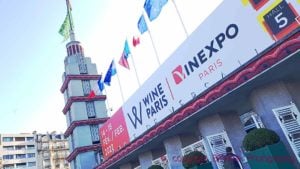
In just over a week, the big wine fair Wine Paris / Vinexpo opens its doors. If you have not already planned a visit there, there is still time. It is a purely professional fair that attracts importers, distributors, horeca, journalists and others in the wine industry. The exhibitors are wine producers (and spirits) from all over the world, far more international than, for example, Vinitaly. Of course, many of the “big and famous” prodcuers participate, but there are also a large number of smaller producers, which contributes greatly to making the fair exciting even for others than monopolies and large importers. We have been to almost every edition of Wine Paris since the beginning in 2020 (or if you prefer, 2019) and think it is a very successful fair that has become more and more interesting over the years. You can either just “saunter around” and make spontaneous discoveries or use it as a meeting platform to meet many of your contacts over a few days, something that would otherwise take weeks. Today, when the wine industry is struggling (no news there), a fair like this is even more important for many. We will of course visit Wine Paris / Vinexpo (we live almost next door…). Maybe we will see you there? That would be nice! Read more: Wine Paris. Here are all presentations and conferences at Wine Paris.
Mendoza in Argentina is a gold mine for those who have the courage to make the effort to seek out the most exciting wine producers

There are far more exciting producers in Mendoza than you might think. Most export markets are dominated by the three-four giant producers (I’m sure you know the names). It is often difficult to find smaller, more personal quality-oriented producers on export markets. Inspired by our recently completed wine tour in Argentina and Chile, we would like to briefly introduce some. Our tour focuses on smaller producers of quality, not always easy to find “at home” but so much more exciting to visit and explore on site than the larger ones more focused on “industrial” tourism and wine.
Casarena, located near Mendoza city in Lujan de Cujo, known for its single vineyard wines, Jamilla, Owen, Lauren, and Naoki.
Alfa Crux, a beautifully impressive modern facility with an art collection, at 1200 m altitude in Valle de Uco with breathtaking views of the Andes.
Finca La Igriega, a small family producer at high altitude in the Uco Valley, pioneer of regional wines, e.g. Paraje Altamira.
Matervini, project number 2 of the famous Santiago Achával and Roberto Cipresso, exclusive wines from malbec from different parts of Mendoza. They have direct sales through a wine club in the USA.
Otero Ramos, a family winery in Luján de Cuyo near Mendoza city that makes both malbec and more unusual wines, e.g. one of the delicious torrontés.
Familia Cassone, with obvious Italian roots, this family business makes e.g. top-quality malbec and syrah, but also a surprising tempranillo.
Weinert, one of the most original and surprising producers in Mendoza, does not own any vineyards, has an improbably impressive barrel cellar and a seemingly inexhaustible supply of old vintages.
Going on a wine tour is not just about finding and tasting wines you can buy “at home” but just as much about experiencing a country and discovering what it has to offer. Inspiration. Experiences. Which might entice you to discover something other than the usual when back home…?
Travel: Come on a wine tour to Chile and Argentina with BKWine.
See: See pictures and videos from Chile and Argentina in the latest wine tour’s Facebook group.
The French appellation system, AOC, turns 90
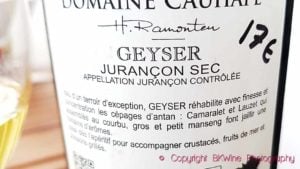
The first French appellation (appellation d’origine contrôlée, AOC) was created in 1936, so in 2026 it will celebrate its 90th anniversary. It is a rather surprising list of six appellations that were created first, on May 15, 1936: Châteauneuf-du-Pape, Arbois, Tavel, Cassis, Monbazillac and Cognac. Today, many wine enthusiasts would probably have a hard time placing at least some of these on a map. The most famous wine appellation on the list is undoubtedly Châteauneuf-du-Pape, and the reason for that is that one of the driving politicians behind the creation of the new law was Baron Pierre Le Roy de Boiseaumarié, who owned Château Fortia in Châteauneuf (or, well, his wife actually owned it). Several other districts followed shortly after, and new AOCs / AOPs are still being created today. These were revolutionary rules that were introduced regarding, among other things, permitted grapes, yields, geographical restrictions, etc. It was a reaction against great confusion and sometimes cheating and counterfeiting in the early 20th century. The French system has since become a model for similar regulations in other countries (Italy, Spain, etc.). However, you could say that it turned 90 both last year and this year. The law was passed in 1935 and came into force in 1936. Congratulations on your 90th anniversary! Read more: INAO.
Chile’s 10% exciting wine producers, some recommendations
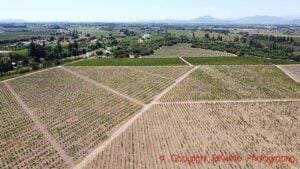
Chile is dominated by large producers (more on that below), but it is with all the others that you can find special experiences. Here are some examples, inspired by our recently completed wine tour in Argentina and Chile:
Villard, as the name suggests, with French roots in the “cold climate” Casablanca Valley next to Valparaiso, founded in 1989, with outstanding and surprising pinot noir, but also e.g. syrah.
Casa Marin, a legendary pioneer in Lo Abarca, San Antonio. Extremely expressive sauvignon blanc in this cool district and equally good riesling, pinot noir and other. Often found on export market thanks to long-time efforts.
Viña Montgras, a relatively large but still family-owned producer in Colchagua known for, among other things, their wines from Ninquén.
Viña Maquis, a historically important family estate located between two rivers in Colchagua which gives them a favourable climate. Makes, among other things, brilliant cabernet franc (considered one of the world’s best), syrah etc. Also has the Calcú estate near the coast.
Laura Hartwig, the founder, the famous Laura Hartwig Bisquertt died a few years ago, but the winery continues to produce Bordeaux-inspired wines of high quality.
Hacienda Araucano, in the Lolol sub-region, owned by the internationally famous François Lurton (“les Fumées Blanches”), makes excellent “base wines” (Humos Blanco) plus a series of very quality-oriented wines, e.g. Alka (carmenère) and Clos (a blend). More often available on export thanks to Lurton’s fame.
Viña Encierra, María Ignacia Eyzaguirre started this very ambitious but also very small winery after the family left a collaboration with a major producer, brilliant carmenère, syrah, petit verdot etc. in an adorable beautiful landscape.
La Sirca, a very (!) family-run winery in northern Colchagua (mother and daughter cooked lunch for us!), now part of the Movi group, with family origins in Bolivia, makes ambitious cabernet, carmenère, chardonnay etc. in small batches.
El Principal, at the foot of impressive 3000 m high mountains, this vineyard also has French roots (the Valette family), just under an hour from Santiago in the Maipo Valley, known not least for its impressive Bordeaux-inspired El Principal cabernet-petit verdot and for its beautiful location, and more recently its verdejo.
The ten largest producers in Chile account for 80% of exports, Concha y Toro alone accounts for 20-25%. None of the producers above even come close to that list. Instead, you will find personality, quality, character and originality in them; things that we like to share with those who travel with us to Chile. Look for these producers and you will find good wines!
(No, we do not sell wine and have no commercial interest in promoting them. Our recommendations are honest and without advertising for certain wines.)
Travel: Come on a wine tour to Chile and Argentina with BKWine.
See: See pictures and videos from Chile and Argentina in the latest wine tour’s Facebook group.
EU and India in trade deal that will open the Indian market for European wine
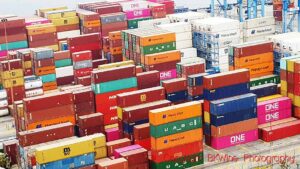
We are living tough and uncertain times. Traditional peace-keeping frameworks are put in danger by America. The USA is waging a destructive trade war against almost everyone, something that will make life more expensive for Americans and business harder for everyone. So, it is great to see that others have a more intelligent and constructive approach. The EU and India has just signed a trade agreement that includes wine, cars, machinery and many other products. India has traditionally been a quite closed and protected market, with little wine imports. When tariffs are 150% this is not surprising. The agreement means that tariffs on wine in time will come down to 20%. Although the trade agreement is primarily focussed on other industries, this change can in time mean that India can develop as an important export market for European producers. India is today the world’s most populous country but according to Meninger’s they only drink 0.03 litre wine per person. “This is the most comprehensive trade deal India has ever signed, which gives European companies a first mover advantage into this market and gives them a strategic upper hand that other players do not,” said Garima Mohan, of German Marshall Fund to AP News. It is even positive, in my opinion, for the domestic Indian wine sector since this opening can lead to a dramatically increased demand for wine, including domestic. When the whole world, including the US, is suffering from United State’s predatory and destructive trade policies, it is heartening to see that others move in a constructive direction. Read more: APNews
Sweetening now allowed in AOP wines

Sometimes you wonder if wine media likes the “big brother society”. The trend towards sweeter “dry” wines is often and vehemently criticised. “Systembolaget shouldn’t sell so many sweet red wines” they say in Sweden. “Should”… But if consumers like wines with a little more sweetness, who is the wine writer (or the monopoly) to tell them that it’s wrong? Isn’t it sophisticated enough to like a little sugar in wine? Personally, I don’t like either red or white semi-dry or semi-sweet wines, but if others want it I am fine with that. It’s a big trend these days. But there are others (than the know-all wine media) who have a better understanding of wine trends and consumer preferences. In November, the INAO decided to allow the sweetening of wines with appellation contrôlée (AOC / AOP). Now, it’s a decision with many conditions. For example, it’s just a possibility, each appellation must decide individually whether to allow it or not. So, we’re unlikely to see it soon on the shelves. The limit is a maximum of 9 g/l. And other conditions. Perhaps the anti-sugar brigade should be reminded that many of the great-name champagnes are at the same level or sometimes higher. Read more: Vitisphere
Sweetening now Blaye in Bordeaux becomes Blavia?!allowed in AOP wines
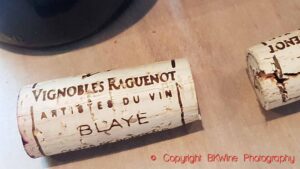
Wise or not? The Bordeaux appellation Blaye AOC wants to change its name to Blavia. It does sound a bit strange, at least until you get used to it. It is, some say, the nuclear power station in Blaye that haunts the wine district that wants to avoid sharing a name with it. The same thing happened a few years ago when Coteaux de Tricastin in the Rhône Valley changed its name to Grignan-lès-Adhemar, for the same reason. Blavia is at least easier to remember. But this is just one of a number of changes that are hoped will instil a new dynamism in this rather unknown appellation. More malbec will also be allowed in the blend. Previously, there was a limit of 15%, now it will be 50% (incidentally, one of the few appellations in Bordeaux that stipulates a % on the blend). It is the big, and now internationally famous grape from Mendoza (Argentina), which is now having a small renaissance in Bordeaux. A number of other quality-enhancing changes are also planned. The change has not yet been approved by all authorities, but everything indicates that it will be so. But it’s important to pay attention to the details: It’s the small appellation Blaye AOC that’s changing its name, not the much larger (and according to some, less prestigious) Blaye Côtes de Bordeaux AOC. So it is perhaps a good thing, Blavia, to avoid confusion in the future. Read more: Vitisphere.
Travel: Come on a wine tour to Bordeaux with BKWine. (PS: We’ve written a prize-winning book on Bordeaux.)
—
Features of the Month
—
Articles and features published on BKWine Magazine and on our wine travel blog and (occasionally) photography blog in the last month.
—
Explore some of the world’s best vermouth *
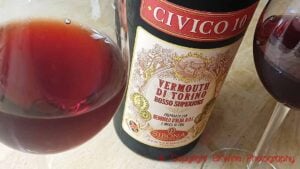
At home, we like to drink vermouth when it is time for an aperitif. Although vermouth is essentially a fortified wine flavoured with herbs and spices, it can taste very different. A Martini Rosso or Bianco does not show the most interesting side of vermouth. Right now, there is a Vermouth di Torino in our fridge, purchased in Piedmont, where some of the world’s best vermouth is made. Vermouth from Torino has been in the spotlight now at the end of 2025. The Italian Ministry of Agriculture has officially recognised the Vermouth di Torino Consortium, which brings together 40 producers (90% of the production of 6 million bottles). This, it is said, marks a milestone in the promotion and protection of this classic vermouth from Piedmont.
Read more in Per’s article on BKWine Magazine: Vermouth di Torino, the classic bittersweet red vermouth, and other delicious vermouths.
Travel: Come on a wine tour to Piedmont with BKWine. (PS: We’ve written a prize-winning book on Piedmont.)
—
Wine Tours
—
Details on our current and future wine tours. Book a wine tour with the “World’s Top Wine Tour Operator” today (or when you feel like travelling to wine country).
Treat yourself to an unforgettable experience in the beautiful wine-lands together with some of the most knowledgeable wine people around. Book now!
—
Bordeaux is full of surprises | wine tour

Once when I was in Bordeaux, an airplane fuselage came sailing up the river on a barge. It was on its way to the Airbus factory upstream. There are other strange things too; a bridge that is lifted straight up for larger ships (Pont Chaban-Delmas), large cruise ships dock in the middle of the city along the riverbank, warehouses converted into restaurants and shops, a boat along the river that is specially built to transport an Ariane rocket, or an old three-masted ship (”tall-ship”). Surfers surfing upstream (yes, actually) on le mascaret.
Now you probably rarely see all of this (or even some), but there are many other things that surprise. In Bordeaux, you get to experience some of the best that you can get in French gastronomy, served in private salons in châteaux. Another surprise is perhaps that Bordeaux is a region where you can find fantastically affordable wines. Sure, there are the big, exclusive châteaux (they are also on the tour program), but if you go outside the most famous appellations, the quality is also top-notch, but the prices are on a completely different level. Come on a tour to Bordeaux and let yourself be surprised and delighted.
Come and discover French wine and food in Bordeaux on this luxurious wine tour with BKWine, one of the world’s leading wine tour operators (*).
Book now!
(*) And the only one who has authored 13 award-winning wine books, one of which is on Bordeaux wines.
We can add that we have also written an award-winning book about Bordeaux.
Countryside luxury in Burgundy and craftmanship instead of glitter in Champagne | wine tour

This nine-day wine tour to Burgundy and Champagne gives you some of the best France has to offer of wine and gastronomy.
The landscape in Burgundy is exactly as you would expect; rolling green hills with vineyards on the slopes, a string of small villages with world-famous names (Pommard, Vosne-Romanée, Gevrey-Chambertin…). Burgundy’s “capital”, Beaune, is a small town but thanks to the fame of its wine, it is well-visited, so well-visited that it can sometimes be difficult to get a table at one of the city’s many restaurants.
On the tour, we of course spend most of our time out among the vineyards. We mainly visit smaller family producers with more personal wines and more personal visits than the big négociant ones. However, one of them is on the program and there we can inspect an old wall from Roman times (!) in the cellar. The importance of “grand cru” and “premier cru” should not be exaggerated; it is above all the talent of the winemaker that matters. But of course there will be many grand crus too. At one of our gastronomic lunches there will be a whole series – five or six or was it seven…? It is fascinating to see that this rural and peaceful landscape produces some of the world’s most highly regarded and expensive wines.
Going north we make a stop in Chablis and then continue to Champagne. Those who think they know something about champagne (the wine) and Champagne (the district) often talk about “champagne grand cru” and claim that it’s the best you can find in Champagne. But that’s not really true. “Grand cru” in Champagne was created at the beginning of the 20th century as a tool for price control… What’s important in making a quality champagne is the work of the winemaker, not primarily what plot of land the grapes grew on – how he takes care of his vines, that he places great importance on the harvest and not least what he does in the cellar. Champagne, more than almost all other wines, is a product of the work in the wine cellar. How to ferment. How to blend wines from different grapes, different plots, different vintages, to get the character the winemaker wants.
Champagne is certainly a luxury product and it can, of course, be lovely with a nice gift box and a heavy and worked bottle. But what matters most is how it tastes when you drink it and that has little (nothing) to do with whether the bottle comes in a box or is glittery. What you will experience on our wine tour in Champagne is the craftsmanship, the incredible range of characters, the importance of the winegrower’s hand. And of course some truly exceptional lunches – there are few others, if any, that can give you these gastronomic wine and food experiences.
Come on this exceptional tour to two of the world’s most respected wine regions with BKWine, one of the world’s leading wine tour operators (*).
Book now!
(*) And the only one who has authored 13 award-winning wine books.
Chasing Summer: Iconic New World Wine Journeys for 2027 | wine tours *

Our 2026 “winter” wine tours are officially sold out—secure your interest for 2027 today
The wine countries of the New World have been around for a while now, but a pioneering spirit remains. New wine-producing regions are still being discovered. The New World is not as established as Europe. And since we travel to the Southern Hemisphere in the middle of winter, we arrive to glorious summer/late summer, with ripe grapes and preparations for harvest. Our focus is wine, so we will visit many wineries, enjoy meetings with winemakers, have fantastic lunches, and also relax poolside. We experience spectacular landscapes: an unforgettable bus journey across the Andes (South America), the view from Table Mountain (South Africa), and geysers and glaciers (New Zealand).
In the winter of 2026, all three of our long‑haul tours are fully booked, but we now have confirmed dates for 2027. It is not too early to tell us if you are interested. Planning is part of the joy of travelling—especially for tours like these. Perhaps you would like to add a safari in South Africa, a stop in Singapore or Sydney on the way to New Zealand, or a visit to the icebergs of Patagonia while in South America. Join us on a very special wine tour in 2027:
Join us on a very special wine tour in 2027:
- Argentina and Chile in South America, 11-24 January 2027
- South Africa, 14-24 February 2027
- New Zealand, 10-25 March 2027
Detailed programmes coming soon(-ish, but look at the 2026 programmes and you’ll get a good idea of what to expect).
—
Bespoke Tours
(examples – we do others too)
—
Forget the myths, learn the truth and reality of Champagne | wine tour *

There are many myths and misconceptions about champagne. Let’s look at some? “Small, fine bubbles are a sign of quality.” Wrong. It could be a sign of a specially prepared (etched) or towel-dried glass (or some other effects) but it doesn’t tell you anything about the taste. “There are 49 million bubbles in a bottle.” No, it depends on many different factors, such as bubble formation points (nucleation sites) in the glass. And one of the big ones: “Grand cru is a sure sign of quality in champagne.” No, grand cru is an obsolete designation in a now abolished price control system. The quality depends primarily on the person who makes the wine. “There are seven, no, now with voltis, eight permitted grapes.” No, it’s actually nine. “The grape variety is no longer called pinot meunier but just meunier and it’s not a pinot at all.” Wrong. The grape variety is still called pinot meunier (sometimes meunier for short) and is actually technically (genetically) the same as pinot noir. You can dive into all this when you come to Champagne.
But the most important thing about champagne is that it is an outstanding wine. It is a fantastic wine in itself but also something that goes perfectly with food, as you will discover at our delicious gastronomic lunches. A champagne tour like no other with the people who wrote one of the most comprehensive book on champagne ever.
Come on this luxurious wine tour to Champagne with BKWine, one of the world’s leading wine tour operators (*).
(*) And the only one who has authored 13 award-winning wine books.
Tuscany, gentle hills with beautiful vineyards and olive trees | wine tour *

Vineyards are part of the Tuscan landscape. Grapevines thrive on the hills where the soil is poor but the sun exposure is excellent. The landscape is quite mountainous in places. The vines are grown between 200 and 600 meters above sea level. How the wine tastes depends on many factors: the grapes, the altitude, the soil and not least the philosophy of the wine producer. There are great variations in Tuscany and the producers like to emphasise these differences that the various districts within Tuscany have. Everyone is proud of their special part of Tuscany. Chianti conquered the world in the 70s with its straw-covered bottle. At that time it was known as an easy-drinking and unpretentious wine. Today we get Chianti in all versions, from top quality prestige wine to uncomplicated fruity lunch wines. The occasion will decide. We will of course visit both Chianti and Chianti Classico (two different geographical areas) and also Montalcino a little further south, known for its fantastic Brunello di Montalcino. Discover the enchanting Tuscany with us; not only the wines but also the landscape, the people and the gastronomy.
Come on this wonderful wine tour to Tuscany with BKWine, one of the world’s leading wine tour operators (*).
(*) And the only one who has authored 13 award-winning wine books.
Piedmont, the land of truffles and fog; and Barolo, Barbaresco | wine tour *

It is a beautiful landscape that meets us in Piedmont. The region certainly merits its name, “at the foot of the mountain”; the Alps tower at the horizon. The signature grape Nebbiolo also has good reason for its name; it is often foggy (nebbia) in the mornings in the hills. The Alps to the north are not far away. Around us lie medieval villages such as Barolo, La Morra, Serralunga, Gavi with their impressive defensive castles, often real fortresses. The autumn landscape is magnificent. Nebbiolo and the other grapes often grow on slopes, sometimes really steep. We taste our way through many fantastic wines, Barolo, Barbaresco and other nebbiolos, as well as slightly lesser-known but equally outstanding wines with arneis, barbera, dolcetto, etc. We enjoy the local cuisine. We visit the truffle market in Alba with its overwhelming scent experience (can you over-dose in truffles?) and we eat a delicious closing lunch with the famous white truffle.
Come and discover all the good things that Piedmont has to offer on this wonderful wine tour with BKWine, one of the world’s leading wine tour operators (*).
(*) And the only one who has authored 13 award-winning wine books.
Douro Valley: The unique landscape that cannot be described but must be seen | wine tour *

The Douro Valley impresses like few other wine regions. There is probably no other wine region that has so many steep slopes in such a large area. The Douro Valley must be seen with your own eyes. No pictures can really do it justice. When it comes to the Douro Valley, the word unique can be used without hesitation. On these difficult-to-work slopes, port wine has been made for many centuries. The “regular” (not fortified) red and white wines, called simply “Douro wines”, have not been known for as long. This combination of Douro wines and port wines makes this tour particularly interesting. We taste all types of wines. The red and also the white Douro wines (non-fortified wines) are fantastic. For many, port wines are an exciting (re-)discovery. You don’t always realise that port wine comes in so many different types and, for instance, what the differences are between an old tawny and a vintage. Completely new dimensions open up. We stay two nights in Porto, an exciting city to explore. On the other side of the river lies Vila Nova de Gaia and this is where the big port wine houses age their wines. We stay two nights at the luxurious Vintage House in the valley, close to the vineyards.
Come and discover the spectacular landscapes and wines of the Douro on this wine tour with BKWine, one of the world’s leading wine tour operators (*).
(*) And the only one who has authored 13 award-winning wine books.