—
The carbonara war and Bordeaux – tradition as a straitjacket or an evolving culture?
—

Francesco Lollobrigida, Italy’s Minister of Agriculture, was shocked when he recently found ready-made spaghetti carbonara with the wrong ingredients in the shop at the European Parliament. Carbonara is made with four ingredients (plus spaghetti, of course), and here they had managed to get two of them wrong. Worst of all was the use of cream instead of egg yolk — a cardinal sin, according to Lollobrigida. (Who, incidentally, is a distant relative of the legendary actress.)
On the other hand, who decides how a spaghetti carbonara should be made?
Fortunately, there are no legal rules for how to prepare a classic dish. If there were, we probably wouldn’t see nearly as many new cookbooks being published as we see today. As it is, a chef can put their own spin on a classic dish and still call it by its name, say, bœuf bourguignon. The Swedish speciality – and now world-famous – gravlax (*) can be made in the most peculiar ways. In France, it is sometimes not even made with salmon but with beef. The French then call it gravlax de bœuf, which is, of course, slightly ridiculous, as lax is the Swedish name for salmon.
(*) Gravlax is salmon (lax is salmon in Swedish) marinated in salt, sugar and dill, so, by definition, it is made from salmon. “Grav-” refers to that the salmon was put in a pit dug in the ground, gräva being Swedish for to dig, also the origin of the English “grave”. So, if you wish, gravlax is “salmon in a grave”…
–
Calling all wine lovers:
Do you know someone who might be interested in a wine tour?
Please tell them about BKWine Wine Tours! We do wine tours like no other. A leading wine tour operator since more than 20 years.
Have you already been on one of our tours? Tell your friends! Word-of-mouth is perhaps the most important way to spread the word of good wine, great food and exciting travel.
Thank you in advance for your help and support!
(If you have Swedish friends, please know that we have a separate, more extensive travel program in Swedish: BKWine Vinresor.)
–
One is entirely free to modernise gastronomic treasures. Cuisine revisitée, as they sometimes say in French (reinterpreted cuisine). What arrives on the plate will look nothing like the classic dish one thought one had ordered.
In the world of wine, things are not quite as simple — to start with, there are more rules – even though one might argue that reinterpretation is needed there more than in gastronomy. Why not a bordeaux revisité? Several châteaux are actually attracting new consumers with a different style — light, fruity, without oak—a good complement to classic Bordeaux.
The classics — whether Napa Cabernet, Rioja, Bordeaux or Châteauneuf‑du‑Pape — suit some consumers but not all. Reinterpreting wine can be done within an appellation’s existing rules by simply ignoring what is customary. There is, for example, no rule that says a Bordeaux must be aged in oak, nor what the grape blend must be (as long as the grapes are permitted). For a Rioja, one year in barrel is enough according to the regulation, and the winemaker may choose the size and age of the barrel. There is no excuse today not to adapt to consumers’ tastes.
In practice, wines are being “revisited” continuously. Today’s Bordeaux bears only a faint resemblance to that of the 1960s. Tradition, technology, and consumer preferences change gradually — slowly — and one may not even notice it happening. (A consequence of this is that “typicity” is a poor way to judge the quality of a wine leading to stagnation rather than quality (although some people unfortunately claim that typicity is an important factor in quality). Read more about that here: Quality is subjective, not objective (and so is “typicity”). Who has the right to decide how a wine should taste?)
Surely some consumers enjoy carbonara with cream. Why shouldn’t they be allowed to have it? In addition, carbonara is a dish that was first mentioned only after World War II, so the tradition is not very long.
But just a week after Francesco Lollobrigida’s outburst, Italian gastronomy had its revenge, of sorts. UNESCO approved Italy’s application to have its gastronomy recognised as intangible cultural heritage. So now you’d better call your pasta by its proper name, or you might be in trouble. On the other hand, pizza (the Neapolitan one) is already a UNESCO cultural heritage, and that hasn’t exactly stopped creative pizzaiolos from making their own interpretations.
French cuisine has no UNESCO status, but “the French gastronomic meal” does. A complete four-course dinner, says UNESCO, strengthens family bonds and promotes social connections; therefore, it is essential to pass on to new generations. We can only agree. After a long and intense workday (and we have many of those), a good and leisurely dinner is the best way to unwind, relax, and be with the family.
Eating many long, delicious dinners with equally good wines is surely a New Year’s resolution better than most — and easier and more pleasant to keep than many others.
With that, we wish you a very Happy New Year.
Travel
Now it’s time to plan your trip for next year.
We do not have any places left on the winter wine tours, but soon we will publish the entire autumn travel program for 2026, as well as the winter of 2027. You will get a sneak peek below.
More info on our wine tours here. “World’s Top Wine Tours“. Tours with the people who know wine and who have an unrivalled experience of wine and tours.
Travel in wine regions with someone you trust.
Enjoy the Brief!
Britt & Per
Wine editors to the national encyclopaedia, Forbes.com contributors, award-winning wine book authors, wine tour advisors to the UN and national wine organisations, wine judges … and, above all, passionate wine travellers.


If you appreciate what we do, you can help us:
Tell your friends about the Brief or send it to them.
Like us and follow us on social media:
BKWine Magazine on Facebook | Wine Tours on Facebook
—
What’s on at BKWine Tours
BKWine is also one of the world’s leading wine tour operators. Here’s what we currently have on our scheduled wine tour program:
- Chile-Argentina, 12-25 January 2026
- South Africa, 15-25 February 2026
- New Zealand, 10-25 March 2026
–
- Bordeaux, 13-19 September
- Burgundy and Champagne, 23 September – 1 October
- Maybe more. What would you like?
–
- Chile-Argentina, 11-24 January 2027
- South Africa, 14-24 February 2027
- New Zealand, 10-25 March 2027
We also make custom designed wine tours.
And we have an extensive travel program in Swedish: BKWine Vinresor.
We’re different than most other wine tour operators. We are people who know wine inside out, who travel constantly in wine regions, who write award winning books about wine. Who do this out of passion.
Our wine tours are different from others.
A typical year we organise more than 30 wine tours to destinations across the world. In Europe: France, Italy, Spain, Portugal and more. World-wide: South Africa, Chile, Argentina, New Zealand. Thanks to our Scandinavian background we have a separate offer for the Scandinavian market. These are sometimes offered in English and also available as custom made tours. For example, these destinations:
—
Read our books
We have written eleven wine books. They have won awards from the Gourmand Awards, The International Organisation of Vine and Wine (OIV) and others.
Unfortunately, only one of them has been translated to English; the others are (so far) only available in Swedish. This is the one that is available in English:
Here’s the full list of our books:
- The Wonderful World of Wine
- Languedoc-Roussillon, the Wines of Southern France
- Champagne, the Wine and the Growers
—
News from the World of Wine
—
Short briefs on what’s been happening in the world of wine recently and other interesting things.
—
Cava Meeting: challenges and opportunities

The Cava Meeting is held every two years in and around Barcelona, and in November this year (2025), around 100 journalists, including BKWine, buyers, and others, gathered to take stock of the cava industry. In his opening speech, Javier Pagés, DO Cava president, talked about the future of Cava, its strengths, and weaknesses. The strengths are many, he said. 70% of production is exported to 100 countries; the grape varieties are native; there is clear segmentation and a high degree of diversity. There are large houses (producers), which are also strong brands, and smaller growers with their own philosophies.
In addition, the opportunities for cava today are many, he says. Despite the decline of the wine industry, sparkling wines are doing well; this segment continues to grow. In the UK, champagne sales are declining, and consumers are questioning whether it is worth its price. Here, cava has a chance to stand out. But there are also challenges. The USA is Cava’s most important export market, but it isn’t easy to compete with Prosecco, which is increasing in both volume and value. All cava is made using the traditional method (unlike prosecco), Javier Pagès points out, and it is an expensive method. It is only profitable when it adds value perceived by the consumer (which is not always the case with cava). DO Cava is now focusing on bringing the superb Cavas de Guarda Superior – the higher-quality cava – to more markets and consumers.
The Swedish wine Immelen 2022 served at the Nobel dinner 2025
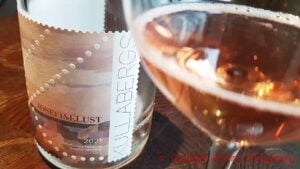
That a Swedish wine was served with the main course at the Nobel dinner of 2025 is something of a sensation. It is great that they take the opportunity to show that wine is actually made in Sweden, something many foreigners do not think is possible. Immelen 2022 comes from Kullabergs Vingård in Skåne, in the south of Sweden, and is a white wine (unusual at the Nobel dinner, where the main course wine is usually red), made from 87% solaris with a dash of souvignier gris and muscaris. All grapes are PIWI grapes, i.e., hybrids that can withstand the Swedish climate and have good resistance to fungal diseases, reducing the need for spraying in the vineyard.
Kullaberg has been a dynamic winery since it started in 2006. It continues to invest. An additional 4 hectares will be planted. The newly built, super-modern winery has a capacity for 100,000 bottles. Earlier this year, Helena Lindberg joined the team as a winemaker. She will work with the current winemaker Nicola D’Agostini. Helena has extensive experience from Italy, where she worked for many years as a winemaker at Tenuta di Biserno in Tuscany. Read more: kullabergs
Prestigious prize from Swedish food magazine awarded to Reyneke in South Africa
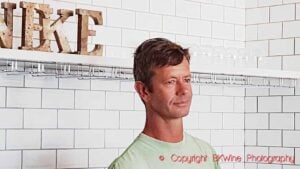
The Golden Glass is a prestigious award from the Swedish food magazine Allt om Mat. This year (2025), it went to one of South Africa’s most renowned wine producers, Reyneke in Stellenbosch. Johan Reyneke is the talented winemaker at this family-owned winery, well-known for its sustainability focus and environmental awareness. Johan wants to understand nature and, whenever possible, use natural methods to address problems in the vineyard. From healthy soils, he makes some fantastic wines from 35 hectares planted with, among others, chenin blanc, syrah, cabernet sauvignon and sauvignon blanc.
The jury’s motivation was: “For his efforts as a pioneer with a sustainable winemaking philosophy that puts people and nature first. For a portfolio with consistently high quality and a clear sense of origin, from entry-level to top wines.”
We visit Reyneke on our South Africa Wine Tour in February. And there will be a new tour happening in 2027. Stay tuned!
Some of Reneyke’s wines to look for:
- Reyneke Organic Chenin Blanc 2025, ~15 euro
- Reyneke Organic Red 2024, ~15 euro
- Reyneke Organic Cornerstone 2021, ~25 euro
- Reyneke Estate Sauvignon Blanc 2023, ~25 euro
Travel: Come on a wine tour to South Africa with BKWine.
See: See pictures and videos from South Africa 2025 in the wine tours Facebook group.
Millesima, a prestigious online wine shop, expands internationally
Since 1983, Millesima has offered direct sales of exceptional wines on its website to private individuals. The selection is massive; 13,000 wines from 800 producers, directly from the estates. Millesima is already present on many markets and is now expanding further into the Swedish and Croatian markets. Sweden is an interesting country, according to Millesima, as the monopoly regulations now allow online wine sales, and the demand for exceptional wines is increasing. (Which is, as a matter of fact, something that happened quite a lot of years ago.)
Millesima now has 20 international websites tailored to each market. Delivery takes place within eight working days. Orders are sent daily from Bordeaux to the customer’s door. Express delivery will also be offered with express carriers. Millesima is known for its specialisation in Bordeaux primeur, large bottle formats and rare vintages. Their spirit range includes over 400 references, including collector’s items. 2.5 million bottles are stored in a 200-year-old cellar in Bordeaux under optimal conditions. The company is owned by the Bernard family. Here’s the shop: millesima (you choose the country with the flag in the upper right corner)
Loire: wine with lower alcohol content – but in a natural way

More and more people are looking for wines with a lower alcohol content. And by ‘lower,’ you can mean anything from 12.5% and below. Sophie and Jean-Christian Bonnin, a winemaking couple in Anjou in the Loire Valley at the family property Domaine Famille Bonnin, focus on 8.5–9%. Their idea is to achieve this lower alcohol content naturally. They absolutely do not want to de-alcoholise their wines. They want to make real wines with lower alcohol content. And it is possible, they say, if you choose the right grape varieties, keep the vinification cool and stabilise the wine with filtration and sulphur. In 2024, they made a red gamay, a white grolleau gris, and a rosé grolleau noir. These are grapes that ripen early and have low sugar content. It would never work to use the more traditional Loire grapes, such as chenin blanc and cabernet franc. All three grape varieties were harvested early with low potential alcohol content. After a quick, cool fermentation, the white and rosé wines were aged on their lees to add body. The white wine has 4 grams of residual sugar, the rosé wine 7 grams. Read more: vitisphere
Champagne celebrates a fantastic 2025 harvest, but storm clouds loom
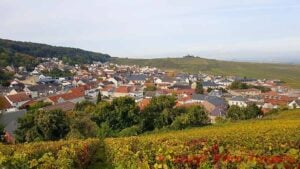
The 2025 harvest in Champagne was record‑early. It began on August 20 and ended on September 10. “We had never seen such high potential alcohol levels so early in August,” says Sébastien Debuisson, technical director at Comité Champagne. The grapes were of exceptional quality. Some growers in Champagne worry that very warm years may lead to lower acidity, altering the balance of a champagne. But in 2025, this did not happen at all. Despite high ripeness and high alcohol levels (for champagne), the wines still have plenty of acidity.
One concern in Champagne is the spread of flavescence dorée, a bacterial disease that can kill vines. A leafhopper (insect) transmits it. In Champagne, nearly 20 hectares of vines had to be uprooted in 2024, and a little more than 18 hectares in 2025, to contain the disease. Vigilance is high. It is crucial to identify infected vines in time and remove them.
On the commercial side, sales in 2025 are expected to stabilise at roughly the same level as in 2024, around 270 million bottles, so lower than the target of 300 million. The French market accounts for 44% of volume, while exports account for 56% of volume and 64% of value. The region is currently facing some headwinds, not least due to increased competition from other sparkling wines. Read more: terredevins
—
Features of the Month
—
Articles and features published on BKWine Magazine and on our wine travel blog and (occasionally) photography blog in the last month.
—
BKWine recommends: from our recent tasting tour up north
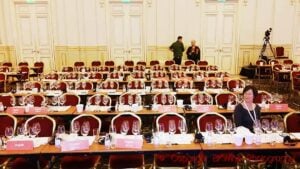
In November we did a tour with several wine tastings in Sweden for wine clubs. We tasted some delicious wines from various parts of the world. It is always exciting and fun to come around to wine tasting groups in and talk about what is happening in the wine world. During the rest of the year – when we are not “on tour” in Sweden – we travel around many different wine regions. It is everything we experience on these trips, at these meetings with winemakers around the world, that we want to share with you when we hold a wine tasting. But above all, what we want to contribute is to spread the message that wine and gastronomy are fun, enjoyable, delicious and an excellent way to discover the world. Here are some suggestions to look for.
Read more in Britt’s article on BKWine Magazine: BKWine recommends: from our recent tasting tour up north.
Explore some of the world’s best vermouth
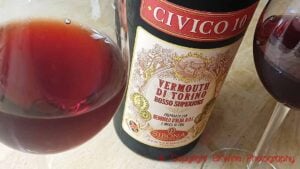
At home, we like to drink vermouth when it is time for an aperitif. Although vermouth is essentially a fortified wine flavoured with herbs and spices, it can taste very different. A Martini Rosso or Bianco does not show the most interesting side of vermouth. Right now, there is a Vermouth di Torino in our fridge, purchased in Piedmont, where some of the world’s best vermouth is made. Vermouth from Torino has been in the spotlight now at the end of 2025. The Italian Ministry of Agriculture has officially recognised the Vermouth di Torino Consortium, which brings together 40 producers (90% of the production of 6 million bottles). This, it is said, marks a milestone in the promotion and protection of this classic vermouth from Piedmont.
Read more in Per’s article on BKWine Magazine: Vermouth di Torino, the classic bittersweet red vermouth, and other delicious vermouths.
Travel: Come on a wine tour to Piedmont with BKWine. (PS: We’ve written a prize-winning book on Piedmont.)
—
Wine Tours
—
Details on our current and future wine tours. Book a wine tour with the “World’s Top Wine Tour Operator” today (or when you feel like travelling to wine country).
Treat yourself to an unforgettable experience in the beautiful wine-lands together with some of the most knowledgeable wine people around. Book now!
—
Bordeaux: Majestic châteaux to modest family estates | wine tour

Bordeaux is both the name of an elegant city on the Garonne River and one of the world’s most prestigious wine regions. Here, magnificent wine châteaux coexist with far more down‑to‑earth estates. The region is vast, home to many dedicated winegrowers who work with great passion, whether at a classified château or a small family‑run property.
During the trip, you will gain a clear understanding of how Bordeaux works and what makes the area so unique. We move through classic appellations such as Médoc, Pessac‑Léognan, Saint‑Émilion, Entre‑deux‑Mers and Sauternes. The days are intense, filled with exquisite gourmet lunches and tastings at the châteaux. We show you the region’s impressive range. We step into both architecturally spectacular wine cellars and more modest facilities. Both can turn out fantastic wines. You will experience every aspect of Bordeaux.
Come and discover French wine and food in Bordeaux on this luxurious wine tour with BKWine, one of the world’s leading wine tour operators (*).
Book now!
(*) And the only one who has authored 13 award-winning wine books, one of which is on Bordeaux wines.
We can add that we have also written an award-winning book about Bordeaux.
The Best of Burgundy and Champagne on this wine tour

This nine‑day journey takes you into the heart of two of France’s most iconic wine regions. First is Burgundy, celebrated worldwide for its refined, expressive pinot noir and chardonnay. Then comes Champagne, the legendary birthplace of the world’s most famous sparkling wine.
Your adventure begins with four nights in Beaune, a small yet wonderfully lively town. Here you will find the historic Hôtel‑Dieu (Hospices de Beaune), charming streets and restaurants to suit every taste. The red wines of the Côte d’Or have long set the standard for pinot noir across the globe, admired for their remarkable elegance.
After Beaune, we go north, and we will make a short stop in Chablis, known for its crisp Chardonnay. We then continue with four nights in Reims in Champagne. Champagne offers a diversity that often surprises. Every producer leaves their own signature on the wine. We get answers to many questions —and we will probably debunk a few old myths along the way.
During this tour through Burgundy and Champagne, we will explore an impressive spectrum of both Burgundy wines and Champagnes, each chosen to highlight the character of the regions. Along the way, our tastings are complemented by gourmet lunches that further elevate the wines. You will experience two of France’s most iconic wine regions at their very best. Stay tuned for the detailed program, coming soon.
Come on this exceptional tour to two of the world’s most respected wine regions with BKWine, one of the world’s leading wine tour operators (*).
- Burgundy – Champagne Grand Tour, 23 September – 1 October, 2026 (detailed programme will be available soon)
Book now!
(*) And the only one who has authored 13 award-winning wine books.
Chasing Summer: Iconic New World Wine Journeys for 2027 | wine tours

Our 2026 “winter” wine tours are officially sold out—secure your interest for 2027 today
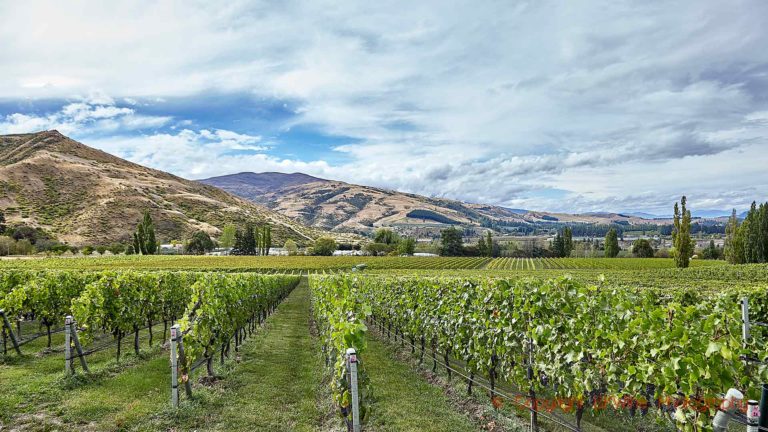
The wine countries of the New World have been around for a while now, but a pioneering spirit remains. New wine-producing regions are still being discovered. The New World is not as established as Europe. And since we travel to the Southern Hemisphere in the middle of winter, we arrive to glorious summer/late summer, with ripe grapes and preparations for harvest. Our focus is wine, so we will visit many wineries, enjoy meetings with winemakers, have fantastic lunches, and also relax poolside. We experience spectacular landscapes: an unforgettable bus journey across the Andes (South America), the view from Table Mountain (South Africa), and geysers and glaciers (New Zealand).
In the winter of 2026, all three of our long‑haul tours are fully booked, but we now have confirmed dates for 2027. It is not too early to tell us if you are interested. Planning is part of the joy of travelling—especially for tours like these. Perhaps you would like to add a safari in South Africa, a stop in Singapore or Sydney on the way to New Zealand, or a visit to the icebergs of Patagonia while in South America. Join us on a very special wine tour in 2027:
Join us on a very special wine tour in 2027:
- Argentina and Chile in South America, 11-24 January 2027
- South Africa, 14-24 February 2027
- New Zealand, 10-25 March 2027
Detailed programmes coming soon(-ish, but look at the 2026 programmes and you’ll get a good idea of what to expect).
—
Bespoke Tours
(examples – we do others too)
—
Forget the myths, learn the truth and reality of Champagne | wine tour *

There are many myths and misconceptions about champagne. Let’s look at some? “Small, fine bubbles are a sign of quality.” Wrong. It could be a sign of a specially prepared (etched) or towel-dried glass (or some other effects) but it doesn’t tell you anything about the taste. “There are 49 million bubbles in a bottle.” No, it depends on many different factors, such as bubble formation points (nucleation sites) in the glass. And one of the big ones: “Grand cru is a sure sign of quality in champagne.” No, grand cru is an obsolete designation in a now abolished price control system. The quality depends primarily on the person who makes the wine. “There are seven, no, now with voltis, eight permitted grapes.” No, it’s actually nine. “The grape variety is no longer called pinot meunier but just meunier and it’s not a pinot at all.” Wrong. The grape variety is still called pinot meunier (sometimes meunier for short) and is actually technically (genetically) the same as pinot noir. You can dive into all this when you come to Champagne.
But the most important thing about champagne is that it is an outstanding wine. It is a fantastic wine in itself but also something that goes perfectly with food, as you will discover at our delicious gastronomic lunches. A champagne tour like no other with the people who wrote one of the most comprehensive book on champagne ever.
Come on this luxurious wine tour to Champagne with BKWine, one of the world’s leading wine tour operators (*).
(*) And the only one who has authored 13 award-winning wine books.
Tuscany, gentle hills with beautiful vineyards and olive trees | wine tour *

Vineyards are part of the Tuscan landscape. Grapevines thrive on the hills where the soil is poor but the sun exposure is excellent. The landscape is quite mountainous in places. The vines are grown between 200 and 600 meters above sea level. How the wine tastes depends on many factors: the grapes, the altitude, the soil and not least the philosophy of the wine producer. There are great variations in Tuscany and the producers like to emphasise these differences that the various districts within Tuscany have. Everyone is proud of their special part of Tuscany. Chianti conquered the world in the 70s with its straw-covered bottle. At that time it was known as an easy-drinking and unpretentious wine. Today we get Chianti in all versions, from top quality prestige wine to uncomplicated fruity lunch wines. The occasion will decide. We will of course visit both Chianti and Chianti Classico (two different geographical areas) and also Montalcino a little further south, known for its fantastic Brunello di Montalcino. Discover the enchanting Tuscany with us; not only the wines but also the landscape, the people and the gastronomy.
Come on this wonderful wine tour to Tuscany with BKWine, one of the world’s leading wine tour operators (*).
(*) And the only one who has authored 13 award-winning wine books.
Piedmont, the land of truffles and fog; and Barolo, Barbaresco | wine tour *

It is a beautiful landscape that meets us in Piedmont. The region certainly merits its name, “at the foot of the mountain”; the Alps tower at the horizon. The signature grape Nebbiolo also has good reason for its name; it is often foggy (nebbia) in the mornings in the hills. The Alps to the north are not far away. Around us lie medieval villages such as Barolo, La Morra, Serralunga, Gavi with their impressive defensive castles, often real fortresses. The autumn landscape is magnificent. Nebbiolo and the other grapes often grow on slopes, sometimes really steep. We taste our way through many fantastic wines, Barolo, Barbaresco and other nebbiolos, as well as slightly lesser-known but equally outstanding wines with arneis, barbera, dolcetto, etc. We enjoy the local cuisine. We visit the truffle market in Alba with its overwhelming scent experience (can you over-dose in truffles?) and we eat a delicious closing lunch with the famous white truffle.
Come and discover all the good things that Piedmont has to offer on this wonderful wine tour with BKWine, one of the world’s leading wine tour operators (*).
(*) And the only one who has authored 13 award-winning wine books.
Douro Valley: The unique landscape that cannot be described but must be seen | wine tour *

The Douro Valley impresses like few other wine regions. There is probably no other wine region that has so many steep slopes in such a large area. The Douro Valley must be seen with your own eyes. No pictures can really do it justice. When it comes to the Douro Valley, the word unique can be used without hesitation. On these difficult-to-work slopes, port wine has been made for many centuries. The “regular” (not fortified) red and white wines, called simply “Douro wines”, have not been known for as long. This combination of Douro wines and port wines makes this tour particularly interesting. We taste all types of wines. The red and also the white Douro wines (non-fortified wines) are fantastic. For many, port wines are an exciting (re-)discovery. You don’t always realise that port wine comes in so many different types and, for instance, what the differences are between an old tawny and a vintage. Completely new dimensions open up. We stay two nights in Porto, an exciting city to explore. On the other side of the river lies Vila Nova de Gaia and this is where the big port wine houses age their wines. We stay two nights at the luxurious Vintage House in the valley, close to the vineyards.
Come and discover the spectacular landscapes and wines of the Douro on this wine tour with BKWine, one of the world’s leading wine tour operators (*).
(*) And the only one who has authored 13 award-winning wine books.