—
The Key to a Wine Producer’s Success: Marketing
—

Sometimes, one marvels at how all the wines produced manage to find consumers. And the right consumer. The one who enjoys that particular wine. Also, more than half of all wines are consumed in a different country than where they are produced. It requires quite sophisticated logistics—and international marketing. The wine passes through several hands before it reaches the end consumer.
Wine tourism is essential to wine producers today. Having people come directly to the vineyard and buy has advantages both for the grower (who avoids middlemen) and the buyer (who can taste the wine before purchasing). The entire wine industry today talks about wine tourism and its importance, and we contribute to this through our work as speakers at wine tourism conferences or as wine tourism consultants. (And, of course, wine tour organiser.) It is direct and local marketing.
–
Calling all wine lovers:
Do you know someone who might be interested in a wine tour?
Please tell them about BKWine Wine Tours! We do wine tours like no other.
A leading wine tour operator since more than 20 years.
Thank you in advance for your help and support!
(If you have Swedish friends, please know that we have a separate,
more extensive travel program in Swedish: BKWine Vinresor.)
–
But for most wine producers, these purchases still account for only a small part of the business. Not everyone is fortunate enough to live in Provence, France, where a producer might sell 50–60% of their volume directly on-site. This direct sales channel also allows the producer to meet the end-customer. Well, at larger estates, it may instead be an employee in the tasting room who handles the shop and tasting duties, but still.
Sometimes participants on our wine tours ask, “Why does the winegrower receive us? Why does he spend all this time with us?” It is hardly to sell a handful of bottles. More importantly, it is a way to meet real wine drinkers, the end-customer. And a way to create experiences that become lifelong memories and relationships.
Recently, however, we read a report claiming that today European wine producers receive 25% of their revenue from wine tourism (and 32% outside of Europe), i.e., bottles they sell to visitors and the fees they charge for tastings and other activities. This shows the weakness of survey studies. For us, who visit hundreds of vineyards per year and see reality, it is an unreasonable or outlandish figure. It is enough to make a calculation “on the back of an envelope” (who does that anymore?) to realise it is an unrealistic number. Would Champagne, for example, sell 70 million bottles directly to 3 million visitors in the region?
Receiving visitors can be important in other ways. Being too far removed from the end customer can mean not keeping up with changing trends. One continues in old tracks and eventually (when it is too late?) discovers that the wines being made are not what people want. “The wine is what it is, and I hope someone likes it,” is not a good strategy for surviving as a producer.
For most producers, it is about finding good wine merchants / importers / restaurants who sell their wines onward. These actors actually have an extremely important job. They are the winegrower’s extended arm. They must inspire wine shops, monopoly buyers, and sommeliers, who in turn must inspire the end customer. Competition is fierce. Sometimes wine producers ask us, “How should we go about selling our wine in Sweden?” There is almost only one answer to that: “Find a good and skilled wine importer, who thinks like you, with whom you get along well. Then together you can work out a good strategy.” And that’s not just for Sweden. It’s for any country.
The more wine drinkers I meet, the more I realise how many different taste preferences there can be. But still, one is influenced by others and sometimes (or often) persuaded to try a new wine. And that is a good thing; otherwise, one would miss many of the greats of the wine world. Perhaps that is also one of the most essential aspects of travelling to a wine region and visiting producers — to experience things one may not know so well and discover that there is much exciting beyond “the same old same old.” (For example, in Bierzo? See the item below.)
Travel
Now it’s time to plan your trip for next year.
We do not have any places left on the winter wine tours, but soon we will publish the entire autumn travel program for 2026, as well as the winter of 2027. You will get a sneak peek below.
More info on our wine tours here. “World’s Top Wine Tours“. Tours with the people who know wine and who have an unrivalled experience of wine and tours.
Travel in wine regions with someone you trust.
Enjoy the Brief!
Britt & Per
Wine editors to the national encyclopaedia, Forbes.com contributors, award-winning wine book authors, wine tour advisors to the UN and national wine organisations, wine judges … and, above all, passionate wine travellers.


If you appreciate what we do, you can help us:
Tell your friends about the Brief or send it to them.
Like us and follow us on social media:
BKWine Magazine on Facebook | Wine Tours on Facebook
—
What’s on at BKWine Tours
BKWine is also one of the world’s leading wine tour operators. Here’s what we currently have on our scheduled wine tour program:
- Chile-Argentina, 12-25 January 2026
- South Africa, 15-25 February 2026
- New Zealand, 10-25 March 2026
–
- Bordeaux, 13-19 September
- Burgundy and Champagne, 23 September – 1 October
- Maybe more. What would you like?
–
- Chile-Argentina, January 2027
- South Africa, February 2027
- New Zealand, March 2027
We also make custom designed wine tours.
And we have an extensive travel program in Swedish: BKWine Vinresor.
We’re different than most other wine tour operators. We are people who know wine inside out, who travel constantly in wine regions, who write award winning books about wine. Who do this out of passion.
Our wine tours are different from others.
A typical year we organise more than 30 wine tours to destinations across the world. In Europe: France, Italy, Spain, Portugal and more. World-wide: South Africa, Chile, Argentina, New Zealand. Thanks to our Scandinavian background we have a separate offer for the Scandinavian market. These are sometimes offered in English and also available as custom made tours. For example, these destinations:
—
Read our books
We have written eleven wine books. They have won awards from the Gourmand Awards, The International Organisation of Vine and Wine (OIV) and others.
Unfortunately, only one of them has been translated to English; the others are (so far) only available in Swedish. This is the one that is available in English:
Here’s the full list of our books:
- The Wonderful World of Wine
- Languedoc-Roussillon, the Wines of Southern France
- Champagne, the Wine and the Growers
—
News from the World of Wine
—
Short briefs on what’s been happening in the world of wine recently and other interesting things.
—
Early harvest of the rare ice wine in Germany
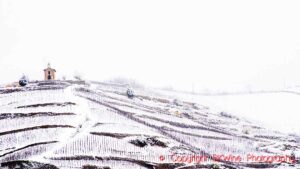
The cold snap in November meant that many German wine regions have already harvested grapes for producing ice wine which is unusually early. Regulations require a minimum temperature of minus 7°C, and on November 22 growers in Rheinhessen, Franconia (Franken), Saxony (Sachsen), Palatinate (Pfalz), Hessische Bergstrasse, Württemberg, and Mosel were able to pick the valuable frozen grapes. In addition to riesling and silvaner, the new fungus‑resistant souvignier gris was also harvested.
German ice wines generally have very high natural residual sugar levels, well above 100 grams per litre, and a low alcohol content of around 7 percent. It is not possible to produce ice wine every year (actually, only quite rarely, not even one year of two) and it is always associated with risk. But it is a highly sought‑after wine thanks to its combination of sweetness and freshness. The impressive must weights suggest that the 2025 vintage will be an outstanding year for ice wine. Read more: winesofgermany
Sweden takes the first step to recycle cork stoppers
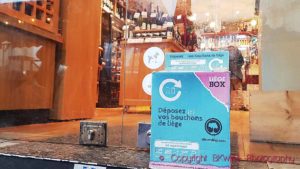
Swedes are phenomenally good at recycling. Except when it comes to cork stoppers. But now this is about to change, starting in the town of Karlstad. This town will be the first in Sweden, in cooperation with the wine stores of Systembolaget (the Swedish alcohol monopoly), to introduce a municipal recycling system for cork stoppers. People will be able to hand in the natural corks from their wine bottles at the municipality’s six recycling stations and three Systembolaget stores. The used wine corks are recycled into new products (though not new cork stoppers). Recycled cork is used in the construction industry for insulation, flooring, fire protection, furniture, shoes, in the automotive industry, and even in the aerospace industry.
Since 2018, more than 550 million corks have been collected worldwide for recycling, according to Amorim in Portugal, the world’s largest cork producer. However, this is only a fraction of the roughly 12 billion cork stoppers used every year.
The French are the world champions when it comes to cork recycling. Read more about this and about the remarkable cork oak in our feature on BKWine Magazine: The environmentally friendly cork stopper and why we should preserve the cork oak forest | Britt on Forbes. For example, we have a cork collection box in our nearest wine shop. How is it where you live? Read more: aktuellhallbarhet
Read: Read more on sustainability, organics and other environmental issues in wine in our upcoming book “The Wine for the Future” (in Swedish “Framtidens vin”) to be published in early 2026.
Bierzo named Munskänkarna’s “Wine Region of the Year”. Do you want to go there?

Munskänkarna, a Swedish wine lovers’ association with almost 30,000 members, have just announced their choice as “Wine Region of the Year”. It is Bierzo. It is a way of highlighting a district that they think is particularly deserving of attention. Bierzo is a wine district in northwestern Spain, with a mild climate influenced by the Atlantic. It is known for its steep, high-altitude vineyards with slate and quartz soils. Two native grapes are mainly grown: the red mencía, which is the main grape that produces intense, aromatic red wines with high acidity, floral notes (violet) and good structure. The white godello produces quite full-bodied white wines with aromas of citrus and stone fruit, often with great complexity and good fresh fruit. Bierzo’s terroir combined with an abundance of old vines produces wines that are praised for their freshness and elegance, making it one of Spain’s most dynamic regions. Systembolaget actually stocks around sixty wines from here.
By some strange coincidences (which we can tell you more about another time when we meet), we at BKWine have very good relations and contacts with Bierzo and are therefore better placed than perhaps anyone else to make a special and memorable wine tour there. But at the same time, Bierzo is a bit remote. The nearest major city is Léon or Santiago de Compostela. The easiest way to get there is probably to fly to Madrid and then take the train. A simple thing, really. That’s why we’re a bit hesitant to organize a trip there next fall. Would it interest enough people? All our tours are handcrafted and tailor-made, so it’s quite a lot of work. So, therefore a question:
Would you interested in coming to Bierzo? Maybe in the fall of 2026? If the answer is “maybe” (or “yes!”), get in touch with us now, so we can see if there is enough interest! If so, send us an email.
Bulk Wine – an important wine sector that should not be ignored
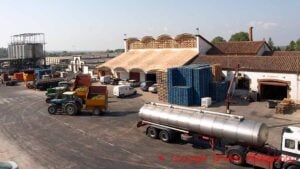
On November 24–25, the big World Bulk Wine Exhibition took place in Amsterdam. Bulk wine may not attract the typical wine enthusiast, but it is a very important part of the wine industry. It certainly is not a question of “evil bag-in-box wine with suspicious origin” as some like to describe it. It is a very environmentally friendly category of wines, with often reasonably good wines to very affordable prices, although perhaps not something that interests the wine enthusiast that much. They end up on the store shelf in bag-in-boxes and often also in bottles (bottled close to the consumer). Bulk wine trade represents more than one‑third of the total volume of wine traded worldwide. Over the past year (June 2024 to June 2025), the volume reached nearly 33 million hectolitres, with a value of €2.59 billion. The average price was €0.79 per litre.
The bulk wine segment is more stable than the bottled wine segment (which has declined by 4.8%) and continues to be more resilient to global economic fluctuations. Spain remains the leading country in international bulk wine trade, both in value and volume. Spain is followed by Italy, New Zealand, Australia, and Chile. France ranks sixth in value and ninth in volume. Among import markets, the United Kingdom is first in value and Germany first in volume, followed by France, the USA, and Italy. Within the EU, bulk exports of red and rosé wines increased by 3.4% during the first half of 2025, while exports of white wines decreased by 1.4%. Read more: worldbulkwine
Domaine Thérèse Rose: Languedoc interpreted by the Swede Svenolov Molin
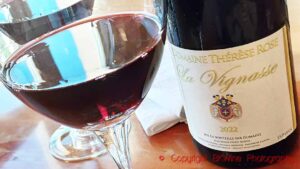
About 12 years ago, Svenolov Molin bought a winemaker’s house in a small village in the Languedoc. He came from the Swedish west coast, was a surgeon by profession, but had a great interest in farming. His interest in viticulture grew gradually when he began spending time with his neighbour Pierre-Louis, who is a fourth-generation winegrower. Sven was hooked and wanted to make his own wine. His estate has now grown to 7 hectares, and he has studied wine and viticulture both in Sweden and in France. He use grenache, syrah and also carignan och piquepoul.
We have tasted two of Sven’s wines. Both are made from the grapes syrah and grenache, using carbonic maceration (fermentation of whole clusters under carbon dioxide), which, according to Sven, produces a more powerful and fruitier red wine. One of the wines is the press wine, and the other is the free-run wine. An interesting experiment that has resulted in two completely different wines.
La Vignasse 2022, Domaine Thérèse Rose
A full-bodied and powerful wine with lots of fruit, quite soft, and with a distinct warm sensation. La Vignasse is the press wine.
Chat Noir 2022, Domaine Thérèse Rose
A full-bodied wine with tannin structure and a slight, pleasant bitterness at the finish. Intense aromas of dark ripe berries. Chat Noir is the free-run wine.
Beaujolais Nouveau, the fruity and easy‑going wine gets a revival
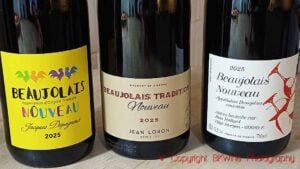
Beaujolais Nouveau Day has already passed, but this year’s wines are excellent and can certainly be purchased even after the third Thursday in November. Beaujolais Nouveau has experienced something of a renaissance. Many wine consumers today are looking for fruity, easy drinking, and flavourful wines and that is exactly what a Beaujolais Nouveau will offer. The wines are shipped to 100 countries worldwide, but France still drinks the most, with 9 million bottles every year. The rest of the world consumes 5.5 million bottles of Beaujolais Nouveau. Although most bottles are sold and drunk soon after the release, the producers’ association in Beaujolais points out that Beaujolais Nouveau can definitely handle a bit of aging, and one may even be pleasantly surprised by the result. Today, Beaujolais Nouveau represents 22% of the total production in Beaujolais. The entire Beaujolais region consists of 12 different appellations covering 12,500 hectares. The only red grape permitted is gamay. Very recently, a new book on Beaujolais (no only nouveau) was published: The Wines of Beaujolais, by Natasha Hughes. Read more: beaujolaisnouveau
2025 Harvest – a cautious increase but large variation between wine-producing countries

OIV (The International Organisation of Vine and Wine) has published the first preliminary figures for wine production in 2025. Production is estimated to reach around 232 million hectolitres. This represents a 3% increase compared to the historically low 2024, but still 7% below the five‑year average. Of the total, the EU produces 140 million hectolitres, though volumes vary between countries. France and Spain show very small harvests, while Italy has recovered to nearly normal levels, and several Central and Southeastern European countries achieve results above average. The USA records only a partial recovery from the low harvest of 2024.
The Southern Hemisphere, with a production of 49 million hectolitres, has made a decent comeback after 2024. Improved conditions in South Africa, Australia, New Zealand, and Brazil have helped offset the sharp decline in Chile. Nevertheless, production still remains slightly below average, largely due to ongoing climate challenges. Despite regional differences, the global market appears relatively stable: the limited production growth in 2025 is expected to keep stocks balanced, while consumption decreases in mature markets and uncertainty in global trade relations increases. Read more: oiv
The Wine For The Future – a sustainable Christmas gift (*)
It’s not too early to start thinking about Christmas presents! But for this one, it is very early, one year ahead. It is about our latest book that came out in 2023 and that will be published in English in 2026(!). “The Wine For Future” shows how the wine world is slowly but surely changing to more sustainable production. We tell you the facts. Why do you have to spray the vineyard, what rules apply and what alternatives are available? There is a lot of talk about additives and we describe what is used and why. Explain why you shouldn’t believe those who complain about “industrial wine with 60 additives and flavourings”. No, that’s not the case. We describe how it works when you are organic and biodynamic. We discuss the most common sustainability labels in different countries around the world. Explain how sustainability works (and marvels at Systembolaget’s somewhat strange take on sustainability).
And last but not least, how has viticulture changed due to the changing climate? More fires, more drought, more torrential rain… What is the solution? We tell you about all the research that is underway. All these facts are highlighted by beautiful but also instructive pictures, all taken by Per on our travels around the world.
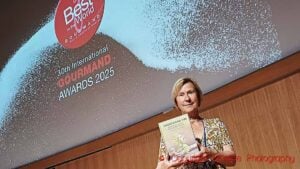
“The Wine For The Future” won the Gourmand International Cookbook Awards as the world’s best wine book on sustainability and third prize “world’s best wine book” (!). It has also been awarded in the OIV’s (International Organisation of Vine and Wine) prestigious book competition.
If you are interested in good wine and the future of the world, then this is a book for you. Or for your acquaintances. But you’ll have to wait until next year to get it. Or if you read Swedish, you can get it here.
—
Features of the Month
—
Articles and features published on BKWine Magazine and on our wine travel blog and (occasionally) photography blog in the last month.
—
What to do with wine from the Titanic? An incredible story
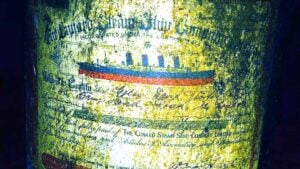
In wine groups on Facebook, questions like, “I found this old bottle in a cellar, what could it be worth?” often pop up. Nine times out of ten, no, rather 99 times out of a hundred, the answer is, “almost nothing, drink it instead.” It could be a “unknown Bordeaux from the 70s, a René Barbier of unknown age, but certainly from the 80s or older. But the other day we received an email with a similar question, but with a different answer. We said, “no, don’t drink it, at least not right away, it could be something that could be very valuable, maybe!” The bottle, or rather the bottles, that our reader had found were from the Titanic. Here’s the story, and what we suggested he do.
Read more in Per’s article on BKWine Magazine: What to do with wine from the Titanic? An incredible story.
BKWine on Forbes

We write regularly on Forbes.com, the American business magazine’s website. These are articles that often appear in longer or more technical versions later on BKWine Magazine. Here is a selection of some of the latest articles by BKWine, Britt & Per Karlsson, on Forbes.com:
- Bordeaux Can Be Both Delicious, Classic And Affordable, From Château De France
- Botanical Cuisine At Mosaic: South African Chef Chantel Dartnall Starts A New Adventure In France
- A New Wine With An Old History, CMC Conti Marone Cinzano Brunello Di Montalcino
- Top Wine Producers In Catalonia’s Hidden Gem, Conca De Barberà
- Conca De Barberà, Catalonia’s Hidden Wine Treasures
How to avoid dragging your suitcase around town when you have a few hours to spare before the train leaves? *

Sometimes you find yourself in a city where you need to spend a few hours until leaving. You have a suitcase with you. But you really don’t want to lug your baggage around town while you visit some of the sites, and let time pass until it is time to leave. You search the railway station for a locker where you can leave your bags, but there are none. What to do? Walk around town with your bag? No, there’s a solution to this. Get the right app and you’ll be able to leave your bag for a few hours (or days). Here’s how.
Read more in Per’s article on BKWine’s Travel Blog: What do you do with your suitcase when you want to go for a walk and can’t find a locker at the station?
A beautiful video about New Zealand and our wine tour there *
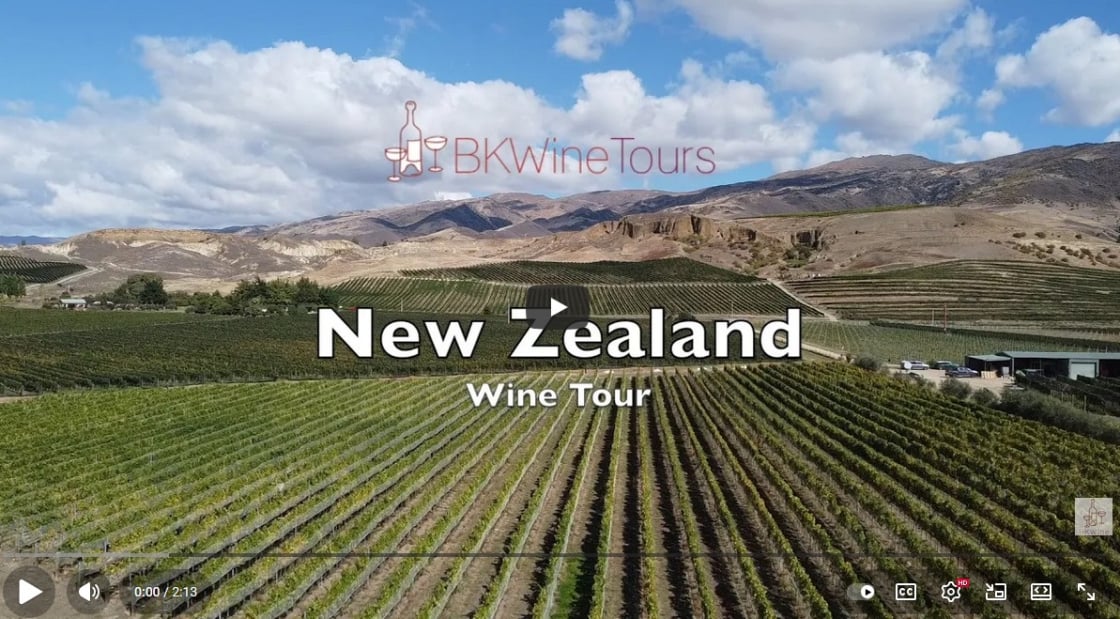
One of our tour participants on the New Zealand wine tour in March this year has made a video about the tour and his experiences there (thank you Erik!). A little bit of the contents: “BKWine’s carefully planned journey with selected visits takes you far beyond the main tourist routes to meet the visionaries who are transforming New Zealand’s wine industry. You will experience private tastings at prestigious wine estates such as Tarras Vineyards and Felton Road, while enjoying beautiful landscapes all around. BKWine’s expert guides share their passion and insider knowledge, ensuring a personal and intimate experience in small groups. Enjoy exclusive invitations to private wine cellars and behind-the-scenes tours, where you meet winemakers and learn about their craft up close. Enjoy breathtaking landscapes, from rolling vineyards to dramatic coastlines, with time to relax and enjoy the beauty of New Zealand.”
Read more, watch the video and plenty of pictures, in the article on BKWine’s wine tour blogg: A luxurious journey and adventure through New Zealand’s winelands – a promotion video for our NZ tour.
Read more on BKWine’s wine tour blogg with videos and pictures on The unforgettable spectacle of Mount Cook and the Tasman Glacier Lake. Just one of the very special experiences on this tour.
Travel: Come on a wine tour to New Zealand with BKWine.
See: See pictures and videos from New Zealand 2025 in the wine tour’s Facebook group.
—
Wine Tours
—
Details on our current and future wine tours. Book a wine tour with the “World’s Top Wine Tour Operator” today (or when you feel like travelling to wine country).
Treat yourself to an unforgettable experience in the beautiful wine-lands together with some of the most knowledgeable wine people around. Book now!
—
Bordeaux, a region filled with history but surprisingly modern wines | wine tour

What is happening today in France’s most legendary wine region? Join us on a tour through Bordeaux, a region where tradition today meets innovation. Your days will be filled with unforgettable château lunches and exclusive tastings.
In Bordeaux, history is ever-present, yet the wines feel strikingly modern, without losing their distinctive character. We combine visits to prestigious estates (some of them grand cru classé) with smaller, family-owned châteaux. We will understand more of Bordeaux by exploring its vineyards, visiting the cellars, and discussing oak ageing and tannins, the essential building blocks of a true Bordeaux wine. We will visit the renowned appellations of Médoc, Graves, Pessac-Léognan, Entre-deux-Mers and Saint Emilion.
Come and discover French wine and food in Bordeaux on this luxurious wine tour with BKWine, one of the world’s leading wine tour operators (*).
Book now!
(*) And the only one who has authored 13 award-winning wine books, one of which is on Bordeaux wines.
We can add that we have also written an award-winning book about Bordeaux.
A 9 day journey in Burgundy and Champagne | wine tour

This nine‑day tour invites you to experience two of France’s most celebrated wine regions: Burgundy, renowned its elegant and high-quality pinot noir och chardonnay wines, and Champagne, the birthplace of the world’s most iconic sparkling wine.
The tour begins with four nights in Beaune, a small town but very vibrant. It is home to the historic Hôtel‑Dieu (Hospices de Beaune) and you will easily find wine bars and restaurant to your liking. The red wines from Côte d’Or have become the benchmark against which all other pinot noir wines are compared, admired for their complexity and depth of flavour.
Our bus will take as north and we will make a short stop in Chablis, known for its crispy chardonnay. We then continue with four nights in Reims in Champagne. Here, you will find many of the legendary Champagne houses alongside one of France’s most awe‑inspiring cathedrals, a masterpiece of Gothic architecture. Over the course of a few days, we explore Champagne, a fascinating wine region with far more diversity than one might expect. While it produces “only” sparkling wine (and a small amount of still wine under the name Coteaux Champenois), differences in grape composition and the philosophies of individual producers create sparkling wines with remarkable variations in taste and style.
During this tour through Burgundy and Champagne we will sample a range of Burgundy wines and Champagnes, paired with fantastic gourmet meals at lunch. Stay tuned for the detailed program, coming soon.
Come on this exceptional tour to two of the world’s most respected wine regions with BKWine, one of the world’s leading wine tour operators (*).
- Burgundy – Champagne Grand Tour, 23 September – 1 October, 2026 (detailed programme will be available soon)
Book now!
(*) And the only one who has authored 13 award-winning wine books.
Spectacular tours to four wine countries in the southern hemisphere | wine tours

It is different to go on a wine tour in the southern hemisphere. For travellers from the northern hemisphere, there is nothing quite like escaping winter to bask in summer sunshine, enjoy the hotel pool after the wine tastings and gorgeous lunches in the winery garden or even in the vineyard. At this time of year, the winegrowers are starting to prepare for the harvest and in South Africa (in February) and New Zealand (in March) it has already started.
Our southern hemisphere tours for the winter of 2026 are fully booked. But we now have the dates confirmed for South America in January and New Zealand in March 2027. Exact dates for South Africa in February 2027 will be announced shortly. If you are interested, do not hesitate to contact us already. Planning a tour like this — perhaps with a few extra days to explore (safari, Garden Route, Iguazú Falls, Patagonia, Australia, Singapore… there are plenty of things to choose from — is part of the joy. Having visited these wine countries many times, we can confidently promise unforgettable experiences.
Join us on a very special wine tour in 2027:
- Argentina and Chile in South America, 11-24 January 2027
- South Africa, February 2027
- New Zealand, 10-25 March 2027
Detailed programmes coming soon(-ish, but look at the 2026 programmes and you’ll get a good idea of what to expect).
—
Bespoke Tours
(examples – we do others too)
—
Forget the myths, learn the truth and reality of Champagne | wine tour *

There are many myths and misconceptions about champagne. Let’s look at some? “Small, fine bubbles are a sign of quality.” Wrong. It could be a sign of a specially prepared (etched) or towel-dried glass (or some other effects) but it doesn’t tell you anything about the taste. “There are 49 million bubbles in a bottle.” No, it depends on many different factors, such as bubble formation points (nucleation sites) in the glass. And one of the big ones: “Grand cru is a sure sign of quality in champagne.” No, grand cru is an obsolete designation in a now abolished price control system. The quality depends primarily on the person who makes the wine. “There are seven, no, now with voltis, eight permitted grapes.” No, it’s actually nine. “The grape variety is no longer called pinot meunier but just meunier and it’s not a pinot at all.” Wrong. The grape variety is still called pinot meunier (sometimes meunier for short) and is actually technically (genetically) the same as pinot noir. You can dive into all this when you come to Champagne.
But the most important thing about champagne is that it is an outstanding wine. It is a fantastic wine in itself but also something that goes perfectly with food, as you will discover at our delicious gastronomic lunches. A champagne tour like no other with the people who wrote one of the most comprehensive book on champagne ever.
Come on this luxurious wine tour to Champagne with BKWine, one of the world’s leading wine tour operators (*).
(*) And the only one who has authored 13 award-winning wine books.
Tuscany, gentle hills with beautiful vineyards and olive trees | wine tour *

Vineyards are part of the Tuscan landscape. Grapevines thrive on the hills where the soil is poor but the sun exposure is excellent. The landscape is quite mountainous in places. The vines are grown between 200 and 600 meters above sea level. How the wine tastes depends on many factors: the grapes, the altitude, the soil and not least the philosophy of the wine producer. There are great variations in Tuscany and the producers like to emphasise these differences that the various districts within Tuscany have. Everyone is proud of their special part of Tuscany. Chianti conquered the world in the 70s with its straw-covered bottle. At that time it was known as an easy-drinking and unpretentious wine. Today we get Chianti in all versions, from top quality prestige wine to uncomplicated fruity lunch wines. The occasion will decide. We will of course visit both Chianti and Chianti Classico (two different geographical areas) and also Montalcino a little further south, known for its fantastic Brunello di Montalcino. Discover the enchanting Tuscany with us; not only the wines but also the landscape, the people and the gastronomy.
Come on this wonderful wine tour to Tuscany with BKWine, one of the world’s leading wine tour operators (*).
(*) And the only one who has authored 13 award-winning wine books.
Piedmont, the land of truffles and fog; and Barolo, Barbaresco | wine tour *

It is a beautiful landscape that meets us in Piedmont. The region certainly merits its name, “at the foot of the mountain”; the Alps tower at the horizon. The signature grape Nebbiolo also has good reason for its name; it is often foggy (nebbia) in the mornings in the hills. The Alps to the north are not far away. Around us lie medieval villages such as Barolo, La Morra, Serralunga, Gavi with their impressive defensive castles, often real fortresses. The autumn landscape is magnificent. Nebbiolo and the other grapes often grow on slopes, sometimes really steep. We taste our way through many fantastic wines, Barolo, Barbaresco and other nebbiolos, as well as slightly lesser-known but equally outstanding wines with arneis, barbera, dolcetto, etc. We enjoy the local cuisine. We visit the truffle market in Alba with its overwhelming scent experience (can you over-dose in truffles?) and we eat a delicious closing lunch with the famous white truffle.
Come and discover all the good things that Piedmont has to offer on this wonderful wine tour with BKWine, one of the world’s leading wine tour operators (*).
(*) And the only one who has authored 13 award-winning wine books.
Douro Valley: The unique landscape that cannot be described but must be seen | wine tour *

The Douro Valley impresses like few other wine regions. There is probably no other wine region that has so many steep slopes in such a large area. The Douro Valley must be seen with your own eyes. No pictures can really do it justice. When it comes to the Douro Valley, the word unique can be used without hesitation. On these difficult-to-work slopes, port wine has been made for many centuries. The “regular” (not fortified) red and white wines, called simply “Douro wines”, have not been known for as long. This combination of Douro wines and port wines makes this tour particularly interesting. We taste all types of wines. The red and also the white Douro wines (non-fortified wines) are fantastic. For many, port wines are an exciting (re-)discovery. You don’t always realise that port wine comes in so many different types and, for instance, what the differences are between an old tawny and a vintage. Completely new dimensions open up. We stay two nights in Porto, an exciting city to explore. On the other side of the river lies Vila Nova de Gaia and this is where the big port wine houses age their wines. We stay two nights at the luxurious Vintage House in the valley, close to the vineyards.
Come and discover the spectacular landscapes and wines of the Douro on this wine tour with BKWine, one of the world’s leading wine tour operators (*).
(*) And the only one who has authored 13 award-winning wine books.