—
“We do what we always have done,” when did you last hear that?
—

For an industry that celebrates tradition and old myths, the wine industry is surprisingly obsessed with news, from the Swedish wine monopoly’s new releases several times a month, manically followed by wine enthusiasts, to visitors’ delight over amphorae, concrete eggs (well, not so new anymore) and anything else that looks a bit spectacular. People expect traditions and a long history, but at the same time, new and “different”.
As mentioned, amphorae are not particularly new anymore, and also several thousand years old if you like. Only your imagination sets a limit to the materials and shapes you can use for fermentation and ageing vessels. We have seen gold-plated barrels, marble, glass, granite sarcophagi, and, of course, stoneware with different firing temperatures.
–
Calling all wine lovers:
Do you know someone who might be interested in a wine tour?
Please tell them about BKWine Wine Tours! We do wine tours like no other.
A leading wine tour operator since more than 20 years.
Thank you in advance for your help and support!
(If you have Swedish friends, please know that we have a separate,
more extensive travel program in Swedish: BKWine Vinresor.)
–
But don’t get me wrong, such a thing certainly makes a difference. For example, read about the tasting we participated in that compared wine aged in nine different containers: One wine, aged in nine different tanks, a tasting by Domaine Gayda | Per on Forbes. Big differences. Or the syrah wine from Italy fermented and aged in six different ways at the Nordic Sea Winery (Oenoforos) made in Simrishamn: Six secret wines show the importance of the winemaker. (The winemaker’s choice, in this and everything else, is at least as important as, for example, terroir and climate.)
It is natural for a wine writer to want to write about something new, a winemaker in Champagne told us recently. But, he continued, news does not necessarily have any practical significance (see, for example, above, about gold-plated, although that particular winemaker can no doubt find a difference). In Champagne, it is easy to write about the “brut nature” champagnes, even though it is a tiny part of all champagne that is brut nature. It is exciting and different to write about. You can easily get the wrong impression from writings, he believed. What people want is still ordinary brut, with a little more sugar in it.
And the others, those who are not amazed and fascinated by the news, are they boring, backwards-looking ones?
In fact, can you at all say today that “we do what we have always done”? Can you make wine today, without any fuss, dazzle and the newest gadgets?
The truth is that they probably cannot because new things find their way into the cellar all the time. The wine world is constantly changing. Everyone has something new in the cellar or in the vineyard, even if it’s just a new type of pump or a better rootstock.
And that is probably a good thing. “The wine of the olden days”, the kind that is often praised by those who say wine was better and more natural before the industrial revolution destroyed genuine and authentic wine, is probably not the kind of wine we want to drink today; made with lots of sulphur, sugar, spices to hide the vinegar taste, arsenic and nicotine sprayed in the vineyard and so on. The kind of thing that was done “in the past”. Well, perhaps not always but it certainly happened…
Some news/changes have great practical importance.
In 1971, Émile Peynaud (often called the father of modern oenology) wrote the classic “Connaissance et travail du vin” (available in English translation, “Knowing and Making Wine). It remains a very relevant book, and a new edition was published just over a year ago.
1971 is not that long ago, not ages away. However, consider that back then, in 1971, there were no harvesting machines (they began to appear gradually from 1973), no practical way to control the temperature during fermentation, and no cultured yeast. They didn’t know if malolactic fermentation was an advantage or a disease. The analytical laboratories were at nearly the same level as they were a hundred years earlier in Pasteur’s time. They didn’t have tangential filtration, imagine that. All of this we take for granted today.
That makes one realise that a lot has happened and that a lot is happening all the time. In addition, all these small and large changes mean that today we can drink wines that are much less affected by defects (almost gone today) and that are much tastier and generally more affordable than “before”. Good wine to the masses!
So, if someone says “as we have always done”, you should not believe them. Thank goodness.
Travel
The travel season is almost but not quite over so it is a bit of a challenge to have time to write and edit the newsletter this month.
But now it’s time to plan your trip for next year.
We do not have any places left on the winter wine tours, but soon we will publish the entire autumn travel program for 2026, as well as the winter of 2027. You will get a sneak peek below.
More info on our wine tours here. “World’s Top Wine Tours“. Tours with the people who know wine and who have an unrivalled experience of wine and tours.
Travel in wine regions with someone you trust.
Enjoy the Brief!
Britt & Per
Wine editors to the national encyclopaedia, Forbes.com contributors, award-winning wine book authors, wine tour advisors to the UN and national wine organisations, wine judges … and, above all, passionate wine travellers.


If you appreciate what we do, you can help us:
Tell your friends about the Brief or send it to them.
Like us and follow us on social media:
BKWine Magazine on Facebook | Wine Tours on Facebook
—
What’s on at BKWine Tours
BKWine is also one of the world’s leading wine tour operators. Here’s what we currently have on our scheduled wine tour program:
- Chile-Argentina, 12-25 January 2026
- South Africa, 15-25 February 2026
- New Zealand, 10-25 March 2026
–
- Bordeaux, 13-19 September
- Burgundy and Champagne, 23 September – 1 October
- Maybe more. What would you like?
–
- Chile-Argentina, January 2027
- South Africa, February 2027
- New Zealand, March 2027
We also make custom designed wine tours.
And we have an extensive travel program in Swedish: BKWine Vinresor.
We’re different than most other wine tour operators. We are people who know wine inside out, who travel constantly in wine regions, who write award winning books about wine. Who do this out of passion.
Our wine tours are different from others.
A typical year we organise more than 30 wine tours to destinations across the world. In Europe: France, Italy, Spain, Portugal and more. World-wide: South Africa, Chile, Argentina, New Zealand. Thanks to our Scandinavian background we have a separate offer for the Scandinavian market. These are sometimes offered in English and also available as custom made tours. For example, these destinations:
—
Read our books
We have written eleven wine books. They have won awards from the Gourmand Awards, The International Organisation of Vine and Wine (OIV) and others.
Unfortunately, only one of them has been translated to English; the others are (so far) only available in Swedish. This is the one that is available in English:
Here’s the full list of our books:
- The Wonderful World of Wine
- Languedoc-Roussillon, the Wines of Southern France
- Champagne, the Wine and the Growers
—
News from the World of Wine
—
Short briefs on what’s been happening in the world of wine recently and other interesting things.
—
A lighter and more environmentally friendly champagne bottle
Verallia, a major glass manufacturer, has a factory strategically located in Champagne outside the village of Oiry, a grand cru village in the Côte des Blancs. Aware that the champagne bottle weighs heavily on the producers’ carbon footprint, it does what it can to work sustainably. 90% of the bottles ordered by champagne producers are produced on site. Another factor that Verallia highlights is that the champagne factory uses a high proportion of recycled glass. This can make up up to 94% of the composition of the bottles, which reduces energy consumption. The plant also stands out for its good water management. Water consumption has decreased by over 90% between 2015 and 2019.
Major investments have also been made to reduce the weight of the bottles. Verallia launched a bottle called Champenoise Ecova 2 in 2024. The bottle weighs 800 grams; a reduction of 35 grams compared to the classic champagne bottle’s 835 grams. An important step. Currently, the bottle as such still represents 28% of the champagne industry’s carbon footprint. Read more: verallia
Travel: Come on a wine tour to Champagne with BKWine. (PS: We’ve written a prize-winning book on Champagne.)
A warmer Rioja requires more garnacha
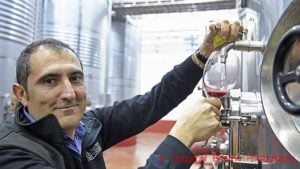
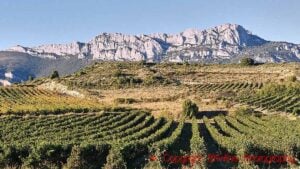
In Rioja, tempranillo reigns supreme with 80% of the vineyard area. But perhaps not for much longer. It is getting warmer and drier and that is where tempranillo shows its limitations. Garnacha (grenache in France), on the other hand, although it has long played second fiddle in Rioja, can handle the drought. It is planted mainly in Rioja Oriental (ex-Baja) where it is warmest. It still rains around 450 mm in Rioja but less and less during the growing season itself. There are long summers without rain. Historically, garnacha was a faithful servant in the region. When the phylloxera arrived in Rioja at the end of the 19th century, the vineyard area was around 80,000 hectares compared to today’s 65,000 ha. After the advance of phylloxera, it had dropped to 15,000 hectares. When replanting with grafted vines began, it was mainly garnacha. But in the 1970s, new replantings took place, this time with tempranillo. The area under garnacha has declined, perhaps in part because the grape is more susceptible to coulure (uneven fruit set). Perhaps this can be food for thought for those who insist that “this is how the wine should taste” to be “typical”’ The style of the wines has varied dramatically over the years, in Rioja as elsewhere.
Garnacha is likely to increase, Rodolfo Bastida, head winemaker at Ramón Bilbao, said in an interview. Growers are now replacing vineyards planted in the 1970s with garnacha in the drier areas, and also with more unknown Rioja grapes such as graciano and mazuelo. Read more: thedrinksbusiness
Small 2025 harvest in France but regional differences
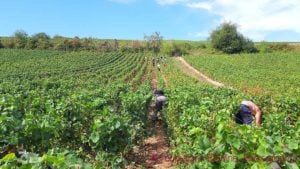
We have heard a lot of positive things about the 2025 harvest around France during our autumn wine tours. But we have also heard about problems. People are happy with the quality but not always with the quantity. The volume is lower than ever, 36 million hectolitres for the whole of France is the prognosis. So even a little lower than the very low 2024. The 2025 harvest was also remarkably early. Many regions were hit by severe heat waves in early August. At such high temperatures, the grapes shrivel and ripening is accelerated. The grapes deliver minimal juice when the time comes. There was some rain in September which in some places helped to increase the size of the grapes slightly. In many instances it can be good to get some rain shortly before the harvest to improve the balance.
In Champagne, people are happy though. 2025 has been a year, says Champagne Penet-Chardonnet in Verzy, with plenty of sunshine and enough rain. Champagne increased its production compared to 2024, as did Burgundy, the Loire Valley, Jura and Savoie. Bordeaux, Alsace, Languedoc-Roussillon, Provence and the Southwest fared worse in terms of volume, all of which have lower production than in 2024.
Age-worthy white burgundies – also in the future
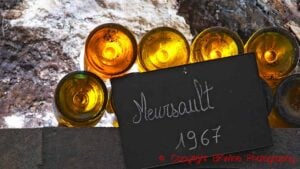
White Burgundies are, more than other white wines, known for their long ageing potential. But with a changing climate and weather patterns, do these wines risk losing that trait? The BIVB, Bureau Interprofessionnel des Vins de Bourgogne , has launched several research projects to investigate this question and to understand how longevity is built, with the aim of eventually adapting production methods.
Forty vineyards are participating in the project, and so far, five vintages have been studied. As expected, it turned out that the winemaker’s choices during vinification directly affect a wine’s resistance to oxidation and thus its ageing potential. Harvest handling plays a crucial role, especially for grapes rich in polyphenols, says Christine Pascal, oenologist and responsible for the project. All methods that promote their extraction—such as sulfiting the grapes or crushing—increase the risk of the wines becoming sensitive to oxidation. Conversely, limiting these extractions strengthens the wines’ resistance.
Ageing methods also play a decisive role. The results show that ageing on the lees and using lightly toasted new or one-year-old barrels help build resistance to oxidation. These are traditional methods that have long been established, and the research project now provides scientific evidence supporting them. The next phase of the project will be to examine the role grape ripeness plays in ageing potential. Read more: bourgogne-wines
Travel: Come on a wine tour to Burgundy with BKWine. (PS: We’ve written a prize-winning book on Burgundy.)
Voltis, Champagne’s ninth grape, finally makes wine
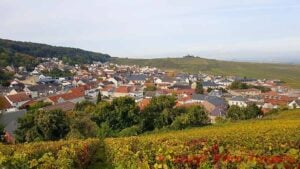
In 2022, Voltis became the first fungus-resistant grape in France to be integrated (with restrictions) into the regulations for an appellation wine. The appellation was Champagne. Now, in 2025, three years later, the first real harvest has taken place. In 2032, a decision will be made on whether the grape will be officially allowed within the regulatory framework. Until then, those who wish to cultivate it may do so on up to 5% of their vineyard area and use it in blends up to 10%. Voltis is currently planted on a very small area, just under 10 hectares.
Voltis is a hybrid, developed to be resistant to fungal diseases, especially downy mildew and powdery mildew. Naturally, there is a lot of scepticism among growers, and it will take time before anyone voluntarily gives up traditional Champagne grapes to plant voltis. But growing voltis means less spraying, which is important if you are thinking sustainably. The grape can be interesting to plant near residential areas where spraying is legally restricted and will become even more so (this will probably be the main use of voltis) or in places that are particularly affected by these diseases.
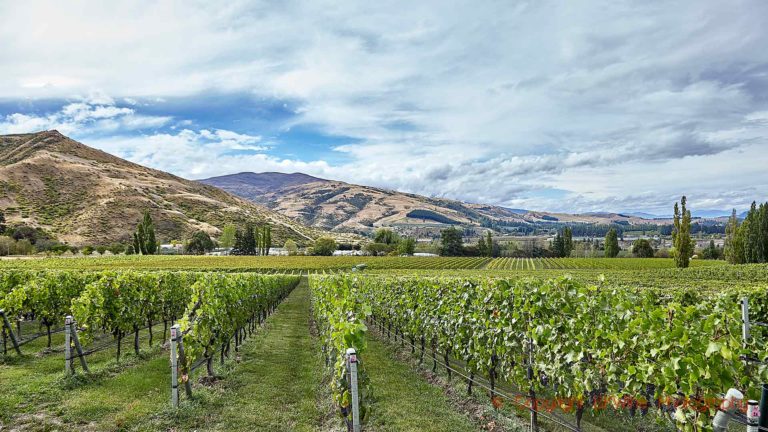
Champagne’s ninth grape? Yes, there are currently eight grape varieties fully permitted in Champagne: chardonnay, pinot noir, pinot meunier, petit meslier, arbanne, pinot blanc, pinot gris, and the newest addition, chardonnay rose, a mutation of chardonnay with pink-coloured grapes, recognized as a distinct variety precisely because of the colour difference. (Picture: a location where voltis is planted.)
Travel: Come on a wine tour to Champagne with BKWine. (PS: We’ve written a prize-winning book on Champagne.)
The Wine For The Future – a sustainable Christmas gift
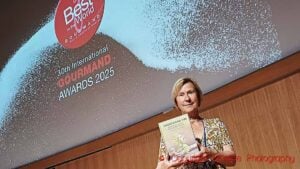
It’s not too early to start thinking about Christmas presents! But for this one, it is very early, one year ahead. It is about our latest book that came out in 2023 and that will be published in English in 2026(!). “The Wine For Future” shows how the wine world is slowly but surely changing to more sustainable production. We tell you the facts. Why do you have to spray the vineyard, what rules apply and what alternatives are available? There is a lot of talk about additives and we describe what is used and why. Explain why you shouldn’t believe those who complain about “industrial wine with 60 additives and flavourings”. No, that’s not the case. We describe how it works when you are organic and biodynamic. We discuss the most common sustainability labels in different countries around the world. Explain how sustainability works (and marvels at Systembolaget’s somewhat strange take on sustainability).
And last but not least, how has viticulture changed due to the changing climate? More fires, more drought, more torrential rain… What is the solution? We tell you about all the research that is underway. All these facts are highlighted by beautiful but also instructive pictures, all taken by Per on our travels around the world.
“The Wine For The Future” won the Gourmand International Cookbook Awards as the world’s best wine book on sustainability and third prize “world’s best wine book” (!). It has also been awarded in the OIV’s (International Organisation of Vine and Wine) prestigious book competition.
If you are interested in good wine and the future of the world, then this is a book for you. Or for your acquaintances. But you’ll have to wait until next year to get it. Or if you read Swedish, you can get it here.
—
Features of the Month
—
Articles and features published on BKWine Magazine and on our wine travel blog and (occasionally) photography blog in the last month.
—
A selection of good wines from around the world from Divine’s range
“Divine, a Swedish importer, held a tasting with many of the wines from their range. I have followed Divine’s journey for many years, and like so many others, am very grateful that they offer us in Sweden a range of wines of not only fantastic quality, but also wines that are otherwise completely impossible to get, and also at a good price. Gunnar usually asks me how much I paid for Sine Qua Non in the USA, and he is always so happy that Divine’s prices are below the prices there. This is a report with the wines I tried. It was a smaller selection, but many interesting wines.”
Read more in Anders Åhlén’s article on BKWine Magazine: A selection of good wines from around the world from Divine’s range.
How to avoid dragging your suitcase around town when you have a few hours to spare before the train leaves?

Sometimes you find yourself in a city where you need to spend a few hours until leaving. You have a suitcase with you. But you really don’t want to lug your baggage around town while you visit some of the sites, and let time pass until it is time to leave. You search the railway station for a locker where you can leave your bags, but there are none. What to do? Walk around town with your bag? No, there’s a solution to this. Get the right app and you’ll be able to leave your bag for a few hours (or days). Here’s how.
Read more in Per’s article on BKWine’s Travel Blog: What do you do with your suitcase when you want to go for a walk and can’t find a locker at the station?
Five looks on ice, or, how to drink 500 year old snow
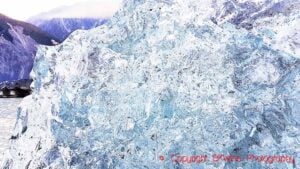
Ice is a special thing. It is water that floats on water. You put it in your G&T, you skate on it, it once was the way to keep food fresh in summer in an ice house (glacière). But it is also the result of water falling from the sky on mountains as snow and accumulating and being compacted by its own weight into ice. That’s a very particular kind of ice, extremely pure, clear as a diamond. But also extremely exposed to climate change. Glaciers. On our New Zealand tour we make an excursion on a glacier lake and explore some of this. Here are a few pictures from that:
- A crystal clear iceberg that recently rolled over
- A gin and tonic with an ice cube from snow that fell 500 years ago
- A large iceberg on Lake Tasman
- A crystal clear piece of ice taken from the Tasman Lake
- Exploring the Mount Cook glacier on the Tasman Lake
If you want to know more you can read the article we published with lots of amazing details: The unforgettable spectacle of Mount Cook and the Tasman Glacier Lake.
And you can also watch the video that gives you an overview of our NZ wine tour.
If then that makes you curious to explore New Zealand, you’ll find our tour programme here.
A beautiful video about New Zealand and our wine tour there *
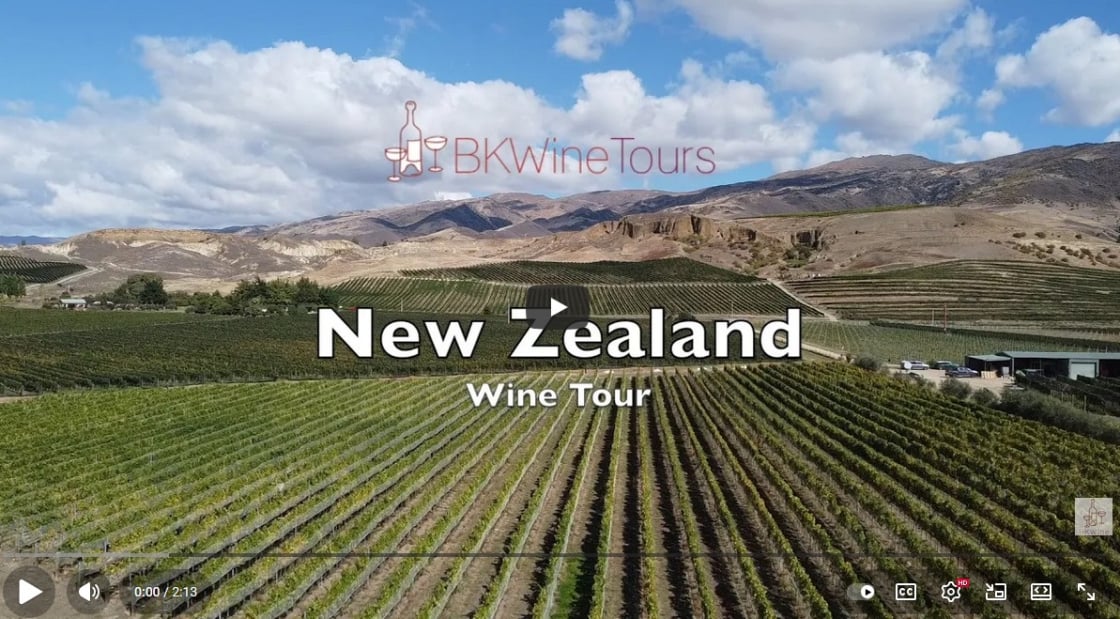
One of our tour participants on the New Zealand wine tour in March this year has made a video about the tour and his experiences there (thank you Erik!). A little bit of the contents: “BKWine’s carefully planned journey with selected visits takes you far beyond the main tourist routes to meet the visionaries who are transforming New Zealand’s wine industry. You will experience private tastings at prestigious wine estates such as Tarras Vineyards and Felton Road, while enjoying beautiful landscapes all around. BKWine’s expert guides share their passion and insider knowledge, ensuring a personal and intimate experience in small groups. Enjoy exclusive invitations to private wine cellars and behind-the-scenes tours, where you meet winemakers and learn about their craft up close. Enjoy breathtaking landscapes, from rolling vineyards to dramatic coastlines, with time to relax and enjoy the beauty of New Zealand.”
Read more, watch the video and plenty of pictures, in the article on BKWine’s wine tour blogg: A luxurious journey and adventure through New Zealand’s winelands – a promotion video for our NZ tour.
Read more on BKWine’s wine tour blogg with videos and pictures on The unforgettable spectacle of Mount Cook and the Tasman Glacier Lake. Just one of the very special experiences on this tour.
Travel: Come on a wine tour to New Zealand with BKWine.
See: See pictures and videos from New Zealand 2025 in the wine tour’s Facebook group.
—
Wine Tours
—
Details on our current and future wine tours. Book a wine tour with the “World’s Top Wine Tour Operator” today (or when you feel like travelling to wine country).
Treat yourself to an unforgettable experience in the beautiful wine-lands together with some of the most knowledgeable wine people around. Book now!
—
Bordeaux, the embodiment of French wine excellence? | wine tour

Bordeaux is a wine region but can also be seen as a brand or a trademark that is recognised all over the world. Although the region is adapting to new consumer tastes it remains a benchmark of quality, an ideal that many others strive to match. Our tour in Bordeaux is filled with exquisite gourmet lunches and exclusive wine tastings at some of the many châteaux. It is a deep dive into Bordeaux, where we aim to showcase both the classics—the grand cru estates—and the smaller, family-run properties that give the region its diversity and charm.
We will explore the Médoc, Pessac-Léognan, Sauternes and Saint-Émilion and also visit the lesser known Entre-deux-Mers, a region where you can find a lot of innovation and forward-looking initiatives. Each producer we meet offers a unique piece of the puzzle that helps us understand how Bordeaux truly works.
We should perhaps add that the lunches we have on our Bordeaux tour are some of the most exceptional that you can ever experience.
Come and discover French wine and food in Bordeaux on this luxurious wine tour with BKWine, one of the world’s leading wine tour operators (*).
Book now!
- Bordeaux wine tour, 13-19 September (programme available soon)
(*) And the only one who has authored 13 award-winning wine books, one of which is on Bordeaux wines.
We can add that we have also written an award-winning book about Bordeaux.
9 days immersion into the wines of Burgundy and Champagne | wine tour

This 9-day tour offers an extraordinary opportunity to enjoy both the heart of Burgundy, one of France’s most iconic and revered wine regions, and Champagne, the world’s most famous sparkling wine. We will stay 4 nights in Beaune, the wine capital of Burgundy and also a cultural treasure, home to the magnificent Hôtel Dieu (Hospice de Beaune), and four nights in Reims, home to many of the famous Champagne houses as well as one of France’s most magnificent cathedrals.
In Burgundy, we will explore legendary wine villages such as Gevrey-Chambertin, Vosne-Romanée, Morey-St-Denis and Puligny-Montrachet. We will visit family-run estates and also some of the renowned negiocants. We will taste some exceptional wines, many grand crus and premier crus included.
Going up to Champagne by bus, we will make a stop in Chablis for a taste of their crisp chardonnays. Our days in Champagne will be filled with extraordinary tastings (and lunches) that will make you realise the diversity of styles the region offer. Champagne is special in many ways. Its northern location gives the wines a freshness that is difficult to imitate. Learn all the secrets of making a champagne on our tour.
This tour is the perfect blend of wine, food, and culture. Stay tuned for the detailed program, coming soon.
Come on this exceptional tour to two of the world’s most respected wine regions with BKWine, one of the world’s leading wine tour operators (*).
- Burgundy – Champagne Grand Tour, 23 September – 1 October, 2026 (detailed programme will be available soon)
Book now!
(*) And the only one who has authored 13 award-winning wine books.
Escape winter in your dreams… or better, in the sun-soaked wine regions of the Southern Hemisphere

There are, of course, those who love winter, with snow and sleet, short days and evenings in front of the fire (at best). But there are also those who want to enjoy wonderful summer weather, delicious gastronomic meals, and exciting wine tastings. Perhaps topped off with a dip in the pool or a journey through spectacular landscapes. And not least, the chance to experience different cultures in countries that you may only visit once in your life.
This winter (early 2026), unfortunately, there is no chance of joining any of our wine tours in the southern hemisphere. They are all fully booked. But they will return in 2027, and considering that they are long in time and long-distance trips, it might be a good idea to start planning already. All three of our “winter tours” take you to the summer, the wines and gastronomy of the southern hemisphere; they give you memories for a lifetime, truly spectacular experiences with programs that we can only design thanks to our long experience of these wine countries and our close contacts with the producers there. Join us on a very special wine tour in 2027:
- Argentina and Chile in South America, January 2027
- South Africa, February 2027
- New Zealand, March 2027
—
Bespoke Tours
—
(examples – we do others too)
—
Forget the myths, learn the truth and reality of Champagne | wine tour *

There are many myths and misconceptions about champagne. Let’s look at some? “Small, fine bubbles are a sign of quality.” Wrong. It could be a sign of a specially prepared (etched) or towel-dried glass (or some other effects) but it doesn’t tell you anything about the taste. “There are 49 million bubbles in a bottle.” No, it depends on many different factors, such as bubble formation points (nucleation sites) in the glass. And one of the big ones: “Grand cru is a sure sign of quality in champagne.” No, grand cru is an obsolete designation in a now abolished price control system. The quality depends primarily on the person who makes the wine. “There are seven, no, now with voltis, eight permitted grapes.” No, it’s actually nine. “The grape variety is no longer called pinot meunier but just meunier and it’s not a pinot at all.” Wrong. The grape variety is still called pinot meunier (sometimes meunier for short) and is actually technically (genetically) the same as pinot noir. You can dive into all this when you come to Champagne.
But the most important thing about champagne is that it is an outstanding wine. It is a fantastic wine in itself but also something that goes perfectly with food, as you will discover at our delicious gastronomic lunches. A champagne tour like no other with the people who wrote one of the most comprehensive book on champagne ever.
Come on this luxurious wine tour to Champagne with BKWine, one of the world’s leading wine tour operators (*).
(*) And the only one who has authored 13 award-winning wine books.
Tuscany, gentle hills with beautiful vineyards and olive trees | wine tour *

Vineyards are part of the Tuscan landscape. Grapevines thrive on the hills where the soil is poor but the sun exposure is excellent. The landscape is quite mountainous in places. The vines are grown between 200 and 600 meters above sea level. How the wine tastes depends on many factors: the grapes, the altitude, the soil and not least the philosophy of the wine producer. There are great variations in Tuscany and the producers like to emphasise these differences that the various districts within Tuscany have. Everyone is proud of their special part of Tuscany. Chianti conquered the world in the 70s with its straw-covered bottle. At that time it was known as an easy-drinking and unpretentious wine. Today we get Chianti in all versions, from top quality prestige wine to uncomplicated fruity lunch wines. The occasion will decide. We will of course visit both Chianti and Chianti Classico (two different geographical areas) and also Montalcino a little further south, known for its fantastic Brunello di Montalcino. Discover the enchanting Tuscany with us; not only the wines but also the landscape, the people and the gastronomy.
Come on this wonderful wine tour to Tuscany with BKWine, one of the world’s leading wine tour operators (*).
(*) And the only one who has authored 13 award-winning wine books.
Piedmont, the land of truffles and fog; and Barolo, Barbaresco | wine tour *

It is a beautiful landscape that meets us in Piedmont. The region certainly merits its name, “at the foot of the mountain”; the Alps tower at the horizon. The signature grape Nebbiolo also has good reason for its name; it is often foggy (nebbia) in the mornings in the hills. The Alps to the north are not far away. Around us lie medieval villages such as Barolo, La Morra, Serralunga, Gavi with their impressive defensive castles, often real fortresses. The autumn landscape is magnificent. Nebbiolo and the other grapes often grow on slopes, sometimes really steep. We taste our way through many fantastic wines, Barolo, Barbaresco and other nebbiolos, as well as slightly lesser-known but equally outstanding wines with arneis, barbera, dolcetto, etc. We enjoy the local cuisine. We visit the truffle market in Alba with its overwhelming scent experience (can you over-dose in truffles?) and we eat a delicious closing lunch with the famous white truffle.
Come and discover all the good things that Piedmont has to offer on this wonderful wine tour with BKWine, one of the world’s leading wine tour operators (*).
(*) And the only one who has authored 13 award-winning wine books.
Douro Valley: The unique landscape that cannot be described but must be seen | wine tour *

The Douro Valley impresses like few other wine regions. There is probably no other wine region that has so many steep slopes in such a large area. The Douro Valley must be seen with your own eyes. No pictures can really do it justice. When it comes to the Douro Valley, the word unique can be used without hesitation. On these difficult-to-work slopes, port wine has been made for many centuries. The “regular” (not fortified) red and white wines, called simply “Douro wines”, have not been known for as long. This combination of Douro wines and port wines makes this tour particularly interesting. We taste all types of wines. The red and also the white Douro wines (non-fortified wines) are fantastic. For many, port wines are an exciting (re-)discovery. You don’t always realise that port wine comes in so many different types and, for instance, what the differences are between an old tawny and a vintage. Completely new dimensions open up. We stay two nights in Porto, an exciting city to explore. On the other side of the river lies Vila Nova de Gaia and this is where the big port wine houses age their wines. We stay two nights at the luxurious Vintage House in the valley, close to the vineyards.
Come and discover the spectacular landscapes and wines of the Douro on this wine tour with BKWine, one of the world’s leading wine tour operators (*).
(*) And the only one who has authored 13 award-winning wine books.