—
In search of lost grapes
—

Our guide at Champagne Leclerc-Briant tells us with a certain pride in her voice that they have planted the grape voltis, Champagne’s eighth permitted (with restrictions) grape variety. This is proof that the house is committed to sustainability. (There are actually nine permitted grapes in Champagne now.)
A new grape variety in Champagne that can be included to a maximum of 5% in a blend may not be a big sensation (however, any change in Champagne is, to some extent, a sensation). However, it is further proof of how the choice of grape variety in the vineyard can affect how winegrowers tackle climate change. Fungus-resistant grape varieties, such as voltis, are (very) slowly making their way in because they require less spraying. One of the main reasons for allowing voltis is not the taste, but that it requires less spraying and is therefore useful to plant close to houses, schools etc.
–
Calling all wine lovers:
Do you know someone who might be interested in a wine tour?
Please tell them about BKWine Wine Tours! We do wine tours like no other.
A leading wine tour operator since more than 20 years.
Thank you in advance for your help and support!
(If you have Swedish friends, please know that we have a separate,
more extensive travel program in Swedish: BKWine Vinresor.)
–
But it is not just about reducing spraying. Drought and heat waves can ruin a harvest just as much as humidity and fungal diseases. This is where the lost (or forgotten) grapes come into play. A “forgotten grape” is a local grape variety that once existed in a region and later (more or less) disappeared for various reasons.
In the 20th century, the number of grape varieties decreased significantly in many wine countries, including France. Many were never replanted after phylloxera. Some were sacrificed when appellations were introduced, and the number of grape varieties had to be controlled and limited. Grapes that disappeared were perhaps difficult to grow, had too high or too low yields, produced wines that were too light in colour and style and didn’t suit the consumers of the time, etc. Now, wine producers are having second thoughts. Diversity within cultivated species can help make agriculture more resilient to climate change.
The fact that a grape variety is lost is not in itself a guarantee that it should be allowed to make a comeback. Many grape varieties are best left forgotten. A good example is some of what they had in Languedoc 50–60 years ago. The grape statistics from 1961 in Languedoc look pretty different compared to today. Who today has heard of aramon, grand noir de la calmette, grapput or valdiguié, not to mention abouriou? Aramon is still around, but only just. Grand noir de la calmette is described as a high-yielding grape variety that produces simple wines. All of these are mainly forgotten (although valdiguié is said to still exist in California, and the French Southwest is trying to revive abouriou). Yet in 1961, Aramon was planted on 160,000 hectares, grand noir de la calmette on 41,000 and abouriou on 5,000 hectares.
As a grape variety, you can be forgotten very quickly. Think of poor müller-thurgau in New Zealand. As recently as 1996 (!), the grape was New Zealand’s most planted. Now there are only a couple of hectares left. It has certain qualities, yes, but would New Zealand have had the same success with this grape as with sauvignon blanc? Probably not. But we recently had a delicious müller-thurgau from the Czech Republic, and there are some MT enthusiasts in Germany. If treated correctly, most grapes can produce interesting wines.
To deserve to be resurrected, certain qualities are required, such as good acidity and late ripening, so that the growers don’t have to harvest in sweltering summer. The whole idea is based on the belief that the forgotten grapes that have grown in a particular place for a long time are better adapted to that place than imported grape varieties.
An example of a resurrected grape is sumoll, an old variety in Penedès in Catalonia that can withstand drought very well. I have already come across two producers who have planted it. One of them, Parés Baltà, has grafted it onto old merlot vines (old local grape replaces an imported grape). Another is castets, which used to be grown in Bordeaux and then disappeared. In 2019, Bordeaux allowed seven new grape varieties in a ten-year experiment. Castets was one of the grapes; it buds late, ripens late and has good resistance to fungal diseases.
A similar trend is that people are increasingly experimenting with “unusual” grape varieties from other countries, often precisely for their tolerance to hot climates. For example, the Greek assyrtiko has been planted in France and the Cypriot xynisteri and maratheftiko in Australia and Italy, respectively.
Forgotten grapes have become something of a popular movement. France has associations for people who would rather not drink anything else. For environmentalist Miguel Torres in Spain, the concept of sustainability includes finding lost grapes. In California, there is an annual Festival of Forgotten Grapes; one is also organised annually in France, les Rencontres des Cépages Modestes. Wine enthusiasts become even more enthusiastic when seeing an unknown grape name on the label.
The New World countries made a name for themselves with a few French grape varieties, but they had been making wine for a long time before the international breakthrough. Also there, producers are realising the benefits of bringing forward their forgotten grapes, semillon, colombard, cinsault, carignan, país, counoise, palomino, teroldego… to our delight. Some grapes have almost completely disappeared in Europe but are thriving in South America, such as the delicious criolla grapes. But that story is for another time.
A suggestion: next time you buy wine, look for a grape variety that you have never heard of (or at least not tasted). And then tell us what you think!
Burgundy and Rhone Valley wine tour
The Burgundy and Rhone Valley wine tour is fully booked this year. Why not come to Bordeaux instead?:
New Bordeaux Tour
Our Burgundy and Rhone Valley tour has had such a success so it is currently fully booked. So, we have decided to add a new tour this coming autumn season: a new five-day extravagant Bordeaux tour.
Summer in Winter Time
All three winter wine tours will be back in 2026. We don’t promise summer, sun, and beach in the middle of northern winter, but we can without hesitation promise summer, sun, wine and gastronomy (and a little beach if you want). See how it’s been this year in these three tour Facebook groups:
- Chile and Argentinas wine tour on Facebook
- South Africa wine tour on Facebook
- New Zealand wine tour on Facebook
Click Join and then choose how many notifications you want – everything, the most important, nothing.
More info on our wine tours here. “World’s Top Wine Tours“. Tours with the people who know wine and who have an unrivalled experience of wine and tours.
Travel in wine regions with someone you trust.
Enjoy the Brief!
Britt & Per
Wine editors to the national encyclopaedia, Forbes.com contributors, award-winning wine book authors, wine tour advisors to the UN and national wine organisations, wine judges … and, above all, passionate wine travellers.


If you appreciate what we do, you can help us:
Tell your friends about the Brief or send it to them.
Like us and follow us on social media:
BKWine Magazine on Facebook | Wine Tours on Facebook
—
What’s on at BKWine Tours
BKWine is also one of the world’s leading wine tour operators. Here’s what we currently have on our scheduled wine tour program:
- Burgundy and the Rhone Valley, 17-25 September 2025
- Bordeaux, wine, gastronomy, chateaux, 28 September – 4 October 2025
–
- Chile-Argentina, 12-25 January 2026
- South Africa, 15-25 February 2026
- New Zealand, 10-25 March 2026
We also make custom designed wine tours.
And we have an extensive travel program in Swedish: BKWine Vinresor.
We’re different than most other wine tour operators. We are people who know wine inside out, who travel constantly in wine regions, who write award winning books about wine. Who do this out of passion.
Our wine tours are different from others.
A typical year we organise more than 30 wine tours to destinations across the world. In Europe: France, Italy, Spain, Portugal and more. World-wide: South Africa, Chile, Argentina, New Zealand. Thanks to our Scandinavian background we have a separate offer for the Scandinavian market. These are sometimes offered in English and also available as custom made tours. For example, these destinations:
—
Read our books
We have written eleven wine books. They have won awards from the Gourmand Awards, The International Organisation of Vine and Wine (OIV) and others.
Unfortunately, only one of them has been translated to English; the others are (so far) only available in Swedish. This is the one that is available in English:
Here’s the full list of our books:
- The Wonderful World of Wine
- Languedoc-Roussillon, the Wines of Southern France
- Champagne, the Wine and the Growers
—
News from the World of Wine
—
Short briefs on what’s been happening in the world of wine recently and other interesting things.
—
How to make a quick switch from growing red wine to white wine
The world’s wine consumers are demanding more white wines. Red wine sales are declining. But what if your vineyard is planted mainly with red grape varieties? Removing and replanting a vineyard is costly, and it takes years before you have a new vineyard in production. A more affordable and quicker solution is to graft a white variety onto your already established red variety vines. The root system is already in place, and you can start harvesting in the second year. Wine growers in Lodi, California, learnt that during a recent “top-grafting a vineyard” meeting organised by the Lodi Winegrape Commission. The region is expected to do quite a lot of top grafting this year, as grapes such as pinot grigio, sauvignon blanc, and chardonnay are more in demand than Bordeaux grapes and petite sirah (durif). Top-grafting has its risks, though. The success rate varies and can be low. The most important thing is to have a healthy vineyard with no viruses or other diseases. Read more about top grafting winebusiness
Finally! Cellar-door sales legal in Sweden

Yes, cellar-door sales of wine, spirits and beer are still illegal but will become legal on June 1. But… In mid-April, the Riksdag voted yes to “farm sales”. This means that from June 1, it will be legal to sell your products at a winery, microbrewery, cider producer or distillery. The law will initially apply on a trial basis for six years. But it will come with many conditions and restrictions. The details are not entirely clear, but it will likely include, among other things, that you will be allowed to buy a maximum of 0.7 litres of spirits (where did the 75-centiliter bottle go?), three litres of wine, three litres of beer and three litres of any other fermented alcoholic beverages. In order to be allowed to shop, you must also participate in an “awareness-raising” event, which you will have to pay for. And the producer must not be too large, so, if what you are selling becomes too popular, you can lose the permit. Some producers have already said that these are unreasonable requirements and say they are not bothering. We will see. Others have commented on the requirement for “education” – if you have to participate in a “knowledge raising event” to buy three litres of wine, why not make the same requirement for Systembolaget, where there is no upper limit? Or maybe just five minutes? A requirement that every customer at Systembolaget must participate in a five-minute knowledge increase before being allowed to shop…
The opponents of “farm sales” painted disaster scenarios of that the monopoly would quickly “fall” if cellar-door sales were allowed. We’ll see if that happens. Hardly likely; I suspect it was just rhetoric. The monopoly will probably remain until more people realise that it serves no purpose, that it does not provide Sweden with a good range of wines at all, and more importantly (but rarely stated) it will be easier for Sweden to have an effective alcohol policy to counteract the negative effects of alcohol when it is no longer the alcohol shop that handles that task.
New disease-resistant grape varieties in France: mourvèdre blanc, mourvèdre gris, exelys
In France, wine producers can now plant three new white grape varieties that could be interesting from a sustainability perspective. The grapes are mourvèdre blanc, mourvèdre gris and exelys. The first two are mutations of the better-known mourvèdre noir, grown in southern France (and elsewhere, a.k.a. monastrell, mataro). The mutations do better during droughts and heat waves than mourvèdre noir and have better disease resistance. They bud late, which reduces the risk of damage from spring frosts. Their thick skin provides good protection against hail. Exelys is a fungus-resistant hybrid that requires minimal spraying against fungal diseases. It has excellent built-in resistance to downy and powdery mildew, two difficult fungal diseases. The producer must watch out for black rot, though. Read more: vitisphere
World wine production and consumption drop in 2024

Global data on the wine sector in 2024 was released at OIV’s (International Organisation of Vine and Wine) press conference on April 15th. John Barker, the director general of OIV, admitted that there are challenges for the wine sector, but he added that there are also many positive factors. The wine industry is working hard to adapt to droughts, floods, diseases, etc., caused by climate change, and it has, says Barker, “an opportunity to position itself as a role model for sustainability”.
The world vineyard surface area in 2024 was 7.1 million hectares, which includes table grapes, grapes for juices, raisins, etc. This is a slight reduction (0,6%) since the last few years and “shows adaptation to increased costs and less consumption”. World wine production was 226 million hectolitres, a decrease, and the lowest production since 1962, owing to weather challenges and market adaptation. 60 % of the production is in the EU and 20 % is in the Southern Hemisphere. Three countries – France, Italy and Spain – account for 50 % of the production. There were production losses in both hemispheres in 2024. Wine consumption is at 212.4 million hectolitres, also the lowest since 1961. It is a decrease of 3.3% compared to 2023. In the USA, the largest wine market globally, consumption decreased by 5.8% in 2024 and fell to 33.3 million hectolitres. 47 % of wine consumed is imported, a sharp increase since the 1990s. Read more: oiv
France selects the most iconic French dishes
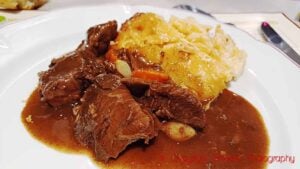
Ipsos, an expert in market analysis, conducted a market survey in March in connection with the presentation of the new edition of the Michelin Guide. Ipsos asked the French people which French dishes they considered most iconic of France. The answers were a cavalcade of French specialities.
The three most emblematic dishes were bœuf bourguignon, cassoulet and blanquette de veau. Cassoulet is a speciality from southwestern France, a filling dish of white beans, tomatoes, garlic, sausages, pork belly and confit de canard, simmered in a pot. Blanquette de veau is a traditional veal stew. Confit de canard (duck leg slowly cooked in its own fat) is a very tasty dish in itself and ended up in fourth place. Next on the list were choucroute, crêpes et galettes, raclette, pot-au-feu (slow-cooked stew of tender beef, root vegetables, and marrow bones), escargots de bourgogne (snails), bouillabaisse (fish stew), coq au vin, quiche lorraine, gratin dauphinois, fondue savoyarde, tartiflette (gratin of potatoes, roast pork, onions and reblochon, a cheese from Savoie), moules marinières, ratatouille, soupe à l’oignon, salade niçoise and steak tartare (beef minced with a knife or a food grinder). They didn’t suggest any particular wines to go with the food. Our recommendation: take something you like, it will work well. Read more: ipsos
Cava: sales are down, but value is on its way up

The severe drought in Catalonia over the last three years has considerably reduced the production and supply capacity of the D.O. Cava. Thankfully, the rain did come at last this winter, and hopefully, the producers can look forward to a normal growing season in 2025. In 2024, the D.O. Cava sold 218 million bottles, a 13.4% decrease from 2023, with 78 million bottles sold domestically (down 3.5% in volume, but up 3.7% in value) and 140 million internationally (down 18%).
Even if sales were down, cava has managed to increase sales value, with a 7.2% growth in the domestic market and a continued rise in international markets. This increase in value is long overdue and a real positive sign for Cava. Key growth areas include organic cavas and the premium cavas de guarda superior paraje calificado. Belgium is the largest export market, followed by the USA and the United Kingdom. Japan, the Netherlands, and Sweden increased their sales notably. Read more: cava
The 1855 Bordeaux Classification turns 170

The 1855 Bordeaux Classification turned 170 on April 18, 2025. Whatever you think of it, it is an essential component of French wine history. It may be worth considering how it came about. The classification was published at the 1855 Paris World Exhibition, the first World Exhibition in France. Previously, there had been one in London in 1851 and one in New York in 1853. Technological advances were the focus in London. However, in Paris, Emperor Napoleon III also wanted to promote agriculture through France’s top wines. The Bordeaux Chamber of Commerce and Industry was tasked with producing a list of the best red and white wines. The ranking was based not on tasting but on price, an objective criterion (the only one). The list included 60 chateaux in the Médoc (in five groups) and 27 chateaux in Sauternes. The city of Libourne on the right bank had its own chamber of commerce, which was not consulted by the organisers of the World Exhibition, which perhaps explains why no châteaux from the right bank were included in the list.
The prestige that this classification later acquired and still has cannot be underestimated. But that was not the intention at all. Baron Philippe de Rothschild, owner of Château Mouton Rothschild, writes in his autobiography Vivre la Vigne: “For those who were there in 1855, the classification was temporary, with no future importance, to be forgotten as soon as the exhibition was over.” But it was not forgotten. Instead, it was eventually pulled out of a drawer, and the rest is history. A history that Philippe de Rothschild helped to write by lobbying for 50 years to upgrade his château from the second group to the first, the only change ever made to the classification (well, almost). Because, of course, it was never the intention of the organisers that anything would change, as the list was only meant to exist for a short time. But today it feels a bit outdated to use a price list from 1855, which ranked wineries by the names of the building/brands, as an indication of quality. Read more: vitisphere
More: About the 1855 Bordeaux classification here. The full list of chateaux in the 1855 Bordeaux classification.
Travel: Come on a wine tour to Bordeaux with BKWine. (PS: We’ve written a prize-winning book on Bordeaux.)
Elaborador Integral, cava from independent growers (like grower champagne)

If you prefer looking for small growers when you buy champagne instead of the big houses, maybe it is time to do the same when you buy Cava, the Spanish sparkling. Cava from the big houses are well distributed all over the world, but some smaller producers are also seen on the export market and are well worth looking for. There is a special stamp on the label that you should look for: Elaborador Integral. This stamp enables you to identify cava that comes from a winery that owns the land, has picked their own grapes, made the vinification, the first fermentation, the second fermentation in bottle and the ageing in their cellars.
Two new wineries were recently added to the list of Elaborador Integral and the total number is now 17. These are the wineries: Agustí Torelló Mata, Alta Alella, Avinyó, Blancher, Bodegas Escudero, Can Suriol, Celler Carlos Andreu, Família Ferrer, Gatell, Giró del Gorner, Juvé & Camps, Mastinell, Ondarre, Parató Vinicola, Parés Balta, Tomé & Bel, Vins el Cep.
Some of our special favourites are Alta Alella, Carlos Andreu, Parés Baltà and Juvé & Camps.
—
Features of the Month
—
Articles and features published on BKWine Magazine and on our wine travel blog and (occasionally) photography blog in the last month.
—
Pairing champagne with vegetables? Absolutely, says the three-star vegetarian chef
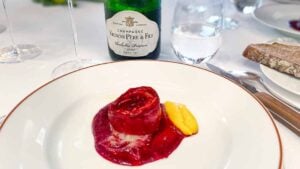
Champagne goes with everything, it is sometimes said. But does it match well with a cuisine based solely on vegetables and plants? To explore this wine and food pairing, BKWine Magazine contributor Jeanne Peixian Qiao, went to Alain Passard’s Arpège in Paris and found excellent matches with the champagnes from Chantal Gonet, Stéphane Vignon, and Lombard. Champagne may not pair well with “everything”, but it certainly matches well with plant-based food.
This article is the second text by Jeanne Peixian Qiao who recently joined BKWine Magazine’s group of guest writers.
Read more in Jeanne Peixian Qiao’s article on BKWine Magazine: In Alain Passard’s Secret Garden: Where Vegetables Meet Champagne Blanc de Blancs.
Travel: Come on a wine tour to Champagne with BKWine. (PS: We’ve written a prize-winning book on Champagne.)
An introduction to Rioja with its three regions

Rioja is a big wine region, covering some 60,000 hectares, but it has traditionally been thought of as a single homogenous district in spite of it having three quite distinct parts, Rioja Alta, Rioja Alavesa, and Rioja Oriental. Today, wine producers are increasingly emphasising the characters of each of the sub-regions, and sometimes even villages. With this article BKWine Magazine introduces a new contributor, Michael Pope, who explores and explains the different Rioja styles.
With this article, we introduce a new guest writer on BKWine Magazine, Michael Pope, who will primarily cover Spain.
Read more in Michael Pope’s article on BKWine Magazine: Rioja: A Land of Three Voices and Three Regions.
A series of exciting wines from Champagne Duval-Leroy together with the owner | Britt on Forbes
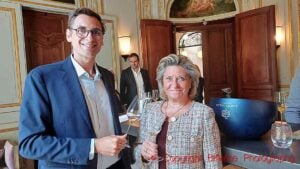
In Champagne, you often classify producers as either “houses”, or “independent growers”. The houses are big and often rather anonymous companies owning little or no vineyards, buying grapes from small growers. The “independent producers” are smaller family-owned wineries that own their own vineyards and make wine from grapes they have grown. Champagne Duval-Leroy is somewhere in between. They are considered as a “house” since they don’t own all the vineyards they make wine from but they are family owned. A little while back, they launched their latest edition of their exclusive rosé champagne, Femme De Champagne Rosé De Saignée 2008. We have tasted it, as well as a few others of their top champagnes, and talked to the owner Carol Duval-Leroy.
Read more in Britt’s article on BKWine Magazine, originally published on Forbes: Femme De Champagne Rosé De Saignée 2008 and four other outstanding wines from Champagne Duval-Leroy.
Travel: Come on a wine tour to Champagne with BKWine. (PS: We’ve written a prize-winning book on Champagne.)
Chateau Kamnik, a pioneer for North Macedonia and for vranec | Per on Forbes | video
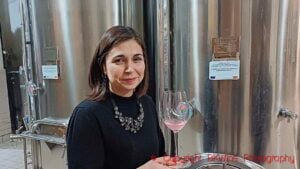
Chateau Kamnik is one of the first wineries in North Macedonia to become internationally known and acclaimed. It is conveniently located on the edge of the capital Skopje. It is also one of the first privately owned quality-oriented wineries to be established after the end of the Cold War. However, the country has 4000 years of winemaking to look back on. A while back, I sat down and talked to their winemaker Sandra Georgievska.
Read more in Per’s article (including a video) on BKWine Magazine, originally published on Forbes: Chateau Kamnik, a pioneer for North Macedonia and for vranec | Per on Forbes
—
Wine Tours
—
Details on our current and future wine tours. Book a wine tour with the “World’s Top Wine Tour Operator” today (or when you feel like travelling to wine country).
Treat yourself to an unforgettable experience in the beautiful wine-lands together with some of the most knowledgeable wine people around. Book now!
—
From Burgundy to the Rhone Valley: history, tradition, innovation, and magnificent wines | wine tour

Our tour starts in Burgundy, in the region of Côte d’Or. This is where you will find the most famous and magnificent Burgundy wines. In Burgundy, they are very proud of their vineyard plots, sometimes very small plots that they vinify separately just to show the consumers the difference in terroir. Winegrowers in Burgundy can have 20–30 different vineyard plots spread across different villages; sometimes they make as many different wines. Sometimes they blend, to get some wines with slightly larger volumes. Even the monks many centuries ago understood the differences in soil, sun exposure, etc. History and tradition are important in Burgundy. But innovation and new technology also thrive. Our days in Burgundy will take you behind the scenes of some small (and some slightly larger) producers. You will taste some fantastic wines, also grand cru. Our lunches will include both Burgundian specialties, not least delicious cheeses, and fine gastronomic cuisine.
After Burgundy we continue south to the Rhône Valley. We will spend one night in the small village of Tain l ’Hermitage, right in the middle of the Hermitage and Crozes-Hermitage appellations. We will then continue to the southern part of the Rhône Valley, a region rich in history and with a stunning landscape. The most famous wine here is Châteauneuf-du-Pape and we will of course visit some producers here and admire what is left of the Papal summer chateau in the picturesque village of Châteauneuf-du-Pape.
This tour is currently fully booked. Why not join us on our new five-day Bordeaux tour that we have just added due to the high demand?
Come and discover French wine and food in Burgundy and the Rhone Valley on this luxurious wine tour with BKWine, one of the world’s leading wine tour operators (*).
- The Grand French Wine tour to Burgundy and the Rhône Valley, 17-25 September, 2025
(*) And the only one who has authored 13 award-winning wine books.
Bordeaux, big famous châteaux and magnificent (!) châteaux lunches | wine tour

The fantastic châteaux lunches are one of the things you will not forget from your Bordeaux tour with us. Star-chef level French gastronomy and matching wines. In private chateau dining rooms. Someone once said “just the lunches on this tour are worth far more than the whole trip costs”… It’s undoubtedly true. Bordeaux is a very big wine region and during our days here we will show you the most important sub-regions, Médoc, Saint Emilion, Graves, Pessac-Léognan and Entre-deux-Mers. Bordeaux is known for its famous (and sometimes expensive) wines and we will visit this category of châteaux but we also want to show you some smaller family-owned châteaux. It is perhaps not quite what you think but Bordeaux is actually a district where you find more quality for your money than in many other regions. If you know where to look. The style of the wines varies and today most châteaux want to make wines that can be drunk without long aging in the cellar but that also have the potential to be aged if you want. In the past, the grapes were often harvested too early, before they were fully ripe, which resulted in astringent wines needing much time in the cellar. Today, people know better. The wines still have a good dose of tannins, they don’t want to take away what is typical of Bordeaux and what makes them such perfect food wines. Come along and try some of France’s most famous wines from a district that has more châteaux than any other wine region. A château around every bend in the road.
Come and discover French wine and food in Bordeaux on this luxurious wine tour with BKWine, one of the world’s leading wine tour operators (*).
Book now!
- Bordeaux wine tour, 28 September – 4 October
(*) And the only one who has authored 13 award-winning wine books.
Magnificent landscapes, passionate people, top-quality wines and gastronomy | wine tour in Chile and Argentina
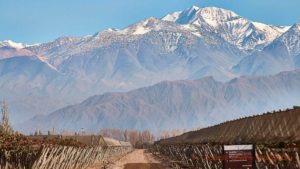
A wine tour to South America is always an adventure. In a good way, I might add. We visit the continent’s two largest wine countries, Argentina and Chile. They are located close to each other and are separated by the mighty Andes mountain range. After a week in Argentina, we travel over the mountains to Chile, a spectacular bus trip that you will never forget. Amazing landscapes. And the entire wine tour is spectacular too. The wines we taste, the passionate wine people we meet, the landscapes, the lunches that are often gastronomic barbecues outdoors, delicious empanadas, the famous meat. Mendoza with its high-altitude vineyards, Chile’s Pacific coast with its cool climate, Colchagua in the interior with its famous carmenère and cabernet sauvignon, Buenos Aires with its tango show, Valparaíso with its street art. The ambition of the wine producers is on top today in both Chile and Argentina. The wine industry is in constant motion and various research projects are underway to better understand the terroir. The wines today are top-class, very exciting. And the variety is great. We enjoy magnificent nature and relax with a (mandatory!) pisco sour by the pool.
Come on this exciting wine tour to Argentina and Chile with Britt and Per of BKWine, one of the world’s leading wine tour operators (*).
- Chile-Argentina, 12-25 January 2026
Book now!
(*) And the only one who has authored 13 award-winning wine books.
More inspiration: You can get an even better feeling for what you will experience on this tour if you visit the latest tour’s own Facebook group. Lots of pictures and videos from the tour (join the group and you’ll get an update when we post new contents): The wine tour to Chile and Argentina 2023.
The land of contrasts | wine tour in South Africa

If you are lucky and the weather is nice when you fly into Cape Town, you will get a wonderful view of the beautiful vineyard landscape, The Cape Winelands. It is actually quite a dramatic landscape with the highest peak at 2247 meters (7,372 ft). When you travel around the vineyards, you will experience a mixture of mountain passes and lush plains, in the warm Swartland not always so lush. Lots of diversity and sometimes dramatic. The wines also have lot of diversity. There are dramatic differences between the wines from the cool south coast – chardonnay and pinot noir from the lovely Walker Bay – and the wines further north from a climate that is more like Spain. And yet, only a few hours away. The wines from South Africa are fantastic, maybe one of the world’s most underrated wine countries. We will also take you to some very different and unexpected gastronomic experiences, including perhaps South Africa’s best winery restaurant. Need I mention that we lodge well, very well, e.g. swimming pools in all hotels, so you can fully enjoy the hot days with a relaxing evening dip.
Come on this fabulous wine tour to South Africa with Britt and Per of BKWine, one of the world’s leading wine tour operators (*).
Book now!
(*) And the only one who has authored 13 award-winning wine books.
More inspiration: You can get an even better feeling for what you will experience on this tour if you visit the latest tour’s own Facebook group. Lots of pictures and videos from the tour (join the group and you’ll get an update when we post new contents): The wine tour to South Africa 2024.
A string of pearls of unforgettable experiences of wine, nature, culture, gastronomy and history | wine tour New Zealand

New Zealand is a place where the adventure begins at the moment of departure from home. When you go to a country on the other side of the globe, the journey there becomes part of the experience. Once you are there, every day offers new landscapes and new experiences. We travel by comfortable bus from New Zealand’s largest city, Auckland, through the beautiful nature that the North Island offers. We stop in Rotorua and look at sulphur-spraying geysers and bubbling steaming mud pools. We are invited to dinner at the home of a Maori family who tells us about their culture and food. We visit the wine districts Hawkes Bay and Wairarapa. The last stop on the North Island will be the capital Wellington, then it is time to take the ferry to the South Island.
After a few days in Marlborough, the district that made the country’s wines famous throughout the world, we go on to Christchurch, the impressive Southern Alps and then to the gem of Central Otago, Queenstown. Central Otago, the world’s southernmost wine region (!), is today one of the world’s most famous pinot noir regions.
The food experiences are an important part of the trip. We enjoy fresh seafood, New Zealand lobster, local salmon and of course lamb. New Zealand is famous for its fine lamb. Wine runs like a common thread throughout the trip but you will experience so much more. Nature, culture, food and wine merge into an adventure to remember.
Come on this stunning wine tour to New Zealand with Britt and Per of BKWine, one of the world’s leading wine tour operators (*).
Book now!
(*) And the only one who has authored 13 award-winning wine books.
More inspiration: You can get an even better feeling for what you will experience on this tour if you visit the latest tour’s own Facebook group. Lots of pictures and videos from the tour (join the group and you’ll get an update when we post new contents): The wine tour to New Zealand 2024.
—
Bespoke Tours
—
Forget the myths, learn the truth and reality of Champagne | wine tour

There are many myths and misconceptions about champagne. Let’s look at some? “Small, fine bubbles are a sign of quality.” Wrong. It could be a sign of a specially prepared (etched) or towel-dried glass (or some other effects) but it doesn’t tell you anything about the taste. “There are 49 million bubbles in a bottle.” No, it depends on many different factors, such as bubble formation points (nucleation sites) in the glass. And one of the big ones: “Grand cru is a sure sign of quality in champagne.” No, grand cru is an obsolete designation in a now abolished price control system. The quality depends primarily on the person who makes the wine. “There are seven, no, now with voltis, eight permitted grapes.” No, it’s actually nine. “The grape variety is no longer called pinot meunier but just meunier and it’s not a pinot at all.” Wrong. The grape variety is still called pinot meunier (sometimes meunier for short) and is actually technically (genetically) the same as pinot noir. You can dive into all this when you come to Champagne.
But the most important thing about champagne is that it is an outstanding wine. It is a fantastic wine in itself but also something that goes perfectly with food, as you will discover at our delicious gastronomic lunches. A champagne tour like no other with the people who wrote one of the most comprehensive book on champagne ever.
Come on this luxurious wine tour to Champagne with BKWine, one of the world’s leading wine tour operators (*).
- This tour is currently available as a bespoke tour for small groups.
(*) And the only one who has authored 13 award-winning wine books.
Tuscany, gentle hills with beautiful vineyards and olive trees | wine tour

Vineyards are part of the Tuscan landscape. Grapevines thrive on the hills where the soil is poor but the sun exposure is excellent. The landscape is quite mountainous in places. The vines are grown between 200 and 600 meters above sea level. How the wine tastes depends on many factors: the grapes, the altitude, the soil and not least the philosophy of the wine producer. There are great variations in Tuscany and the producers like to emphasise these differences that the various districts within Tuscany have. Everyone is proud of their special part of Tuscany. Chianti conquered the world in the 70s with its straw-covered bottle. At that time it was known as an easy-drinking and unpretentious wine. Today we get Chianti in all versions, from top quality prestige wine to uncomplicated fruity lunch wines. The occasion will decide. We will of course visit both Chianti and Chianti Classico (two different geographical areas) and also Montalcino a little further south, known for its fantastic Brunello di Montalcino. Discover the enchanting Tuscany with us; not only the wines but also the landscape, the people and the gastronomy.
Come on this wonderful wine tour to Tuscany with BKWine, one of the world’s leading wine tour operators (*).
- This tour is currently available as a bespoke tour for small groups.
(*) And the only one who has authored 13 award-winning wine books.
Piedmont, the land of truffles and fog; and Barolo, Barbaresco | wine tour

It is a beautiful landscape that meets us in Piedmont. The region certainly merits its name, “at the foot of the mountain”; the Alps tower at the horizon. The signature grape Nebbiolo also has good reason for its name; it is often foggy (nebbia) in the mornings in the hills. The Alps to the north are not far away. Around us lie medieval villages such as Barolo, La Morra, Serralunga, Gavi with their impressive defensive castles, often real fortresses. The autumn landscape is magnificent. Nebbiolo and the other grapes often grow on slopes, sometimes really steep. We taste our way through many fantastic wines, Barolo, Barbaresco and other nebbiolos, as well as slightly lesser-known but equally outstanding wines with arneis, barbera, dolcetto, etc. We enjoy the local cuisine. We visit the truffle market in Alba with its overwhelming scent experience (can you over-dose in truffles?) and we eat a delicious closing lunch with the famous white truffle.
Come and discover all the good things that Piedmont has to offer on this wonderful wine tour with BKWine, one of the world’s leading wine tour operators (*).
- This tour is currently available as a bespoke tour for small groups.
(*) And the only one who has authored 13 award-winning wine books.
Douro Valley: The unique landscape that cannot be described but must be seen | wine tour

The Douro Valley impresses like few other wine regions. There is probably no other wine region that has so many steep slopes in such a large area. The Douro Valley must be seen with your own eyes. No pictures can really do it justice. When it comes to the Douro Valley, the word unique can be used without hesitation. On these difficult-to-work slopes, port wine has been made for many centuries. The “regular” (not fortified) red and white wines, called simply “Douro wines”, have not been known for as long. This combination of Douro wines and port wines makes this tour particularly interesting. We taste all types of wines. The red and also the white Douro wines (non-fortified wines) are fantastic. For many, port wines are an exciting (re-)discovery. You don’t always realise that port wine comes in so many different types and, for instance, what the differences are between an old tawny and a vintage. Completely new dimensions open up. We stay two nights in Porto, an exciting city to explore. On the other side of the river lies Vila Nova de Gaia and this is where the big port wine houses age their wines. We stay two nights at the luxurious Vintage House in the valley, close to the vineyards.
Come and discover the spectacular landscapes and wines of the Douro on this wine tour with BKWine, one of the world’s leading wine tour operators (*).
- This tour is currently available as a bespoke tour for small groups.
(*) And the only one who has authored 13 award-winning wine books.