—
When ideals meet reality — water becomes wine?
—

The French winemaker we had in front of us the other week on the Rhône wine tour looked a little stumped. He had just been asked a question that seemed to be quite straightforward: “Is an appellation always a uniform terroir?” The winemaker was silent for a while and then said, “Yes, that’s a very good question.”
If you take a step back and think about what an “appellation” is, the answer is perhaps that the idea from the beginning was that an appellation should have a uniform terroir, a common character. But in the long run, it couldn’t be maintained. Our winemaker’s own appellation, Crozes-Hermitage, is a good example. It originated in the vineyards on the slopes around the town of Crozes-Hermitage. But soon more people wanted to join in. In 1952, a large area was added to the plains south of the town.
–
Calling all wine lovers:
Do you know someone who might be interested in a wine tour?
Please tell them about BKWine Wine Tours! We do wine tours like no other.
A leading wine tour operator since more than 20 years.
Thank you in advance for your help and support!
(If you have Swedish friends, please know that we have a separate,
more extensive travel program in Swedish: BKWine Vinresor.)
–
There’s nothing wrong with the plains. But the terroir is no longer uniform. Sometimes an appellation can simply be a commune and a commune boundary is not drawn with geology in mind. And so on. Sometimes you wonder why the boundary between two appellations has been drawn here and not there. A grower we met in Châteauneuf-du-Pape recently on our Rhône Valley wine tour gave us an interesting perspective on this.
In 1935, when the boundaries of the AOC Châteauneuf-du-Pape were established, not all growers thought it would be an advantage to be located inside the boundary. Why didn’t they want to be part of this prestigious appellation? Well, inside you were only allowed to produce 35 hl/ha and outside you could produce double that and probably more. And this was a time when the French drank their brave 100 litres per person per year. In other words, it was easy to sell a lot of wine. It was a difficult decision to say “I’ll only make a third as much wine from now on”. Today, the land value (and wine price) is ten times higher inside the boundary than outside.
That’s a story similar to one of the grand chateaux in Bordeaux, one that is not in the famous (but obsolete) 1855 classification and that we often visit on our Bordeaux wine tour. Why is it not in the classification? Well, it is said that the owner at the time thought it was a ridiculous long journey on horseback (this was in 1855!) in to the town of Bordeaux just to be included on a listing of wines ranked by price. So he couldn’t be bothered.
There are many ideals (or old traditions) in the wine world that must be abandoned when reality changes. Today, heat waves are more frequent in France and most other wine countries in Europe and the issue of irrigation is widely discussed. Irrigation was long taboo in France, as in other countries, and people looked down on the New World who could not manage without “pumping up their grapes with water”. Now the barking is different.
Water, can’t it be used for other things now that the growing season is getting warmer and warmer? Michel Chapoutier, whom we met the other week on the Rhône wine tour in Tain l’Hermitage, has built a wine empire in the Rhône Valley. He also has many ideas about how the wine industry can innovate in order to survive. One of his radical ideas is that you could add water when the alcohol content gets too high and thus get a more balanced wine. Some people are horrified, but is it really worse to add water to reduce the alcohol content than to add sugar (chaptalise) to increase the alcohol content? This has been done for a long time in many countries.
In the past, high alcohol content was a sign of quality. Now consumers want Châteauneuf-du-Pape with 12%, which is certainly not an easy task for wine producers.
It is a fine-tuned balance between tradition, character, identity, market realities, climate change and consumer preferences.
In fact, it is basically about that the wine producers need to have the right (or manageable) conditions to make good wine and we wine consumers need to have realistic expectations of the wine.
There are limits to puritanism. Did you know, for example, that some of the wine called “Pauillac” is actually grown in the neighbouring commune of Saint Julien? Or that there are excellent white Aloxe-Corton made from pinot gris grown in the heart of chardonnay country? But that is a story for another day.
Travel
The travel season is in full swing so it’s a bit of a challenge to have time to write and edit the newsletter order this month.
We’ve already covered a number of different wine regions this season – Piedmont, Loire Valley, Burgundy, Tuscany, Rhône Valley, Austria and a few more. And there are more to come.
Most of the producers we’ve spoken to are very positive about the vintage – as they should be and as they usually are. If I were to try to summarize what all the winemakers we’ve met have said so far and make a very rough generalization, 2025 will be a good vintage, but with a bit less quantity than usual, even though some regions have had their challenges (both heat and rain). But, as I said, that’s a rough generalization.
But now it’s time to plan your trip for next year.
We have a few places left on the wine tour to New Zealand.
Soon we will also publish the entire autumn travel program for 2026.
- New Zealand, March 10-25, 2026
Book now! Only a limited number of places left.
More info on our wine tours here. “World’s Top Wine Tours“. Tours with the people who know wine and who have an unrivalled experience of wine and tours.
Travel in wine regions with someone you trust.
Enjoy the Brief!
Britt & Per
Wine editors to the national encyclopaedia, Forbes.com contributors, award-winning wine book authors, wine tour advisors to the UN and national wine organisations, wine judges … and, above all, passionate wine travellers.


If you appreciate what we do, you can help us:
Tell your friends about the Brief or send it to them.
Like us and follow us on social media:
BKWine Magazine on Facebook | Wine Tours on Facebook
—
What’s on at BKWine Tours
BKWine is also one of the world’s leading wine tour operators. Here’s what we currently have on our scheduled wine tour program:
- Burgundy and the Rhone Valley, 17-25 September 2025
- Bordeaux, wine, gastronomy, chateaux, 28 September – 4 October 2025
–
- Chile-Argentina, 12-25 January 2026
- South Africa, 15-25 February 2026
- New Zealand, 10-25 March 2026
–
- Burgundy and the Rhone Valley, 23 September – 1 October 2025 (full programme coming soon)
- More coming
We also make custom designed wine tours.
And we have an extensive travel program in Swedish: BKWine Vinresor.
We’re different than most other wine tour operators. We are people who know wine inside out, who travel constantly in wine regions, who write award winning books about wine. Who do this out of passion.
Our wine tours are different from others.
A typical year we organise more than 30 wine tours to destinations across the world. In Europe: France, Italy, Spain, Portugal and more. World-wide: South Africa, Chile, Argentina, New Zealand. Thanks to our Scandinavian background we have a separate offer for the Scandinavian market. These are sometimes offered in English and also available as custom made tours. For example, these destinations:
—
Read our books
We have written eleven wine books. They have won awards from the Gourmand Awards, The International Organisation of Vine and Wine (OIV) and others.
Unfortunately, only one of them has been translated to English; the others are (so far) only available in Swedish. This is the one that is available in English:
Here’s the full list of our books:
- The Wonderful World of Wine
- Languedoc-Roussillon, the Wines of Southern France
- Champagne, the Wine and the Growers
—
News from the World of Wine
—
Short briefs on what’s been happening in the world of wine recently and other interesting things.
—
Heatwave brings early harvest in France
The heatwave in France at the beginning of August was a bit of a problem for winegrowers. But the producers we have met so far this autumn have been satisfied with the quality of the 2025 vintage. In many places it has been record early. In some places in the southern Rhône Valley, they were already starting on August 14. In Burgundy, 2025 is one of the earliest vintages in recent decades, starting as early as August 18. Two heatwaves, in June and August, accelerated ripening but reduced the harvest. It rained during the harvest, which was also a complicating factor. But the grapes were ripe and with the rain they risked rotting so it was best to harvest, reasoned Hanna Schaps, winemaker at Maison Schaps in Côte de Beaune.
Travel: Come on a wine tour to Burgundy with BKWine. (PS: We’ve written a prize-winning book on Burgundy.)
Copper back on the headlines in France, diseases threaten with more products banned

France will in future have fewer copper products to choose from to protect its vines against the serious fungal disease mildiou. ANSES (Agence nationale de sécurité sanitaire de l’alimentation, de l’environnement et du travail – National Agency for Food Safety, Environment and Work Environment) has chosen not to renew the authorisation for a variety of copper products. This worries winegrowers and not least those who work organically because for them there are no alternatives to copper. Those that are still permitted are considered by many to be far too weak. But even conventional growers are concerned because they also use copper, often in combination with a synthetic product. The products that have not been approved are considered by ANSES to be risky for the people who carry out the spraying. Although natural products, so-called biocontrol or sustainable plant protection, are constantly being developed, there is currently no other product that can replace copper. Read more: vitisphere.
Alain Jaume in the southern Rhône Valley received a prestigious award from Guide Hachette

On our tour to the southern Rhône Valley recently, we visited the Alain Jaume winery who proudly announced that they had been named Producer of the Year (Vigneron de l’Année) in the Guide Hachette des Vins de France 2026, one of France’s most prestigious and important wine guides. The Guide Hachette is widely used by the French when shopping for wine. So it’s no wonder that Hélène Jaume and her colleagues were so happy. The winery makes wines all over the southern Rhône Valley, and a little in the northern Rhône. Try them if you can find them! Here are some of the wines we tasted at their winery:
- Alain Jaume Côtes du Rhône Grand Veneur Organic Reserve, 2022
- Châteauneuf-du-Pape Les Origines 2022, Domaine Grand Veneur Alain Jaume
- Gigondas Terrasses de Montmirail 2022, Alain Jaume
- Vacqueyras Grande Garrigue 2022, Alain Jaume
- Lirac, Clos Sixte 2022, Alain Jaume
- Côtes du Rhône Les Champauvins 2022, Alain Jaume
Travel: Come on a wine tour to the Rhone Valley with BKWine.
Vranken-Pommery sells Heidsieck & Co
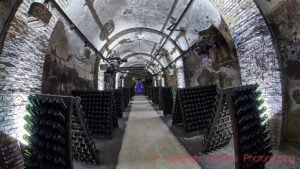
Champagne group Vranken Pommery Monopol, the second largest champagne conglomerate, has recently announced that it will sell one of its champagne houses – Heidsieck & Co – to rival group Lanson-BCC, fourth in the list of largest groups. The reason is said to be that it wants to reduce its debt and strengthen its financial autonomy. Vranken Pommery also presented a new strategic direction: to focus more on Champagne Pommery and premium wines. It also owns the champagne houses Vranken and Charles Lafitte. Heidsieck & Co is recognisable by its blue-and-yellow label and is among the 15 largest champagne brands sold in French grocery stores. The buyer, Lanson-BCC, is already represented in this type of shops with the champagnes Tsarine, Chanoine, Alfred Rothschild & Cie and Lanson. Read more: rayon-boissons
Travel: Come on a wine tour to Champagne with BKWine. (PS: We’ve written a prize-winning book on Champagne.)
Austria continues to lead in organic viticulture
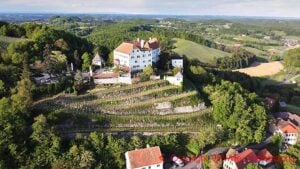
Exactly a quarter (25.0%) of the vineyard area in Austria is certified organic, according to the latest figures from the country’s Ministry of Agriculture. This is a new record for Austria, which means that the country maintains its position as the world leader in organic viticulture. In 2000, the share of organic vineyards in Austria was only 1.7%. Since then, it has increased rapidly. Other environmental certification programs are also common. Every tenth organic vineyard is biodynamic, and if you count the area, it’s 14% of the organic vineyard area. From this, we can conclude that the biodynamic ones have on average a larger area than the average organic one, which is an interesting detail. In addition, 27% of the vineyard area is certified by Sustainable Austria (Nachhaltig Austria). Read more: austrianwine
Some suggestions for good wines from Tuscany
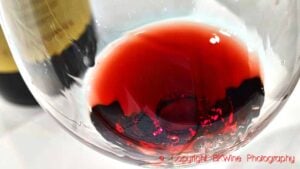
Inspired by our wine tour to Tuscany at the beginning of the season, I have put together some tips for good wines from this beautiful wine region:
- Chianti Classico Nuovo, Fattoria Poggerino, 2022
- A family-owned winery run by Piero Lanza. This particular wine is made in an egg-shaped tank, hence the name (n-ouvo)
- Casanuova di Nittardi, Chianti Classico, Vigna Doghessa, 2023
- The winery has a fantastic collection of art because the owner is also a gallery owner
- Brunello di Montalcino, Col d’Orcia, 2020
- From one of the major producers in Montalcino, which has several wines in Sweden
- Read about Col d’Orcia at BKWine Magazine
Here are some other good producers, inspired by the wine tour to Tuscany, that you can look for: Castellinuzza (Chianti), Canalicchio di Sopra (Montalcino), San Polino (Montalcino), Azienda Agricola Oliviera (Chianti).
—
Features of the Month
—
Articles and features published on BKWine Magazine and on our wine travel blog and (occasionally) photography blog in the last month.
—
A beautiful video about New Zealand and our wine tour there
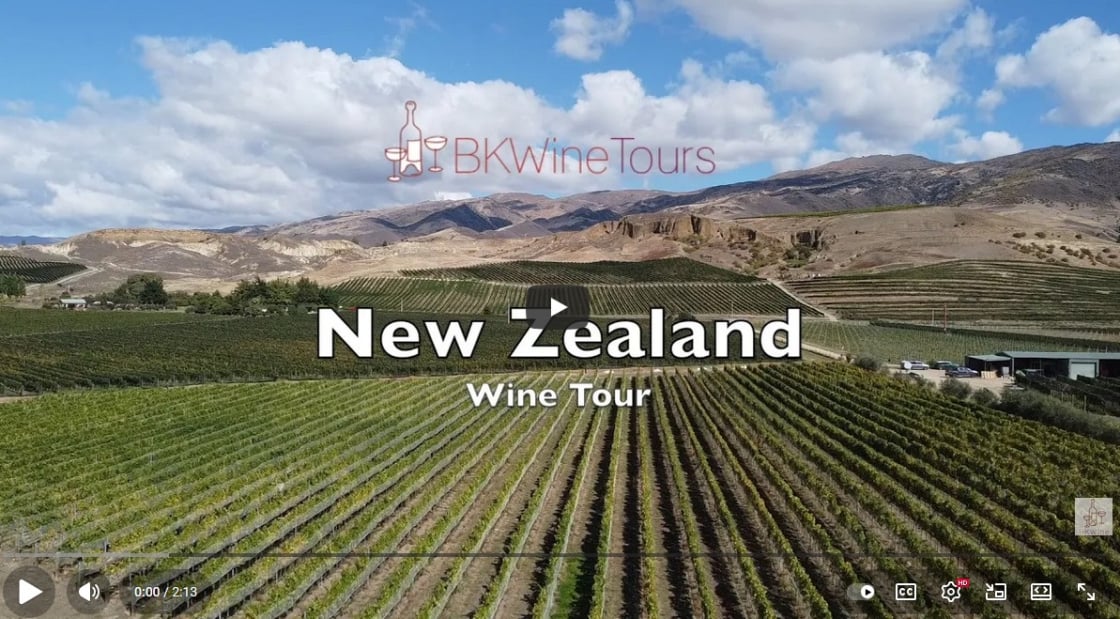
One of our tour participants on the New Zealand wine tour in March this year has made a video about the tour and his experiences there (thank you Erik!). A little bit of the contents: “BKWine’s carefully planned journey with selected visits takes you far beyond the main tourist routes to meet the visionaries who are transforming New Zealand’s wine industry. You will experience private tastings at prestigious wine estates such as Tarras Vineyards and Felton Road, while enjoying beautiful landscapes all around. BKWine’s expert guides share their passion and insider knowledge, ensuring a personal and intimate experience in small groups. Enjoy exclusive invitations to private wine cellars and behind-the-scenes tours, where you meet winemakers and learn about their craft up close. Enjoy breathtaking landscapes, from rolling vineyards to dramatic coastlines, with time to relax and enjoy the beauty of New Zealand.”
Read more, watch the video and plenty of pictures, in the article on BKWine’s wine tour blogg: A luxurious journey and adventure through New Zealand’s winelands – a promotion video for our NZ tour.
Read more on BKWine’s wine tour blogg with videos and pictures on The unforgettable spectacle of Mount Cook and the Tasman Glacier Lake. Just one of the very special experiences on this tour.
Travel: Come on a wine tour to New Zealand with BKWine.
See: See pictures and videos from New Zealand 2025 in the wine tour’s Facebook group.
—
Wine Tours
—
Details on our current and future wine tours. Book a wine tour with the “World’s Top Wine Tour Operator” today (or when you feel like travelling to wine country).
Treat yourself to an unforgettable experience in the beautiful wine-lands together with some of the most knowledgeable wine people around. Book now!
—
New Zealand – world-class sauvignon blanc and pinot noir | wine tour *

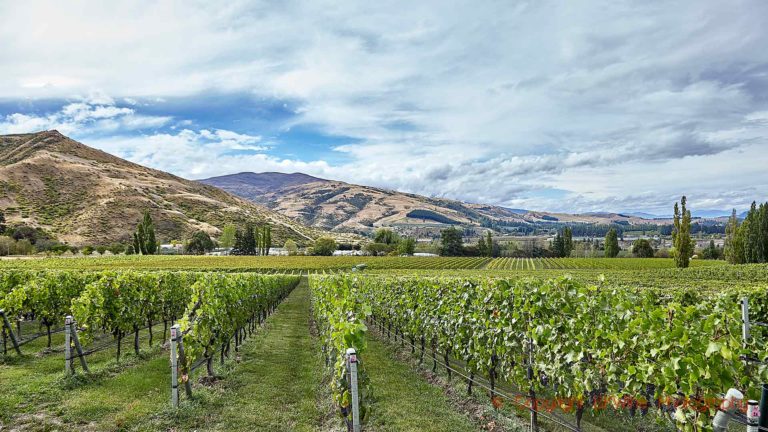
Despite its small size, New Zealand has made a significant mark on the wine world. The country has almost as much acreage of sauvignon blanc as France, and it is mainly in Marlborough that this grape thrives. Wines with freshness and hints of tropical fruit are produced here, and sometimes with impressive complexity. It was precisely sauvignon blanc that made New Zealand a wine country to be reckoned with. Until the 1990s, wine production was very small. And the big grape was, surprise surprise, the German müller-thurgau. Today, it is almost gone, and sauvignon blanc, pinot noir, riesling, cabernet sauvignon, syrah and more have taken its place.
Join us on an unforgettable tour in March and discover the country’s diversity of wine regions and grape varieties. In Central Otago on the South Island, pinot noir has found its perfect place, with wines that can compete with the best from Burgundy. In Hawke’s Bay, you’ll discover flavourful syrah and generous chardonnay, while Martinborough also excels with its elegant pinot noir. On Waiheke Island, just a short boat ride from Auckland, you’ll find powerful cabernet sauvignon. During the trip, we will experience both islands and enjoy the magnificent scenery that makes New Zealand so special. It is a journey filled with discovery, taste sensations, and natural beauty.
Come on this stunning wine tour to New Zealand with Britt and Per of BKWine, one of the world’s leading wine tour operators (*).
Book now!
(*) And the only one who has authored 13 award-winning wine books.
More inspiration: You can get an even better feeling for what you will experience on this tour if you visit the latest tour’s own Facebook group. Lots of pictures and videos from the tour (join the group and you’ll get an update when we post new contents): The wine tour to New Zealand 2025.
Discover the prestigious wine region of Bordeaux | wine tour *

Last minute. Book now!
If you hurry, you can still register for our Bordeaux tour, which starts at the end of September. Over five days, you will discover prestigious châteaux, enjoy gorgeous lunches at Château Lascombes, Château Beychevelle, Château Haut-Bailly, and Château Franc Mayne, and indulge in tastings at yet more châteaux. You will also meet some smaller wine producers who will tell you how the actual hard work in the vineyard is done. We also take a quick drive down to Sauternes for some noble rot wines.
Don’t miss this opportunity!
Come and discover French wine and food in Bordeaux on this luxurious wine tour with BKWine, one of the world’s leading wine tour operators (*).
Book now!
- Bordeaux wine tour, 2026 dates to be released soon
(*) And the only one who has authored 13 award-winning wine books, one of which is on Bordeaux wines.
From Burgundy to the Rhone Valley: world-famous French wines and villages | wine tour *

Our tour begins in Burgundy, a region renowned for its exceptional wines, beautiful vineyards, and world-famous villages, including Gevrey-Chambertin, Meursault, and Vosne-Romanée. We’ll stay for four nights in Beaune, a town with a cosy, small-town vibe yet a global reputation thanks to its celebrated wines. Just a short stroll from the town centre, you are surrounded by vines.
From Burgundy, we head south to the Rhône Valley, ending in Avignon. We make a stop in the village of Tain l’Hermitage for a Northern Rhône experience, and then we continue down to the Southern Rhône, which is nowadays an exciting place, buzzing with energy. Once known for simple, affordable wines, the region now boasts stars whose bottles fetch high prices, though great value can still be found. If you are into grenache, syrah, or cinsault, this is the place. Along the way, we will meet passionate producers, savour Provençal cuisine, explore the Papal Palace, and soak in the stunning scenery.
Come on this exceptional tour to two of the world’s most respected wine regions with BKWine, one of the world’s leading wine tour operators (*).
- Burgundy – Rhone Valley Wine Tour, 23 September -1 October, 2026 (detailed programme will be available soon)
Book now!
(*) And the only one who has authored 13 award-winning wine books.
Bespoke Tours
(examples – we do others too)
Forget the myths, learn the truth and reality of Champagne | wine tour *

There are many myths and misconceptions about champagne. Let’s look at some? “Small, fine bubbles are a sign of quality.” Wrong. It could be a sign of a specially prepared (etched) or towel-dried glass (or some other effects) but it doesn’t tell you anything about the taste. “There are 49 million bubbles in a bottle.” No, it depends on many different factors, such as bubble formation points (nucleation sites) in the glass. And one of the big ones: “Grand cru is a sure sign of quality in champagne.” No, grand cru is an obsolete designation in a now abolished price control system. The quality depends primarily on the person who makes the wine. “There are seven, no, now with voltis, eight permitted grapes.” No, it’s actually nine. “The grape variety is no longer called pinot meunier but just meunier and it’s not a pinot at all.” Wrong. The grape variety is still called pinot meunier (sometimes meunier for short) and is actually technically (genetically) the same as pinot noir. You can dive into all this when you come to Champagne.
But the most important thing about champagne is that it is an outstanding wine. It is a fantastic wine in itself but also something that goes perfectly with food, as you will discover at our delicious gastronomic lunches. A champagne tour like no other with the people who wrote one of the most comprehensive book on champagne ever.
Come on this luxurious wine tour to Champagne with BKWine, one of the world’s leading wine tour operators (*).
(*) And the only one who has authored 13 award-winning wine books.
Tuscany, gentle hills with beautiful vineyards and olive trees | wine tour *

Vineyards are part of the Tuscan landscape. Grapevines thrive on the hills where the soil is poor but the sun exposure is excellent. The landscape is quite mountainous in places. The vines are grown between 200 and 600 meters above sea level. How the wine tastes depends on many factors: the grapes, the altitude, the soil and not least the philosophy of the wine producer. There are great variations in Tuscany and the producers like to emphasise these differences that the various districts within Tuscany have. Everyone is proud of their special part of Tuscany. Chianti conquered the world in the 70s with its straw-covered bottle. At that time it was known as an easy-drinking and unpretentious wine. Today we get Chianti in all versions, from top quality prestige wine to uncomplicated fruity lunch wines. The occasion will decide. We will of course visit both Chianti and Chianti Classico (two different geographical areas) and also Montalcino a little further south, known for its fantastic Brunello di Montalcino. Discover the enchanting Tuscany with us; not only the wines but also the landscape, the people and the gastronomy.
Come on this wonderful wine tour to Tuscany with BKWine, one of the world’s leading wine tour operators (*).
(*) And the only one who has authored 13 award-winning wine books.
Piedmont, the land of truffles and fog; and Barolo, Barbaresco | wine tour *

It is a beautiful landscape that meets us in Piedmont. The region certainly merits its name, “at the foot of the mountain”; the Alps tower at the horizon. The signature grape Nebbiolo also has good reason for its name; it is often foggy (nebbia) in the mornings in the hills. The Alps to the north are not far away. Around us lie medieval villages such as Barolo, La Morra, Serralunga, Gavi with their impressive defensive castles, often real fortresses. The autumn landscape is magnificent. Nebbiolo and the other grapes often grow on slopes, sometimes really steep. We taste our way through many fantastic wines, Barolo, Barbaresco and other nebbiolos, as well as slightly lesser-known but equally outstanding wines with arneis, barbera, dolcetto, etc. We enjoy the local cuisine. We visit the truffle market in Alba with its overwhelming scent experience (can you over-dose in truffles?) and we eat a delicious closing lunch with the famous white truffle.
Come and discover all the good things that Piedmont has to offer on this wonderful wine tour with BKWine, one of the world’s leading wine tour operators (*).
(*) And the only one who has authored 13 award-winning wine books.
Douro Valley: The unique landscape that cannot be described but must be seen | wine tour *

The Douro Valley impresses like few other wine regions. There is probably no other wine region that has so many steep slopes in such a large area. The Douro Valley must be seen with your own eyes. No pictures can really do it justice. When it comes to the Douro Valley, the word unique can be used without hesitation. On these difficult-to-work slopes, port wine has been made for many centuries. The “regular” (not fortified) red and white wines, called simply “Douro wines”, have not been known for as long. This combination of Douro wines and port wines makes this tour particularly interesting. We taste all types of wines. The red and also the white Douro wines (non-fortified wines) are fantastic. For many, port wines are an exciting (re-)discovery. You don’t always realise that port wine comes in so many different types and, for instance, what the differences are between an old tawny and a vintage. Completely new dimensions open up. We stay two nights in Porto, an exciting city to explore. On the other side of the river lies Vila Nova de Gaia and this is where the big port wine houses age their wines. We stay two nights at the luxurious Vintage House in the valley, close to the vineyards.
Come and discover the spectacular landscapes and wines of the Douro on this wine tour with BKWine, one of the world’s leading wine tour operators (*).
(*) And the only one who has authored 13 award-winning wine books.