Harvest may seem important and in a way it is. But it is relatively simple: harvest ripe, healthy grapes. Pruning, which is done in winter, is far more complicated and requires both knowledge and skill. It is almost always done entirely manually. You cut off almost all the branches, leaving only a skinny skeleton.
But it is absolutely crucial which buds and shoots you leave. If you get it wrong, it can be a disaster.
There are a variety of different pruning and training methods, each with advantages and disadvantages. Here are the most important ones:
Guyot (single or double *, “cane pruning”), you only keep the trunk itself plus one (or two) vertical one-year branch(es) (canes), which is (are) later bent down and tied. A productive pruning.
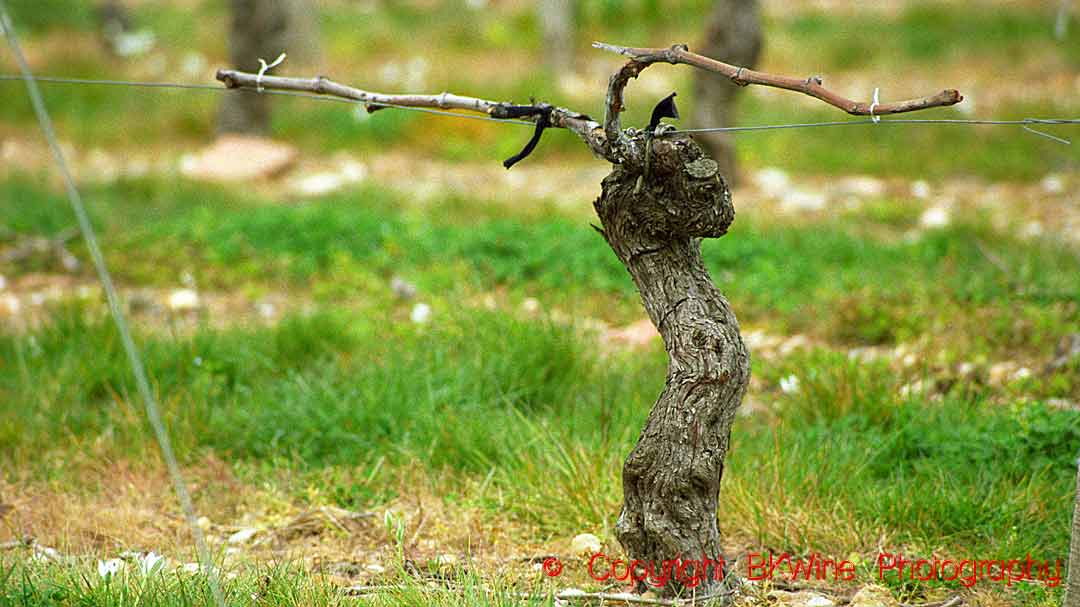
Cordon royat (single or double *, “spur pruning”), a permanent branch (or two) with a number of buds extends from the trunk, making an inverted L or a T. These are the two most common. Both are tied up on steel wires and can be harvested by machine.
* : single/simple = single branch in one direction, double = two branches, one in each direction
Gobelet
(bush vine), all one-year branches (canes) are cut down and grow during the year up to an independent bush. They can be supported by a stake and can then be called “en echalat”.
Pergola, the vine grows with permanent branches like a roof. Good for warm climates and table grapes. Winter pruning is one of the most important tools for controlling yield.
(The image above: cordon simple)