The French winemaker we had in front of us the other week on the Rhône wine tour looked a little stumped. He had just been asked a question that seemed to be quite straightforward: “Is an appellation always a uniform terroir?” The winemaker was silent for a while and then said, “Yes, that’s a very good question.”
If you take a step back and think about what an “appellation” is, the answer is perhaps that the idea from the beginning was that an appellation should have a uniform terroir, a common character. But in the long run, it couldn’t be maintained. Our winemaker’s own appellation, Crozes-Hermitage, is a good example. It originated in the vineyards on the slopes around the town of Crozes-Hermitage. But soon more people wanted to join in. In 1952, a large area was added to the plains south of the town.
–
Calling all wine lovers:
Do you know someone who might be interested in a wine tour?
Please tell them about BKWine Wine Tours! We do wine tours like no other.
A leading wine tour operator since more than 20 years.
Thank you in advance for your help and support!
(If you have Swedish friends, please know that we have a separate,
more extensive travel program in Swedish: BKWine Vinresor.)
–
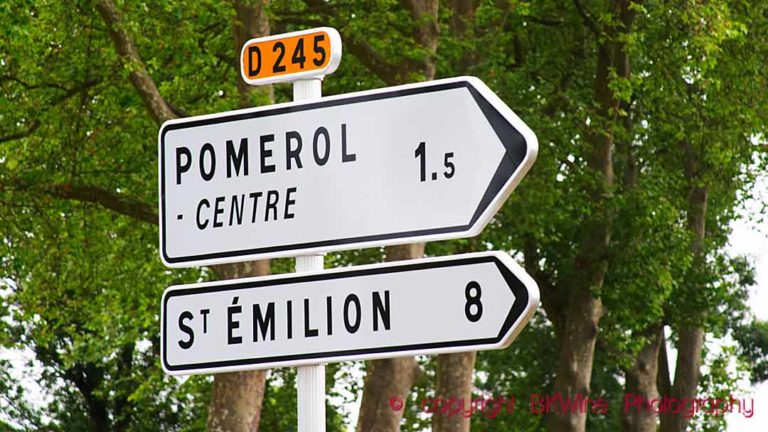
There’s nothing wrong with the plains. But the terroir is no longer uniform. Sometimes an appellation can simply be a commune and a commune boundary is not drawn with geology in mind. And so on. Sometimes you wonder why the boundary between two appellations has been drawn here and not there. A grower we met in Châteauneuf-du-Pape recently on our Rhône Valley wine tour gave us an interesting perspective on this.
In 1935, when the boundaries of the AOC Châteauneuf-du-Pape were established, not all growers thought it would be an advantage to be located inside the boundary. Why didn’t they want to be part of this prestigious appellation? Well, inside you were only allowed to produce 35 hl/ha and outside you could produce double that and probably more. And this was a time when the French drank their brave 100 litres per person per year. In other words, it was easy to sell a lot of wine. It was a difficult decision to say “I’ll only make a third as much wine from now on”. Today, the land value (and wine price) is ten times higher inside the boundary than outside.
That’s a story similar to one of the grand chateaux in Bordeaux, one that is not in the famous (but obsolete) 1855 classification and that we often visit on our Bordeaux wine tour. Why is it not in the classification? Well, it is said that the owner at the time thought it was a ridiculous long journey on horseback (this was in 1855!) in to the town of Bordeaux just to be included on a listing of wines ranked by price. So he couldn’t be bothered.
There are many ideals (or old traditions) in the wine world that must be abandoned when reality changes. Today, heat waves are more frequent in France and most other wine countries in Europe and the issue of irrigation is widely discussed. Irrigation was long taboo in France, as in other countries, and people looked down on the New World who could not manage without “pumping up their grapes with water”. Now the barking is different.
Water, can’t it be used for other things now that the growing season is getting warmer and warmer? Michel Chapoutier, whom we met the other week on the Rhône wine tour in Tain l’Hermitage, has built a wine empire in the Rhône Valley. He also has many ideas about how the wine industry can innovate in order to survive. One of his radical ideas is that you could add water when the alcohol content gets too high and thus get a more balanced wine. Some people are horrified, but is it really worse to add water to reduce the alcohol content than to add sugar (chaptalise) to increase the alcohol content? This has been done for a long time in many countries.
In the past, high alcohol content was a sign of quality. Now consumers want Châteauneuf-du-Pape with 12%, which is certainly not an easy task for wine producers.
It is a fine-tuned balance between tradition, character, identity, market realities, climate change and consumer preferences.
In fact, it is basically about that the wine producers need to have the right (or manageable) conditions to make good wine and we wine consumers need to have realistic expectations of the wine.
There are limits to puritanism. Did you know, for example, that some of the wine called “Pauillac” is actually grown in the neighbouring commune of Saint Julien? Or that there are excellent white Aloxe-Corton made from pinot gris grown in the heart of chardonnay country? But that is a story for another day.
Travel
The travel season is in full swing so it’s a bit of a challenge to have time to write and edit the newsletter order this month.
We’ve already covered a number of different wine regions this season – Piedmont, Loire Valley, Burgundy, Tuscany, Rhône Valley, Austria and a few more. And there are more to come.
Most of the producers we’ve spoken to are very positive about the vintage – as they should be and as they usually are. If I were to try to summarize what all the winemakers we’ve met have said so far and make a very rough generalization, 2025 will be a good vintage, but with a bit less quantity than usual, even though some regions have had their challenges (both heat and rain). But, as I said, that’s a rough generalization.
But now it’s time to plan your trip for next year.
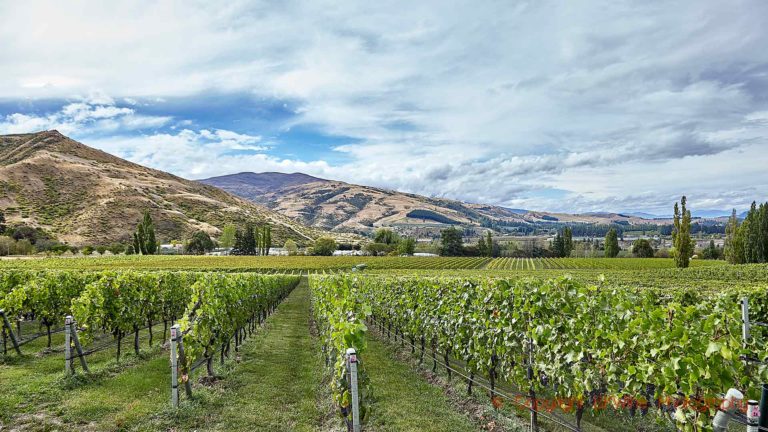
We have a few places left on the wine tour to New Zealand.
Soon we will also publish the entire autumn travel program for 2026.
- New Zealand, March 10-25, 2026
Book now! Only a limited number of places left.
More info on our wine tours here. “World’s Top Wine Tours“. Tours with the people who know wine and who have an unrivalled experience of wine and tours.
Travel in wine regions with someone you trust.
Enjoy the Brief!
Britt & Per
Wine editors to the national encyclopedia, Forbes.com contributors, award-winning wine book authors, wine tour advisors to the UN and national wine organisations, wine judges … and, above all, passionate wine travellers.
If you appreciate what we do, you can help us: Tell your friends about the Brief or send it to them.
Like us and follow us on social media:
BKWine Magazine on Facebook | Wine Tours on Facebook
Twitter | Instagram | Linkedin | YouTube