During my visit to Conca de Barberà in Spanish Catalonia in April this year, I met some very enthusiastic and ambitious wine producers. They all want to emphasise their region’s grape varieties and style. They are showing us that the cava grapes, especially parellada and macabeu, make brilliant still wines. The red Trepat grape, unique to Conca de Barberà, is adaptable in the face of climate change and makes light red wines with low alcohol levels and lots of drinkability, precisely what many consumers are looking for. But it can also be more “serious”.
It is a fairly small region so the number of producers is limited. But at the same time, it is a very talented bunch of producers that make a very wine spectrum of wines, red, rosé, white, sparkling… Just take a look at the list of permitted grape varieties. In these two article I give you some of the top producers.
Read my introduction to the region and the grapes of Conca de Barberà: Trepat, a grape that is a star, in Catalonian Conca de Barberà.
This is a longer version of an article published on Forbes.com.
Quick facts on Conca de Barberà
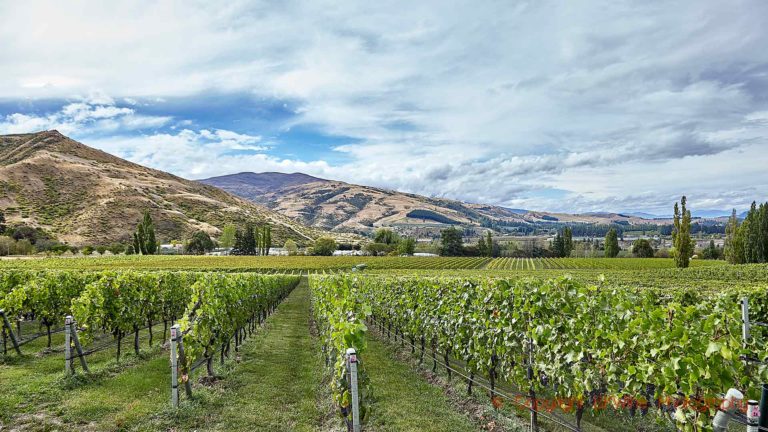
Conca de Barberà is a Spanish Protected Designation of Origin, Denominación de origen (DO) in Catalonia. It is most famous for its quite unique trepat grape. “Conca” is about an hour and a half drive west of Barcelona, in the Tarragona province. Conca meaning “basin” or “valley” which aptly describes its topography. This region is a blend of Mediterranean and continental climates, with vineyards at high altitudes (350-900 meters) which contribute to the freshness of the wines. The soils are predominantly limestone and clay.
The signature grape, trepat, produces light-bodied reds and refreshing rosés with vibrant red fruit aromas. They also grow many other red grape varieties like tempranillo and garnacha, and whites like macabeo and chardonnay. But today it is increasingly profiling itself with unique character of its trepat wines. There are some 30 producers making a wide range of wines from the 3,800 hectares.
White grapes: Sumoll blanco, parellada, moscatel de grano menudo macabeo, garnacha blanca, chenin blanc, chardonnay
Red grapes: tempranillo, syrah, sumoll tinto, pinot noir, monastrell, merlot, garnacha negra, el trepat, cabernet sauvignon
There is a lot of optimism among the producers in Conca de Barberà. They believe in their wines. As Josep Almirall, export manager at Cellers Domenys, says: “This is a magic place; we have altitude, the Mediterranean influence and diurnal differences.” They are making plans for their wine production and the development of wine tourism. And just the fact that the severe drought that began in 2021 is over raises morale.
Cava will remain the biggest product for many of them, but slowly but surely, phenomenal still wines are gaining ground under the DO Conca de Barberà, both red and white.
In this and the following article I present some of the most notable producers in Conca de Barberà.
Producers included in part 1 (this article):
- Celler Carles Andreu
- Mas Josep Foraster
- Vidbertus
Conca de Barberà producers included in the second article:
- Vins de Pedra/Marta Pedra
- Castell d’Or
- Celler Rendé Masdéu
- Cellers Domenys
- Mas de la Pansa
- Familia Torres
Celler Carles Andreu
Celler Carles Andreu is known for its excellent cava. It is a member of the exclusive association Elaborador Integral, a label for cava producers that carry out the entire production process themselves. The association currently has 17 members.
Carles Andreu started making cava in 1991, and it was only in 2000 that he started making still wines. He studied in Montpellier and came back to Conca in the early 1980s. He was then working the family vineyards and as a technician at the local cooperative. Here he met another winemaker, and they decided in 1991 to start a small production of cava in the cellar of the old family house. Ten years later, he was a pioneer producer of still red wines made from trepat, a unique grape variety. Others only used it for rosé, mainly cava rosé but also still rosé. Trepat was not, at the time, a prestige variety.
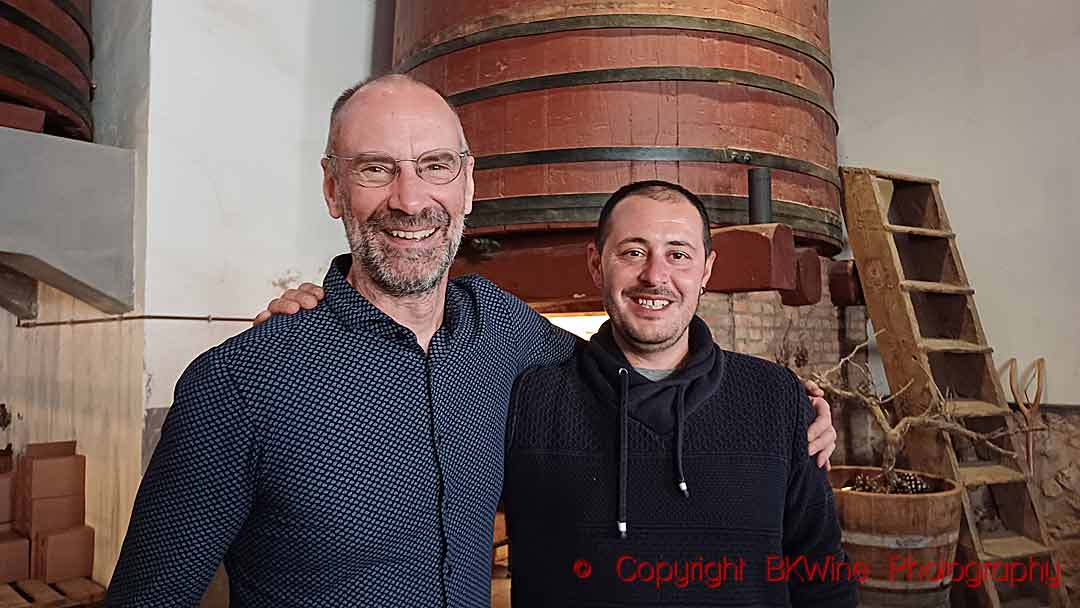
“Our main product is Cava and parellada, one of the classical cava varieties, is our main variety in the vineyard”, says Bernat Andreu who runs the Cellar with his father Carles.
They make 80% Cava and 20% still wines, which is now the norm for a producer in Conca de Barberà. They used to belong to the cooperative and still sell some grapes to the local coop.
The wines
Cava Carles Andreu L’Era del Celdoni Gran Reserva 2016 Brut Nature Parellada
This 2016 Cava was degorged in November 2024, and it spent 6 years on the lees. “This is our best plot, from a stony slope. The production is only 3,500 bottles”, says Bernat. The wine is very pure, fresh and elegant with a creamy mouthfeel. (~32 euro)
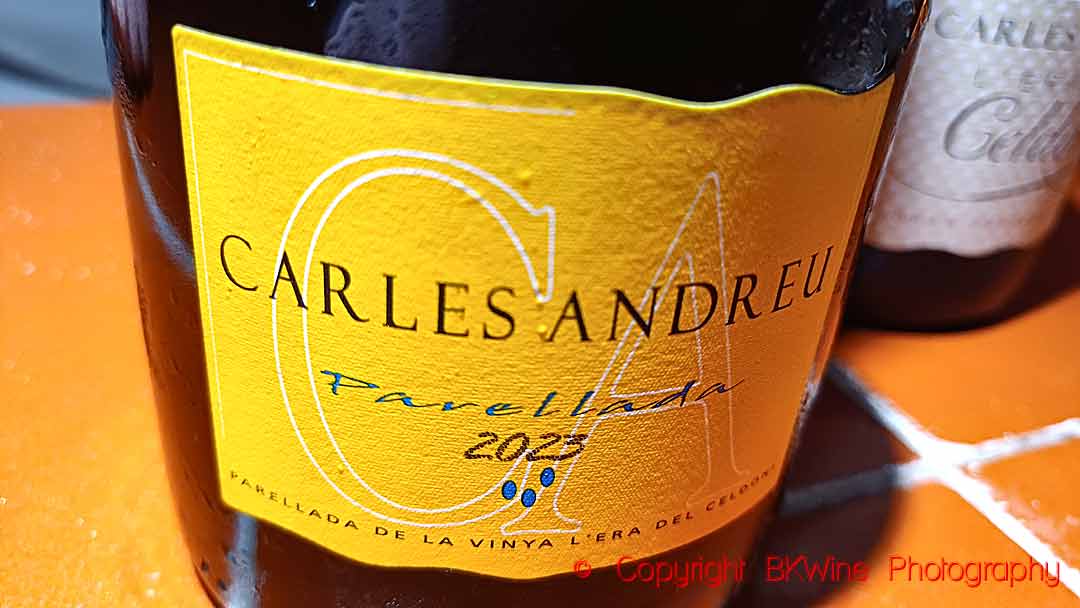
Parellada 2023 Conca de Barberà, Celler Carles Andreu
Parellada as a still wine can be magnificent, as it is here, with a superb mouthfeel and structure. 6 months on the lees (in stainless steel tank) does the trick. Parellada is often low in alcohol, and this one is 12%.
Trepat 2024 Dotze Arroves, Conca de Barberà, Celler Carles Andreu
This is a Trepat in a light, drinkable style. « We think this is a style that will be popular”, says Bernat. It is made in stainless-steel tanks. The grapes are fully ripe with a potential alcohol content of 12%. It is a delicious wine, relatively soft, flavourful, light in body, with raspberries and other red berries in the aromas and some length.
Trepat 2022, Celler Carles Andreu
This is a bolder style of Trepat. Bernat does a green harvest for more concentration and harvests late October when the grapes are almost overripe (but the wine has still only 12.5% alc.). Lovely fruit, raspberries, rich in the mouth, fresh. (16 euro)
Trepat 2019, Celler Carles Andreu
You can definitely keep your Trepat wine for some years. This is a very fruity, elegant wine with excellent drinkability.
Carles and Bernat also made a Trepat Novel in 2024 with 100% carbonic maceration and without added sulphites (at 10.5% alcohol).

Mas Josep Foraster
“At the beginning of the 1990s”, Ricard Sebastià Foraster tells me, “my uncle convinced my grandfather to make the winery and to start making our own wines. The first vintage was 1998. And I was sure I wanted to continue.”
Now he has 34 hectares in total. He owns 27 and rents some. “But everything that goes into the winery is grapes that we farm. We don’t buy grapes; we make the whole process here.”
And he makes some outstanding wines. He likes trepat, both as a single variety and in a blend. He has recently planted garnacha (grenache) to be blended with trepat. “Trepat are heat and drought-resistant, as is garnacha”, he points out.
Problem with grenache, he continues, is that it usually picks up a lot of sugar. Here also, but a little bit less because they have a lot of contrast between day and night temperatures during summer. “Grenache is an oxidative variety and is good to blend with other grapes that are reductive.
Around the winery, the vineyard is at an altitude of 400 metres. “Here, the mother rock is very close, and it is a soil with a lot of pebbles. Usually, trepat is more productive in clay soils, and here it gives smaller grapes, more concentrated.”
You can plant trepat at 1000 metres, because it has a long cycle. It ripens usually in the second half of October. So, if you have a very cool climate, it will never ripen. But for the best results, you also need this temperature contrast to stop the ripening at night.
The wines
Josep Foraster Blanc Selecció
Macabeu, chardonnay and garnacha blanca. A delicious blend with 7 months of ageing. The garnacha stays in concrete egg, macabeu in big Stockinger barrels and chardonnay in small barrels. “This is the first white we produced. Now it has changed the style a bit, and we use less batonnage (lees stirring). Well structured, delicious mouthfeel. (~ 14 euro)
Josep Foraster Brisat del Coster Macabeu
A skin macerated wine with 25 days of skin contact. Grapes are harvested early to keep acidity. Slow fermentation at low temperature, half in stainless steel and half in concrete eggs. Superb wine with flavours of apricots, some tannins from the skins, and a wine with structure.
Josep Foraster Les Gallinetes 2023
55 % Trepat, 45 % Garnacha. The first vintage of this wine was 2009. Now it is made from young vines on seven different plots. An extended period of maceration in barrels, to make it rounder. Pleasant, easy-going and easy-drinking wine with some structure.
Josep Foraster Trepat 2023
40% of the wine is aged in foudre (big oak vats) and the rest in smaller barrels. It is mouth-watering, refreshing with red fruit and also some white pepper.
Josep Foraster Julieta 2023 Trepat
Facing north in clay soil, these 84-year-old vines produce a superb wine, light in style but complex in aroma, with beautiful red fruit. 40% of the stems are added to the maceration period to give texture to the wine. Before bottling, it spends 7 months in a concrete egg. (20 euro)
Josep Foraster Pep 2022
Trepat fermented and aged in concrete tanks. The vines grow at an altitude of 580 meters in a very white alabaster soil. Old vines (85 years), whole cluster fermentation. Great complexity, length, fruit, and warm spices, vibrant. (40 euro)
Vidbertus
Albert Rovira started working in the family winery in L’Espluga de Francoli in 2005. He also makes the wines, together with oenologist Martí Magrinyà. Patrick Webb handles the essential part of getting the wines out into the world. ”Trepat, parellada and garrut, that is the future of the region, to show the character of these local grapes”, he says, and he adds that they just started with an importer in Chicago. In general, they have old vines, and that makes a difference, says Patrick. ”Some of our vineyards are 115 years old.”
The style here in Conca de Barberà is also to show wines with lower alcohol. “Both parellada and macabeu are low in sugar accumulation”, says Patrick, “and people want lower alcohol wines. We can do very distinct wines. And we need diversity because Spain needs to catch up.”
The wines
996 Garrut 2021, Vidbertus
Garrut (local name for monastrell/mourvèdre) from pre-phylloxera vineyards. “Vineyards this old do not yield that many grapes; we made 996 bottles this vintage,” says Patrick. But they give an incredible acidity. Packed with refreshing fruit and great concentration.
Elixir Trepat 2022, Vidbertus
From 53-year-old bush vines. After 17 days of fermentation and skin maceration, the wine rests for four months in a big oak vat. Good structure, some smoky and peppery notes, fresh in the finish. A superb wine.
Deliri Trepat 2024, Vidbertus
This is their first vintage of this light and slightly spicy trepat. It is fermented in steel tanks and does not undergo barrel ageing. It is a refreshing, easy-drinking and balanced wine.
Trepat ancestrale 2023, Vidbertus
An exciting wine but also very approachable. Very dry in style with aromas of fresh herbs and a hint of saltiness.
Entre2, Vidbertus
A brilliant, very fresh parellada with a vibrating acidity, very drinkable. Spends 7 months in stainless steel.
In part 2 on Conca de Barberà I will cover the following producers:
- Vins de Pedre/Marta Pedra
- Castell d’Or
- Celler Rendé Masdéu
- Cellers Domenys
- Mas de la Pansa
- Familia Torres


2 Responses
Bonjour. Super article merci !
J’aimerais travailler avec eux, pourriez-vous me partager leurs coordonnées par mail s’il vous plait ?
Bonjour Bertrand, envoyez moi un mail sur
bkarlsson@bkwine.com et je vais repondre.
Merci,
Britt