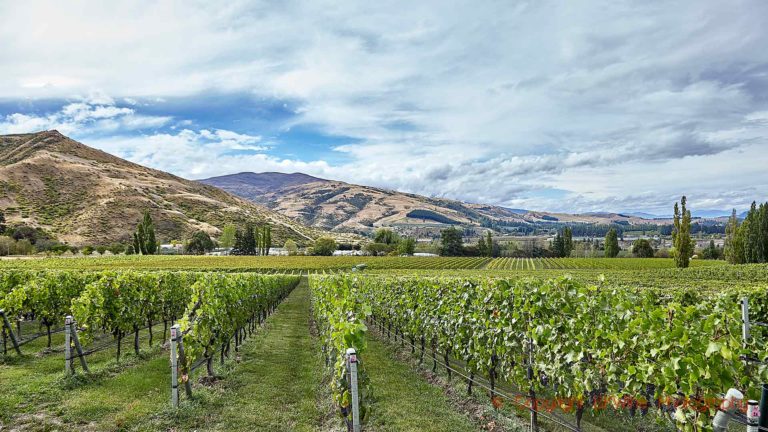
Commandaria, a legendary wine of Cyprus, interpreted by Karseras Family Winery | Per on Forbes

Share / Like:

Share / Like:

Commandaria is a legendary wine. It has a longer history than most wines, if not all other wines. The name comes from the time of the crusaders and it was already then famous across the world (as much as we knew of the world at the time). But during most of the 20th century, only four big companies dominated the wine production. It is only recently that this has begun to change. In the late 1990s Panayiotis Karseras founded the Karseras Family Winery, one of the first independent family producers to make this wine of the crusaders, wine of noblemen, wine of kings. I met with the current owner and winemaker Filippos Karseras and his father Panayiotis .

Some olive trees in Cyprus are estimated to be over 2,000 years old. That means that even though commandaria is the oldest named wine type in the world (wine of a recognised name), some of the trees on the island had been growing for more than 1000 years before commandaria became famous. But even if it is an ancient wine type, until recently, there were only a handful of very large producers making it.

This is a longer version of an article published on Forbes.com.

An ancient olive tree at the Karseras Winery, Doros, Cyprus
An ancient olive tree at the Karseras Winery, Doros, Cyprus, copyright BKWine Photography

Ancient history and legends

But let’s get back to the beginning, or at least, the beginning of the name. In the thirteenth century The Knights Templar of the Order of St. John of Jerusalem made a stopover on Cyprus. They were heading to Jerusalem for the Third Crusade. (That was a little bit more that a century after the First Crusade, which had been initiated by Pope Urban II, who came from the Champagne region, where today you can see his statue — another wine link to the crusades…) When The Knights Templars came to Cyprus they conquered a fortress that became their headquarters. It became known as La Grande Commanderie. And voilà, there we have a catchy and durable name for a wine that was already famous around the world.

Vineyards in Cyprus at the Tsiakkas winery
Vineyards in Cyprus at the Tsiakkas winery, copyright BKWine Photography

Fast forward to the late 19th century when Cyprus became a British colony (starting 1878). Commandaria became popular in the Empire and supplies needed to be secured. This led to the restructuring of the wine industry by the foreign rulers towards volume production so that it became dominated by four big companies that could assure sufficient production quantities of commandaria.

In recent decades, there’s a new dynamism in the region. Small family producers with new ideas have started to make “new-wave” commandaria. I met with Filippos Karseras who, together with his father Panayiotis, owns the Karseras Winery, one of the first producers of “growers’ commandaria”.

What kind of wine is commandaria?

But first, having a long history does not guarantee fame, so what is commandaria wine?

It is a sweet wine made in Cyprus. Two grape varieties are used, both indigenous, the red mavro and the white xynisteri.

“Mavro” means black, but, in spite of its name, it is a red grape that gives wines with light colour but often rich in alcohol. (It is not related to the Bulgarian grape mavrud.) It excels when it is used for commandaria; for dry red table wines it is often unremarkable although it is extensively planted.

Xyinisteri is the second grape allowed in commandaria. It is a white grape, considered one of the great indigenous grapes in Cyprus, also for dry table wines.

Commandaria is often made from a blend of mavro and xynisteri with the red grape being the dominant component, but single-variety wines from both grapes exist.

Vines in the vineyard of the Karseras Family Winery
Vines in the vineyard of the Karseras Family Winery, Doros, Cyprus, copyright BKWine Photography

After harvest the grapes are left in the sun to dry, typically 7 to 10 days. This increases the sugar level and is the key to making these intensely sweet wines. It is then fermented into a sweet wine, usually fortified. It must be aged in barrel for a minimum of two years.

In fact, the area of production is small, around 500 hectares including 14 villages (Agios Konstantinos, Agios Pavlos, Apsiou, Gerasa, Zoopigi, Kalo Chorio, Louvaras , Monagri, Kapileio, Silikou, Laneia, Agios Georgios Silikou, Agios Mamas, Doros). The soil is varied but the most common types are volcanic and calcareous.

According to official figures, there are 38 producers/bottlers, but I suspect that in practise, there are much fewer than that number that one can find on the market. There are, on the other hand, some 500 growers, so the average vineyard holding is very small.

One could compare commandaria to a sweet port or madeira, or to a vin santo or vin de paille, but it is a limping comparison. Commandaria is a style of its own.

An interesting evolution in Cyprus today is the renewed interest in making wines in their traditional clay jars, called pitharia, similar to kvevri in Georgia or talha in Alentejo. There is a movement to try and changed the rules so that commandaria can be made in pitharia but today it is not permitted.

Clay jars, "pitharia", used for winemaking in Cyprus fur hundreds of years at the Karseras Winery
Clay jars, "pitharia", used for winemaking in Cyprus fur hundreds of years at the Karseras Winery, Doros, Cyprus, copyright BKWine Photography

Karseras Winery

But back to one of the pioneers of “growers’ commandaria”, the Karseras Family Winery. It was established as a commandaria-producing winery in 1998, but the family had been growing grapes long before that. The winery was founded by Panayiotis Karseras and his wife Lenia. One of their four sons, also named Panayiotis Karseras, and the grandson Filippos Karseras, now run the winery. It was Panayiotis (the elder) who put the old winery building that they use today in order.

It was, in fact, one of “the four big”, Etko, who was one of the drivers behind Karseras starting making their own wine. Etko wanted to make a premium line of commandaria but had difficulties getting enough quality grapes. They asked Karseras to deliver to them separately, instead of letting their grapes, or wine, go into the “communal batch” sourced from 300 or so growers. It wasn’t until later, in 2012, that Karseras started to bottle under their own name, thanks to the attention their wine had received from international visitors at the Karseras winery. Still today, they sell a portion of their production to some of the big wineries.

Filippos Karseras and Panayiotis Karseras of the Karseras Family Winery, Cyprus
Filippos Karseras and Panayiotis Karseras of the Karseras Family Winery, Doros, Cyprus, copyright BKWine Photography

But it was also a wish to go back to a more traditional way of making commandaria, without filtering, without fortification, “we want to do less with commandaria, we don’t like too much filtering, too much clarifying. We want to do it as old-school,” says Filippos.

It was originally the international success that had driven commandaria to more technology. Filippos explains, “at the end of the 1800s there were two ships for carrying wine to the eastern Mediterranean. When they transported commandaria, they had problems with refermentation,” which can be avoided by adding alcohol and filtering.

However, even though it is a young winery, it has a long history. I asked Filippos how long his family had been making wine, “Literally, since forever. The University has told us that the first Karseras in our area were mentioned in the 11th century,” Filippos explained. No doubt there has been a family production from the vineyards they own since, well, probably not forever, but for a long, long time. But this was not commercially sold.

The old Karseras Family Winery, Doros, Cyprus
The old Karseras Family Winery, Doros, Cyprus, copyright BKWine Photography

As mentioned, the commercial market was dominated for most of the 20th century by four large companies until what I could call the revival of the Cypriot wine industry around the time Karseras began.

The Karseras Winery is in the Doros (Dhoros) village, just half an hour from the city of Limassol on the south coast of Cyprus. It is one of the fourteen villages on the southern slopes of the Troodos mountain range making commandaria. Karseras is entirely focused on producing Commandaria. They don’t make any table wine on a commercial scale.

They have around 15 hectares of vines. The vineyards are spread across six of the 14 commandaria villages. The main grape variety is the red (black) mavro, with a little bit of the white xynisteri.

Xynisteri and maratheftiko vines co-planted for pollination in a vineyard in Cyprus
Xynisteri and maratheftiko vines co-planted for pollination in a vineyard in Cyprus, copyright BKWine Photography

The two wines

Today, there are two different types of commandaria allowed in the regulations: fortified and non-fortified. Both are made from the very sweet sun-dried grapes. Traditionally, only the fortified method was used commercially, but now it is also allowed to produce non-fortified commandaria. This seems to be the preferred method among smaller producers. Filippos is a firm believer in the non-fortified approach and Karseras was one of the drivers when the rules were changed to allow a non-fortified version. “When you put spirit in it, you kill everything,” he says. They use stainless steel for vinification, then let the wine age in barrels, and finally in bottles.

The “Family Edition” of their commandaria has spent two years in barrel and undergoes a light filtering before bottling. For this wine, they use 90-95% mavro and the rest is xynisteri. It is sold in a curious short and tubby bottle with an original label with an old man with wispy hair and a long beard. But that’s why it is called the Family edition. The man on the label is a portrait of the founder of the winery, who was also a priest in the village for 60 years, namely Father Panayiotis Karseras. The wine is quite light, sweet, of course, but modestly so and very elegant with a distinctly refreshing acidity.

Karseras Winery Commandaria, Family Edition and Platinum
Karseras Winery Commandaria, Family Edition and Platinum, Doros, Cyprus, copyright BKWine Photography

For their prestige wine, called “Platinum”, they don’t do any filtering; instead, they let it age for twenty years. The current vintage is 2005. It is intensely sweet, with 155 grams of sugar per litre. But this, too, is comparatively light in body, in a very elegant style, with intense flavours of sweet apricot marmalade and fresh apricots, honey, spices… Since this wine is unfiltered it can have a slight deposit.

In the yard outside the winery, there is a row of some ancient-looking olive trees. They may not be thousands of years old, but they were certainly there and already old when Father Panayiotis, founder of the winery, was born—a history to nurture with care.

Read more on commandaria, with tasting notes on a number of different producers in the article we have previously published on Forbes: The legendary crusaders’ wine from Cyprus.

A sign at the Karseras Family Winery, Doros, Cyprus
A sign at the Karseras Family Winery, Doros, Cyprus, copyright BKWine Photography
Control samples for the department of agriculture at the Karseras Winery, Doros, Cyprus
Control samples for the department of agriculture at the Karseras Winery, Doros, Cyprus, copyright BKWine Photography

Chose your language. Read the article in:

Author:

Author:

Share this post:

Leave a Reply

Your email address will not be published. Required fields are marked *

  Subscribe to comments:

Notify me of followup comments via e-mail. You can also subscribe without commenting.

SUBSCRIBE TO OUR NEWSLETTER!

25,000 subscribers get wine news every month. You too?