|
| Wine Books(and some photography books too)Reviews of recent wine books and a selection of some of our favorite best books. Recommendations of what you should have in your library if you want to learn more about wine and reviews of recent books. We also have a page on Photography Books (click here). Note to publishers/writers: If you want
your books to be reviewed here please
contact us here.
Curious which wine books are on the top list, which are the ones that sell well at the moment? Check the best selling
wine books on Amazon.co.uk "Technical" wine booksWe have also done a list with "technical" wine books for those of you who might want to go more in depth. It includes some books on organic and biodynamic farming. You can find our list of technical wine books here. Support this site by using the links below if you are interested in buying a book (any book actually). The book selection on the right hand side here is the Amazon-generated ad selection. Book Reviews - our comments
Femme de Champagne
Champagne Guide
Japanese Whisky – Facts, figures and taste
Andrew Jefford’s Wine Course
The Wines of Burgundy
Grand atlas des vignobles de France
La Vigne Assassinée – l’Avenir du Vin
The Wine Trials – A fearless Critic Book
Angels, Thieves and Winemakers
The Wine Diet
Les Zinzins du Zinc - Le guide des meilleurs bars à vin de France
House of Joy
The World Atlas of Wine
Le Grand Guide des Vins de France 2008
Tokaj – a Companion for the Bibulous Traveller
Desert Island Wine
The Wine and Food Lover’s Guide to Portugal
The Art & Science of Wine
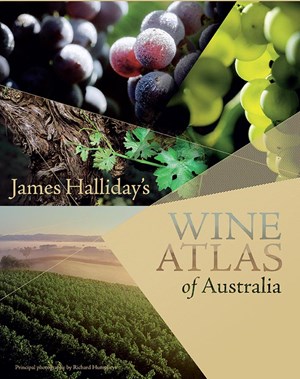
The Wine Atlas of Australia
Rare Malts, Facts, Figures and Taste
How to build and start your own wine cellar An ebook (pdf) on wine cellars. It actually includes some general wine and wine history sections but most of it about how to build a wine cellar. It’s not quite a DIY manual of how to build it. Rather it is a collection of tips and recommendations on things you should think of and things that are important for a wine cellar. For example, there’s a chapter on cooling units and how to choose a good one. A short but useful ebook if you want some inspiration for building your cellar. (Brief 45)
A very ambitious book: a travel guide for he who wants to visit vineyards covering the whole world. And perhaps even over-ambitious. The book contains lots of excellent recommendations – of growers to visit, shops with a good selection, hotels and restaurants, sites etc. All with personal, well written recommendations by Robert Joseph, who no doubt is one of the most well travelled wine writers (and founder and previous editor of the English wine magazine Wine International). But it is perhaps trying to bite of a too big piece of the cake. If, for example, you want to visit the upper Loire Valley (Sancerre, Pouilly and other appellations) is it really enough with just one producer recommendation? We hope for a sequel (or several) that will cover in a bit more depth specific wine regions.
(Sometimes it is fortunate that you read the fine print
in the contract and sometimes you’re glad that you actually did not skip
the introduction to the book. We were very surprised (and flattered)
when we read in “Acknowledgements” in Robert Joseph’s book this
sentence: ”I also owe a particular debt to the online efforts of Jamie
Goodie (www.wineanorak.com), Jancis Robinson (www.jancisrobinson.com),
Bertrand Celce (www.wineterroirs.com) and Britt Karlsson (www.bkwine.com).”
Many thanks!)
A dense tome with profiles of many growers in the
Languedoc-Roussillon region. Michel Smith has selected his choice of
best growers, the future Grands Crus. The book is 100% focused on the
producers, not even a brief introduction to the region or the
appellations is included. Every property is presented on one or two
pages, in quite a bit of detail. Lots of text in rather small type,
interspersed with some (but not much) photos. You can always have
opinions on a selection of growers. For instance, why are none of the
excellent producers in La Clape included? But overall we think this is a
good and representative selection from the region. a book for the French
reading Languedoc enthusiast looking for a reference work on growers.
An odd book in some ways. First: written by an Islander
living in Champagne. Second, a strange mix of recipes, portraits,
pictures and publicity for champagne. But if you disregard that (perhaps
in particular the publicity for various champagne producers) the book is
very charming. Each chapter presents an outstanding chef. All run famous
restaurants where champagne is served (and other things too). Lots of
beautiful pictures, especially the portraits of the chefs, and many
mouth-watering recipes from the restaurants that are featured. But
sometimes it also shows one of the strange (and in our opinion, less
attractive) aspects of today’s “haute cuisine” (both French and
international): the food is sometimes presented on the plates looking
more like abstract compositions of art rather than being meant to be
eaten… But that’s mostly the occasional oddity in the book. Instead, let
yourself be inspired by the many recipes and stories about outstanding
restaurant personalities.
About
Wine
The Healing Power of Champagne - History, Traditions,
Biology and Diet
If you ever needed an excuse to drink a glass of
champagne you should read this book. It walks you through all good
things champagne can do for you in case you suffer from appetite loss,
obesity, migraine, depression, gynaecological troubles (yes), food
allergies and much more. It even has a “technical appendix” on various
good or bad substances. Champagne history, as the title hints, is
featured throughout the book. It is a translation from a French original
which certainly has contributed to the style of the writing.
The
Wine Atlas of Canada
The Wines of France, The Essential Guide for Savvy
Shoppers
This is a reference book from A to Z. Very thorough and
competent with lots of details on almost every imaginable subject in
wine. Dipping into some of the more esoteric subject (that we know well
thanks to recent travels) shows that even on wine from Albania, or
Alentejo in Portugal, or carbonic maceration you will get virtually all
information that can be reasonably be found. A must have for the really,
really through and technical wine student. (It may be worth mentioning
that even if it is Jancis Robinson who is named and pictured on the
jacket, she has a whole team of collaborators behind her to produce the
book.)
An extensive tome, more like an encyclopaedia than a
regular book, and here you will find most (if not all) of the
interesting chateaux in Bordeaux. Each sub-district has a very
informative introduction and very good maps. A book that the passionate
Bordeaux lover should not be without. (Brief 40)
An
almost pocket sized book that is easy to carry with you on the trip. Each
Italian wine regions gets a short introduction which is followed by a listing of
the appellations and a selection of producers, all with a short description. Not
a book to read from cover to cover but it will certainly help you get an initial
understanding of Italy. Perhaps, as a travel companion, one would have wished
for more detailed maps but that may be too much to ask for in such a small book
on such a big region.
The bulk of the book is a listing of Austrian wine producers.
Each producer is described in detail and the wines are rated. It is virtually a
catalogue of Austrian winemakers. But the book also contains good introductions
to each of the wine regions as well as a couple of chapters on Austria and its
wines and grapes in general. Several good maps too. In other words, an aptly
chosen title.
www.falstaff.at
The Journal of Wine Economics (JWE) This is not a book but a specialist, peer reviewed, scientific journal. The JWE is published by the American Association of Wine Economists (AAWE). In the first issue you can read about, for example, how to interpret the result of wine tastings, what is influencing the price of wine (objective or sensory analysis), an analysis of the importance of the “en primeur” price for wines and more. In other words, very scientific but interesting reading for the specialist. www.wine-economics.org
Tuscany - How to
find great wines off the beaten track
The series Discovering Wine
Country from Mitchell Beazley has recently seen two new additions: one
on northern Spain, including Catalonia, Rioja, Galicia and Navarra, and
one on Toscana. Both books follow the same
formula: The author makes a short introduction to each region and its
wines, followed by recommendations of wine growers to visit,
restaurants, hotels, and sights. The books are ideal companions for
traveling, also thanks to the handy and small format. But also perfect
to start traveling already on the couch in the living room. There are
also some tips and suggestions as to what to do, and what not to do –
e.g. wear a shirt and not a T-shirt in Tuscany, don’t try and schedule
any visits over lunch time in Spain, always call ahead etc. Quite good
maps with suggested itineraries.
I bought my first Rhône book sometimes in the early 80s. It was the second edition of a book written by John Livingstone-Learmonth. So JLL is no newcomer to the Rhône, nor to writing. As a matter of fact, there is probably no one who know the Rhône region better than him. And you can see that in this new book that covers only the northern part of the Rhône valley. It’s a brick with 703 pages. But if you are interested in the Rhône Valley this book is a must. JLL talks both about the history (that he knows well since long) and about the future. It is not anything that you will read from cover to cover but rather a reference tome where you will find all details that you might ever be interested in on the growers and on the appellations. There are also very useful line drawing maps of the vineyards. The only thing that one might have wished for is a bit more photos to give the reader more of a feeling of how the region (and the growers) looks – but that might have made the book twice as heavy of course. (Take a look in our photo galleries instead!) Now we are anxious to see the sister tome on the southern Rhône. (FUTURE CLASSIC -SPECIALIZED) Read some excerpts from the book here:
Buy this book:
Amazon.co.uk
Wine educator, wine writer and wine maker Helen Gillespie-Peck arrived
in France 30 years ago. The book is not so much an autobiography – even
if she explains all about the challenges of moving to France,
understanding how things work, learning French, dealing with neighbours
etc – but more an introduction to the world of wine. She walks the
reader through how to grow wine, how to taste wines, understanding
different wine regions in France and in other countries etc. All is
underpinned by her own personal experiences. Can be read as a “text
book” or just as entertainment.
(Brief 32)
If you are interested in reading a bit more in depth on wine regions
there are many books to choose from. Remington Norman’s Rhône
Renaissance is certainly a very interesting one on the Rhone Valley and
its grape varieties. The author takes as a starting point the main grape
varieties grown in the Rhône Valley and expands his horizon to not only
cover the Rhône but also the rest of southern France and producers in
other countries that use the same varieties. You can for instance read
about the Rhône enthusiasts Joseph Phelps and Randall Grahm (Bonny Doon)
in California, both making good efforts to break the Cabernet Sauvignon
and Chardonnay dominance in the US with excellent wines from Syrah,
Grenache or Viognier. Even if it now dates a few years back it is still
a very readable book for the lover of Rhône wines – and wines made in
the same “spirit” elsewhere.
(CLASSIC)
(Brief 31)
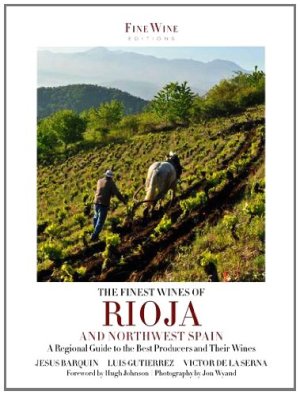
This is the book with a big B for the Iberofil and for those who love
Spanish wines. Or for those who just simply want to know more about the
wines of Spain. Very nicely designed, with good photos (but not ours)
that make you want to go there, as well as good maps. The text is well
written by someone who is passionate about Spain and talks about the
development of Spain as a wine country, about all the Spanish wine
district and recommends many good producers. (RECOMMENDED)
L’Exploitation Vitivinicole – statuts, commercialisation, sécurité This tome is not something to read from cover to cover. And certainly not in bed. It is a reference book for he who grows and makes wine, or wants to buy a vineyard. The book (or actually, the binder) gives him guidance to the jungle of agricultural rules and regulations in France, what he should not forget in terms of safety installations, how to do the administration, how to deal (administratively) with employees etc… But it also gives recommendations on how to market the wines, what wine shows you can participate in, how to deal with journalists, how to export and much more things a winemaker needs to think of. (EXTREMELY SPECIALIZED - FOR THE WINEGROWER)
Hugh Johnson, England's best known wine writer, and James Halliday, one
of Australia's most famous winemakers, describe how the winemaker and wine
grower can influence the quality and character of the wine. It is written so
that even the novice can understand (well, you have to be interested at least).
It explains what is done both in the vineyard and in the wine cellar, both in
the New World and in the Old World. One of the few books that talks a bit more
about the technical aspects of wine but still is written for the enthusiast wine
lover rather than the wine professional.
(EXCELLENT SPECIAL INTEREST BOOK)
If you want to learn a little about every wine region in the world, this
is the book for you. The first edition was written by Hugh Johnson in
1971 and 30 years after, in 2001, this 5th edition, with Jancis Robinson
as co-author, was published. You’ll find short but fact-filled
information on every wine region imaginable and an introduction to the
history of wine, viticulture and vinification. Beautiful pictures and
very good maps. Probably the single most indispensable book in the
library. (August 2005) (INDISPENSABLE)
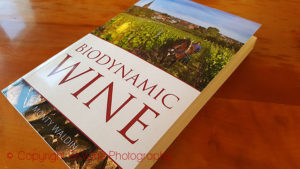
This is a somewhat heavy book, but if you are interested in the
principles of biodynamic wine growing this book gives you all the
information you need. It’s written by a knowledgeable person who has
worked, among others, with Fetzer Vineyards, one of the pioneers on
biodynamics in California. The first part tells you about the history
behind the philosophy and how it is used in the vineyard (including how
to prepare biodynamic compost) and the second part lists, with extensive
information, a number of biodynamic growers around the world. (August 2005)
(HIGHLY SPECIALIZED)
Michelin, famous for its "red" guides on gastronomy and "green" tourist
guides, has launched a new green guide called “The Wine Regions of
France”. It is a practical, pocket size guide (provided you have big
pockets) if you plan to go on vacation in the French wine regions. It
covers essentially all regions and contains information on restaurants
and hotels as well as practical info on producers, walks in the
vineyards, routes to choose as well as other wine information.
The New France, a complete guide to contemporary French Wine
Andrew Jefford explores in this book the new tendencies among wine producer
in France today. He presents a number of the new generation producers
explaining their philosophies and how they are in the process of changing
the wine landscape in France. Not an easy task for Andrew. But it is very
interesting and very informative. some favorite producers are presented in
more detail and gives his opinion on things that could be changed. Andrew
also defends the the French wine laws but also suggests a number of
improvements. Definitely worth reading if you want to know more about what's
happening in France today. (January 2004) (FUTURE CLASSIC)
Paul Strang has previously written a book about the wines of the South West
("Sud-Ouest", i.e. the region between Bordeaux and Spain.) which was not
quite convincing. The producers seemed to have been selected not by merit
but by chance. This book is much better and since there are currently few
books about Languedoc-Roussillon this one is very welcome. All appellations
are clearly described and the most well known producers are mentioned. The
growers are photographed in black & white (seems to me the in thing to do at
the moment) but the other pictures and the maps are in colour. Definitely
worth reading when you have passed the stage of Bordeaux and Bourgogne.
(January 2004) (RECOMMENDED)
Few wine, if any, experts have tasted so many exclusive and expensive wines
as Michael Broadbent. This is the third edition of his tastings notes.
Fascinating reading about both old and new vintages. It's not a book that
you read from cover to cover but one where you dip in once in a while, maybe
to compare with your own thoughts about a wine if sometimes you are lucky
enough to taste some of the same wines. Definitely a reference book for
those of you who are interested in older vintages of high class wines or who
just want to dream a bit about excellent wines. (January 2004) (RECOMMENDED)
(We're not sure if there is any difference between the US and UK edition.)
This is not a new book but it is
certainly one we recommend all the same. Hubrecht Duijker, from Holland,
have written many wine books, some in collaboration with Hugh Johnson, and
this small and handy book is part of a series where each book is a travel
and wine guide to a wine region. Perfect to keep in the pocket when
traveling. It includes detailed maps (the same excellent maps that you find
in Hugh Johnson's Wine Atlas - the best there is!) recommendations of
producers, hotels restaurants and sights. Almost a must for the traveler and
certainly the best wine travel guide. (January 2004) (RECOMMENDED)
A unique new book about Calvados: Henrik Mattsson is a Swedish writer who has spent 2 years working on
an ambitious venture. He has single handed written, typeset and designed
what is in effect the first real book (as far as we know) about
Calvados. It is elegantly designed and covers all important subjects,
such as: the history of Calvados, how to make it and how to drink it,
the producers, and things to see and do when you go there. Unfortunately
it could have been better checked for typos and linguistically. But it
is nevertheless a very interesting book to read for those of you who
like a glass of calvados every now and then. Buy the book from the
publisher:
http://www.calvadosbook.com/. (RECOMMENDED)
Touring in Wine Country Burgundy | Bordeaux | Loire | Rhône
| Provence
(Also exists in French, published by Flammarion) These books
were published some years ago but they are books that you don’t want to be
without if you travel in wine country. Indispensable. It is a series edited by
Hugh Johnson and written by the Dutch author Hubrecht Duijker. (We have not seen
the Provence book.) Each book is in a convenient pocket format, following the
same logic: the wine region is described sub-district by sub-district, the wines
are commented, and some good growers are put forward. There are also some short
suggestions for hotels, restaurants and tourist sights. But the best part of the
books are the maps: often very detailed, with suggestions for roads to take,
some wine producers and vineyards marked on the maps etc. More or less the same
maps as in The Atlas (Hugh J’s) but in a packaging that is perfect for
traveling. Buy them and you’ll be urging to get going. (And then you can go on a
wine tour with BKWine!)
[We have not read and reviewed this book] An autobiography of sorts by perhaps the greatest wine writer around
(who, among his other achievements, created The Wine Atlas). The story
of his life from a wine perspective
(Brief 31)
[We have not read and reviewed this book] Prize winner at the Gourmand Cookbook Awards 2005: Best Book on Wine
Photography and also Best Book for Professionals. We have not seen it
yet though.
(Brief 31)
[We have not read and reviewed this book]
A book exclusively about Riesling about
this great variety that has been given very little attention on the book
shelves. (January 2005)
[We have not read and reviewed this book]
Clive Coates’s books are always massive
and very detailed, e.g. his impressive book on Burgundy. This will no doubt be
of similar depth. (January2005)
[We have not read and reviewed this book]
A lovely picture book (we’ve seen some of the photos): photos of
wineries around the world with interesting architecture. Visit the
author's web site:
www.devinitywine.com (January2005)
[We have not read and reviewed this book]
A new edition of this massive book on
the history of wine. Probably the best book (and certainly the best we've seen)
on the subject. The new edition is updated by HJ in collaboration with a
Cambridge historian so it is no doubt still a good buy. (January2005)
[We have not read and reviewed this book] A massive tome to celebrate the 150th anniversary of the 1855 classification of
Bordeaux. Exclusively presented articles on each chateau.
--- Where to buy? - Some good wine book shopsBeaune: Bordeaux: Internet:
|
|