Recommendations – a selection from
what we have tasted, visited or enjoyed recently
(Note: a
‘**’ (e.g. Lavinia**) indicates that you can find the address
on my web:
producers here, and
restaurants/shops here.)
□
Producers
Domaine des 2 Ânes,
Corbières
Pech Narbonnais 11440 Peyriac de Mer, tel 04 68 41 67 79
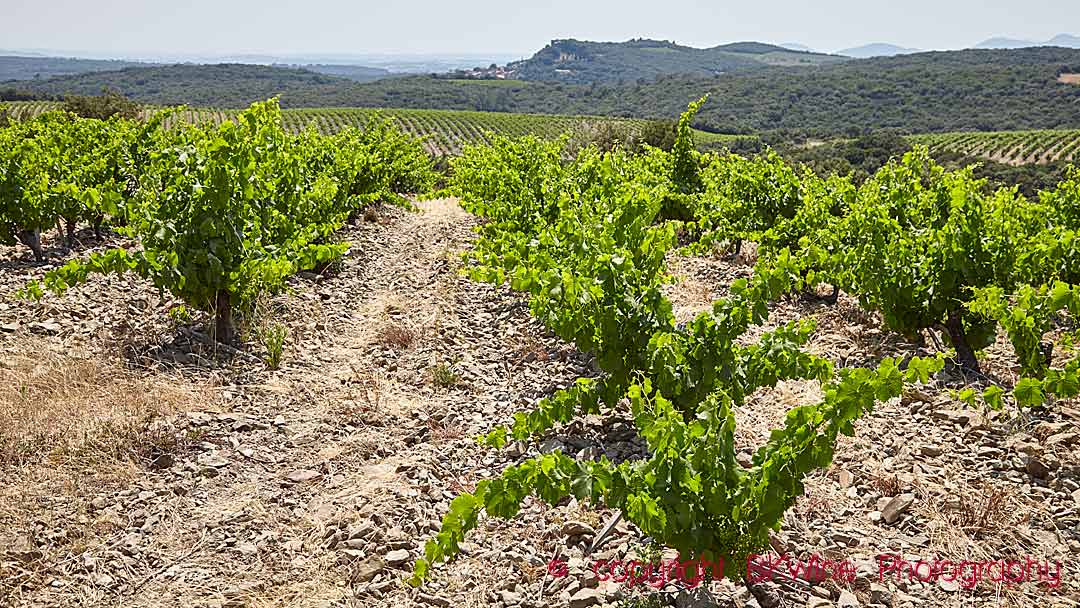
Corbières is the biggest appellation in Languedoc. It is dominated by
mountains and can be very remote and rural. It used to be know for its rustic
wines that went well with stews and other heavy food. That style still exists
but quality conscious growers now give their wines more elegance and
complexity. Like for instance this producer with its curious name (‘anes’
means donkeys).
Domaine des Roches
Neuves, Saumur Champigny
56, boulevard Saint-Vencent, 49400 Varrains, tel 02 41 52 94 02
Red
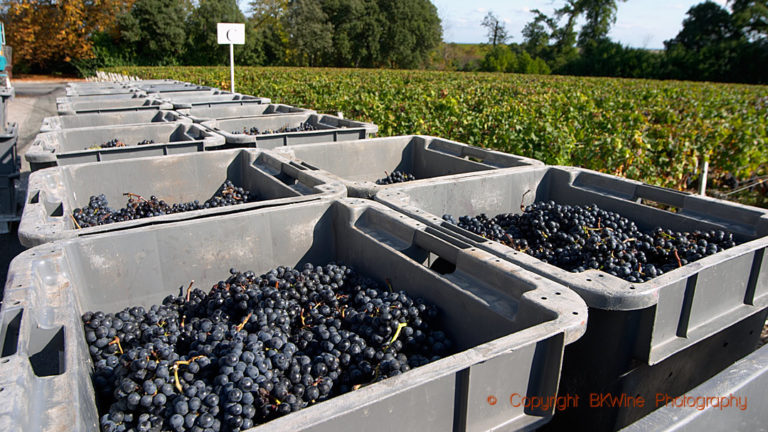
Loire wine is often made from Cabernet Franc, an aromatic and appealing grape
variety. But it is important not to pick it too early or else you can get very
harsh, “green” and rough wines. Thierry Germain at Domaine des Roches Neuves
is a master at handling Cabernet Franc, with low yields and late harvest. His
wines are full-bodied and soft, almost velvety. He also makes a very good
Saumur Blanc white wine.
Read about more of our
favourite wine producers and find the contact details on my
Wine Producer Page.
□
Wine Bars and Restaurants
- -
Paris:
L’Avant Goût
26, rue Bobillot, 75013 Paris (M. Place d’Italie), tel 01 53 80 24 00.
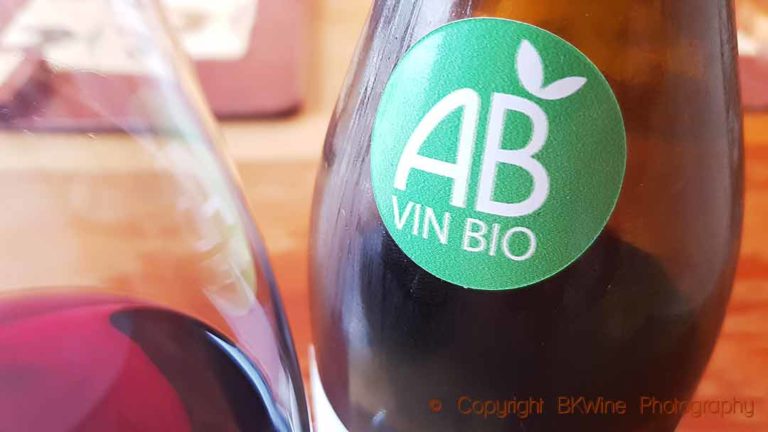
Booking essential evenings. Good wine list with many organic wines. Set menu
12€ (lunch) to 32€.
Mavrommatis
42, rue Daubenton, 75005 Paris (M. Censier-Daubenton), tel 01 43 31 17 17 (closed
Sun & Mon)
Maybe Paris’ best Greek restaurant. Some good “domestic” wines. Menu from 18€.
Le Café Constant
139, rue Saint-Dominique, 75007 Paris (M. Ecole-Militaire)
Traditional well made food. Very busy and bustling. 15-18 € for a main course.
News and more from the Wine World
Calvados
Calvados is making progress on the export market. This excellent digestif can
help you digest a big meal as no other and is also an excellent ingredient in
the kitchen (and for the cook): e.g. crêpes flambées or to give flavour
to a creamy
sauce. Most calvados come from the sub-region called Pays d’Auge, the very
picturesque landscape between the fashionable seaside resort Deauville and the
cheese town Pont l’Eveque. In Pays d’Auge calvados is double distilled, just
like for cognac. And then it is stored in oak for a number of years which
gives it much of its character. The youngest calvados is sold after 2 years of
aging. After four years it can be called VSOP and if it has six years or more
it can be called hors d’age. Sometimes you can even see 20 ans
(20 years) or old vintages in small quantities. It is small and not at all
tasty apples that are used for calvados (and cider). It is a mix of bitter,
sweet and acidic apples (of different varieties) that are used to make a good
cider that is then distilled to make the calvados. And you need a lot of
apples! 20 kg of apples makes 14 litres of cider which makes 1 litre of 70 %
calvados – which is then diluted to the appropriate strength. (Click on the
pictures!)


(you can buy our pictures for publication)
Wine in China
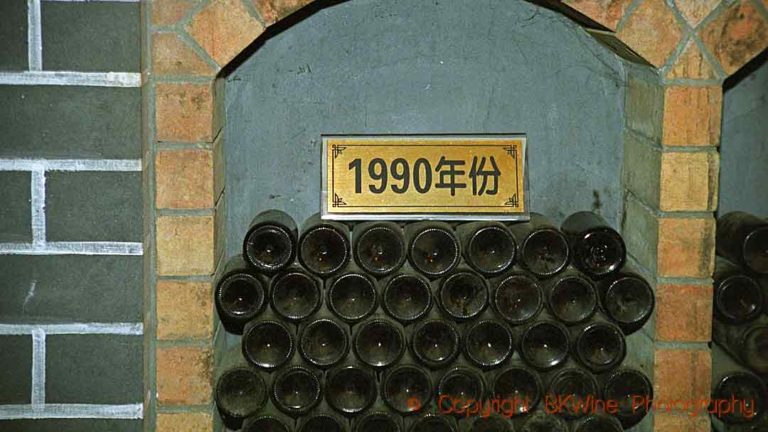
China Drinks, China’s main wine and spirits magazine, organised a
competition in January: the 2005 Beijing International Wine & Spirits
Competition. BKWine was on-site and participated in the jury for the Chinese
wines and spirits. Well, today Chinese “wines” are not always made from grapes
but sometimes from other fruit and berries – or rice! So it was an odd
collection of beverages we were tasting and judging. Not all that easy. One Great
Gold Medal was awarded to a Chinese wine, a Cabernet Sauvignon from one of the
best and biggest vineyards: the Great Wall Winery. Chinese wine consumption,
as the production, is rising rapidly. Pictures from China are on the site.
(Click on the pictures!)


Record
year for Champagne in 2004
Total sales in 2004 was 300 million bottles of Champagne which, according to
the estimates of CIVC (the producers’ organisation), means that it is the most bottles
sold in any one year to consumers. The only year to come close is 1999 when
producers actually sold more bottles of champagne (327 million) but it is
estimated that many of those bottles remained in stock at merchants due to
over optimistic forecasts for the new millennium.
EU finances
marketing of wine
The EU has set aside 10.2 million euro for marketing campaigns for
agricultural products; 5 million for wine. Four programs have been defined:
one for French, Portuguese and Spanish wines; one for Beaujolais; one for wine
and cheese for Germany and Austria; and one for Italian VQPRD. The programs
will market the products primarily in North America, China, Russia, India,
Japan, and Central and Eastern Europe.
New
rules in Alsace
INAO has introduced some new or changed rules for Alsace wines:
Planting density must be at least 4500 vines per hectare, training must be in
simple Guyot with at the most 8-10 “eyes”. Alsace Grand Cru must be made from
one single grape variety; permitted Grand Cru wine varieties are Riesling,
Gewurztraminer, Pinot Gris, Muscat à Petits Grains, Muscat Ottonel. (Grand Cru
Altenberg de Bergheim and Zotzenberg have more sever restrictions.) Maximum
”agronomic” yield is 10,100 kg/ha. Minimum alcohol contents is 12.5% for Pinot
Gris and 11% for the other varieties. The new rules will initially only apply
to vineyards planted after 2000.
English
study says terroir is not important
A study made by Olivier Gergaud and Victor Ginsburgh has concluded
that “terroir” (soil, microclimate etc) is not particularly important
for the quality of the finished wine. They conclude that it is possible to
make good wine on almost any type of soil. The study compared wines from
around a hundred vineyards, primarily in the Médoc. Read more in The Observer:
The Observer
(Picture: 'terroir' in Burgundy. Click on the picture.)
New rules for Fitou
INAO has defined new rules for Fitou wines: The main permitted grape
varieties are: Carignan Noir (maximum 70%), Grenache Noir, Mourvèdre, and
Syrah. Additional permitted varieties: Cinsault, Lledoner Pelut. The wines
must be aged for at least 9 months before being sold.
http://www.cru-fitou.com
Irrigation
will (probably) be allowed in France
INAO made positive noises towards allowing irrigation in French
vineyards. The proposal means that it would be OK to water vineyards under
special circumstances, as for instance the extremely hot summer in 2003.
www.journee-vinicole.com
(Picture: drip irrigation in Catalonia. Click on the picture.)
Sideways wins Oscar
The film Sideways, that takes place in Californian wine country, has
been given an Oscar for “best adapted screenplay”. It had five nominations.
Mondovino
opens in the US
The more controversial wine film - Mondovino - by Jonathan Nossiter has
recently opened in the US. It has sparked quite violent reactions, much more
so than in Europe. Maybe not surprising. Read more about the film here:
http://www.mondovinofilm.com/
La Mancha allows
three new grapes
Three new grape varieties will be permitted in La Mancha, a district
that has recently moved from being a source for low quality cheap wine to
being one where a lot of interesting things happen. The three varieties are:
Muscat à Petits Grain and Verdelho for white wine, and Petit Verdot for red
wine. But they are still only permitted in small quantities for experimental
purposes. The traditional grape varieties in La Mancha are: Airen, Macabeu,
Chardonnay and Sauvignon Blanc for white wines and Moravia Dulce, Grenache,
Tempranillo, Cabernet Sauvignon, Merlot and Syrah for red wine.
Moët
& Chandon launches 'crown corked' sparkling wine
It is, of course, not champagne but an Australian sparkling wine made
by a subsidiary of Moet & Chandon that has recently been launched in the UK
with a crown cork (as on beer bottles). It is called Chandon Green Point and
sells for £12.99 at e.g.
Oddbins
(Picture: bottles in Champagne with crown corks. That is the commonly used
closure for the second fermentation in Champagne. Click on the picture!)
Michelin launches a new Guide Rouge for New York
Michelin’s “red” guide (Le Guide Rouge – the one with the stars)
originally only covered France. Then it was extended to the neighbouring
countries and to “main cities Europe”. Now they will launch the first guide
outside of Europe. From November the New York guide will be available for
$15.95.
http://www.michelin-us.com/
New rules for
Pacherenc de Vic Bilh
You’re not familiar with Pacherenc du Vic Bilh? With a name like that
it’s maybe not so strange. To simplify (being not strictly correct) you could
call it white Madiran. Here’s a short description and pronunciation guide:
www.wineint.com. The new rules say that Pacherenc du Vic Bilh wines should
be made mainly from Corbu, and Petit Manseng (min 60% combined, max 80% for a
single variety). Other permitted grapes are: Arrufiac, Gros Manseng, Sauvignon
Blanc.
Renewed threat to
Californian vineyards
Once more the “glassy winged sharpshooter” has shown it’s ugly face in
California (see here how it looks
www.modbee.com). It’s eggs were found on vines delivered from Lodi (also
in California) to a Napa Valley vineyard. The sharpshooter spreads Pierce’s
disease, a virus disease that kills the vines. There is no good cure for the
disease so the sharpshooter poses a very serious threat. Read more here
www1.pressdemocrat.com and more:
www1.pressdemocrat.com
A Robert Parker rating increases the price with 15%
Decanter reports that a study shows that wines that get a rating from
Parker on average gains 3€ (equivalent to 15% for the wines studied) compared
to a wine that is not rated by Parker. The study is based on ‘primeur’ wines
in Bordeaux. For the consumer it can then be expected that the price
difference will be even greater. Maybe one conclusion can be that the Parker
craze may be defeating itself: rated wines automatically become more expensive
so if you want to find something that is good value-for-money you should look elsewhere?
Read more on
Decanter
Chardonnay-du-Monde
competition
The competition Chardonnay-du-Monde was held recently and no wine was given
the Grande Medaille d’Or. 64 wines had the (ordinary) gold medal though. You
can find the results here:
www.chardonnay-du-monde.com
(Picture: Chardonnay in Les Clos, Chablis Grand Cru. Click on the picture!)
World Riesling
competition
The eighth Riesling-du-Monde was also just held. First Gold Medals
were won by five wines: four from Alsace (Cave Vinicole d’Andlau, Dom des
Marronniers, Doppff & Irion, Dom du Tonnelier) and one German wine (Schloss
Reinhartshausen). More info:
www.riesling-du-monde.com
Wine Women Awards
One more competition, this time for women in wine. It is open for both
amateurs and professionals who want to test their knowledge of wine: wine
merchants, sommeliers, ‘restauratrices’, wine teachers etc (but not wine
makers and oenologists). More info:
www.winewomenawards.com (click on the flag for English version)
New wine auction in Stockholm on May 24
Systembolaget, the Swedish monopoly will organise a second wine (and
spirits) auction on May 24 (but it being a monopoly it is organised by the
same auction house as last time, the Auktionsverket – no competition there
either).
□
Wine-On-Line
Some wine sites
worth having a look at:
Send
us suggestions for sites to be included here:
winebrief@bkwine.com.